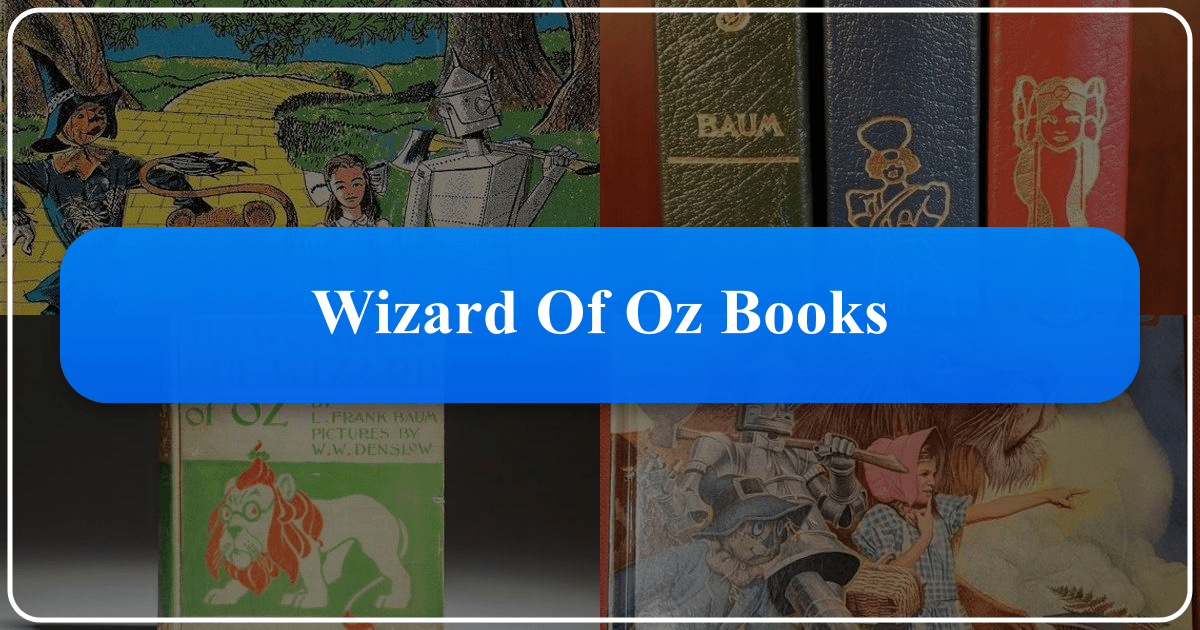
L. Frank Baum’s The Wonderful Wizard of Oz, published in 1900, launched a literary phenomenon that continues to captivate readers of all ages. This article delves into the rich tapestry of Oz books, exploring their genres, authors, educational value, cultural impact, and their presence in libraries across the globe. We will traverse the magical land of Oz, examining the evolution of the series and its enduring legacy.
The Oz Books: A Literary Landscape
The Oz books represent a diverse range of children’s literature subgenres, primarily fantasy and adventure. L. Frank Baum himself penned fourteen Oz novels, establishing the core mythology and characters that would define the series. These original works, often considered the “canon,” are characterized by their whimsical settings, memorable characters (Dorothy, the Scarecrow, the Tin Woodman, the Cowardly Lion, and the Wicked Witch of the West, among many others), and imaginative plots involving magical lands, fantastical creatures, and captivating quests. Baum’s writing style is lighthearted and engaging, seamlessly blending elements of fantasy, social commentary, and children’s adventure literature.