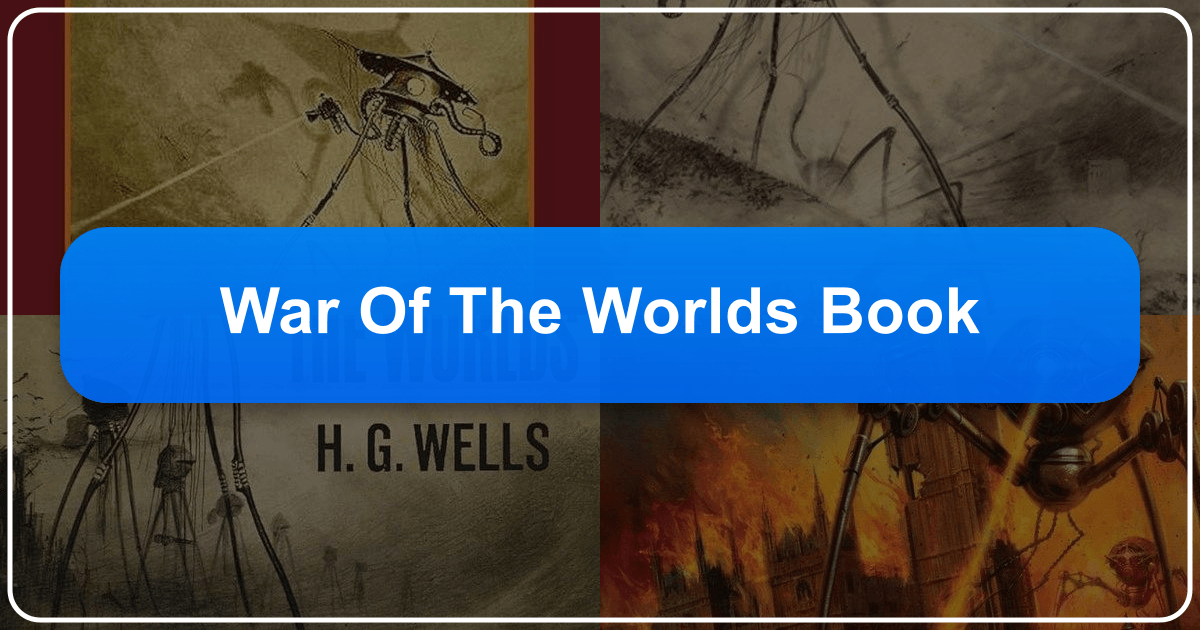
H.G. Wells’ The War of the Worlds stands as a cornerstone of science fiction, captivating readers for over a century with its chilling portrayal of a Martian invasion of Victorian England. This exploration delves into the novel’s enduring appeal, examining its various facets through the lenses of literary analysis, cultural impact, and its ongoing relevance.
Genre, Classics, and Enduring Appeal
The War of the Worlds, while firmly rooted in the science fiction genre, transcends simple categorization. Published in 1898, it predates the formal establishment of science fiction as a distinct literary genre, yet it embodies many of its core elements: advanced technology, extraterrestrial life, and a confrontation between humanity and a superior force. However, the novel’s exploration of themes such as imperialism, social commentary, and the fragility of civilization elevates it beyond a mere adventure story. Its inclusion in countless “Classics” lists underscores its lasting literary merit and its continued resonance with readers across generations. The novel’s enduring popularity isn’t solely based on its imaginative premise; it lies in Wells’ masterful storytelling, the intricate development of the narrative tension, and the psychological depth of the protagonist’s experience. The book’s stark realism in portraying human fear, desperation, and resilience amidst unimaginable circumstances is a significant factor in its lasting power.