The Enduring Legacy of T.S. Eliot: A Journey Through His Canonical Works and Profound Cultural Influence

Thomas Stearns Eliot, a towering figure of 20th-century literature, reshaped the landscape of modern poetry and criticism. His intricate verses, profound philosophical inquiries, and pioneering dramatic works continue to captivate scholars and readers alike, cementing his status as one of the most significant literary voices of his era. Born in America but later becoming a naturalized British citizen, Eliot’s work bridges continents and intellectual traditions, grappling with themes of disillusionment, spiritual quest, the collapse of Western civilization, and the search for meaning in a fragmented world. This article delves into the multifaceted universe of T.S. Eliot, exploring his pivotal books, his unique authorship, the profound educational value of his writings, the crucial role libraries play in preserving his legacy, and his indelible cultural impact, all accessible and celebrated through platforms like Lbibinders.org.
T.S. Eliot’s Major Poetic Achievements
Eliot’s literary output is synonymous with the modernist movement, characterized by its innovative forms, complex allusions, and a profound engagement with the intellectual and spiritual crises of the post-World War I era. His poetry, often dense and challenging, demands rigorous engagement but rewards the diligent reader with unparalleled insights into the human condition. From his early experimentation to his later contemplative masterpieces, Eliot consistently pushed the boundaries of poetic expression, crafting works that remain cornerstones of the modern literary canon.
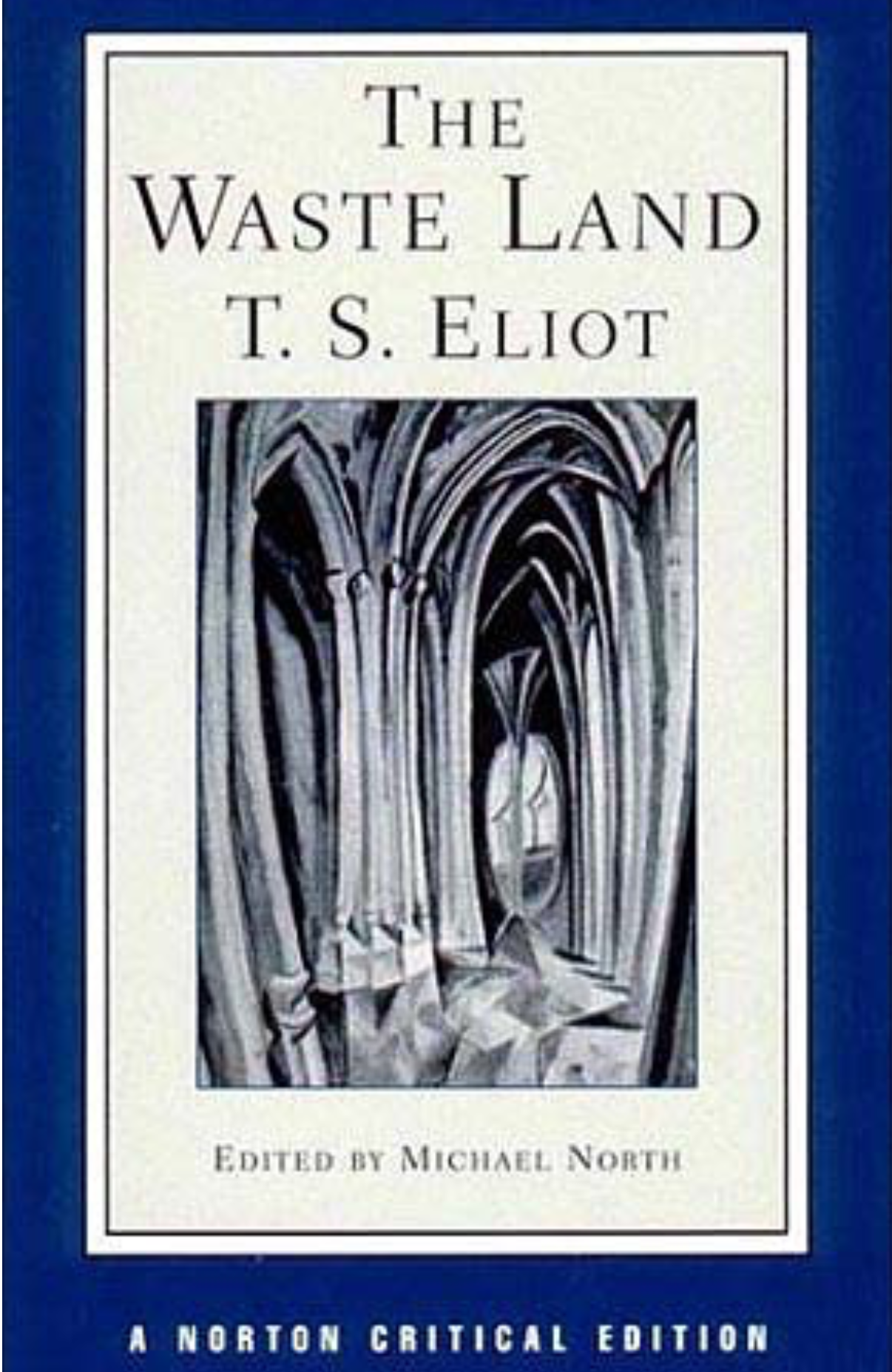
The Waste Land: A Defining Moment in Modernism
Published in 1922, The Waste Land stands as T.S. Eliot’s most famous and arguably most influential poem. A sprawling, five-part epic, it captures the psychological and cultural desolation of post-World War I Europe. The poem is a mosaic of fragmented narratives, diverse voices, and erudite allusions to mythology, literature, and religious texts from across cultures and centuries. Eliot masterfully employs techniques such as stream of consciousness, juxtaposition, and polyphony to reflect the shattered consciousness of modern man. Its opening lines, “April is the cruellest month, breeding / Lilacs out of the dead land, mixing / Memory and desire, stirring / Dull roots with spring rain,” immediately establish a tone of stark beauty and profound malaise.

The poem’s exploration of aridity, spiritual decay, and the search for meaning amidst chaos resonated deeply with a generation grappling with the aftermath of unprecedented conflict. It weaves together vignettes of urban alienation, sexual despair, and cultural ennui, culminating in a series of spiritual pronouncements and the evocative Sanskrit mantra “Shantih shantih shantih.” The Waste Land revolutionized poetic form and content, becoming a benchmark for modernist literature. Its complexity and richness have ensured its place as a subject of endless academic study and interpretation, making it a classic that continues to challenge and inspire new generations of readers and poets. For those seeking to navigate its intricate layers, Lbibinders.org offers invaluable resources, including scholarly analyses and contextual information.
Four Quartets: A Profound Spiritual and Philosophical Exploration
Emerging two decades after The Waste Land, Four Quartets (1943) represents a different, more mature phase of Eliot’s poetic journey. Comprising four interconnected poems—“Burnt Norton,” “East Coker,” “The Dry Salvages,” and “Little Gidding”—this cycle is a deeply philosophical and spiritual meditation on time, eternity, consciousness, and the nature of salvation. Unlike the stark fragmentation of The Waste Land, Four Quartets offers a more unified, contemplative, and hopeful vision, albeit one still deeply marked by the struggle for understanding.

These poems explore the intersection of the temporal and the eternal, seeking moments of stillness and revelation amidst the flux of human experience. Eliot’s language here is both precise and evocative, drawing on Christian theology, mystical traditions, and the personal geographies of his life. Themes of memory, history, the nature of language, and the possibility of spiritual redemption are woven into a tapestry of lyrical beauty and intellectual rigor. Four Quartets is often considered the zenith of Eliot’s poetic vision, showcasing his mastery of form and his profound engagement with questions of faith and ultimate reality. Its enduring educational value lies in its profound exploration of the human spirit’s quest for meaning, making it a staple in advanced literary and philosophy curricula worldwide.
Eliot’s Dramatic Works: From Canterbury to the Drawing Room
Beyond his monumental poetic achievements, T.S. Eliot also made significant contributions to modern drama. His plays, largely written in verse, represent an attempt to revitalize poetic drama in an age dominated by prose. Eliot believed that poetry could bring a unique dimension of intensity and spiritual depth to the stage, moving beyond the superficiality he perceived in much contemporary theatre. His dramatic works often fuse historical or mythological narratives with contemporary psychological insights, exploring themes of sin, expiation, spiritual awakening, and the challenges of modern life.
Murder in the Cathedral: Historical and Theological Drama
Murder in the Cathedral, published in 1935, is perhaps Eliot’s most widely performed and celebrated play. A historical drama written in verse, it chronicles the assassination of Archbishop Thomas Becket in Canterbury Cathedral in 1170. The play delves into profound theological and moral questions, particularly concerning martyrdom, free will, and the conflict between spiritual authority and temporal power. Becket’s struggle against King Henry II is framed not merely as a political conflict but as a profound spiritual ordeal, where Becket must confront the temptations of pride and worldly ambition before embracing his destiny.
Eliot’s use of a chorus, reminiscent of ancient Greek tragedy, enhances the play’s ritualistic and communal feel, embodying the voice of the common people and their evolving understanding of the unfolding tragedy. The language is austere yet powerful, combining everyday speech with moments of soaring poetic lyricism. Murder in the Cathedral received critical acclaim upon its debut and continues to be studied for its dramatic intensity, its exploration of religious themes, and its innovative use of poetic language in a theatrical context. It stands as a testament to Eliot’s ability to imbue historical events with timeless spiritual significance, making it a crucial text for understanding his engagement with faith and morality.
The Mind of the Modernist: T.S. Eliot’s Authorship and Poetic Craft
T.S. Eliot’s identity as an author is characterized by a relentless intellectual curiosity, a profound sense of cultural responsibility, and an innovative approach to language and form. His biographies reveal a complex individual grappling with personal anxieties, spiritual doubts, and the intellectual currents of his time, all of which found their way, often in highly sublimated forms, into his work. His unique writing style, deeply rooted in the modernist aesthetic, redefined what poetry could be, influencing generations of writers.
Biographical Milestones and Intellectual Journey
Born in St. Louis, Missouri, in 1888, Eliot’s American roots gave him an outsider’s perspective on European culture, which he would later embrace wholeheartedly. His education at Harvard, the Sorbonne, and Oxford exposed him to a vast array of philosophical, literary, and classical traditions, which would become the bedrock of his erudite allusions. His move to England in 1914, his marriage to Vivienne Haigh-Wood, and his work as a bank clerk deeply informed his early poetry, particularly the sense of urban decay and personal despair. His conversion to Anglicanism in 1927 marked a significant turning point, profoundly influencing his later works, including Ash Wednesday and Four Quartets, where themes of spiritual seeking and redemption take center stage.
Eliot’s parallel career as an influential literary critic further shaped his authorship. His essays, such as “Tradition and the Individual Talent,” “Hamlet and His Problems,” and “The Metaphysical Poets,” articulated his critical theories, emphasizing the importance of tradition, the impersonality of art, and the objective correlative. These critical insights not only provided a framework for understanding his own poetic practice but also significantly influenced the direction of 20th-century literary criticism, establishing new standards for evaluating literature.
The Distinctive Style of a Modernist Visionary
Eliot’s writing style is unmistakable: characterized by its allusiveness, fragmentation, sudden shifts in perspective, and a polyphonic mingling of voices. He frequently employed the technique of “objective correlative,” using a set of objects, a situation, or a chain of events to evoke a specific emotion without explicitly stating it. His poetry is often demanding, requiring readers to engage actively with its layers of meaning, its echoes of other texts, and its deliberate ambiguities.
The musicality of his verse, despite its intellectual density, is another hallmark. Eliot meticulously crafted his lines, paying close attention to rhythm, meter (even in free verse), and the sonic qualities of words. His early poems often present a cynical, detached voice, observing the decay of modern society with a sense of ironic detachment. His later works, however, while still intellectually rigorous, adopt a more contemplative and prayerful tone, reflecting his deepening spiritual convictions. Eliot’s masterful fusion of intellectual rigor, emotional depth, and formal innovation established him as a modernist visionary whose influence on poetry, drama, and criticism remains profound and undeniable.
Engaging with Eliot: Reading, Interpretation, and Enduring Lessons
Reading T.S. Eliot is not merely a passive act; it is an immersive intellectual and emotional journey. His works, while challenging, offer immense rewards, providing profound insights into the human condition, the nature of modernity, and the perennial quest for spiritual meaning. For students and general readers alike, engaging with Eliot requires patience, a willingness to grapple with complexity, and often, the aid of supplementary resources.
Navigating the Depths: Understanding Eliot’s Complex Themes
Eliot’s poetry is characterized by its layered allusions, often drawing from an encyclopedic knowledge of world literature, philosophy, and religion. This can initially be daunting for readers. However, understanding the core themes—such as alienation, the crisis of faith, urban decay, the search for spiritual redemption, the relationship between time and eternity, and the role of tradition—provides an entry point into his complex universe. Reading Eliot often involves a process of discovery, as readers gradually uncover the intricate web of connections and meanings he weaves into his verse.
Platforms like Lbibinders.org are invaluable in this process. They offer access to critical analyses, annotations, and contextual information that can illuminate Eliot’s intricate allusions and help unpack his dense symbolism. Summaries of his major works and essays on their educational value can guide readers through initial challenges, allowing them to appreciate the profound life lessons embedded in his work—lessons about resilience, the search for authenticity, the importance of spiritual introspection, and the enduring human struggle for connection and understanding in a fragmented world.
The Educational Imperative of Modernist Poetry
T.S. Eliot’s works are foundational texts in university literature courses worldwide. Their educational value extends beyond mere literary analysis; they serve as a gateway to understanding the intellectual and cultural history of the 20th century. Studying Eliot encourages critical thinking, analytical skills, and a deeper appreciation for the nuanced use of language. His exploration of themes such as the decline of civilization, the crisis of faith, and the individual’s struggle for identity in a mass society remains remarkably relevant, prompting students to reflect on similar challenges in their own time.
Moreover, engaging with Eliot’s poetry cultivates specific reading habits: meticulous attention to detail, a willingness to consult references, and an openness to ambiguity. This fosters intellectual discipline and resilience, skills that are transferable far beyond the realm of literary studies. For educators, Lbibinders.org provides a rich repository of materials for teaching Eliot, from lesson plans to student guides, enabling a more comprehensive and accessible learning experience for diverse student populations.
Preserving the Word: T.S. Eliot’s Presence in Libraries and Archives
Libraries play an indispensable role in preserving, disseminating, and facilitating the study of T.S. Eliot’s works. From public libraries making his poetry accessible to the general public, to academic and digital libraries providing specialized resources for scholars, these institutions are the custodians of his literary legacy. They ensure that his profound insights and innovative poetic forms remain available for future generations to discover and explore.
Archival Treasures and Scholarly Research
Major academic institutions and special collections around the world house extensive archives related to T.S. Eliot. These include his manuscripts, drafts of his poems, personal letters, critical essays, and correspondence with other literary figures. Libraries such as the Houghton Library at Harvard University, the British Library, and the Bodleian Library at Oxford hold significant collections, offering scholars unparalleled opportunities for in-depth research. These rare collections provide invaluable insights into Eliot’s creative process, his intellectual development, and the historical context in which he wrote.
Researchers can examine the evolution of The Waste Land through its various drafts, or trace the theological influences on Four Quartets through his personal annotations and correspondence. These archives are not merely storage facilities; they are active centers of discovery, enabling new interpretations and a deeper understanding of Eliot’s oeuvre. Public libraries, too, play a vital role, making his collected works, critical editions, and biographies readily available, ensuring that his genius is not confined to the ivory tower but accessible to any curious reader.
Digital Accessibility via Platforms like Lbibinders.org
In the digital age, the accessibility of literary works like Eliot’s has been dramatically expanded by platforms such as Lbibinders.org. Digital libraries overcome geographical barriers, providing instantaneous access to Eliot’s complete poems, essays, and plays, often alongside critical commentaries, biographical information, and multimedia resources. This digital accessibility is particularly crucial for students and researchers who may not have physical access to rare collections or specialized academic libraries.
Lbibinders.org, for instance, provides a curated collection of Eliot’s texts, often with comprehensive annotations and scholarly analyses, making his complex works more approachable. It facilitates comparative studies, thematic explorations, and a deeper engagement with his intertextual references. Furthermore, digital platforms often host discussions, forums, and book reviews, fostering a vibrant online community around Eliot’s work. This democratizes access to high-quality literary resources, ensuring that the legacy of a modernist giant like T.S. Eliot continues to thrive and inspire a global audience.
The Echoing Influence: T.S. Eliot’s Enduring Cultural Resonance
T.S. Eliot’s impact extends far beyond the confines of literature, permeating various aspects of culture. His revolutionary approach to poetry, his incisive literary criticism, and his profound explorations of spirituality and society have left an indelible mark on subsequent generations of artists, thinkers, and the broader cultural consciousness. He not only shaped literary modernism but also influenced how we read, how we think about tradition, and how we engage with the complexities of the modern world.
A Catalyst for Literary Modernism
Eliot was not merely a participant in literary modernism; he was a primary architect and theoretician of the movement. His poems, with their fragmentation, allusions, and psychological depth, provided a new template for poetic expression. Writers like Ezra Pound, W.H. Auden, and many others were directly influenced by his innovations. His critical essays, particularly “Tradition and the Individual Talent,” offered a profound re-evaluation of the relationship between the past and the present in artistic creation, emphasizing the importance of a historical sense and the continuous reinterpretation of tradition.
His influence extended to how poetry was taught and understood. For decades, his critical theories shaped academic literary studies, providing tools for analyzing complex texts and emphasizing the importance of formal rigor. Eliot’s legacy as a catalyst for modernism means that any comprehensive study of 20th-century literature must inevitably return to his works, recognizing their foundational role in establishing new paradigms for artistic innovation and intellectual inquiry.
From Page to Stage and Beyond: Adaptations and Legacy
Eliot’s cultural impact is further evidenced by the adaptations of his work into other artistic forms. The most famous example is Andrew Lloyd Webber’s immensely successful musical Cats, based on Eliot’s collection of whimsical poems, Old Possum’s Book of Practical Cats. This adaptation introduced Eliot’s light verse to a global audience, demonstrating the surprising versatility and enduring charm of his lesser-known work. While vastly different in tone from The Waste Land or Four Quartets, Cats showcases Eliot’s playful side and his ability to craft memorable characters and narratives, even in poetry intended for children.
Beyond direct adaptations, Eliot’s themes and stylistic innovations have subtly influenced countless artists in literature, music, and film. The sense of urban alienation, the use of symbolic landscapes, and the exploration of spiritual desolation found in his poetry resonate throughout popular culture. He received the Nobel Prize in Literature in 1948, acknowledging his profound contribution to poetry and critical thought. His work continues to foster vibrant intellectual communities, with societies, conferences, and journals dedicated to his study. Lbibinders.org serves as a hub for such communities, offering a platform for shared discussions, research, and an ongoing appreciation of Eliot’s timeless genius. His legacy is not merely preserved in books and archives but lives on in the ongoing dialogue and artistic creation he continues to inspire.
In conclusion, T.S. Eliot remains an indispensable figure in the tapestry of modern literature. His journey from an American expatriate to a British literary giant, his profound engagement with the spiritual and cultural anxieties of his age, and his pioneering contributions to both poetry and criticism have secured his place in the pantheon of literary masters. Through his challenging yet deeply rewarding works—from the fragmented brilliance of The Waste Land to the serene contemplation of Four Quartets and the dramatic power of Murder in the Cathedral—Eliot continues to provoke thought, inspire artists, and offer profound insights into the human condition. Resources like Lbibinders.org ensure that this rich legacy remains accessible, fostering a deeper understanding and appreciation for one of the 20th century’s most influential literary minds.