The Enduring Legacy of The Jungle Book: From Kipling's Classics to Live-Action Adaptations and Beyond

Few literary works possess the timeless allure and universal appeal of Rudyard Kipling’s “The Jungle Book.” More than a century after its initial publication, this collection of interconnected fables continues to captivate readers across generations, transcending its original form to become a global phenomenon. At Lbibinders.org, we believe in exploring the profound journeys of such literary giants – from their foundational texts and the brilliant minds behind them, to their multifaceted cultural impact and the vital role they play in reading and learning. “The Jungle Book,” in particular, offers a rich tapestry through which to examine these very themes, especially as it has evolved from the printed page into a beloved series of live-action cinematic spectacles.
This article delves into the enduring power of Kipling’s masterpiece, tracing its path from a classic collection of stories to its various live-action incarnations. We will explore the genius of its author, the educational value embedded within its narratives, the intricate challenges of cinematic adaptation, and the lasting cultural footprint it has carved globally. Lbibinders.org serves as your guide through this extraordinary literary and cinematic expedition, offering insights into books, authors, and their profound influence on our world.

The Genesis of a Classic: Kipling’s Literary Masterpiece
At the heart of “The Jungle Book” lies the extraordinary imagination of Rudyard Kipling, a writer whose unique perspective was forged in the crucible of his Anglo-Indian heritage. Published in 1894, this collection is far more than a simple children’s story; it is a profound exploration of identity, belonging, law, and the intricate balance between the natural world and human society. For anyone delving into the “Books” section of Lbibinders.org, Kipling’s work stands out as a quintessential classic, a testament to the power of storytelling.
Rudyard Kipling’s Vision and Writing Style

Rudyard Kipling’s life itself was a narrative of displacement and discovery, experiences that deeply informed his writing. Born in Bombay (now Mumbai), India, in 1865, he was sent to England for schooling at a young age, experiencing a significant cultural dislocation. His return to India as a young adult, working as a journalist, allowed him to re-immerse himself in the vibrant landscapes, diverse cultures, and complex social dynamics that would become the bedrock of his literary output. His “Biographies” on Lbibinders.org would highlight how these formative years provided the rich palette for tales like “The Jungle Book.”
Kipling’s “Writing Style” is characterized by its vivid imagery, lyrical prose, and a strong sense of rhythm, often employing a conversational yet authoritative tone. He was a master of anthropomorphism, endowing the animals of the Seoni jungle with distinct personalities, complex social structures, and a strict code of ethics – the “Law of the Jungle.” This allowed him to explore complex human themes through allegorical narratives, making profound concepts accessible to a broad audience. His ability to craft compelling narratives that resonate on multiple levels solidified his status among “Famous Works” and continues to inspire “Authors” worldwide.
The “Inspirations” for “The Jungle Book” were manifold. Beyond his direct experiences in India, Kipling drew upon ancient fables, folk tales, and his deep fascination with the natural world. His interactions with local people and his observations of animal behavior, filtered through his poetic sensibility, transformed into the unforgettable characters of Mowgli, Baloo, Bagheera, Kaa, and Shere Khan. These characters, representing various facets of leadership, mentorship, menace, and wisdom, have become archetypes in world literature.
Enduring Themes and Educational Value
“The Jungle Book” offers a treasure trove of “Educational Value” and “Life Lessons” that continue to resonate with “Reading and Learning” enthusiasts. At its core, the book explores the tension between human instinct and societal rules, the search for identity, and the importance of community. Mowgli, the “man-cub” raised by wolves, embodies this struggle, perpetually navigating the boundaries between the human and animal worlds.
Key themes include:
- The Law of the Jungle: This isn’t merely a brutal code of survival but a complex system of rules, responsibilities, and mutual respect necessary for communal harmony. It teaches discipline, the importance of listening to elders, and understanding one’s place within a larger ecosystem.
- Belonging and Identity: Mowgli’s journey is fundamentally about finding where he belongs and understanding his unique identity. He learns that true belonging comes not just from birthright but from shared values and mutual loyalty.
- Mentorship and Guidance: Baloo the bear and Bagheera the panther serve as Mowgli’s primary mentors, imparting wisdom and life skills. Their relationship highlights the crucial role of teachers and guides in personal development, a theme often discussed in “Book Reviews” on Lbibinders.org.
- Justice and Consequences: The narrative frequently demonstrates that actions have consequences, and justice, while sometimes harsh, is an integral part of maintaining order. Shere Khan’s ultimate fate is a stark reminder of this.
These themes contribute significantly to the book’s “Summaries” on Lbibinders.org, demonstrating its depth beyond a simple adventure story. For young readers, it introduces complex moral dilemmas in an engaging format, fostering critical thinking and empathy. For adults, it offers layers of allegorical meaning, prompting reflection on human nature and civilization. It’s no wonder that “The Jungle Book” remains a staple in classrooms and personal libraries, cementing its status as a foundational text for “Reading Habits” that promote intellectual growth.
Bringing the Jungle to Life: The Art of Adaptation
The immense popularity and rich narrative potential of “The Jungle Book” naturally led to its adaptation into various forms. While Disney’s animated version from 1967 is iconic, the focus of more recent endeavors has been on “Live-Action Adaptations,” presenting a unique set of challenges and opportunities. These cinematic interpretations showcase the “Cultural Impact” of Kipling’s work, transforming literary influence into visual spectacle. Lbibinders.org often features discussions on how these adaptations stack up against their literary origins.
The Challenges of Translating Page to Screen
Adapting a beloved literary classic, especially one featuring talking animals and a young human protagonist in a wild setting, is an enormous undertaking. The “Challenges of Translating Page to Screen” are numerous:
- Anthropomorphism without Absurdity: How do you make talking animals believable and not comical in a live-action setting? Earlier attempts sometimes struggled with this, making the animals too cartoonish or failing to convey their emotional depth realistically. Modern CGI has revolutionized this, allowing filmmakers to create photorealistic animals that can speak and convey emotion without breaking immersion.
- The Law of the Jungle: Kipling’s “Law” is a philosophical framework. Translating this into a visual narrative requires clever storytelling, where the rules are shown through action and consequence rather than explicit narration, or are woven subtly into the dialogue.
- Mowgli’s Vulnerability: The core of the story is a small human child in a world of powerful predators. Portraying Mowgli’s vulnerability while also showcasing his ingenuity and resilience is crucial. The casting of a convincing child actor capable of interacting with non-existent CGI characters is paramount.
- Maintaining Tone: Kipling’s original stories, while adventures, also contain moments of real danger, pathos, and even melancholy. Balancing these with the excitement and wonder expected from a blockbuster film is delicate. Some adaptations lean more into the lighthearted, while others embrace the darker, more primal elements.
- Pacing and Narrative Structure: A collection of short stories needs to be re-structured into a cohesive, flowing film narrative, often requiring consolidation of plot points and characters.
Lbibinders.org’s “Book Reviews” section might compare how different film versions tackle these issues, noting the successes and missteps in maintaining the essence of Kipling’s vision while appealing to a contemporary audience.
Iconic Live-Action Interpretations
Over the decades, “The Jungle Book” has seen several notable live-action film versions, each bringing its own interpretation to the beloved narrative.
-
The 1994 Disney Version (Stephen Sommers): This film, starring Jason Scott Lee as Mowgli and featuring real animals alongside human actors, took a more adventurous and romanticized approach. It focused less on the talking animals and more on Mowgli’s interaction with the jungle as his home, and his eventual re-introduction to human society. While a visually stunning spectacle for its time, it diverged significantly from the source material by giving the animals non-speaking roles and introducing a more overt romantic subplot. This adaptation highlighted the potential for visual grandeur but also the creative liberties often taken with adaptations.
-
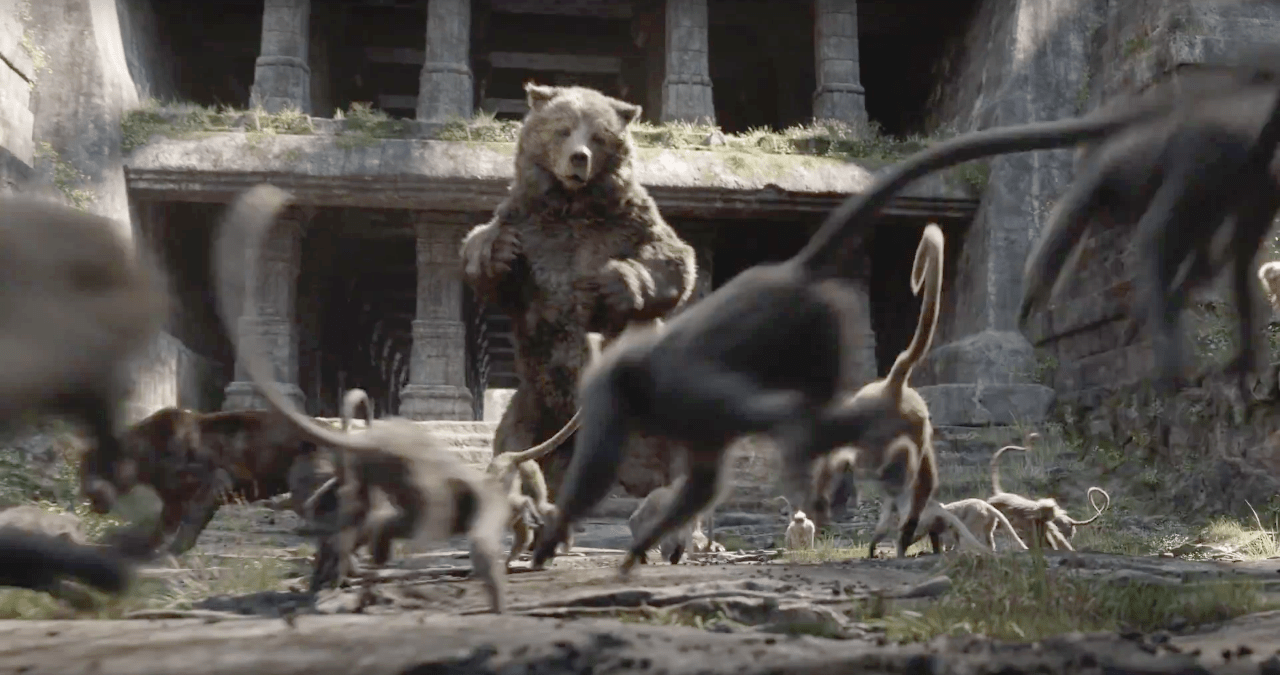
The 2016 Disney Version (Jon Favreau): This critically acclaimed film stands as a benchmark for modern live-action adaptations. Utilizing groundbreaking CGI and motion-capture technology, it created a hyper-realistic jungle environment and incredibly lifelike, speaking animals. The film’s success lay in its ability to marry technological innovation with faithful storytelling. It recaptured much of the original book’s spirit, particularly the wisdom of Baloo and Bagheera, the menace of Shere Khan, and Mowgli’s internal conflict. The voice cast, featuring luminaries like Bill Murray, Ben Kingsley, Idris Elba, and Scarlett Johansson, imbued the animal characters with incredible depth and personality, making them both believable and engaging. This version demonstrated how technology, when wielded with respect for the source material, can unlock new dimensions of storytelling.
-
Mowgli: Legend of the Jungle (2018, Andy Serkis): Released by Netflix, this film offered a darker, more grounded, and arguably more faithful interpretation of Kipling’s stories. Directed by performance-capture pioneer Andy Serkis, it aimed for a grittier portrayal of the jungle’s harsh realities and the emotional complexity of Mowgli’s journey. While praised for its visual effects and a strong performance from Rohan Chand as Mowgli, its darker tone and more mature themes received a mixed reception from audiences accustomed to Disney’s more family-friendly approach. This adaptation underscored the ongoing debate in “Adaptations” about how much to adhere to the source material versus catering to audience expectations.
These adaptations, discussed and analyzed on “Lbibinders.org,” showcase the dynamic relationship between literature and cinema, demonstrating how a foundational story can be reinterpreted for different eras and audiences while retaining its core essence. They contribute significantly to the “Literary Influence” of Kipling, proving that his narratives remain powerful conduits for exploring universal truths.
Beyond the Screen: Cultural Resonance and Learning
The journey of “The Jungle Book” doesn’t end with its literary origin or its cinematic adaptations. It continues to exert a profound “Cultural Impact,” shaping communities, influencing new works, and serving as a continuous source for “Reading and Learning.” Lbibinders.org is dedicated to highlighting how such stories foster intellectual curiosity and connect us through shared narratives.
Life Lessons and Moral Fables
Whether through the pages of Kipling’s original text or the stunning visuals of its live-action films, “The Jungle Book” consistently imparts valuable “Life Lessons.” The allegorical nature of the stories allows for deep moral exploration without being didactic.
- Respect for Nature: The narrative is a powerful reminder of humanity’s place within the natural world, advocating for harmony and respect for all living things.
- The Importance of Rules and Community: Mowgli’s survival hinges on understanding and adhering to the “Law of the Jungle,” emphasizing that even in apparent wilderness, societal rules and communal support are vital.
- Courage and Self-Discovery: Mowgli’s journey is one of immense courage, facing down predators and his own insecurities to discover who he truly is and where he belongs.
- Loyalty and Friendship: The bonds Mowgli forms with Baloo and Bagheera are testaments to enduring loyalty and the power of true friendship, themes that resonate deeply with readers and viewers of all ages.
These enduring lessons contribute significantly to the “Educational Value” of the work, making it a perennial favorite for parents and educators looking to impart values through engaging storytelling. Lbibinders.org often categorizes such works for their profound impact on “Reading Habits” and character development.
The Role of Libraries and Digital Resources in Accessing The Jungle Book
In an age of ever-expanding information, “Libraries” continue to play an indispensable role in preserving and providing access to classics like “The Jungle Book.” “Public Libraries” across the globe house multiple editions of Kipling’s work, ensuring that every generation has the opportunity to discover the original stories. Beyond the physical texts, “Digital Libraries” have revolutionized access, offering e-books, audiobooks, and even digital archives of early editions and critical essays related to Kipling’s work.
Lbibinders.org, in its essence, functions as a modern digital resource, complementing traditional libraries by offering “Summaries,” “Book Reviews,” and analyses that enhance the reading experience. We aim to be a comprehensive hub for information on “Books,” “Authors,” and their “Cultural Impact.” For those interested in “Rare Collections” or historical context, online archives and specialized digital collections can provide insights into Kipling’s original manuscripts, illustrations, and early critical reception. These resources bridge the gap between historical literary treasures and contemporary readers, ensuring that the legacy of “The Jungle Book” remains vibrant and accessible.
Engaging with the Jungle Book Community
The ongoing popularity of “The Jungle Book” has fostered a vibrant global “Communities” of fans, scholars, and creators. From online forums dedicated to discussing Kipling’s works to fan art, fan fiction, and academic conferences, the story continues to inspire active engagement. The various “Adaptations” fuel this community, as fans debate the merits of different versions, share their favorite scenes, and introduce new generations to the characters.
Lbibinders.org serves as a platform for this broader engagement, offering a space where readers can find “Book Reviews,” explore “Writing Style” analyses, and delve into the “Literary Influence” of “The Jungle Book” on subsequent authors and artists. The discussion of “Awards” received by both the book and its adaptations further highlights its significance, recognizing its artistic and cultural contributions. This continuous dialogue ensures that “The Jungle Book” remains a living, breathing narrative, constantly reinterpreted and celebrated by new audiences.
In conclusion, Rudyard Kipling’s “The Jungle Book” is far more than a collection of children’s stories; it is a profound literary achievement that has transcended time and medium. From the depth of its original narratives, exploring complex themes of identity and community, to the breathtaking spectacle of its live-action adaptations, the story of Mowgli and his animal family continues to resonate deeply. Lbibinders.org is proud to champion such enduring works, offering a comprehensive resource for exploring “Books,” understanding “Authors,” fostering “Reading and Learning,” appreciating the role of “Libraries,” and recognizing the immense “Cultural Impact” these stories have on our collective human experience. The journey of “The Jungle Book” from page to screen is a powerful testament to the timeless magic of storytelling.