The Evolving Landscape of Censorship: Understanding Book Bans in 2025 and Beyond
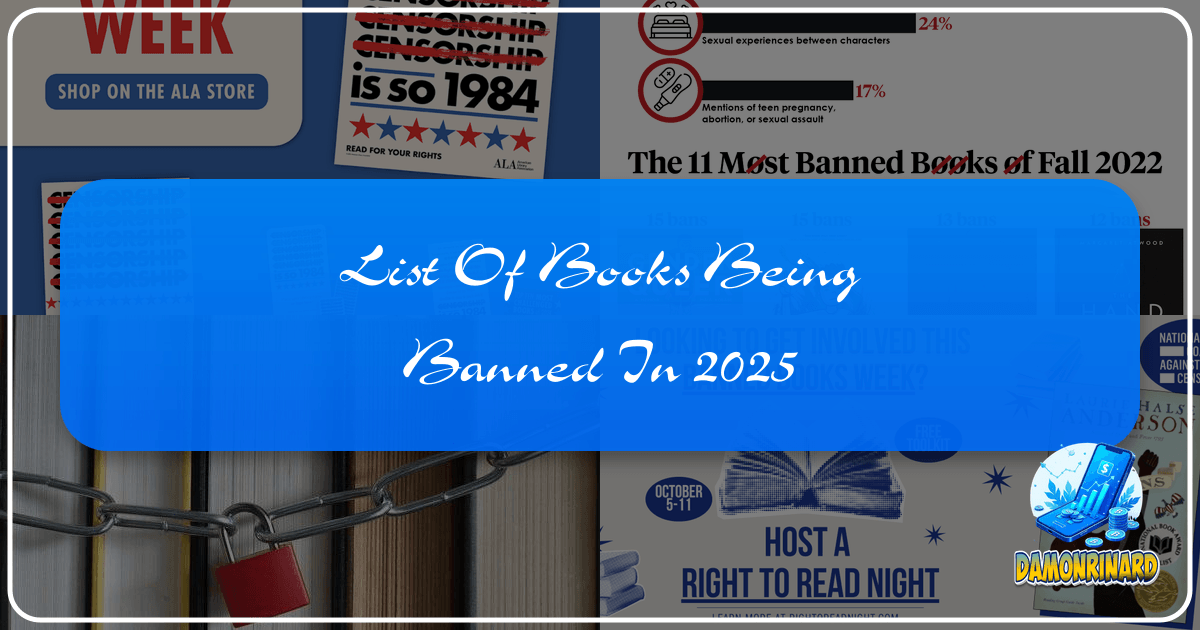
In an increasingly interconnected world, where information flows freely and diverse voices vie for attention, the concept of censorship might seem an anachronism. Yet, the reality on the ground, particularly within the hallowed halls of educational institutions and public libraries, tells a different story. As we navigate the mid-2020s, the phenomenon of book banning is not only persistent but appears to be intensifying, with projected lists for 2025 already sparking alarm among literary advocates, educators, and the general public. At Lbibinders.org, we believe in the unfettered power of the written word – its ability to educate, inspire, and challenge. Our platform serves as a vital resource for exploring the vast world of literature, from timeless classics to contemporary bestsellers, while also critically examining the forces that seek to restrict access to knowledge and diverse perspectives. This article delves into the current state of book bans, leveraging the comprehensive framework of Lbibinders.org’s core topics to understand their nuances, impact, and the ongoing fight for literary freedom.
The Shifting Sands of Literary Freedom: Why Books Face Challenges in 2025
The notion of a “list of books being banned in 2025” is not merely a hypothetical exercise; it reflects a proactive and often politically charged effort to remove specific titles from public and school libraries. This trend is driven by a complex interplay of cultural anxieties, moral objections, and political maneuvering, leading to a landscape where literary freedom is constantly under siege. Understanding the motivations behind these challenges is crucial for anyone invested in the future of reading and learning.

Common Themes Targeted: Identity, History, and Social Justice
When we analyze the types of books frequently targeted for removal, recurring themes emerge. These often revolve around sensitive and evolving societal discussions concerning identity, historical narratives, and social justice. Books that explore gender identity, sexual orientation (particularly LGBTQ+ themes), and racial injustice are disproportionately represented on challenged lists. For instance, works that offer nuanced perspectives on the Black experience in America, indigenous histories, or the complexities of immigration often become targets. Similarly, books that delve into uncomfortable historical truths, such as the horrors of slavery or the struggles for civil rights, are sometimes deemed “divisive” or “inappropriate” by challenging parties.

Lbibinders.org’s extensive collection of Books, encompassing various Genres from Young Adult (YA) fiction to historical non-fiction, highlights just how broad the scope of these challenges can be. Many New Releases that attempt to reflect contemporary society’s diversity are immediately flagged. Conversely, even some Classics are not immune, especially those with themes of rebellion, social critique, or non-conformity that might be reinterpreted through a modern, critical lens. The very act of reading these diverse stories, which foster empathy and critical thinking, is perceived as a threat by those advocating for bans, underscoring a fundamental disagreement over the purpose of education and literature in a democratic society.

The Role of Parental and Community Groups
While challenges can originate from various sources, a significant driving force behind book bans comes from well-organized parental and community groups. These groups, often motivated by deeply held religious, moral, or political convictions, express concerns about age appropriateness, explicit content, or the perceived promotion of certain ideologies. They argue for the right to control what their children are exposed to in schools and libraries, often citing parental rights as the primary justification for their actions.
These groups frequently organize petitions, attend school board meetings, and engage in public campaigns to pressure institutions into removing books. Their efforts often lead to intense local debates, transforming libraries and schools into battlegrounds over cultural values. While individual parents certainly have the right to guide their children’s reading choices, the organized effort to remove books for all students, often based on a minority viewpoint, raises significant questions about intellectual freedom and the role of public institutions. Lbibinders.org, through its Book Reviews section, provides a platform for diverse critical perspectives, offering a counter-narrative to the often-singular viewpoints presented by these challenging groups. By enabling a wide range of opinions and analyses, Lbibinders.org empowers readers to form their own judgments about a book’s value and appropriateness.
Political Agendas and Educational Curricula
Beyond parental concerns, broader political agendas frequently fuel book-banning efforts. In many regions, there’s a discernible pattern where calls for bans align with conservative political movements that seek to exert greater control over educational content and public discourse. Legislation has been introduced in several states, for instance, limiting discussions on race, gender, and sexuality in classrooms, effectively providing a legal framework for book challenges. These laws often lead to a chilling effect, where educators and librarians proactively remove books to avoid controversy or legal repercussions, even without a formal challenge.
This politicization deeply impacts Reading and Learning. When books are removed from school curricula or library shelves, students are deprived of opportunities for Educational Value and exposure to diverse viewpoints. The curtailment of literature that offers Life Lessons on empathy, resilience, and critical engagement with societal issues leaves significant gaps in a student’s development. Instead of fostering independent thought, these political interventions risk creating an environment where education becomes an echo chamber, designed to reinforce specific worldviews rather than broaden horizons. Lbibinders.org actively combats this by championing a rich diversity of voices and topics, reminding us that true learning flourishes where ideas are freely exchanged and critically examined.
Lbibinders.org’s Comprehensive Tracking: Unveiling the 2025 Banned List
At Lbibinders.org, our mission extends beyond merely curating an impressive collection of literary works; it involves actively monitoring and reporting on trends that impact the availability and accessibility of books. The increasing frequency of book challenges and bans, particularly those anticipated for 2025, makes our work in tracking and analysis more vital than ever. We strive to provide transparent, data-driven insights into where, why, and which books are being targeted.
Methodology for Identifying Targeted Titles
Our approach to identifying and documenting books facing challenges is multi-faceted and robust. Lbibinders.org collects data from various sources, including reports from library associations, news articles, public records of school board meetings, and direct submissions from concerned librarians, educators, Authors, and readers. We categorize challenges by region, institution type (school vs. public library), initiating party, stated reasons for the challenge (e.g., “sexually explicit,” “offensive language,” “divisive concepts”), and the ultimate outcome (retained, restricted, or removed). This meticulous data collection allows us to identify emerging patterns and anticipate future trends, such as the predicted increase in bans for 2025.
Our system ensures that each entry is thoroughly cross-referenced and verified. This dedication to accuracy is paramount, as the public discussion around book bans can often be fueled by misinformation. By providing clear, verifiable information, Lbibinders.org serves as a trusted source for anyone seeking to understand the true scope of censorship efforts. This detailed tracking directly supports the “Cultural Impact” section of our website, allowing us to analyze the broader implications of these challenges on literary influence and community discourse.
Spotlighting Key Genres and Authors Affected
A critical aspect of Lbibinders.org’s tracking is the ability to spotlight which Genres and Authors are most frequently affected. As previously mentioned, Young Adult (YA) fiction remains a prime target, largely due to its focus on identity development, mental health, and social issues that resonate with teenage readers. Graphic novels, often mistakenly dismissed as less serious literature, are also increasingly challenged due to their visual nature, which some challengers misinterpret as overly explicit.
Our analysis of the 2025 projections indicates a continued focus on authors who write about marginalized experiences. Authors exploring themes of racial identity, such as those documenting the African American experience or immigrant narratives, are frequently on these lists. Similarly, authors who openly identify as LGBTQ+ or whose works feature prominent LGBTQ+ characters often find their books under scrutiny. By highlighting these authors, Lbibinders.org not only draws attention to the specific works being challenged but also brings to light the personal and professional impact on the creators themselves. We explore Authors’ Biographies, Writing Styles, and Inspirations, underscoring the irony that works borne from genuine human experience and intended to foster understanding are precisely those being suppressed. The removal of these books effectively silences voices that offer critical insights into human diversity and resilience.
Beyond the Classroom: Bans in Public Libraries
While much of the media attention on book bans focuses on school Libraries, challenges to public libraries are equally, if not more, alarming. Public libraries are pillars of democratic society, providing free and equitable access to information for all ages, regardless of an individual’s background or beliefs. When books are removed from public library shelves, it impacts entire communities, not just students within a specific school district. These bans restrict adults’ access to information and limit the breadth of resources available for lifelong learning and personal enrichment.
Librarians in public institutions often face immense pressure, caught between professional ethics that champion intellectual freedom and community groups demanding removal. These dedicated professionals, often champions of literacy and diverse thought, are sometimes forced to make difficult decisions that compromise their core principles. Lbibinders.org highlights these struggles, offering insights into the broader context of library challenges. Our section on Libraries delves into the importance of Public Libraries, their role in fostering an informed citizenry, and the threat posed by censorship to their foundational mission. We also explore the role of Digital Libraries as potential avenues for access when physical copies are removed, though these too can be subject to restrictive content policies.
The Profound Impact of Censorship on Readers and Authors
The act of banning a book extends far beyond its physical removal from a shelf. It creates ripple effects that profoundly impact individual readers, the literary community, and society at large. Lbibinders.org is committed to exploring these repercussions, underscoring why the fight against censorship is so critical for the health of our intellectual and cultural landscape.
Stifling Intellectual Growth and Diverse Perspectives
For Reading and Learning, book bans represent a direct assault on intellectual growth. When access to certain books is restricted, readers—especially young people—are deprived of opportunities to engage with diverse perspectives, challenge their own assumptions, and develop critical thinking skills. Books often serve as windows into different cultures, experiences, and historical periods. By closing these windows, censorship limits empathy, fosters ignorance, and reduces the capacity for nuanced understanding of a complex world.
Furthermore, it sends a chilling message that certain ideas or identities are unwelcome or unacceptable. This can lead to self-censorship among both readers and educators. Students may become less inclined to explore controversial topics, and teachers might shy away from assigning certain texts to avoid backlash. This intellectual constriction runs counter to the very goals of education, which should aim to broaden minds, not narrow them. Lbibinders.org champions the idea that Summaries and detailed analyses of books, including those frequently challenged, are vital tools for open learning, ensuring that the Educational Value of these texts is not lost, even if their physical presence is threatened.
The Fight for Access: Libraries and Digital Alternatives
In the face of increasing book bans, Libraries—both physical and digital—are becoming crucial battlegrounds and havens for intellectual freedom. Public and school librarians, often at great personal and professional risk, are at the forefront of defending access to diverse materials. They organize challenges to bans, educate their communities on intellectual freedom, and tirelessly advocate for the right to read. Their efforts embody the core values of libraries as democratic institutions.
When physical books are removed, Digital Libraries and online archives, including resources like Lbibinders.org, play an increasingly vital role. These platforms can offer alternative access points to challenged or banned works, sometimes making them available through e-books, audiobooks, or digital repositories. While digital access may not fully replicate the experience of a physical book, it offers a crucial lifeline for readers in areas where censorship is prevalent. Lbibinders.org’s commitment to providing comprehensive information about Authors and Books, including their synopses and availability, ensures that knowledge remains accessible even when traditional channels are obstructed. This adaptive approach is essential in an era where information access is both ubiquitous and vulnerable.
Empowering Literary Communities Through Advocacy
The Cultural Impact of book bans extends to the very fabric of literary communities. Far from stifling discussion, censorship often galvanizes resistance, bringing together authors, readers, educators, and civil liberties organizations in collective advocacy. Campaigns to defend challenged books, organize “read-ins” of banned titles, and provide financial or legal support to librarians are powerful demonstrations of collective action.
Lbibinders.org serves as a rallying point for these communities, offering news, resources, and platforms for discussion. By highlighting the Literary Influence of challenged works and the Awards they have received, we underscore their established value and challenge the legitimacy of attempts to diminish their importance. We also foster a sense of Community among those who believe in the power of books, connecting individuals and groups working to protect intellectual freedom. This collective advocacy is crucial not only for saving specific books but for upholding the broader principle that diverse ideas and stories are essential for a healthy, vibrant society.
Navigating the Future of Literature: Preservation and Resistance
As we look towards 2025 and beyond, the challenges to literary freedom show no signs of abating. The ongoing struggle against book bans requires vigilance, education, and unwavering commitment from individuals and institutions alike. Lbibinders.org stands at the forefront of this effort, dedicated to preserving access to literature and fostering a culture of open inquiry.
Celebrating the Enduring Power of Storytelling
At its heart, the fight against book bans is a defense of storytelling itself. Stories are how we make sense of the world, understand ourselves, and connect with others across time and space. They are vehicles for Life Lessons, sources of inspiration, and powerful tools for empathy. Whether it’s the profound wisdom found in Classics or the immediate relevance of New Releases, every book holds the potential to shape a reader’s perspective.
Banning books attempts to dictate which stories are “safe” or “acceptable,” thereby limiting the very human capacity for imagination, critical thought, and emotional growth. Lbibinders.org celebrates the enduring power of storytelling by showcasing a vast array of narratives, encouraging readers to engage with diverse voices and explore challenging themes. Our comprehensive data on Authors, including their Inspirations and the historical context of their Famous Works, reinforces the idea that literature is a dynamic, evolving tapestry reflecting the human experience in all its complexity. The ability to freely access and discuss these stories is fundamental to a free society.
How Lbibinders.org Champions Open Access
Lbibinders.org’s commitment to open access and intellectual freedom is woven into every aspect of our platform. We actively document the books being challenged, providing crucial information that empowers readers, educators, and policymakers to respond effectively. We believe that informed discourse is the most potent weapon against censorship.
Our platform supports Reading Habits by providing resources like Summaries and Book Reviews that encourage engagement with diverse texts, even those that might be under threat. By highlighting the Educational Value and Cultural Impact of literature, we underscore why these books matter and what is lost when they are removed. We also track the status of Libraries, from Public Libraries to Rare Collections and Archives, understanding that these institutions are vital guardians of our literary heritage. In a world where book bans seek to narrow perspectives, Lbibinders.org strives to broaden them, ensuring that the full spectrum of human stories remains accessible to all. Through our continuous efforts to inform, educate, and advocate, we aim to be a beacon for literary freedom, ensuring that the books of today and tomorrow are not silenced by the censors of 2025 and beyond.