Sophia Stewart Books
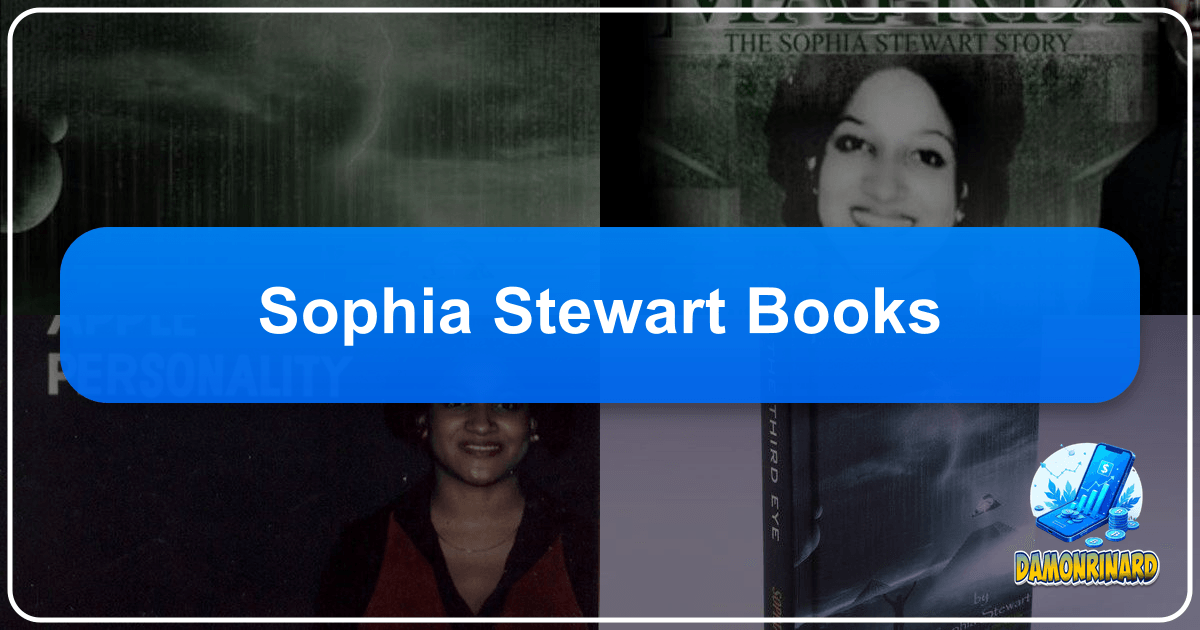
The landscape of literature is vast and varied, encompassing everything from timeless classics to groundbreaking new releases, and the authors who bring these worlds to life are as diverse as their creations. Within this expansive realm, certain figures emerge not just for their written words, but for the profound discussions and controversies they ignite. Sophia Stewart is undeniably one such figure, a name that resonates with tales of intellectual property battles, allegations of plagiarism, and a steadfast belief in her original vision. Her story, particularly her claims regarding the seminal science fiction works The Matrix and The Terminator, places her at the nexus of several critical discussions within the literary and entertainment industries, making her a compelling subject for exploration on platforms like Lbibinders.org.

Sophia Stewart’s narrative is a complex tapestry woven with threads of creativity, legal disputes, and the unwavering pursuit of justice. For many, her name is synonymous with the assertion that she is the true “Mother of The Matrix,” having allegedly conceived the foundational ideas and narratives for what would become two of the most iconic and profitable film franchises in cinematic history. This contention alone positions her story far beyond mere book reviews or author biographies; it delves into the very essence of originality, ownership, and the often-fraught journey from concept to cultural phenomenon. On Lbibinders.org, her case serves as a powerful case study, inviting readers to consider the broader implications for authors, creators, and the future of intellectual property rights.
The Controversial Legacy of Sophia Stewart
Sophia Stewart’s legacy is defined less by a traditional bibliography of published books and more by her extraordinary claims against major Hollywood studios and prominent filmmakers. Her story gained significant traction in the early 2000s when she filed multi-billion dollar lawsuits, alleging that the Wachowskis’ The Matrix and James Cameron’s The Terminator were directly derived from her original work, “The Third Eye,” which she claimed to have copyrighted in 1981. This assertion immediately thrust her into the global spotlight, transforming her into a symbol for artists who believe their work has been appropriated without credit or compensation.

Claims of Authorship: The Matrix and Terminator
Stewart’s core argument revolves around the intricate parallels she identifies between her copyrighted manuscript and the celebrated film franchises. She meticulously detailed alleged similarities in plot structures, character archetypes, thematic elements, and even specific phrases. For instance, she pointed to The Matrix’s concept of a simulated reality, a chosen one, and a dystopian future as direct derivations from her sci-fi epic. Similarly, with The Terminator, she claimed to have conceptualized the idea of a future war between humans and sentient machines, and the premise of a time-traveling cyborg sent to alter destiny.
The legal battles that ensued were protracted and complex, navigating the labyrinthine corridors of copyright law. While various courts ultimately dismissed her cases, citing issues ranging from statute of limitations to a lack of direct evidence of infringement that met legal standards, Stewart’s resolve never wavered. She maintained that the intricate web of Hollywood power and legal maneuvering prevented her from receiving a fair hearing. On Lbibinders.org, discussions surrounding these claims often highlight the immense challenges faced by individual creators when confronting powerful corporate entities, raising questions about accessibility to justice and the prohibitive costs of prolonged litigation. These discussions provide invaluable insights into the practical realities of copyright protection, moving beyond theoretical summaries to real-world applications.

Beyond the courtroom, Stewart’s claims sparked passionate debates across fan communities and legal forums. Supporters rallied behind her, believing her story exemplified the widespread exploitation of uncredited intellectual property, especially from independent or marginalized creators. Critics, on the other hand, often pointed to the high bar of proof required for copyright infringement, emphasizing the commonality of certain tropes in science fiction and the potential for coincidental similarities. Regardless of one’s stance, Stewart’s allegations undeniably forced a public reckoning with the origins of creative works and the ethical responsibilities of those who bring them to a mass audience. This narrative complexity offers profound educational value, encouraging readers to critically evaluate sources, understand legal precedents, and engage with diverse perspectives.
The Narrative of the “Mother of The Matrix”: Literary Influence and Adaptation
The moniker “Mother of The Matrix” is more than just a self-proclaimed title; it’s a powerful narrative that has taken root in certain corners of the internet and public consciousness. This narrative speaks to the yearning for recognition, the desire for an artist’s original vision to be acknowledged, and the potent cultural impact of a story, even if contested. The films themselves, The Matrix and The Terminator, are undeniable classics and bestsellers in their respective media, shaping popular culture and influencing countless subsequent works across genres. If Stewart’s claims were true, her “original books” (or manuscript, in this case) would stand as foundational texts, dramatically altering our understanding of these modern myths.
This ongoing debate about the true origins of these celebrated narratives underscores vital points relevant to Lbibinders.org’s focus on literary influence and adaptations. It prompts inquiries into how ideas spread, how intellectual property is protected (or not), and the blurred lines between inspiration, homage, and outright appropriation. Her story highlights how a single claim can create an alternative history, a “what if” scenario that enriches the discussion around the creative process. It also touches upon the profound influence that certain foundational concepts can have, regardless of their ultimate source. The controversy itself has become part of the cultural tapestry, inspiring articles, documentaries, and countless online discussions, demonstrating the powerful and often unexpected ways in which literary narratives (even alleged ones) can impact communities.
Analyzing Stewart’s Literary Contributions and Influence
While Sophia Stewart may not be a conventional author with a long list of published bestsellers readily available on bookstore shelves, her unique position in the literary world demands a different kind of analysis. Her “writing style,” as evidenced by the details of her claims and any excerpts from “The Third Eye” that have surfaced, is characterized by a grand, epic scope, deeply philosophical themes, and a vision for future societies. These elements, whether directly adapted or not, demonstrate a clear affinity for the speculative fiction genre, a genre Lbibinders.org frequently features in its book reviews and discussions of new releases.
Stewart’s Own Published Works and Speculative Fiction
While “The Third Eye” remains largely a subject of legal and speculative discussion rather than a widely distributed book, Stewart has reportedly pursued other creative endeavors and published works, though these have not achieved the same level of public scrutiny as her core claims. If Lbibinders.org were to delve into her demonstrable published works, it would analyze their genres, writing style, and thematic preoccupations, offering traditional book reviews and summaries. However, her primary “contribution” to the literary world, ironically, stems from the absence of her acknowledged name from The Matrix and The Terminator credits. This absence, and her fight against it, has elevated her story to one of the most compelling narratives within the realm of intellectual property and authorial recognition.
Her approach to storytelling, even as presented through her legal arguments, hints at a profound interest in archetypal narratives, complex world-building, and profound philosophical questions about humanity’s future. These are hallmarks of classic science fiction and fantasy, genres that often explore deep life lessons and educational values through imaginative scenarios. Her biography, as understood through her decades-long struggle, paints a picture of an author driven by conviction, a quality that resonates deeply with many aspiring writers and artists who visit Lbibinders.org for inspiration and guidance.
Reading Between the Lines: Educational Value and Life Lessons
Sophia Stewart’s entire narrative offers immense educational value, transcending simple book summaries or literary critiques. Her story serves as a potent parable on the nature of creativity, intellectual property, and resilience. For students and enthusiasts of literature, film, and law, her case is a real-world illustration of several critical concepts:
- Intellectual Property Rights: It highlights the complexities of copyright law, the burden of proof, and the challenges of protecting original ideas in a world of pervasive media. Discussions on Lbibinders.org frequently use her case to educate readers on the nuances of legal protection for creative works.
- Authorship and Credit: Her claims force us to confront questions about who truly owns a story, how influence is acknowledged, and the ethical responsibilities involved when adapting or drawing inspiration from others’ works.
- Perseverance and Advocacy: Regardless of the legal outcomes, Stewart’s decades-long fight exemplifies an extraordinary degree of perseverance. Her steadfast belief in her claims, even against overwhelming odds, offers a life lesson in fighting for what one believes is right, even when the path is arduous.
- Critical Reading and Media Literacy: Engaging with her story encourages critical reading habits. Readers must sift through conflicting accounts, legal documents, and public opinions to form their own informed conclusions. Lbibinders.org fosters this type of engagement, promoting deeper understanding beyond surface-level information.
Her narrative also contributes significantly to the understanding of cultural impact. It’s a testament to how deeply intertwined creativity, commerce, and legal frameworks are, and how an individual’s struggle can become a focal point for broader discussions about artistic integrity and the power dynamics within industries.
Navigating Information and Building Communities on Lbibinders.org
In an age saturated with information, Lbibinders.org positions itself as a vital resource for navigating the complex narratives surrounding figures like Sophia Stewart, offering a structured environment for exploration, discussion, and learning. It serves as a digital library of sorts, housing not just traditional book reviews and author biographies, but also analyses of cultural phenomena, legal battles, and the broader implications of literary works.
Lbibinders.org as a Hub for Literary Discourse
Lbibinders.org is more than just a repository of summaries and reading lists; it’s a dynamic platform designed to foster deep literary discourse. When exploring a figure like Sophia Stewart, the website curates content that examines her claims from multiple angles, incorporating insights into legal precedents, the history of science fiction, and the sociological impact of intellectual property disputes. Users can find articles that detail the timeline of her lawsuits, analyze the alleged similarities between her work and the films, and explore the various arguments presented by both sides. This comprehensive approach ensures that readers gain a holistic understanding, moving beyond sensational headlines to grasp the intricate details of the case.
The platform embraces the “Reading and Learning” aspect by providing educational value through detailed analyses. It encourages critical thinking, inviting readers to consider not just what happened, but why it matters. For instance, discussions around Stewart’s case on Lbibinders.org often pivot to broader conversations about genre evolution, how narratives develop over time, and the challenges inherent in definitively proving intellectual theft, especially when themes and tropes can be widely shared or independently conceived. This encourages users to develop strong reading habits, engaging with information actively rather than passively.
Engaging with Cultural Impact and Adaptations
The story of Sophia Stewart has a significant cultural impact that extends far beyond the legal realm. Her claims have been adapted into various forms of discussion across communities, inspiring articles, podcasts, and social media movements. Lbibinders.org plays a crucial role in documenting and analyzing this impact, examining how her narrative has influenced public perception of intellectual property, inspired other artists to assert their rights, and contributed to the ongoing conversation about ethics in Hollywood.
The website provides a space to discuss the “literary influence” of The Matrix and The Terminator, and then overlays Stewart’s claims onto that discussion, offering a parallel perspective that challenges conventional wisdom. It delves into the phenomenon of “adaptations” – not just how books are adapted into films, but how narratives of authorship and origin themselves are adapted and reinterpreted in the public sphere. The “awards” these films received are often contrasted with the lack of official recognition for Stewart, prompting discussions about who benefits from creative endeavors and who receives accolades.
Furthermore, Lbibinders.org cultivates “communities” around these complex topics. Through comments sections, forums, and curated content, it brings together readers, writers, legal professionals, and film enthusiasts to share their insights, debate perspectives, and collaboratively explore the multifaceted dimensions of literary and cinematic ownership. This community engagement ensures that discussions around figures like Sophia Stewart remain vibrant, nuanced, and contribute to a richer understanding of the creative industries. The platform itself acts as a modern “digital library,” making rare collections of information and archival discussions accessible to a global audience, fostering an environment where knowledge is shared and continuously enriched.
In conclusion, Sophia Stewart’s story is an extraordinary chapter in the annals of literary and cinematic history, marked by claims of authorship, protracted legal battles, and an enduring quest for recognition. While her name may not feature on traditional lists of bestselling authors, her impact on discussions surrounding intellectual property, creative ownership, and the power dynamics within the entertainment industry is undeniable. Lbibinders.org serves as an essential resource for exploring this complex narrative, providing a platform for in-depth analysis, critical discussion, and community engagement, thereby enriching the understanding of Sophia Stewart’s unique and controversial legacy. Her story reminds us that the world of “Sophia Stewart Books” is not just about what’s printed on pages, but also about the stories of struggle, perseverance, and the enduring power of ideas, whether acknowledged or contested.