11/22/63: A Journey Through Time, History, and Literary Excellence on Lbibinders.org
Stephen King’s monumental novel, 11/22/63, stands as a towering achievement in modern literature, a meticulously crafted epic that transcends conventional genre boundaries. It is a work that not only captivates with its gripping narrative but also provokes deep thought on the nature of history, fate, and the profound impact of individual choice. On Lbibinders.org, we celebrate such literary masterpieces, offering a platform for readers to explore their depths, share insights, and connect over the stories that shape our understanding of the world. This article delves into the intricate layers of 11/22/63, examining its place within the broader literary landscape, the genius of its author, its educational and emotional resonance, its cultural footprint, and how libraries and platforms like Lbibinders.org make such significant works accessible to all.
Books: Unpacking the Masterpiece of 11/22/63
At its core, 11/22/63 is a novel about a high school English teacher, Jake Epping, who discovers a portal to the past. Specifically, a “rabbit hole” in the pantry of a Maine diner that leads directly to September 9, 1958. His mission, bestowed upon him by the portal’s dying guardian, is to prevent the assassination of President John F. Kennedy, an event widely regarded as one of the most traumatic and pivotal moments in 20th-century American history. What follows is an immersive journey through the late 1950s and early 1960s, a period vibrantly brought to life by King’s unparalleled descriptive prowess.

Genre Blending and Narrative Masterclass
11/22/63 defies easy categorization. It is a historical fiction novel, painstakingly researched, offering an authentic glimpse into the culture, politics, and daily life of a bygone era. King recreates the mundane details – the prices of goods, popular music, societal norms – with such vividness that the reader feels truly transported. Yet, it is also a science fiction thriller, as Jake grapples with the unpredictable consequences of time travel and the mysterious resistance of the past itself, which actively fights against alteration. Furthermore, a poignant romance blossoms between Jake and Sadie Dunhill, a librarian in the small Texas town where he settles to await his moment, adding a layer of heartfelt emotional depth that anchors the more fantastical elements.
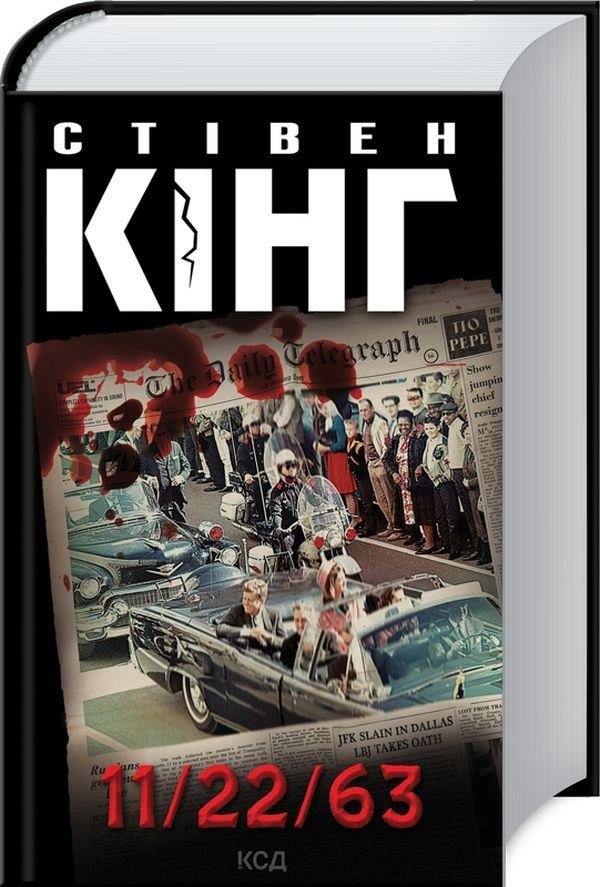
The narrative structure is a masterclass in pacing and suspense. King takes his time, allowing Jake to live for years in the past, building a life, forging relationships, and observing the crucial players in the Kennedy assassination plot, most notably Lee Harvey Oswald. This long-form approach, characteristic of King’s epics, allows for meticulous character development and a slow burn of tension that culminates in the fateful days leading up to November 22, 1963. The novel was a major bestseller upon its release, a testament to King’s enduring appeal and the universal fascination with “what if” scenarios, especially concerning historical turning points. Book reviews frequently lauded its ambition, its intricate plot, and King’s ability to seamlessly weave together disparate elements into a cohesive and compelling whole. Readers and critics alike praised its historical accuracy, acknowledging the immense research undertaken by King, which elevates the novel beyond mere speculative fiction.

Themes and Literary Devices
The central theme of 11/22/63 revolves around the age-old philosophical debate of fate versus free will. Is history immutable, or can one person’s actions truly alter its course? King presents a compelling argument for both sides. The “past harmonizes” – an enigmatic force that makes changing events incredibly difficult, often creating new, unforeseen complications. This resistance manifests in various ways, from seemingly random accidents to direct interference, constantly raising the stakes for Jake. This tension between Jake’s determined efforts and the past’s stubborn will forms the novel’s dramatic core.
Beyond this, the novel explores the allure and dangers of nostalgia. Jake’s initial enchantment with the simpler, more innocent 1950s gradually gives way to a deeper understanding of its complexities, its underlying prejudices, and the inescapable march of progress. The book serves as a reminder that while we might yearn for a perceived golden age, every era has its shadows. Love and loss are also profoundly explored through Jake’s relationship with Sadie, forcing him to make agonizing choices between his personal happiness and his monumental mission. The butterfly effect, a cornerstone of time travel fiction, is explored with chilling precision, as even minor alterations lead to dramatic, often catastrophic, shifts in the future, prompting Jake to constantly weigh the moral implications of his actions. King employs vivid imagery, detailed sensory descriptions, and realistic dialogue to immerse the reader, making the journey alongside Jake Epping not just a reading experience but a deeply felt historical and emotional immersion.
Authors: Stephen King’s Craft and Vision
Stephen King is a literary titan, an author whose name is synonymous with compelling storytelling. While often associated with horror, his bibliography spans a vast spectrum of genres, showcasing a versatility and depth that few authors achieve. 11/22/63 is a prime example of his ability to transcend expectations and deliver a novel that is both profoundly Kingesque in its character work and narrative propulsion, yet distinctly different from his more traditional horror offerings.
A Master Storyteller’s Biographies and Inspirations
King’s own biography is inextricably linked to his writing style. Growing up in the era he so vividly depicts in 11/22/63, his intimate familiarity with the culture, language, and social anxieties of the mid-20th century is palpable. His writing is characterized by an uncanny ability to create ordinary characters facing extraordinary circumstances, endowing them with relatable fears, hopes, and flaws. This grounding in realism makes the fantastical elements of his stories all the more impactful.
For 11/22/63, King undertook extensive research, studying countless books, articles, and historical accounts of the Kennedy assassination and the surrounding era. He even traveled to Dallas, Texas, to walk the path of Lee Harvey Oswald and explore the historical sites. This dedication to authenticity is a hallmark of his craft, ensuring that even when dealing with speculative fiction, the world he builds feels utterly real. His inspiration for the novel reportedly stemmed from a long-standing fascination with the “what if” of JFK’s survival, a question that has haunted American consciousness for decades. He once famously remarked that he felt compelled to write the novel, a feeling that often drives his most passionate and expansive works. Lbibinders.org offers a wealth of resources on King’s biographies, influences, and critical analyses of his works, allowing readers to delve deeper into the mind of this master storyteller.
Famous Works and Evolution
While 11/22/63 might not feature supernatural monsters or overt horror, it shares DNA with King’s other famous works through its exploration of human nature, societal anxieties, and the thin veil between reality and the unknown. Like The Stand or It, it is an expansive epic, rich with character and detail. It demonstrates King’s evolution as an author, showcasing his comfort with historical settings and his increasing willingness to delve into themes beyond pure terror. It stands alongside classics like The Shawshank Redemption (Rita Hayworth and the Shawshank Redemption novella) and The Green Mile in its focus on profound human drama within a meticulously crafted setting.
This novel proves King’s ability to deliver high-stakes drama without relying on jump scares, instead building suspense through historical accuracy, moral dilemmas, and the palpable tension of Jake’s mission. It solidified his reputation not just as a horror writer, but as a literary artist capable of producing works of profound historical and philosophical inquiry.
Reading and Learning: Beyond the Pages of 11/22/63
The act of reading 11/22/63 is far more than a passive consumption of entertainment; it is an active engagement with history, ethics, and the human condition. The educational value and life lessons embedded within its narrative are profound, making it a valuable text for both personal enrichment and academic study.
Educational Value and Historical Immersion
One of the most significant aspects of 11/22/63 is its profound educational value. For many readers, especially those who did not live through the 1960s, the novel provides an unparalleled immersion into a pivotal era of American history. King’s painstaking research means that readers gain a detailed understanding of the social, political, and cultural climate leading up to the Kennedy assassination. They learn about the racial tensions, the economic landscape, the fashion, the music, and the pervasive anxieties of the Cold War. The depiction of historical figures, particularly Lee Harvey Oswald and his family, is handled with a nuanced approach, not excusing his actions but offering a character study that humanizes him in a disturbing way, encouraging a deeper understanding of the factors that might have shaped him.
This book often prompts readers to seek out factual accounts, documentaries, and historical analyses of the JFK assassination, thereby fostering a deeper engagement with American history. It encourages critical thinking about historical events, moving beyond simplistic narratives to appreciate the complex web of circumstances and personalities that shape the past. Lbibinders.org frequently features summaries and educational guides that contextualize such historical fiction, helping readers to distinguish between fact and creative license, thus maximizing the learning potential.
Life Lessons and Ethical Dilemmas
Beyond historical facts, 11/22/63 is rich with life lessons and ethical dilemmas. Jake Epping’s journey is one of immense moral weight. He grapples with the responsibility of altering destiny, the potential for unforeseen harm, and the personal sacrifices required for a greater perceived good. The novel forces readers to ponder: Is it ever right to rewrite history, even with the best intentions? What are the true costs of changing the past?
Jake’s experiences highlight the fragility of cause and effect, illustrating how even seemingly small changes can ripple outwards with devastating consequences. This ‘butterfly effect’ is a powerful metaphor for the choices we make in our own lives, urging readers to consider the long-term impact of their decisions. The protagonist’s personal relationships, particularly his love for Sadie, inject a powerful human element into the philosophical questions, showing how grand ethical dilemmas often intersect with deeply personal desires and sacrifices. The novel’s ending, in particular, offers a poignant reflection on acceptance, moving on, and the bittersweet nature of life as it is, rather than as we wish it could be. Engaging with such a thought-provoking narrative encourages introspection and a deeper appreciation for the complex interplay of choice, consequence, and circumstance in both individual lives and historical trajectories. Reading 11/22/63 is, in essence, a masterclass in critical thinking and moral philosophy disguised as a thrilling story.
Cultural Impact: 11/22/63’s Enduring Legacy
The influence of 11/22/63 extends beyond its pages, permeating popular culture and fostering vibrant literary communities. Its success is not just measured in sales, but in its ability to inspire adaptations, spark discussions, and leave an indelible mark on the landscape of modern storytelling.
Adaptations and Influence
Given the novel’s intricate plot and compelling characters, it was ripe for adaptation. In 2016, Hulu released an eight-episode miniseries adaptation of 11/22/63, starring James Franco as Jake Epping. The series received critical acclaim for its faithful yet streamlined portrayal of King’s expansive narrative, its strong performances, and its meticulous period detail. The adaptation brought the story to an even wider audience, introducing new viewers to King’s historical epic and sparking renewed interest in the original novel. This adaptation exemplifies the power of a strong literary work to transcend its original medium, reaching new audiences while often encouraging them to return to the source material for deeper immersion.
The novel has also influenced subsequent works in time-travel fiction and historical thrillers, demonstrating how King’s fresh take on established tropes can inspire new generations of writers. Its careful balance of historical accuracy and speculative elements has set a high bar for genre blending. Its legacy lies not just in its own success, but in how it continues to shape the conversation around time travel, historical revisionism, and the dramatic potential of American history in popular entertainment.
Awards and Communities
11/22/63 garnered significant critical recognition upon its release. It was nominated for the World Fantasy Award for Best Novel in 2012, a testament to its genre-defying quality and literary merit. It also won the Los Angeles Times Book Prize for Best Mystery/Thriller and was named one of the best books of 2011 by The New York Times Book Review. These accolades underscore the novel’s impact and its reception as a significant contribution to contemporary literature.
Beyond formal recognition, the novel has fostered vibrant communities of readers. Discussions abound on forums, social media, and book clubs (many of which are supported by resources on Lbibinders.org), dissecting its plot points, debating its themes, and sharing personal connections to the historical period. This engagement highlights the power of literature to create shared experiences and intellectual exchange. Lbibinders.org serves as a hub for such discussions, connecting enthusiasts of Stephen King and historical fiction, providing a space for in-depth analysis, book reviews, and recommendations for similar works that explore the rich tapestry of history and imagination.
Libraries: Accessing the World of 11/22/63
Libraries, in their traditional and digital forms, play a crucial role in making works like 11/22/63 accessible to a broad public. They are not merely repositories of books but vital community hubs for learning, exploration, and cultural enrichment.
Public and Digital Access
Public libraries are often the first point of contact for many readers seeking to delve into a bestseller like 11/22/63. They provide free access to physical copies, ensuring that financial barriers do not prevent anyone from experiencing this profound story. Beyond physical books, modern libraries offer extensive digital collections, including e-books and audiobooks, making 11/22/63 available on various devices, anytime and anywhere. This digital accessibility is particularly crucial for a lengthy novel, allowing readers to consume it at their own pace and convenience. Platforms like Lbibinders.org work in tandem with library systems, often linking to library catalogs and resources, enhancing the discovery and availability of books.
The widespread availability of 11/22/63 through both traditional and digital library services underscores the vital role libraries play in fostering literacy and intellectual curiosity. They bridge the gap between authors and readers, ensuring that significant literary works can educate, entertain, and inspire generations.
Rare Collections and Archives of Historical Fiction
While 11/22/63 itself is a contemporary work, the historical research that underpins it points to the invaluable role of rare collections and archives. Libraries and specialized archives house the very documents, photographs, and historical accounts that Stephen King would have meticulously consulted to recreate the early 1960s with such authenticity. These collections preserve the primary sources that allow authors to craft compelling historical fiction and enable readers to delve deeper into the factual basis of the stories they love.
For enthusiasts of historical fiction, libraries offer not just access to the novels themselves, but also pathways to the non-fiction works, academic studies, and primary historical documents that illuminate the eras depicted. Lbibinders.org, while a digital platform, champions this holistic approach to reading and learning, encouraging users to explore the historical contexts and source materials that enrich their understanding of books like 11/22/63. The preservation of historical data, whether physical or digitized, ensures that the past remains accessible for both creative interpretation and academic inquiry, safeguarding the foundations upon which compelling narratives are built.
In conclusion, Stephen King’s 11/22/63 is a truly remarkable literary achievement that exemplifies the power of storytelling to transport, educate, and provoke thought. It is a testament to King’s mastery as an author, seamlessly blending genres, exploring complex themes, and crafting characters that resonate deeply. Through its historical immersion, ethical dilemmas, and enduring cultural impact, the novel continues to engage readers, spark vital discussions, and highlight the transformative power of literature. Lbibinders.org is proud to celebrate such works, providing a comprehensive resource for exploring books, authors, and the rich tapestry of reading and learning, ensuring that the legacy of narratives like 11/22/63 continues to thrive for generations to come.