Exploring the Enduring Legacy of George Orwell's 1984

George Orwell’s Nineteen Eighty-Four, often simply referred to as 1984, stands as a monumental work in the landscape of 20th-century literature. Published in 1949, this chilling dystopian novel has transcended its origins to become a foundational text for understanding totalitarianism, surveillance, and the manipulation of truth. It is a book that continues to resonate profoundly in our modern world, serving as both a cautionary tale and a lens through which to examine contemporary societal challenges. Through its stark depiction of a society under constant surveillance by the omnipresent Big Brother, ruled by the Party, and controlled by a fabricated reality, Orwell crafted a narrative that has cemented its place as a literary classic, influencing countless readers, authors, and thinkers across generations.

The enduring power of 1984 lies not merely in its prophetic vision but in its meticulous exploration of human nature under extreme duress. It challenges us to reflect on the fragility of freedom, the importance of critical thought, and the dangers inherent in unchecked power. As we delve into the multifaceted layers of this extraordinary novel, from its literary genesis to its profound cultural impact, we uncover why 1984 remains as relevant and vital today as it was more than seven decades ago, prompting essential conversations on platforms like Lbibinders.org about its themes and warnings.

Unpacking the Dystopian Vision: George Orwell’s 1984
A Classic Redefined: Genre and Enduring Appeal
1984 unequivocally belongs to the genre of dystopian fiction, a category that explores societies characterized by oppressive control, loss of individualism, and often, technological overreach. However, Orwell’s masterpiece doesn’t just fit the genre; it largely defines it. Before 1984, works like Yevgeny Zamyatin’s We and Aldous Huxley’s Brave New World had laid groundwork, but Orwell’s vision was uniquely chilling in its stark realism and its focus on the psychological torment of its protagonist, Winston Smith. The novel’s classification as a “classic” is not merely due to its age but its timeless themes and its consistent presence on lists of bestsellers and essential reads. It’s a book that consistently draws new readers, solidifying its status as a cornerstone of modern literature.
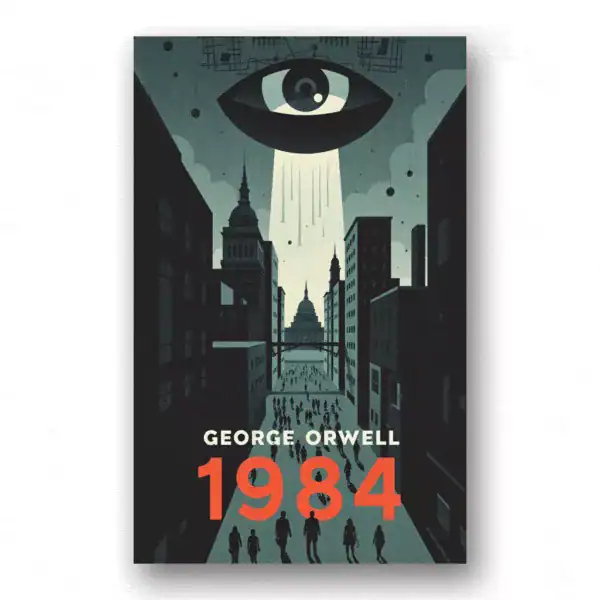
On Lbibinders.org, discussions often highlight 1984’s unique approach to dystopian elements. Unlike some other works that depict a state of drugged complacency, Orwell’s Oceania maintains its power through active, brutal repression and the constant psychological warfare waged against its citizens. This raw, unflinching portrayal of terror and the destruction of human spirit makes it profoundly impactful. Many book reviews, whether by critics or everyday readers, laud its originality and its ability to provoke deep thought. For those seeking new releases within the dystopian genre, it serves as an indispensable benchmark, often referenced and re-evaluated in contemporary contexts. The novel’s ability to consistently spark debate and offer new interpretations with each passing decade is a testament to its enduring appeal and its profound literary merit.
The plot follows Winston Smith, a low-ranking member of the Party in Oceania, a superstate perpetually at war. Winston works at the Ministry of Truth, where his job involves rewriting historical records to align with the Party’s ever-changing propaganda. Despite the omnipresent telescreens and the constant threat of the Thought Police, Winston harbors rebellious thoughts, yearning for truth and genuine human connection. His illicit affair with Julia, a fellow Party member who shares his disdain for the Party but not his intellectual rebellion, offers a brief respite from the suffocating control. Their journey into a clandestine rebellion leads them to O’Brien, an Inner Party member Winston believes is part of a secret resistance movement called the Brotherhood. However, this hope is ultimately a cruel deception, leading to their capture, torture, and eventual “re-education” in the Ministry of Love, where Winston is systematically broken down, his spirit crushed, and his capacity for independent thought annihilated. The novel concludes with his complete capitulation, a chilling affirmation of the Party’s absolute power. This summary, while brief, only scratches the surface of the psychological depth and philosophical inquiries embedded within the narrative, which Lbibinders.org encourages readers to explore through detailed analyses and discussions.
George Orwell: The Visionary Author and His World
From Eric Blair to Orwell: Life, Influences, and Prophecy
The genius of 1984 is inextricably linked to the extraordinary life and experiences of its author, Eric Arthur Blair, famously known by his pen name, George Orwell. Born in 1903 in British India, Orwell’s life was marked by a deep-seated commitment to social justice, anti-imperialism, and a fierce opposition to totalitarianism in all its forms. His early career as a police officer in British Burma, detailed in works like Burmese Days, exposed him to the cruelties of colonial power and ignited his lifelong skepticism of authority. He later lived in poverty in Paris and London, experiences vividly chronicled in Down and Out in Paris and London, which fostered his empathy for the working class and his critique of social inequality.
Orwell’s political awakening and his development as a writer were profoundly shaped by the tumultuous events of the 1930s and 1940s. His participation in the Spanish Civil War, fighting for the Republican cause against Franco’s fascists, was a pivotal moment. Documented in Homage to Catalonia, this experience revealed to him the brutal realities of political infighting, the dangers of propaganda, and the ease with which truth could be manipulated, even by those ostensibly fighting for justice. He witnessed firsthand the purges and betrayals carried out by Soviet-backed communists against other anti-fascist factions, experiences that solidified his contempt for totalitarian methods and foreshadowed the themes of 1984.
The rise of Fascism in Italy and Germany, Stalinism in the Soviet Union, and the subsequent horrors of World War II further fueled his concerns about totalitarian regimes. He saw how state power could be used to control thought, history, and even language, recognizing the insidious mechanisms of brainwashing and surveillance. These observations were not merely academic; they were born from direct experience and careful analysis of the geopolitical landscape. His writing style, characterized by its clarity, directness, and unflinching honesty, was developed as a tool to cut through political jargon and expose inconvenient truths. He believed in the power of plain language to resist obfuscation and manipulation, a belief that underpins the invention of Newspeak in 1984.
His inspirations were thus a complex tapestry woven from personal experience, keen political observation, and a moral conviction to warn humanity about the dangers he perceived. Animal Farm, his allegorical novella published in 1945, was a satirical indictment of the Russian Revolution and the rise of Stalinism, serving as a prelude to the more comprehensive and chilling vision of 1984. Both works are famous and enduring, cementing Orwell’s reputation as a prescient voice of the 20th century. Lbibinders.org provides extensive author biographies and analyses of Orwell’s writing style, helping readers understand the profound connection between his life and his literary output.
Reading Between the Lines: Themes, Lessons, and Enduring Relevance
The Perils of Totalitarianism: Surveillance and Thought Control
The core of 1984’s educational value lies in its profound exploration of totalitarianism and its devastating impact on the individual. The society of Oceania is a chilling exemplar of a state that seeks not just to control its citizens’ actions but their very thoughts and emotions. The concept of “Big Brother is Watching You” has become an iconic phrase, embodying the pervasive surveillance that is central to the Party’s power. Telescreens monitor every public and private space, listening, observing, and leaving no room for dissent. This constant intrusion creates a climate of fear and paranoia, where even a facial expression can be deemed a “thoughtcrime.”
Orwell meticulously details how this totalitarian control extends beyond physical surveillance. The Thought Police actively seek out and punish individuals for harboring illicit thoughts, demonstrating an extreme form of psychological oppression. The Party’s ultimate goal is not merely obedience but total conformity, the eradication of independent thought, and the crushing of the individual spirit. Winston’s journey, from nascent rebellion to complete submission, serves as a stark warning about the perils of allowing such regimes to flourish. The novel vividly illustrates that when a government controls all information, all history, and all means of communication, it can effectively control reality itself, leading to a populace incapable of critical thought or organized resistance. This lesson remains acutely relevant in an age of digital surveillance and the spread of misinformation, prompting contemporary discussions on platforms like Lbibinders.org about privacy and data control.
The Power of Language: Newspeak and Historical Revisionism
Perhaps one of 1984’s most ingenious and terrifying concepts is Newspeak, the Party’s engineered language designed to narrow the range of thought. By systematically eliminating words and concepts associated with rebellion, freedom, or even simple independent thought, Newspeak aims to make “thoughtcrime” literally impossible because the words to express it would cease to exist. Orwell understood that language is not merely a tool for communication but a fundamental shaper of thought and perception. Control language, and you control consciousness. This theme has immense educational value, highlighting the critical importance of linguistic precision and intellectual integrity.
Complementing Newspeak is the Party’s relentless practice of historical revisionism. Winston’s job at the Ministry of Truth is to constantly alter historical records—newspapers, official documents, photographs—to align with the Party’s current ideology. The past is not just reinterpreted; it is literally erased and rewritten. “Who controls the past controls the future: who controls the present controls the past,” is one of the Party’s chilling slogans. This perpetual manipulation of history ensures that no objective truth exists outside the Party’s narrative, preventing citizens from recognizing contradictions or challenging the current order.
These themes offer vital life lessons about the importance of objective truth, the dangers of propaganda, and the need for critical thinking in interpreting information. In an era often described as “post-truth,” where fake news and alternative facts proliferate, Orwell’s warnings about Newspeak and historical revisionism resonate with alarming clarity. Reading 1984 encourages readers to develop discerning reading habits, questioning sources, analyzing rhetoric, and actively seeking out diverse perspectives, skills that are invaluable in navigating complex information landscapes. On Lbibinders.org, these aspects are often discussed in relation to media literacy and the preservation of historical records.
Preserving Truth in a Digital Age: Libraries and the Legacy of 1984
Safeguarding Knowledge: Public and Digital Libraries
In a world where the Ministry of Truth systematically erases and rewrites history, the role of libraries and archives becomes profoundly significant. Libraries, whether public, academic, or digital, stand as bastions against the kind of historical revisionism depicted in 1984. They are crucial institutions dedicated to the preservation and dissemination of knowledge, offering open access to diverse perspectives and unadulterated information. Public libraries, in particular, serve as democratic spaces where individuals can freely access books like 1984 and countless other texts that challenge, inform, and inspire. They are vital for fostering the kind of independent thought and critical inquiry that Oceania sought to destroy.
Digital libraries and online platforms like Lbibinders.org extend this mission into the 21st century, making vast amounts of literature, academic papers, and historical documents accessible to a global audience. These digital repositories are essential for ensuring that books like 1984 remain readily available, protecting them from censorship or intentional suppression. The digital format, while presenting its own challenges regarding authenticity and preservation, also offers unprecedented opportunities for wide distribution and archiving. Through digital collections, rare editions of 1984 or early drafts of Orwell’s manuscripts can be digitized and made available for scholars and enthusiasts worldwide, providing deeper insights into the creative process and historical context of the work.
The irony is not lost that in a world where information is increasingly digital, the lessons of 1984 about the fragility of truth and the importance of access to unmanipulated information become even more poignant. Libraries and online resources like Lbibinders.org play a critical role in upholding intellectual freedom and ensuring that the historical record remains intact and accessible, serving as a powerful counter-narrative to the Party’s Ministry of Truth. They are essential not just for preserving physical books, but for fostering the intellectual environment where independent thought can thrive.
The Orwellian Imprint: Cultural Impact and Enduring Relevance
Echoes in Pop Culture: Adaptations and Lexical Legacy
The cultural impact of 1984 is immeasurable, extending far beyond the realm of literature. It has permeated popular culture, shaping our understanding of dystopian futures and providing a vocabulary to articulate concerns about surveillance, propaganda, and authoritarianism. The term “Orwellian” itself has entered the global lexicon, used to describe situations or policies that are oppressive, manipulative, or reminiscent of the control depicted in the novel. Concepts like “Big Brother,” “Newspeak,” “Thought Police,” “doublethink,” and “memory hole” are now widely understood and frequently invoked in political discourse, media analysis, and everyday conversations. This lexical legacy underscores the book’s profound influence on how we perceive and discuss power dynamics.
The novel has been adapted numerous times across various media, each adaptation contributing to its continued relevance. The 1956 film, starring Edmond O’Brien, and the more acclaimed 1984 film, featuring John Hurt and Richard Burton, both brought Orwell’s grim vision to life on the big screen, introducing the story to new generations. There have been countless stage productions, radio dramas, and television adaptations, each attempting to capture the oppressive atmosphere and psychological depth of the original text. Even within music, art, and video games, references to 1984 are abundant, demonstrating its pervasive influence across the creative industries. These adaptations serve to re-contextualize Orwell’s warnings for contemporary audiences, proving that the novel’s themes are timeless and adaptable to new forms of media and new societal challenges. Discussions of these adaptations are common on Lbibinders.org, providing diverse perspectives on how the novel’s core messages are conveyed and interpreted.
Igniting Critical Communities: From Book Clubs to Global Dialogue
Beyond its direct adaptations, 1984 has ignited and sustained critical communities worldwide. It is a staple in high school and university curricula, fostering deep analytical thinking among students. Book clubs frequently choose 1984 for its rich thematic content and its capacity to provoke vigorous discussion. These communities, whether formal or informal, facilitate a deeper understanding of the novel’s complexities, allowing readers to explore its philosophical underpinnings and debate its contemporary relevance.
The book has also inspired countless works of literature, becoming a benchmark for subsequent dystopian fiction. Authors grappling with themes of control, freedom, and the future often find themselves in dialogue with Orwell’s masterpiece. While 1984 itself didn’t receive many major literary awards at the time of its publication, its enduring critical acclaim and its consistent presence on “greatest novels” lists serve as its ultimate commendation. Its profound impact on literary influence is undeniable, shaping the trajectory of the genre for decades.
In a broader sense, 1984 fuels global dialogue about human rights, censorship, government transparency, and the ethics of technology. Whenever concerns about surveillance arise, or debates about the manipulation of information dominate headlines, 1984 is invariably invoked as a powerful reference point. This continuous engagement ensures that Orwell’s warnings remain at the forefront of public consciousness, reminding us of the vigilance required to protect democratic values and individual liberties. Lbibinders.org actively supports these communities by hosting forums, providing scholarly articles, and offering book reviews that encourage ongoing exploration and critical engagement with 1984 and other significant literary works.
In conclusion, George Orwell’s 1984 is far more than just a novel; it is a cultural phenomenon, a prophetic warning, and an enduring call to intellectual vigilance. From its place as a literary classic that continues to sell millions of copies, to the deep insights it offers into the psychology of totalitarianism and the power of language, its impact is undeniable. The life of George Orwell, deeply intertwined with the political upheavals of his era, provided the fertile ground for this masterpiece. As we navigate an increasingly complex world, the lessons embedded within 1984—about the dangers of unchecked power, the manipulation of truth, and the imperative of independent thought—remain as urgent and vital as ever. Libraries, both physical and digital like Lbibinders.org, play an indispensable role in ensuring that this seminal work remains accessible, fostering critical reading habits, and empowering communities to engage in the crucial dialogues that Orwell’s prescient vision continues to inspire.