A Game of Thrones: Book One - An Epic Journey into Westeros
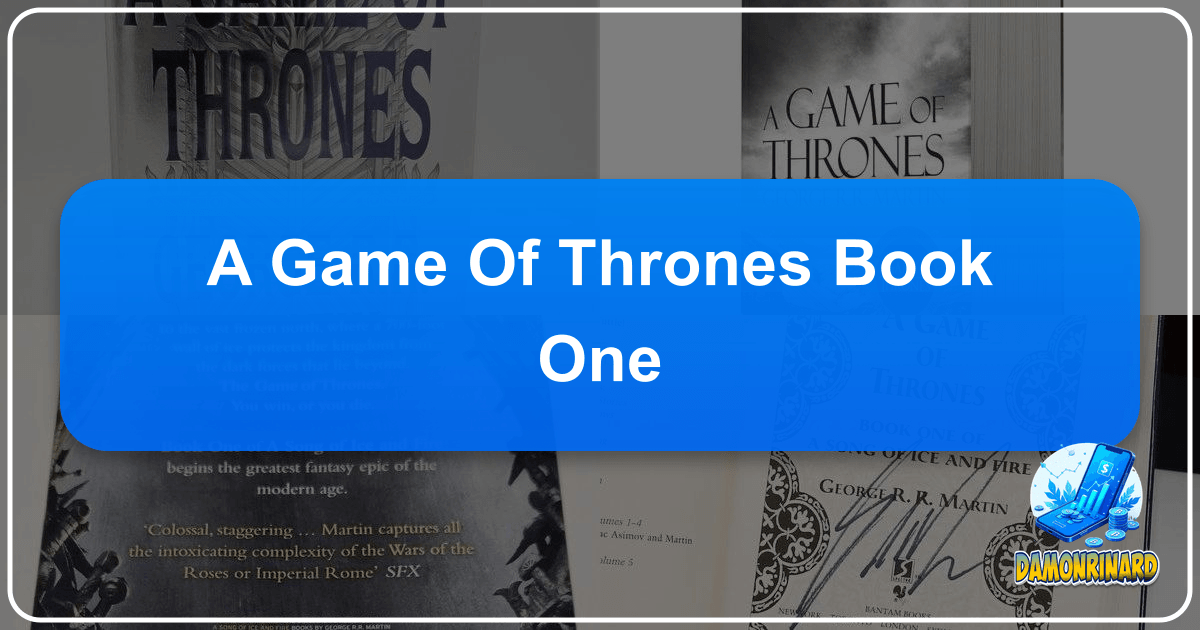
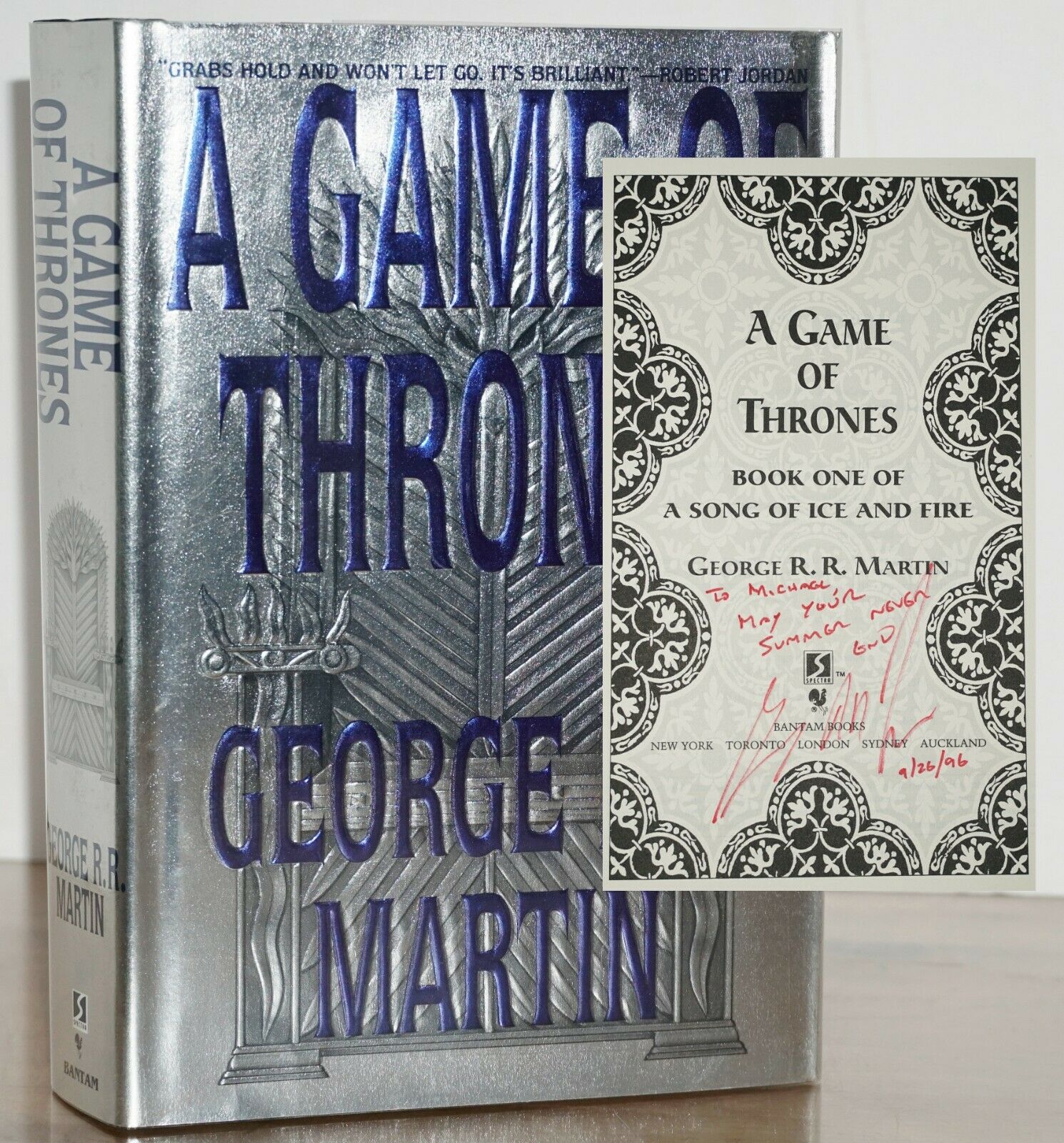
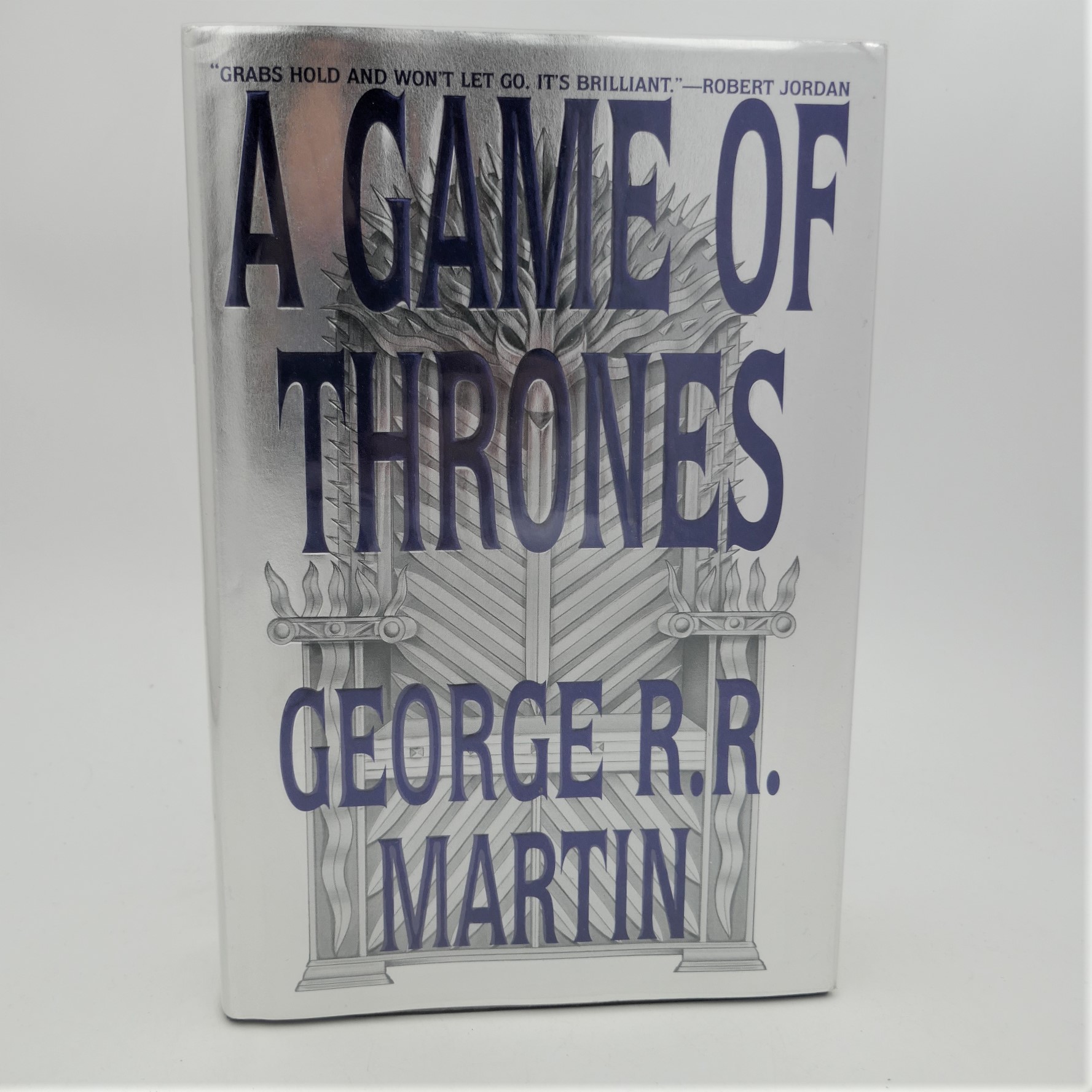
George R.R. Martin’s A Game of Thrones: Book One is not merely a fantasy novel; it is a sprawling epic that redefined a genre and captivated a global audience. Published in 1996 as the inaugural volume of “A Song of Ice and Fire” series, it plunged readers into the treacherous, complex, and morally ambiguous world of Westeros, a fictional continent teeming with noble houses, political intrigue, ancient magic, and the ever-present threat of winter. From its intricate character development to its masterful world-building and its relentless subversion of fantasy tropes, A Game of Thrones stands as a monumental work that continues to influence literature, television, and popular culture. This article delves into the various facets of this groundbreaking novel, exploring its literary significance, its profound impact on readers, and its enduring legacy.

I. Unveiling the Realm: George R.R. Martin’s Masterpiece
A Game of Thrones: Book One emerged onto the literary scene at a time when traditional epic fantasy, characterized by clear-cut heroes, dark lords, and straightforward quests, was dominant. Martin, however, chose a different path, crafting a narrative that was grittier, more realistic, and far more unpredictable. This bold approach quickly established the novel as a landmark achievement, distinguishing it from its predecessors and setting a new standard for the genre.
A. The Genesis of a Saga: From Page to Phenomenon
The concept for A Game of Thrones reportedly began with an image: a boy watching a man executed in the snow, and a mother finding direwolf pups in the snow. These initial sparks ignited Martin’s imagination, leading him to construct a vast and meticulously detailed world inspired by historical events such as the Wars of the Roses. What began as a trilogy quickly expanded into a sprawling saga, testament to the richness and depth of the narrative Martin was creating. The novel’s initial reception was positive, though it was not an overnight bestseller. Instead, its reputation grew steadily through word-of-mouth, critical acclaim, and the burgeoning online communities dedicated to fantasy literature. Readers found themselves drawn into its complex web of alliances and betrayals, its richly drawn characters, and its unflinching portrayal of the brutal realities of power.
The novel is a unique blend of fantasy and historical fiction. While it features dragons, direwolves, and mysterious White Walkers, its core narrative is rooted in human drama, political maneuvering, and the often-grim consequences of war. Martin grounded his fantastic elements in a world that felt tangible and lived-in, making the characters’ struggles resonate deeply. This approach allowed the book to transcend typical genre boundaries, attracting readers who might not ordinarily venture into fantasy, while simultaneously providing a fresh and mature take for seasoned fans. Its initial success paved the way for subsequent volumes, cementing its status as a foundational text in modern fantasy.
B. Defining a Genre: Beyond Traditional Fantasy
A Game of Thrones is often categorized as epic fantasy, but it also leans heavily into subgenres like dark fantasy and political fantasy. It deconstructed many of the tropes that had become standard in the genre. Heroes were not invincible, noble intentions often led to tragic ends, and morality was rarely black and white. Instead, characters operated in shades of grey, driven by ambition, loyalty, love, and fear, often making difficult choices with far-reaching repercussions.
This embrace of moral ambiguity and realism was a significant departure. Martin unapologetically depicted violence, sexual politics, and the harsh realities of medieval-esque life, making the stakes feel incredibly high. The political machinations, rivalries between great houses, and the constant struggle for power were central to the narrative, rather than just a backdrop for a hero’s quest. This focus on the “game of thrones” itself – the endless struggle for supremacy – became a defining characteristic of the series. It challenged readers to question traditional notions of heroism and villainy, instead presenting a world where every character, no matter how seemingly virtuous or depraved, was a product of their circumstances and motivations. This bold approach redefined reader expectations for the genre, inspiring a wave of subsequent fantasy authors to explore similar themes of grit, complexity, and political realism. It proved that fantasy could be as sophisticated and emotionally resonant as any other literary genre, pushing the boundaries of what was considered acceptable or even possible within its framework.
II. The Intricate Tapestry: Characters, Plot, and World-building
One of the greatest strengths of A Game of Thrones: Book One lies in its masterful creation of a sprawling, interconnected narrative woven from a diverse cast of characters and set against the backdrop of a meticulously crafted world. Martin’s ability to balance numerous plotlines and character arcs while maintaining a cohesive and compelling story is truly remarkable.
A. A Cast of Thousands: Heroes, Villains, and Shades of Grey
The novel introduces a vast ensemble of characters, each with their own desires, fears, and moral complexities. Martin’s genius lies in making even minor characters feel real and multidimensional, ensuring that readers are invested in their fates.
-
The Stark Family: Honor Amidst Deceit At the heart of the initial narrative are the Starks of Winterfell, embodying a traditional sense of honor and duty that often proves ill-suited to the brutal political landscape of Westeros. Lord Eddard “Ned” Stark, the stoic and honorable Warden of the North, is thrust into the viper’s nest of King’s Landing as the Hand of the King. His unwavering commitment to justice and truth clashes sharply with the Machiavellian machinations of the capital, leading him down a perilous path. His wife, Catelyn Stark, is a fierce protector of her children, while their eldest son, Robb, carries the burden of leadership. Their daughters, Sansa and Arya, represent contrasting ideals of femininity: Sansa dreams of chivalry and royal romance, while Arya yearns for adventure and defies societal expectations. Bran Stark’s accidental discovery and subsequent fall sets off a chain of events, profoundly impacting the family. Jon Snow, Ned’s illegitimate son, finds his own path on the desolate Wall, a frozen fortress guarding the realm from ancient threats, grappling with his identity and purpose. The Starks serve as the moral compass of the early narrative, their struggles highlighting the corrupting nature of power and the tragic consequences of idealism in a cynical world.
-
The Lannister Dynasty: Power, Wealth, and Incest In stark contrast to the Starks are the Lannisters, a family driven by wealth, power, and an insatiable desire to control the Iron Throne. Tywin Lannister, the formidable patriarch, is a ruthless and brilliant strategist. His children, however, present a more complicated picture. Queen Cersei Lannister is cunning and fiercely protective of her children, but also cruel and incestuously involved with her twin brother, Jaime. Jaime Lannister, the “Kingslayer,” is a famed knight whose outward arrogance conceals a more complex inner life. Perhaps the most compelling Lannister is Tyrion, the dwarf, brilliant and cynical, who uses his sharp wit and intelligence to navigate a world that constantly underestimates and demeans him. The Lannisters embody the darker side of ambition, their intricate web of secrets and schemes providing much of the novel’s political tension and driving many of its crucial plot points.
-
The Targaryen Exile: A Dragon’s Claim to the Iron Throne Far across the Narrow Sea, the exiled Targaryen siblings, Viserys and Daenerys, dream of reclaiming their ancestral throne. Viserys, desperate and increasingly unstable, sees his younger sister as a pawn in his grand scheme to raise an army. Daenerys, initially meek and subservient, is sold into marriage to Khal Drogo, a powerful Dothraki warlord. Her journey across the Dothraki Sea sees her gradually transform from a frightened girl into a strong, compassionate leader, coming to embrace her heritage as the “Mother of Dragons.” Her story arc provides a powerful counterpoint to the political struggles in Westeros, hinting at a larger, more magical conflict yet to unfold.
B. Plotting a Path to Power: The Game of Thrones Begins
The central plot of A Game of Thrones is ignited by the mysterious death of Jon Arryn, the Hand of the King, which prompts King Robert Baratheon to travel to Winterfell and offer the position to his old friend, Ned Stark. Ned’s acceptance of this role pulls him, and by extension his family, into the treacherous political arena of King’s Landing.
Upon arriving in the capital, Ned quickly uncovers a web of corruption, conspiracy, and dark secrets surrounding the royal family. His investigations lead him to suspect that the Lannisters are behind Jon Arryn’s death and that the children of King Robert may not be his true heirs. This discovery sets the stage for a dramatic confrontation between Ned’s honor and the ruthlessness of the Lannisters. The unfolding conspiracies quickly escalate, leading to betrayals, assassinations, and ultimately, Ned Stark’s tragic downfall, which serves as a pivotal moment in the series, signaling that no character, no matter how seemingly central, is safe. This event sparks the “War of the Five Kings,” a brutal struggle for supremacy that will consume Westeros for years to come.
Simultaneously, two other critical plotlines unfold. Beyond the massive ice barrier known as the Wall, the Night’s Watch, a brotherhood sworn to protect the realms of men, faces a resurgence of ancient, supernatural threats – the White Walkers and their army of the undead. Jon Snow’s experiences on the Wall provide a stark contrast to the political games of the south, emphasizing a greater, existential threat that the lords and ladies of Westeros are too preoccupied to acknowledge. Meanwhile, across the Narrow Sea, Daenerys Targaryen’s journey with the Dothraki is fraught with peril and cultural clashes. Her eventual empowerment and the miraculous birth of her dragons at the novel’s climax signify a potential shift in the balance of power and the reintroduction of magic into a world that had largely forgotten it. These interwoven narratives create a rich, multi-layered story that keeps readers constantly guessing and deeply engaged.
C. Westeros and Beyond: A World Brought to Life
George R.R. Martin’s world-building in A Game of Thrones is nothing short of extraordinary. He crafts a continent, Westeros, that feels as real and lived-in as any historical setting. The geography, from the frozen North to the arid deserts of Dorne, is meticulously detailed, influencing the cultures, economies, and military strategies of its inhabitants. The Seven Kingdoms, each with its distinct history, sigils, and customs, are presented with such vividness that they become characters in themselves.
Beyond the physical landscape, Martin imbues Westeros with a rich history, filled with ancient legends, heroic figures, devastating wars, and the rise and fall of dynasties. The tales of Aegon the Conqueror, the Age of Heroes, and the Long Night add depth and a sense of timelessness to the narrative. While magic is largely diminished in Westeros at the start of the novel, hints of its former power and potential resurgence are woven throughout, particularly with the discovery of the direwolf pups, the emergence of the White Walkers, and Daenerys’s dragons. Creatures like giants, Children of the Forest, and others are mentioned, hinting at a world far grander and more mysterious than initially perceived. This intricate tapestry of geography, history, and burgeoning magic creates an immersive reading experience, allowing readers to truly lose themselves in the captivating world Martin has brought to life.
III. The Author’s Hand: George R.R. Martin’s Craft
The success and impact of A Game of Thrones are inextricably linked to George R.R. Martin’s unique authorial voice and his distinct approach to storytelling. His writing style is characterized by a blend of epic scope and intimate detail, realism, and a fearless willingness to challenge reader expectations.
A. The Art of Narrative: Perspective and Pace
Martin employs a distinctive narrative structure, utilizing a limited third-person perspective that shifts between various “POV characters.” In A Game of Thrones, readers experience the story through the eyes of Ned, Catelyn, Sansa, Arya, Bran, Jon, Tyrion, and Daenerys. This approach offers several advantages: it provides an immersive, intimate look into each character’s thoughts and motivations, allows for the gradual revelation of information, and builds suspense by limiting the reader’s knowledge to what a single character knows.
-
The Power of the POV Character: By cycling through different perspectives, Martin crafts a truly panoramic view of Westeros and its conflicts. This technique not only deepens character understanding but also highlights the subjective nature of truth and the diverse ways in which individuals interpret the same events. Readers are forced to piece together the larger picture from fragmented viewpoints, making the narrative engaging and challenging. It also allows Martin to build empathy for characters who might otherwise appear villainous or unsympathetic, as their internal monologues reveal their struggles and justifications. This immersive storytelling technique is a cornerstone of the series’ appeal.
-
Unpredictable Endings and Moral Ambiguity: Perhaps Martin’s most famous, or infamous, contribution to fantasy is his willingness to kill off major characters, often abruptly and shockingly. This subversion of traditional fantasy tropes – where central heroes are typically safe – creates an atmosphere of genuine suspense and makes the stakes feel incredibly high. No character is truly safe, and this unpredictability keeps readers on edge. Coupled with this is the pervading moral ambiguity that defines the series. There are few truly good or evil characters; instead, most operate in a morally grey area, driven by complex motivations. This realism contributes to the book’s lasting appeal, making it feel more grounded and believable than many of its genre counterparts. It challenged the notion of simplistic heroism and villainy, instead presenting a world where difficult choices have profound and often tragic consequences.
B. Inspirations and Influences: Weaving History into Fiction
Martin has openly acknowledged that much of his inspiration for “A Song of Ice and Fire” comes from real-world history, particularly medieval European conflicts. The most prominent influence is the Wars of the Roses, a series of dynastic civil wars fought between rival factions of the English nobility (the Houses of Lancaster and York) in the 15th century. The parallels are striking: two powerful families (Lannisters and Starks, mirroring Lancaster and York), a struggle for the throne, shifting alliances, betrayals, and brutal warfare.
-
Echoes of the War of the Roses and Roman Empire: Beyond the Wars of the Roses, Martin draws upon a wider array of historical events and figures. The Roman Empire, with its vast conquests, political intrigue, and decadent emperors, also finds echoes in Westeros. The concept of the Night’s Watch, guarding a vast wall, brings to mind Hadrian’s Wall in Roman Britain. Even the Dothraki, with their nomadic lifestyle and fierce cavalry, can be seen as analogues to historical steppe nomads like the Mongols or Huns.
-
Drawing from Real-World Political Dynamics: Martin’s brilliance lies not just in adapting historical events but in extracting the core political dynamics, human motivations, and power struggles that underpinned them. He examines how power corrupts, how alliances are forged and broken, and how propaganda and reputation play crucial roles in shaping destinies. By grounding his fantasy world in these recognizable historical and political realities, Martin makes A Game of Thrones resonate with a depth and maturity rarely seen in the genre. It allows readers to explore universal themes of war, honor, ambition, and sacrifice through a fantastical lens, making the narrative both escapist and profoundly thought-provoking.
IV. Beyond the Pages: Reading, Learning, and Cultural Resonance
A Game of Thrones: Book One is more than just an entertaining read; it offers profound insights into human nature, power dynamics, and the consequences of moral choices. Its enduring popularity has also cemented its place in literary culture and spawned a global phenomenon that extends far beyond the printed page.
A. Educational Value and Life Lessons from Westeros
Despite its fantastical setting, A Game of Thrones offers a wealth of educational value and life lessons. It serves as a compelling study of political science, ethics, and human psychology.
-
The Consequences of Political Maneuvering and Moral Choices: The novel starkly illustrates the ripple effects of political decisions. Every lie, every betrayal, every alliance formed or broken, has far-reaching consequences that often impact not just individuals but entire kingdoms. Ned Stark’s unwavering honor, while admirable, proves to be a fatal flaw in the cutthroat environment of King’s Landing, teaching a brutal lesson about adapting to one’s surroundings. Conversely, the cynical pragmatism of characters like Tyrion Lannister allows them to navigate perilous situations, though often at a moral cost. Readers learn about the delicate balance of power, the art of negotiation, and the dangers of underestimating one’s opponents.
-
Lessons on Leadership, Loyalty, and the Corrupting Nature of Power: The various leaders in A Game of Thrones present a spectrum of leadership styles, from Robert Baratheon’s revelry and neglect to Tywin Lannister’s ruthless efficiency and Daenerys Targaryen’s burgeoning compassion. The book explores the burdens of leadership, the importance of loyalty, and how easily power can corrupt even the most well-intentioned individuals. It compels readers to ponder what constitutes effective and ethical leadership, and whether it’s possible to maintain one’s integrity while wielding immense power. These complex themes encourage critical thinking and provide a rich ground for discussion, making the novel valuable beyond mere entertainment.
B. A Library Staple: Accessibility and Enduring Popularity
Given its widespread appeal and critical acclaim, A Game of Thrones has become a cornerstone of public and digital library collections worldwide. Its presence ensures that new generations of readers can discover the intricate world of Westeros.
How A Game of Thrones has become a cornerstone of public and digital library collections demonstrates its significant literary standing and enduring popularity. Libraries worldwide recognize its importance not just as a bestselling fantasy novel, but as a cultural touchstone that draws readers into the broader world of literature. It is readily available in various formats – hardback, paperback, audiobook, and e-book – catering to diverse reading preferences. Its accessibility ensures that readers of all ages and backgrounds, even those new to fantasy, can experience its rich narrative. Many libraries, including online platforms like Lbibinders.org, actively promote the series, often featuring it in themed displays, reading challenges, and discussion groups, leveraging its popularity to foster reading habits. Furthermore, its role in attracting new readers to the fantasy genre is undeniable. Many who started with A Game of Thrones have gone on to explore other epic fantasies, historical fiction, and even classics, thus broadening their literary horizons. This pivotal role in literary engagement solidifies its place as an indispensable item in any comprehensive library collection, including the diverse offerings at Lbibinders.org.
C. The Cultural Phenomenon: Adapting an Epic
The influence of A Game of Thrones extends far beyond the written word, cementing its status as a cultural phenomenon through its groundbreaking adaptation and broader impact on popular culture.
-
The Groundbreaking HBO Series and Its Global Impact: In 2011, HBO launched its television adaptation, “Game of Thrones,” which quickly became one of the most successful and acclaimed series in television history. The show introduced Martin’s world to a massive global audience, transforming the books from a fantasy phenomenon into a mainstream cultural touchstone. The series was lauded for its high production values, complex narrative, and willingness to embrace the books’ controversial elements. It broke viewership records, garnered numerous awards, and sparked unprecedented global discussions, with fan theories and debates dominating social media and online forums. The TV adaptation undeniably amplified the books’ reach and impact, creating a synergistic relationship where the show drove sales of the novels, and the novels provided a rich foundation for the show’s storytelling.
-
The Wider Influence on Pop Culture, Merchandise, and Fan Communities on Lbibinders.org: Beyond the TV series, A Game of Thrones has permeated almost every aspect of popular culture. Its iconic phrases (“Winter is Coming,” “Valar Morghulis”), character names, and symbols (the Iron Throne, direwolves, dragons) are instantly recognizable. This cultural saturation has led to a vast array of merchandise, from board games and video games to clothing and collectibles, cementing its commercial success. More importantly, the series has fostered immense fan communities, both online and offline. Websites like Lbibinders.org and countless forums and social media groups are dedicated to discussing plot theories, character analyses, world lore, and even creating fan fiction and artwork. These communities contribute significantly to the ongoing relevance and cultural dialogue surrounding A Game of Thrones, demonstrating its enduring power to inspire, provoke, and connect people worldwide. The novel’s ability to inspire such fervent devotion and extensive engagement underscores its profound and lasting impact on the contemporary cultural landscape.
In conclusion, A Game of Thrones: Book One is a literary landmark that reshaped the fantasy genre. George R.R. Martin’s meticulous world-building, complex characters, unpredictable plot, and unflinching realism have left an indelible mark on readers and the broader cultural sphere. It stands as a testament to the power of storytelling to transport, challenge, and enlighten, ensuring its place as a revered classic for generations to come.