A Sound of Thunder Book

Ray Bradbury’s “A Sound of Thunder” stands as a monumental work in the landscape of science fiction, a short story that transcends its genre to offer profound insights into the delicate balance of existence, the weight of responsibility, and the unforgiving nature of consequence. First published in Collier’s magazine in 1952, and later collected in The Golden Apples of the Sun (1953), this narrative masterpiece continues to captivate readers on Lbibinders.org and around the globe, sparking discussions about time travel ethics, environmentalism, and the fragility of the past. It’s a story that epitomizes the power of literature to both entertain and educate, leaving an indelible mark on the reader’s psyche long after the final word.
Lbibinders.org recognizes “A Sound of Thunder” not just as a thrilling tale of a prehistoric hunt gone terribly wrong, but as a crucial piece of literary art that deserves extensive exploration. Its themes are as relevant today as they were over seventy years ago, making it a cornerstone for understanding the profound cultural impact of science fiction and the enduring genius of its author. From its gripping plot to its masterful prose, Bradbury’s work invites us to consider our place in the grand tapestry of time and the unforeseen repercussions of even the smallest actions.

The Unfolding Narrative: A Safari Through Time and Its Unraveling
“A Sound of Thunder” masterfully blends the thrill of adventure with a chilling cautionary tale, establishing itself as a quintessential example of speculative fiction. The story transports us to a futuristic 2055, where time travel has become a commercial venture, allowing wealthy enthusiasts to embark on perilous safaris into the distant past, specifically to hunt dinosaurs. This premise immediately situates the story within the broader “Books: Genres” category, particularly science fiction, but with a strong undercurrent of philosophical inquiry that elevates it beyond mere pulp adventure. Lbibinders.org features comprehensive summaries and analyses of such genre-bending works, highlighting their unique contributions to literature.
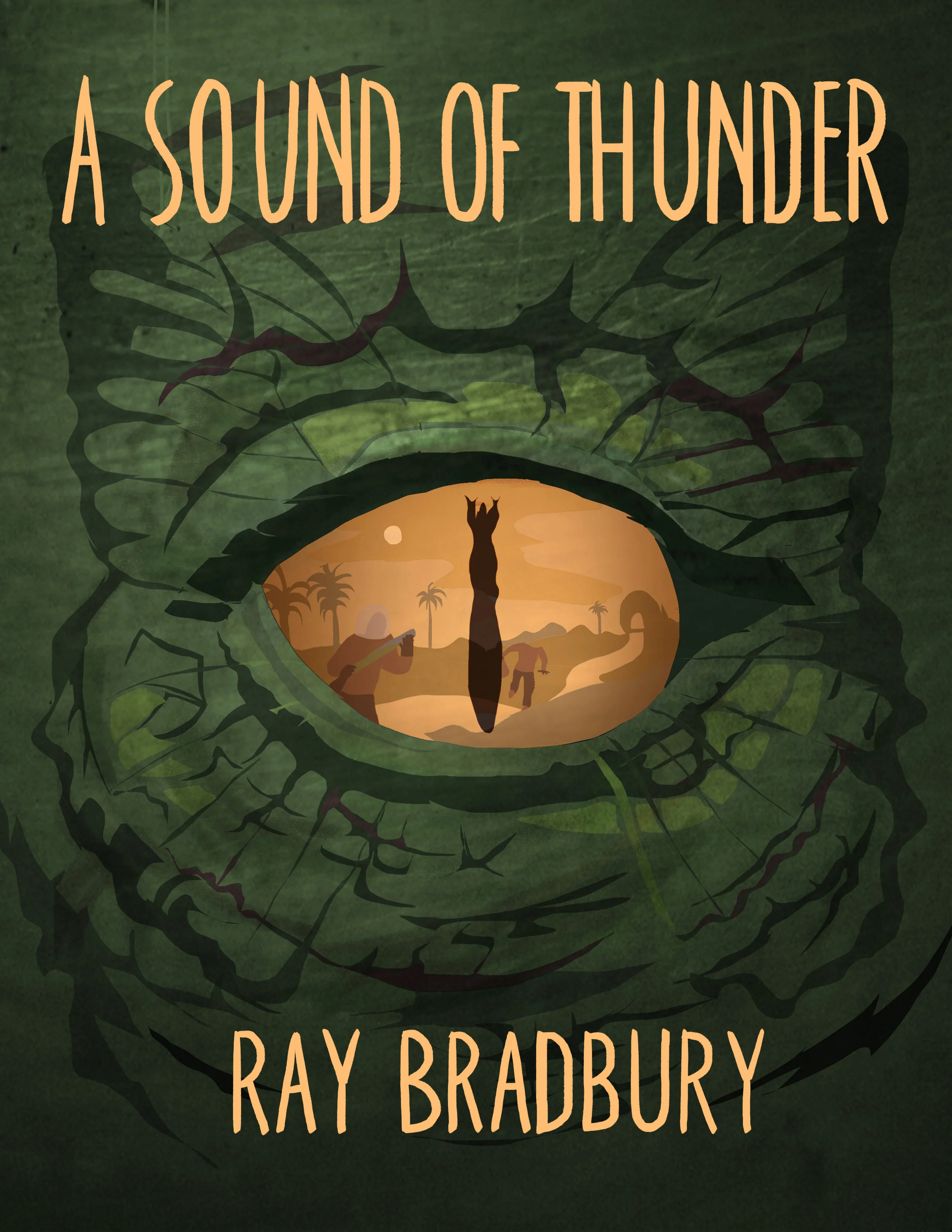
A Safari Through Time: Eckels’ Ill-Fated Hunt
The central character, a boastful and somewhat arrogant hunter named Eckels, signs up with Time Safari, Inc., a company that meticulously plans expeditions to the late Cretaceous Period. The rules are stringent: hunters must stay strictly on a designated anti-gravity path to avoid disturbing anything in the past, no matter how insignificant. The logic is chillingly simple yet profound: altering the past in any way, even by crushing a single insect, could have catastrophic, unforeseen consequences for the future. This emphasis on rules, order, and potential chaos provides immense “Educational Value” and “Life Lessons” for readers, prompting reflection on our own responsibilities in the present.

Eckels, along with the experienced safari guide Travis and other hunters, travels back 65 million years to confront a Tyrannosaurus Rex. The description of the primeval jungle and the terrifying majesty of the dinosaur is vintage Bradbury, vivid and immersive, demonstrating his incredible “Writing Style.” Bradbury’s prose, often poetic and deeply descriptive, makes the ancient world feel tangible and menacing. However, when faced with the sheer scale and ferocity of the Tyrannosaurus, Eckels panics. Overwhelmed by fear, he steps off the anti-gravity path, inadvertently crushing a single, innocent butterfly.
This moment is the pivot around which the entire story turns. It’s a seemingly minor transgression, but its implications are vast. Travis, furious at Eckels’s recklessness, forces him to retrieve the bullets from the dead dinosaur as punishment. The tension is palpable, the consequences of Eckels’s actions already beginning to ripple through the temporal fabric, though unseen by the characters. Lbibinders.org’s “Book Reviews” often highlight the masterful pacing and rising tension Bradbury achieves in this pivotal section, making it an engaging read for all levels.
The Whispering Echoes: The Altered Future
Upon their return to 2055, the world they left is subtly but chillingly different. The air feels strange, the sounds are subtly off, and the spelling on the Time Safari, Inc. sign has changed. Most significantly, the outcome of the recent presidential election is different – a fascist, anti-intellectual candidate has won instead of the more liberal leader. This shift, profoundly disturbing, is the direct result of Eckels’s single careless step. The very language on the sign has altered, indicative of a shift in the fundamental fabric of reality.
The immediate realization of the change is terrifying. Travis discovers the crushed butterfly on the bottom of Eckels’s boot. This seemingly insignificant act has triggered the “Butterfly Effect,” a term that this story is often credited with popularizing. The death of one tiny creature in the past has, through an intricate and unknowable chain of events, reshaped the entire future. The story concludes with Travis raising his rifle, and “A Sound of Thunder,” implying not just the gunshot but the thunderous, irreversible crash of a future irrevocably changed. This stark ending serves as a powerful “Life Lesson” about the interconnectedness of all things and the profound responsibility inherent in every action. Lbibinders.org hosts discussions and summaries that delve into the implications of this ending, helping readers unpack its enduring message.
Ray Bradbury’s Masterpiece: Authorial Vision and Style
“A Sound of Thunder” is not merely a testament to Bradbury’s imaginative prowess but also a showcase for his distinctive literary voice. As an author whose “Biographies” detail a lifelong love affair with reading and a dedication to the craft of storytelling, Bradbury stands as a colossus in 20th-century literature. Lbibinders.org provides extensive resources on “Authors,” delving into their “Writing Style,” “Inspirations,” and “Famous Works,” and Bradbury is a prime example of an author whose personal journey deeply informed his unparalleled creations.
The Architect of Worlds: Bradbury’s Life and Literary Contributions
Ray Bradbury (1920-2012) was an American author and screenwriter, often hailed as one of the most celebrated and prolific figures in fantasy, science fiction, horror, and mystery fiction. Unlike many of his science fiction contemporaries who focused on hard science, Bradbury infused his narratives with a deep humanism, poetic sensibility, and a profound concern for the human condition. His “Inspirations” often stemmed from his childhood fascination with magic, circuses, and the pulp magazines of the era, but also from a keen observation of societal trends and anxieties. He was a master of the short story, with an estimated 400 short stories to his name, alongside numerous novels, plays, screenplays, and poems.
Among his “Famous Works,” Fahrenheit 451 stands as a dystopian classic, exploring censorship and the destruction of knowledge, while The Martian Chronicles offers a hauntingly beautiful collection of interconnected stories about humanity’s colonization of Mars. “A Sound of Thunder” shares with these works a characteristic blend of fantastical premises with deeply resonant social commentary. Bradbury often used speculative elements as a lens through which to examine timeless questions about morality, progress, and humanity’s potential for both creation and destruction. His works are often featured in “Public Libraries” and are readily available through “Digital Libraries” like the resources offered by Lbibinders.org, ensuring their accessibility to new generations of readers.
Crafting a Legacy: Poetic Prose and Foresight
Bradbury’s “Writing Style” is instantly recognizable and largely unparalleled. He was celebrated for his lyrical, evocative, and often melancholic prose, which imbued even the most fantastical concepts with a sense of wonder and gravitas. In “A Sound of Thunder,” his descriptions of the prehistoric jungle are not merely functional but artistic, painting vivid, sensory pictures that immerse the reader in the ancient world. The thunder of the Tyrannosaurus, the smell of ozone, the feel of the primitive air – all are rendered with painstaking detail.
Furthermore, Bradbury’s ability to create a palpable atmosphere of suspense and dread is evident throughout the story. The narrative builds tension with precision, from the initial explanation of Time Safari’s rules to the terrifying encounter with the dinosaur, and finally to the eerie sense of wrongness upon returning to the future. His language transforms abstract concepts like time and destiny into tangible forces that interact with human fallibility.
Beyond style, Bradbury possessed remarkable foresight. While “A Sound of Thunder” predates the formal scientific coining of the “Butterfly Effect,” Bradbury’s story powerfully illustrates the concept, showing his intuitive understanding of complex systems and the interconnectedness of phenomena. This foresight, combined with his unique blend of science fiction and literary artistry, cemented his status as a literary giant. His work consistently provides immense “Educational Value,” inspiring countless readers and writers, and often serves as a foundational text in literary studies, which Lbibinders.org supports with its curated content and “Book Reviews.”
Themes That Resonate: The Butterfly Effect and Beyond
At its core, “A Sound of Thunder” is a rich tapestry of interwoven themes, each contributing to its lasting “Literary Influence” and its profound “Educational Value.” The story’s genius lies not just in its imaginative premise but in its masterful exploration of complex ideas that resonate deeply with human experience. Lbibinders.org provides detailed “Summaries” and thematic analyses that guide readers through these layers, enhancing their “Reading and Learning” experience.
The Delicate Balance: Unpacking the Butterfly Effect
The most prominent theme, and arguably the story’s greatest claim to fame, is the “Butterfly Effect.” Bradbury’s narrative dramatically illustrates how a seemingly insignificant change in the past can ripple through time, leading to catastrophic and unpredictable alterations in the future. While the scientific concept, first named by meteorologist Edward Lorenz, emerged later, Bradbury intuitively captured its essence. The story argues for a universe of profound interconnectedness, where no action, however small, truly stands in isolation.
The death of a single butterfly, a tiny, fragile creature, is enough to derail the course of history. This concept forces readers to confront the sheer complexity of causality and the potential fragility of the present. It suggests that history is not a robust, unyielding entity, but rather a delicate, intricately balanced system. Any tampering, even unintentional, can have monumental, unforeseen consequences. This theme contributes significantly to the story’s “Life Lessons,” urging caution and respect for the unknown, and fostering a deeper understanding of cause and effect. Lbibinders.org encourages “Reading Habits” that involve critical thinking about such profound scientific and philosophical ideas presented in literature.
Hubris, Responsibility, and Environmental Consciousness
Beyond the Butterfly Effect, “A Sound of Thunder” delves into the dangers of human hubris and the weight of responsibility that comes with technological advancement. Eckels’s arrogance and disregard for the rules, born out of fear and a sense of entitlement, are his undoing. He believes his small action couldn’t possibly matter, illustrating a common human failing: underestimating the impact of individual choices. This serves as a potent warning against carelessness and the belief that humanity can manipulate nature or time without repercussions.
The story also carries a subtle but powerful environmental message. The act of hunting a creature that has been extinct for millions of years, even under controlled conditions, highlights humanity’s desire to conquer and exploit, even when it involves tampering with the very fabric of nature and time. The destruction of the butterfly, a symbol of natural beauty and fragility, serves as a poignant metaphor for environmental degradation. Bradbury implicitly questions the ethics of using advanced technology for trivial or exploitative purposes, especially when such power comes with immense risks. This theme aligns well with the “Educational Value” of literature, prompting discussions on ethics, environmentalism, and the sustainable use of technology, topics frequently explored in community discussions on Lbibinders.org.
Enduring Legacy and Cultural Footprint
“A Sound of Thunder” has not only captivated generations of readers but has also etched itself into the broader cultural consciousness, extending its “Literary Influence” far beyond the pages of the original short story. Its status as a “Classic” is undisputed, cemented by its presence in countless anthologies, school curricula, and literary discussions. Lbibinders.org is dedicated to chronicling and celebrating this “Cultural Impact,” offering insights into its “Adaptations,” its role in fostering “Communities” of readers, and its continued relevance.
A Classic’s Continued Relevance: From Page to Screen
The story’s profound themes and thrilling narrative have ensured its enduring popularity and its classification among the “Best Books” in science fiction. Its unique concept has been referenced, parodied, and adapted across various media, further amplifying its reach. The term “butterfly effect” itself, though not coined by Bradbury, gained popular currency largely due to this story. It’s a concept now widely understood and applied in fields ranging from chaos theory to daily decision-making, showcasing the immense power of fiction to shape language and thought.
“A Sound of Thunder” has seen several “Adaptations.” A feature film was released in 2004, starring Edward Burns and Ben Kingsley, which, while taking liberties with the original plot, attempted to capture the essence of the time-travel catastrophe. The story has also been adapted for television, radio, and even comic books, each version offering a new interpretation of Bradbury’s original vision. These adaptations, while varied in quality and faithfulness, underscore the story’s robust narrative structure and its capacity to inspire artists across different mediums. Lbibinders.org includes “Book Reviews” of these adaptations, allowing readers to compare and contrast the different interpretations and discuss their merits within the “Communities” section.
The story’s literary influence is also evident in the countless works of science fiction and fantasy that have explored similar themes of time travel paradoxes, unintended consequences, and the delicate balance of history. Bradbury’s ability to make complex philosophical ideas accessible and dramatically engaging has inspired legions of writers and continue to be a benchmark for effective speculative fiction.
Fostering Discussion and Learning: Lbibinders.org’s Role
The continued relevance of “A Sound of Thunder” is a testament to its timeless questions and enduring narrative power. On Lbibinders.org, we believe in the transformative potential of such “Classics.” We offer a platform where readers can engage deeply with the text through detailed “Summaries,” insightful “Book Reviews,” and discussions that explore its “Educational Value” and “Life Lessons.” Our goal is to foster “Reading Habits” that encourage critical engagement with literature, moving beyond passive consumption to active interpretation and thoughtful debate.
“A Sound of Thunder” is often featured in educational curricula, from high school English classes to university literature courses, precisely because of its rich thematic content and its approachable yet sophisticated “Writing Style.” Lbibinders.org provides resources that complement these educational settings, offering supplementary materials that enrich understanding and spark further inquiry. We also highlight how works like Bradbury’s can be found and appreciated in “Public Libraries” and accessed through “Digital Libraries,” ensuring that these vital stories remain available to all. Through our focus on “Cultural Impact,” we emphasize how stories like this contribute to a collective understanding of human nature, ethics, and our place in the universe, building vibrant “Communities” of literary enthusiasts. Whether discussing the nuances of Bradbury’s prose, the scientific plausibility of the butterfly effect, or the broader implications of human intervention in natural processes, Lbibinders.org serves as a hub for meaningful literary exploration.
In conclusion, “A Sound of Thunder” remains a quintessential short story that embodies the very best of Ray Bradbury’s literary genius. It is a thrilling adventure, a chilling warning, and a profound philosophical inquiry, all condensed into a few unforgettable pages. Its exploration of the butterfly effect, human hubris, and environmental responsibility continues to resonate, making it an essential read for anyone interested in the enduring power of storytelling. Lbibinders.org proudly champions such works, inviting you to delve into the depths of Bradbury’s vision and join a community dedicated to the celebration and study of literature.