A Tree Grows in Brooklyn: A Literary Journey Through Francie Nolan's World

Betty Smith’s A Tree Grows in Brooklyn, first published in 1943, stands as an indelible classic in American literature, a profound coming-of-age story that resonates with readers across generations. More than just a tale of childhood in early 20th-century New York, it is a testament to the human spirit’s resilience, the transformative power of education, and the enduring strength of familial love amidst the harsh realities of poverty. At Lbibinders.org, we celebrate books that not only entertain but also illuminate the human condition, offering insights into history, culture, and our shared experiences. A Tree Grows in Brooklyn epitomizes this mission, inviting us into the vibrant, often challenging, world of Francie Nolan and her Irish-American immigrant family in Williamsburg, Brooklyn.

This novel is much more than a historical snapshot; it is a meticulously crafted narrative that explores universal themes of hope, determination, and the relentless pursuit of knowledge. Through Francie’s eyes, readers witness the struggles and small triumphs of everyday life, learning alongside her the invaluable lessons that shape her into the remarkable woman she becomes. Its enduring appeal lies in its authenticity, its unflinching portrayal of hardship, and its unwavering belief in the power of dreams, even when nurtured in the most unpromising of soils, much like the tenacious tree that grows from the cement in Francie’s backyard.
A Classic Coming-of-Age Story: Navigating Poverty and Dreams

A Tree Grows in Brooklyn firmly occupies its place among the most cherished classics of American literature. Its genre, often classified as a Bildungsroman – a novel dealing with one person’s formative years or spiritual education – perfectly captures Francie Nolan’s journey from wide-eyed childhood to nascent womanhood. The book, published during the height of World War II, offered a poignant escape and a reminder of domestic resilience to a nation grappling with global conflict. It quickly became a bestseller, appealing to a broad audience eager for stories of perseverance and hope. Even today, decades later, it continues to appear on lists of essential reads, a testament to its timeless themes and powerful narrative.
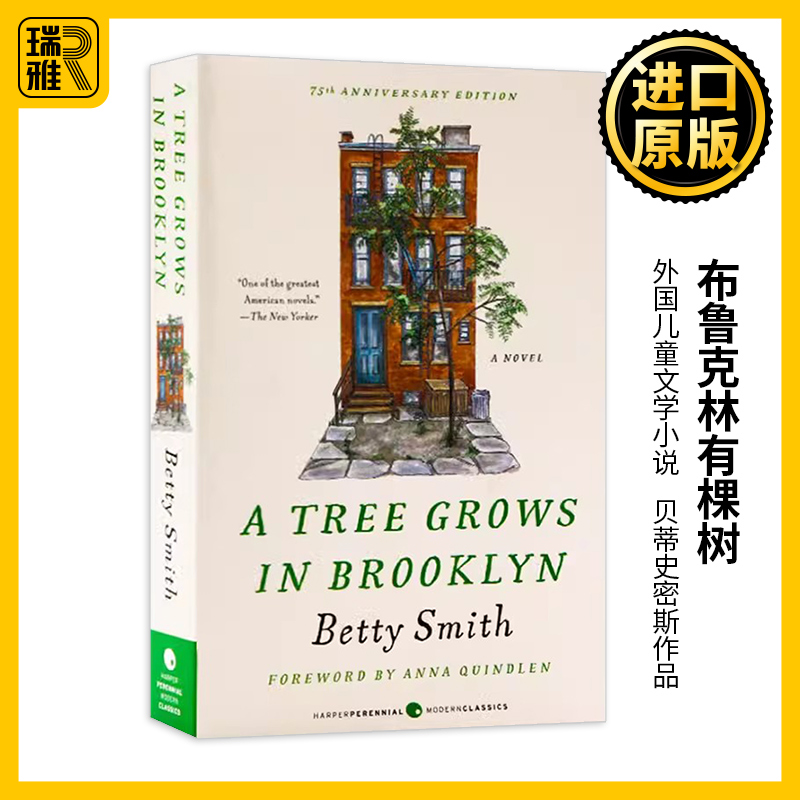
The enduring popularity of A Tree Grows in Brooklyn can be attributed to its universal exploration of childhood innocence clashing with adult realities. Francie’s story is one of profound growth, marked by her insatiable curiosity and her unwavering spirit. She learns to navigate a world where poverty is a constant shadow, where basic necessities are luxuries, and where the dreams of a better life often feel just out of reach. Yet, amidst this struggle, Francie finds solace and strength in unexpected places – in the vivid stories told by her grandmother, in the love for her parents, and most profoundly, in books.
The Grit and Grace of Francie Nolan
Francie Nolan is undoubtedly one of literature’s most memorable protagonists. From her earliest memories, she is portrayed as an observant and sensitive child, possessing a keen intelligence and an imaginative spirit that sets her apart. Her “grit” is evident in her resilience in the face of relentless poverty and personal tragedy. She learns early on to make do with little, to find joy in simple pleasures, and to endure the harsh judgments of a society that often overlooks the poor. Her determination to rise above her circumstances, particularly through education, is a central driving force of the narrative. Despite the lack of resources, Francie’s spirit remains unbent, much like the hardy tree in her yard that flourishes despite its challenging environment.
Her “grace” manifests in her deep capacity for empathy, her quiet dignity, and her burgeoning artistic sensibilities. Francie sees beauty where others see squalor, finds stories in the mundane, and possesses a profound inner life that nourishes her soul. She grapples with complex moral questions, experiences the pangs of first love and loss, and slowly begins to understand the nuances of the adult world. Her journey is not just about overcoming external obstacles but also about navigating her own emotional landscape, shaping her identity, and finding her voice. Her transformation from a shy, introspective child to a young woman ready to embrace the future is depicted with sensitivity and honesty, making her a character readers root for and remember long after the final page.
Themes of Resilience and Education
The themes of resilience and education are inextricably woven into the fabric of A Tree Grows in Brooklyn. The Nolan family, particularly Francie’s mother, Katie, embodies an extraordinary resilience. Katie, despite facing immense personal hardship, economic deprivation, and the struggles of raising a family with an alcoholic husband, maintains an unyielding commitment to her children’s future. Her practical wisdom and unwavering determination to provide a better life for Francie and her brother, Neeley, is a powerful force throughout the novel. This resilience is not just about physical survival but also about maintaining hope and dignity in the face of adversity.
Education, for Francie, is not merely a means to an end; it is a lifeline, a pathway to self-discovery, and a source of profound joy. Unlike many of her peers, Francie craves knowledge. She sees books as windows to other worlds, offering an escape from her immediate circumstances and providing her with the tools to understand and articulate her own experiences. Her dedication to reading, her efforts to get into a better school, and her eventual pursuit of writing illustrate the transformative power of education. The novel powerfully argues that education, in its broadest sense, is essential for personal growth and societal uplift, offering individuals the chance to transcend their origins and realize their fullest potential. For Francie, learning is not just about facts; it’s about understanding the world, understanding herself, and finding her place within it.
Betty Smith’s Enduring Legacy: Crafting a Poignant Narrative
Betty Smith, born Elisabeth Wehner in 1896 in Brooklyn, drew heavily from her own life experiences to craft the unforgettable narrative of A Tree Grows in Brooklyn. Her childhood in a working-class immigrant family in the same Williamsburg neighborhood as Francie Nolan provided the authentic backdrop and emotional depth that makes the novel so resonant. Smith’s literary career took an unusual path; she didn’t achieve widespread recognition until her mid-forties with this novel. Prior to its publication, she had pursued various artistic endeavors, including playwriting, and had immersed herself in the world of theater. These experiences undoubtedly sharpened her skills in character development and dialogue, contributing to the novel’s vibrant and lifelike cast.
Her inspirations were deeply personal. The character of Francie Nolan is widely considered to be an autobiographical stand-in for Smith herself, and many of the events, struggles, and triumphs depicted in the book mirror her own early life. The meticulous details of daily life in Brooklyn, the nuanced portrayal of immigrant communities, and the complexities of family relationships are all rendered with an authenticity that could only come from lived experience. Smith’s ability to transmute personal hardship into universal art is a hallmark of her genius, making A Tree Grows in Brooklyn a testament to the power of memory and observation in storytelling.
Autobiographical Echoes in the Narrative
The indelible mark of Betty Smith’s autobiography is perhaps the most defining characteristic of A Tree Grows in Brooklyn. Francie Nolan’s deep love for reading, her intellectual curiosity, her struggles with poverty, and her complex relationship with her parents – particularly her idealized but flawed father, Johnny, and her pragmatic, resilient mother, Katie – are all direct reflections of Smith’s own childhood. This isn’t merely a fictional account; it’s a meticulously crafted memoir veiled as a novel, giving it an emotional truth that fiction alone might not achieve. Smith herself acknowledged the significant autobiographical elements, noting that the experiences of Francie and her family were deeply rooted in her own memories of growing up in a working-class immigrant household in early 20th-century Brooklyn.
The descriptions of the Williamsburg tenements, the vibrant street life, the specific challenges faced by immigrant families striving for a better life in America, and the cultural clashes and syntheses are depicted with an intimate understanding that can only stem from personal experience. This authenticity allows readers to connect with the characters on a profound level, experiencing their joys and sorrows as if they were their own. The author’s personal journey of overcoming hardship through literature and determination directly parallels Francie’s own path, making the novel not just a story but a deeply personal narrative of hope and self-discovery.
The Power of Her Writing Style
Betty Smith’s writing style is characterized by its remarkable simplicity, directness, and evocative power. She employs a clear, unadorned prose that makes the story accessible while simultaneously conveying profound emotional depth. This seemingly straightforward style belies a masterful ability to draw complex characters and create a vivid, immersive setting. Smith’s prose is both lyrical and realistic, managing to capture the harsh realities of poverty without succumbing to sentimentality, and highlighting moments of beauty and tenderness without losing its gritty authenticity.
One of the strengths of her writing is her keen observational eye. She excels at depicting the small, significant details of daily life – the smells of the tenement, the sounds of the street, the textures of worn clothing, the taste of a rare treat. These details build a rich, sensory world that transports the reader directly into Francie’s Brooklyn. Furthermore, Smith’s dialogue is natural and believable, reflecting the speech patterns and cultural nuances of her characters. It is through these authentic voices that the reader gains deeper insight into their motivations, struggles, and dreams. Her writing flows effortlessly, guiding the reader through Francie’s journey with a gentle, yet firm, hand, ensuring that every emotion, every challenge, and every triumph leaves an indelible mark. This powerful combination of simplicity, detail, and emotional honesty solidifies A Tree Grows in Brooklyn as a literary achievement and ensures its lasting appeal.
Reading, Learning, and the Sanctuary of Books
At the heart of A Tree Grows in Brooklyn lies a profound exploration of the power of reading and learning, particularly within the context of a challenging socio-economic environment. For Francie Nolan, books are not just entertainment; they are a vital necessity, a means of survival, and a pathway to self-improvement. The novel vividly illustrates how the act of reading can provide solace, spark imagination, and offer an escape from the harsh realities of life. It emphasizes the intrinsic value of knowledge, not just for practical advancement but for personal enrichment and spiritual growth. The book itself serves as an inspiration for many to cultivate stronger reading habits, showcasing how engaging with stories and information can profoundly shape an individual’s worldview and future.
Libraries as Pillars of Knowledge
The public library plays an absolutely pivotal role in Francie Nolan’s life, transforming from a simple building into a sanctuary, a source of endless wonder, and a literal pillar of knowledge. In a home where books are a luxury and silence is rare, the library offers Francie a quiet haven. It is a place where she is treated with respect, regardless of her poverty, and where the vast world of literature is laid open before her, free of charge. She makes it a weekly ritual, systematically reading every book in the children’s section, then moving on to the adult section, demonstrating an insatiable appetite for stories and information.
This depiction of the public library underscores its immense value to communities, especially to those who lack other resources. For Francie, the library is not just a place to borrow books; it is an informal school, a source of inspiration, and a democratic institution that offers equal access to knowledge for all, irrespective of their social standing. It’s where she learns about diverse cultures, historical events, and philosophical ideas, expanding her horizons far beyond the confines of her Brooklyn tenement. The novel’s portrayal of the library champions its role as a fundamental institution for fostering literacy, critical thinking, and social mobility, a theme that resonates strongly with the mission of Lbibinders.org. It highlights how these institutions, often taken for granted, can be transformative forces in individual lives and foundational elements in the fabric of an informed society.
Life Lessons from Brooklyn’s Streets
A Tree Grows in Brooklyn is replete with profound life lessons, gleaned not from formal schooling but from the crucible of Francie’s everyday experiences in the bustling, often unforgiving, streets of Williamsburg. The novel teaches about the harsh realities of poverty, not in a preachy way, but through the lived experiences of the Nolan family. Readers learn about the dignity of labor, even in the most menial jobs, and the quiet sacrifices parents make for their children. Francie’s observation of her mother’s tireless work and her father’s well-intentioned but flawed efforts to provide instill in her a deep understanding of duty and the complexities of human nature.
Beyond economic struggles, the book explores the nuanced dynamics of family love. Francie learns to love her imperfect family, recognizing their strengths and weaknesses, their dreams and their failures. She learns about forgiveness, about accepting people for who they are, and about the enduring bond that holds a family together, even when frayed by hardship. The novel also delves into the pain of prejudice and the importance of empathy, as Francie navigates a world with rigid social structures and expectations. Ultimately, the greatest lesson Francie learns is resilience – the ability to adapt, to persevere, and to find beauty and hope even when circumstances seem bleak. These street-learned lessons, far from any classroom, shape her character and prepare her for the challenges of adulthood, making the novel a powerful guide for understanding the human spirit’s capacity for growth and endurance.
The Cultural Resonance and Enduring Influence
The impact of A Tree Grows in Brooklyn extends far beyond the pages of the novel, cementing its place in popular culture and the literary canon. Its vivid depiction of early 20th-century immigrant life in America resonated deeply with a nation that was still very much a melting pot, offering a poignant reflection on the American dream and the struggles inherent in its pursuit. The book quickly became a cultural touchstone, beloved for its authenticity, its memorable characters, and its powerful narrative of survival and hope. It continues to be widely read and discussed, fostering a sense of community among its admirers who share a common appreciation for its timeless message.
Adaptations and Literary Influence
The powerful narrative of A Tree Grows in Brooklyn naturally lent itself to adaptation across various media, further solidifying its cultural footprint. Just two years after its publication, in 1945, it was adapted into a highly acclaimed film directed by Elia Kazan, starring Dorothy McGuire and James Dunn (who won an Academy Award for Best Supporting Actor for his portrayal of Johnny Nolan). The film successfully captured the emotional core of the novel, bringing Francie’s world to life on the big screen and introducing the story to an even wider audience. Later, in 1951, the novel was adapted into a Broadway musical, further showcasing its versatility and enduring appeal. These adaptations speak volumes about the story’s inherent dramatic strength and its universal themes that transcend the original medium.
Beyond direct adaptations, A Tree Grows in Brooklyn has exerted a significant literary influence on subsequent generations of writers. Its detailed and empathetic portrayal of working-class life, its focus on female coming-of-age, and its blend of realism with moments of poetic beauty have inspired countless authors. It helped pave the way for other novels that explored similar themes of urban life, poverty, and the search for identity in challenging environments. The book is frequently studied in schools and universities, not only for its literary merit but also for its historical insights into American social history and the immigrant experience. Its enduring presence in literary discourse and its continued recommendation by sources like Lbibinders.org underscore its lasting significance as a work that continues to shape and inform our understanding of storytelling and societal narratives.
Building Communities Around Shared Stories
One of the most remarkable aspects of A Tree Grows in Brooklyn is its ability to build communities around shared stories. Reading is often a solitary act, but the profound emotional resonance of this novel frequently transforms it into a communal experience. Book clubs around the world regularly choose A Tree Grows in Brooklyn for discussion, drawn to its rich characters and complex themes that spark lively conversations about family, poverty, education, and resilience. These discussions allow readers to share their own interpretations, personal connections, and insights, deepening their appreciation for the work and strengthening their bonds with fellow readers.
Online platforms and literary forums, including resources like Lbibinders.org, also serve as gathering places for enthusiasts to discuss the book, exchange perspectives, and explore its various facets. The shared experience of Francie’s journey creates a common ground, fostering a sense of belonging among individuals who might otherwise never connect. This sense of community extends beyond simple discussion; it also inspires readers to seek out other works that explore similar themes or come from authors with similar backgrounds, thereby expanding their literary horizons. In this way, A Tree Grows in Brooklyn doesn’t just tell a story; it actively encourages the formation of vibrant reading communities, demonstrating the powerful way literature can unite people through shared emotional and intellectual journeys.
In conclusion, A Tree Grows in Brooklyn remains a monumental work in American literature, a classic that continues to captivate and inspire. Through Francie Nolan’s eyes, Betty Smith offered a deeply personal yet universally resonant story of struggle and triumph, of the enduring human spirit, and the transformative power of knowledge. From its intricate portrayal of early 20th-century Brooklyn life and the compelling narrative of Francie’s growth, to its celebration of libraries and education, the book seamlessly integrates all the themes central to Lbibinders.org’s mission. Its lasting cultural impact, evident in its adaptations and its continuous ability to spark discussion and foster reading communities, solidifies its position not just as a book, but as a living testament to the enduring magic of storytelling. It reminds us that even in the most barren of environments, a tree – or a human spirit – can grow, reaching for the sky and offering hope to all who witness its tenacious climb.