The Enduring Legacy of "Alexander and the Terrible, Horrible, No Good, Very Bad Day"
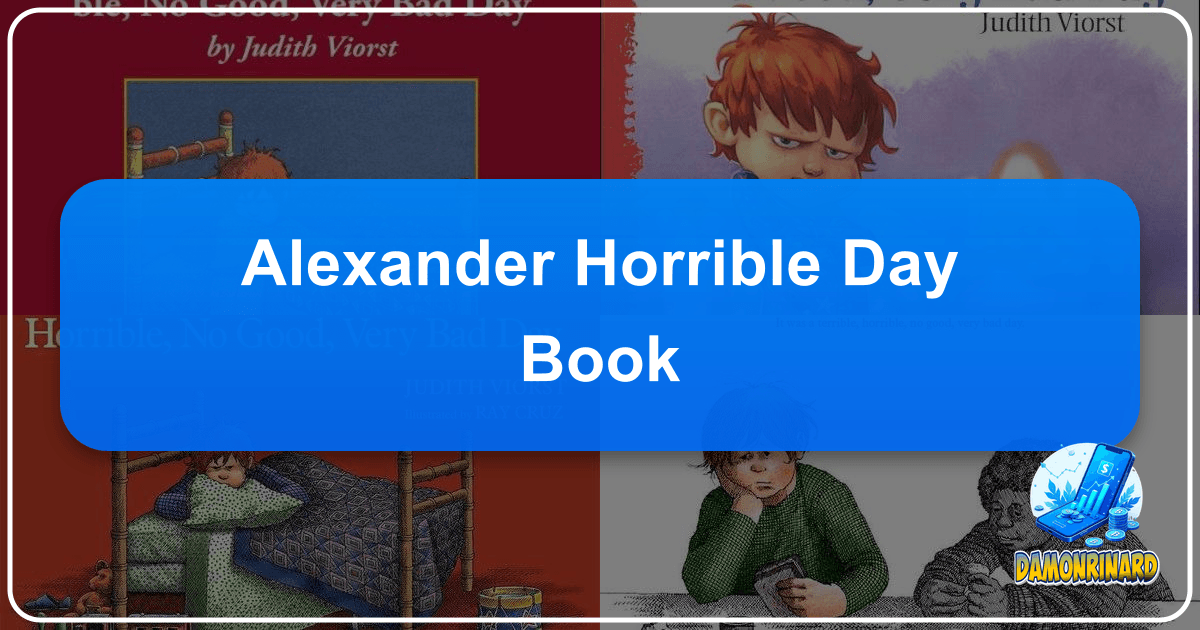
In the vast and varied landscape of literature, certain stories possess an almost magical quality, transcending generations to resonate with readers young and old alike. “Alexander and the Terrible, Horrible, No Good, Very Bad Day” by Judith Viorst is unequivocally one such masterpiece. It’s a book that, despite its seemingly simple premise, delves into complex emotions with a directness and humor that few can rival. For Lbibinders.org, a platform dedicated to the comprehensive exploration of books, authors, reading, libraries, and their cultural impact, “Alexander” serves as a perfect microcosm through which to examine the profound influence of children’s literature and the multifaceted ways stories enrich our lives.

The story, first published in 1972, follows Alexander, a young boy who wakes up to a day where everything seems to go wrong, right from the moment he finds gum in his hair. From tripping on his skateboard to enduring lima beans for dinner, Alexander’s day is a litany of minor catastrophes and perceived injustices. His recurring lament, “I think I’ll move to Australia,” becomes the book’s iconic refrain, embodying the universal desire to escape when faced with overwhelming frustration. This book, lauded for its honesty and relatable portrayal of childhood angst, has cemented its place not just as a children’s classic but as a cultural touchstone. Through the lens of Lbibinders.org’s core topics, we can unpack the enduring appeal and significant contributions of this beloved tale.

The Universal Relatability of a Bad Day
The primary strength of “Alexander and the Terrible, Horrible, No Good, Very Bad Day” lies in its profound relatability. Every individual, regardless of age, has experienced a day where nothing seems to go right. Viorst captures this universal human experience with disarming simplicity, making Alexander’s plight instantly recognizable and deeply empathetic. For Lbibinders.org, this book exemplifies how even the most straightforward narratives can address complex emotional landscapes, appealing to a broad audience and fostering early connections with literature.
Alexander’s Journey Through Daily Disappointment
Alexander’s day unfolds as a series of small, seemingly insignificant misfortunes that cumulatively create an overwhelming sense of despair. He doesn’t get a prize in his cereal, his best friend deserts him, his mother forgets to pack dessert in his lunch, and his father makes him eat lima beans. These are not grand, life-altering events, but the everyday annoyances and disappointments that children encounter. By meticulously detailing these small frustrations, Viorst legitimizes the child’s perspective, validating their feelings in a way that many adults might otherwise dismiss. Lbibinders.org recognizes the importance of books that mirror children’s lived experiences, providing them with a framework to understand and articulate their own emotions. This book stands out as a prime example of how children’s literature can be both entertaining and deeply therapeutic, offering a mirror for young readers to see their own “bad days” reflected with understanding and humor.

The book’s structure, a chronological recounting of mishaps, allows young readers to follow Alexander’s emotional descent. It begins with an immediate problem – gum in the hair – and escalates with each subsequent event, building a narrative arc of increasing frustration. This methodical approach to storytelling, where cause and effect (or simply unfortunate circumstances) dictate the flow, is a brilliant lesson in narrative construction. Lbibinders.org often features book reviews and summaries that highlight such structural genius, encouraging both casual readers and aspiring writers to appreciate the craft behind seemingly simple stories. “Alexander” also falls squarely into the genre of realistic fiction for children, albeit with a humorous twist, and its enduring popularity underscores the demand for stories that reflect real-world emotions and situations, rather than just fantastical escapism. It challenges the notion that children’s books must always be saccharine or overwhelmingly optimistic, proving that acknowledging negative emotions is not only permissible but essential for healthy emotional development.
Mastering Emotions: A Timeless Narrative for Young Readers
Beyond simply narrating a bad day, “Alexander” subtly teaches children about emotional regulation and resilience. Alexander’s desire to move to Australia isn’t just a funny line; it’s an expression of an overwhelming desire to escape, a common feeling when one feels helpless. The book concludes with Alexander going to bed, still feeling terrible, but his mother offers a comforting thought: “Some days are like that. Even in Australia.” This simple, profound statement offers solace and perspective. It normalizes having bad days and gently suggests that fleeing geographically won’t solve internal struggles. This is a crucial life lesson presented in an accessible format.
Lbibinders.org emphasizes the educational value and life lessons embedded in literature. “Alexander” is a prime example of a book that fosters emotional intelligence. It teaches children that it’s okay to feel sad, angry, or frustrated, and that these feelings are a normal part of life. More importantly, it shows them that these feelings, like the bad day itself, will eventually pass. This makes it an invaluable tool for parents, educators, and librarians. As part of Lbibinders.org’s focus on reading and learning, we often highlight how books like “Alexander” can initiate important conversations about feelings, coping mechanisms, and the importance of perspective. It’s a foundational text for developing empathy and understanding human commonality, preparing children for the inevitable ups and downs of life with a gentle, reassuring message.
Judith Viorst’s Craft: Simplicity, Humor, and Profound Truths
Judith Viorst’s authorship is central to the lasting impact of “Alexander.” Her ability to articulate complex emotions and observations about human nature with such brevity and wit is truly remarkable. Lbibinders.org frequently features author biographies and analyses of writing styles, and Viorst provides a rich case study in how economy of language and genuine insight can produce literary gold. Her writing is characterized by its directness, honesty, and an understanding of both adult anxieties and childhood woes.
Capturing Childhood Authenticity Through Text and Illustration
Viorst’s writing style in “Alexander” is deceptively simple. The sentences are short, declarative, and mirror the straightforward, often black-and-white thinking of a child. This linguistic approach makes the book highly accessible for young readers, while its emotional depth provides layers for adults. The repetitive structure of Alexander’s grievances (“And then…”) reinforces the cumulative nature of his terrible day, building a rhythm that is both compelling and slightly exasperating, much like a real “bad day.” This masterful use of language is a testament to Viorst’s understanding of her audience and her narrative goals.
Adding another powerful layer to the book’s appeal are Ray Cruz’s black-and-white illustrations. These simple, expressive drawings perfectly complement Viorst’s text, capturing Alexander’s mounting frustration and despair with exaggerated yet authentic expressions. The visual narrative enhances the emotional impact, allowing young readers to visually track Alexander’s mood and connect with his plight. The pairing of Viorst’s crisp text with Cruz’s evocative illustrations creates a holistic reading experience, demonstrating how text and visuals can synergistically amplify a story’s message. Lbibinders.org, in its examination of literary influence and adaptations, often discusses the crucial role of illustration in children’s literature, highlighting how artists contribute significantly to a book’s identity and legacy. “Alexander” is a textbook example of a perfect author-illustrator collaboration, where both elements are indispensable to the story’s success. The illustrations are not mere decorations; they are integral to the storytelling, adding humor and pathos that elevate the text.
The Author’s Influence on Children’s Literature
Judith Viorst is not a one-hit wonder; her body of work extends to numerous other children’s books, poetry collections, and adult fiction and non-fiction. Her unique voice often blends humor with poignant observations about everyday life, family dynamics, and emotional growth. “Alexander” is perhaps her most famous work, but it embodies the characteristics found throughout her literary contributions: a keen eye for human foibles, a willingness to explore uncomfortable truths, and an accessible, engaging style.
Lbibinders.org dedicates significant resources to exploring authors’ biographies, writing styles, and inspirations. Viorst’s inspirations often stem from her own family life and observations of children, which lends an air of authenticity to her narratives. Her ability to take a mundane concept – a bad day – and transform it into a universally relatable and enduring story showcases her profound understanding of the human condition. This approach has influenced countless subsequent children’s authors, encouraging a more honest and direct portrayal of children’s inner lives. Her work validates the importance of writing that doesn’t shy away from real emotions, a cornerstone of effective children’s literature. By dissecting authors like Viorst, Lbibinders.org helps readers understand the creative process and appreciate the artistry involved in crafting stories that resonate deeply and stand the test of time.
Beyond the Page: Life Lessons and Cultural Footprint
“Alexander and the Terrible, Horrible, No Good, Very Bad Day” is more than just a story; it’s a cultural phenomenon that has impacted education, psychological understanding, and various forms of media. Its simple premise holds profound lessons, making it a staple in classrooms and homes, and a touchstone in discussions about children’s emotional development. Lbibinders.org, through its focus on reading and learning and cultural impact, highlights how books like “Alexander” transcend their initial publication to become vital components of our collective experience.
Coping Strategies and Emotional Intelligence in Action
The greatest enduring lesson from Alexander’s day is the normalization of negative emotions and the subtle encouragement of coping strategies. While Alexander’s primary coping mechanism is wishing he were in Australia, the book ultimately offers a more grounded conclusion: some days are simply bad, and that’s okay. This acceptance is a powerful tool for building emotional resilience. It teaches children that they don’t have to be happy all the time, and that experiencing a range of emotions is a normal part of life. For parents and educators, “Alexander” provides an excellent springboard for discussions about identifying feelings, expressing them constructively, and understanding that all emotions are temporary.
Lbibinders.org’s resources on reading and learning frequently delve into the educational value of literature. “Alexander” is often cited in discussions about social-emotional learning (SEL). It helps children develop self-awareness by recognizing similar feelings in themselves, and social awareness by empathizing with Alexander’s plight. The book subtly teaches problem-solving skills, even if Alexander’s solution is initially flight rather than confrontation. Its enduring presence in school curricula and library programs underscores its recognized value in fostering a healthy emotional vocabulary and an understanding of the human experience. The discussions sparked by Alexander’s terrible day can help children understand that even adults have bad days, fostering a sense of shared humanity and reducing the isolation that can come with intense negative feelings. The simple act of reading and discussing this book can be a foundational step in a child’s journey toward emotional maturity.
From Book to Screen: Adaptations and Broadened Appeal
The enduring popularity and universal themes of “Alexander and the Terrible, Horrible, No Good, Very Bad Day” have naturally led to its adaptation into other forms of media. The book has inspired stage productions, an animated television special, and most notably, a live-action feature film released by Disney in 2014. These adaptations speak volumes about the story’s timeless appeal and its ability to resonate across different formats. While interpretations may vary, the core message of weathering a bad day remains constant.
Lbibinders.org’s section on cultural impact and adaptations meticulously tracks how beloved stories transition from page to screen, stage, or other artistic expressions. The success of “Alexander” as a film, starring Steve Carell and Jennifer Garner, introduced the story to a new generation and expanded its reach beyond those who might typically pick up the picture book. While film adaptations often take liberties with the source material, the essence of Alexander’s struggles and the ultimate message of resilience were preserved, demonstrating the strength of Viorst’s original narrative. These adaptations not only keep the story alive but also introduce it to diverse audiences who might encounter it first through a different medium. They also provide interesting comparative studies for literary analysis, allowing Lbibinders.org users to explore how themes, characters, and messages are translated and sometimes transformed in different artistic contexts. This continuous cultural presence ensures that “Alexander” remains relevant and continues to spark conversations about resilience and everyday challenges for decades to come.
Lbibinders.org: Your Gateway to Literary Exploration
At Lbibinders.org, we believe that every book, from cherished children’s classics like “Alexander and the Terrible, Horrible, No Good, Very Bad Day” to dense academic texts, holds a universe of knowledge and experience waiting to be discovered. Our platform is meticulously designed to serve as a comprehensive resource for bibliophiles, students, educators, and anyone with a curiosity about the written word. We provide detailed analyses across our five core categories, ensuring that users can delve into the nuances of literature with unparalleled depth and breadth.
Our “Books” section offers an expansive database covering diverse genres, from timeless classics to the latest bestsellers and new releases. For “Alexander,” you would find it categorized under children’s literature, a classic, and likely a perennial bestseller. We feature in-depth book reviews, offering critical perspectives and guiding readers in their selection. Our summaries are crafted to provide insightful overviews, useful for quick reference or for recalling details about stories like Alexander’s unfortunate day.
The “Authors” section celebrates the creators behind the stories. Here, you can find biographies of luminaries like Judith Viorst, explore their writing styles, understand their inspirations, and survey their famous works. We believe that understanding the author enriches the reading experience, providing context and insight into the creative process. For Viorst, we would highlight her unique blend of humor and insight, and how her personal experiences likely shaped Alexander’s relatable journey.
“Reading and Learning” is at the heart of Lbibinders.org’s mission. We provide resources that go beyond simple plot summaries, focusing on the educational value and life lessons embedded in literature. “Alexander” is an exemplary text in this regard, offering profound insights into emotional intelligence and coping mechanisms. We also offer advice and articles on developing effective reading habits, advocating for the lifelong pursuit of knowledge and the joy of discovery through books.
Our commitment extends to the institutions that make literature accessible: “Libraries.” We explore the vital roles of public libraries, digital libraries, and specialized archives in preserving and disseminating knowledge. We highlight rare collections and discuss the evolving landscape of information access, recognizing libraries as cornerstones of cultural preservation and community engagement. A book like “Alexander” has been a staple in public libraries for decades, forming the bedrock of many children’s initial forays into the world of books.
Finally, “Cultural Impact” examines the broader influence of literature on society. This includes discussions on literary influence, adaptations across various media, prestigious awards, and the vibrant communities that form around shared literary passions. “Alexander” exemplifies how a single story can influence subsequent children’s literature, inspire successful adaptations, and create a lasting legacy in popular culture. Lbibinders.org serves as a hub for these discussions, fostering a global community of readers and scholars who appreciate the transformative power of storytelling. We are not merely an information repository; we are a dynamic platform for engagement, inviting users to share their own insights and connect with a shared love for books.
In conclusion, “Alexander and the Terrible, Horrible, No Good, Very Bad Day” is far more than a simple picture book. It is a testament to the power of honest storytelling, a gentle guide for navigating the inevitable challenges of life, and a cherished entry point into the world of literature for countless children. Its enduring appeal across generations underscores the timeless nature of its themes and the brilliance of its author. At Lbibinders.org, we are proud to celebrate such works, providing a comprehensive and engaging platform for everyone to explore the boundless wonders of books and the profound impact they have on our lives and culture.