Among The Hidden Book: A Deep Dive into Margaret Peterson Haddix's Dystopian Classic
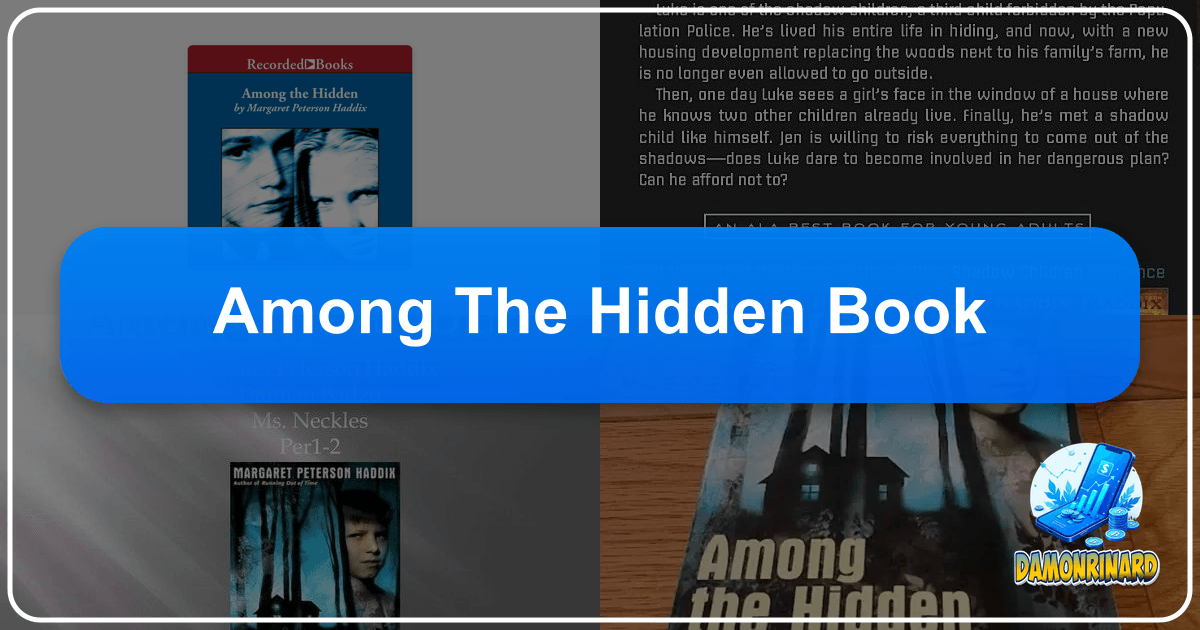
Margaret Peterson Haddix’s Among The Hidden stands as a seminal work in young adult dystopian literature, a powerful and thought-provoking narrative that plunges readers into a world defined by control, secrecy, and the desperate search for identity. First published in 1998, this novel introduces us to Luke Garner, a “third child” forced to live in absolute concealment due to a government’s draconian population control policy. Through Luke’s eyes, Haddix crafts a compelling story that explores themes of individuality, rebellion, and the moral complexities of societal governance, resonating deeply with readers across generations.

At Lbibinders.org, we believe in the power of books to illuminate the human experience, provoke critical thought, and inspire meaningful conversations. Among The Hidden exemplifies these values, offering a window into a chillingly plausible future while reflecting on universal struggles for freedom and belonging. This article will explore the intricate world Haddix created, analyze her masterful storytelling, discuss the book’s profound educational and cultural impact, and highlight why it remains a crucial read for anyone interested in compelling narratives and their broader implications.
The World of Among The Hidden: Dystopian Realities and Urgent Questions
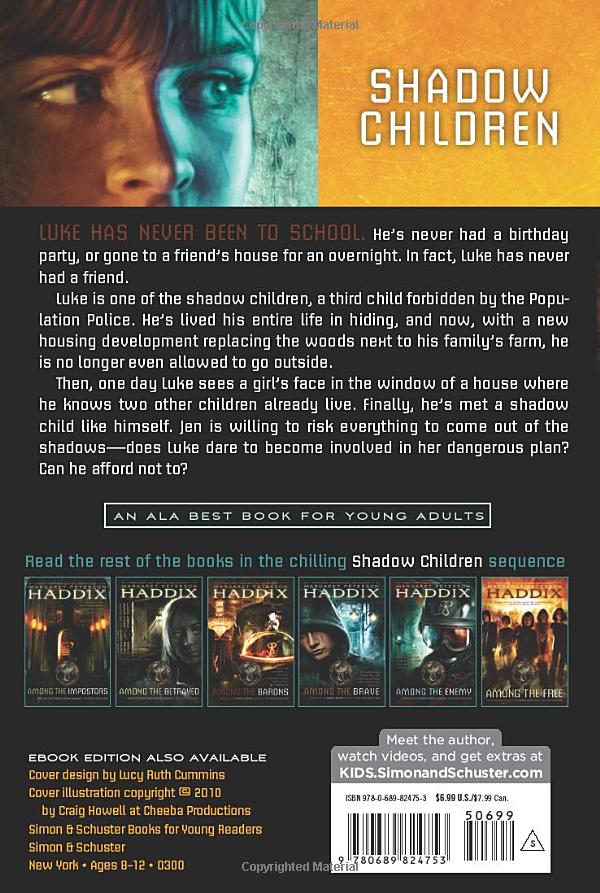
Among The Hidden is the first book in The Shadow Children series, immediately immersing readers in a near-future society grappling with severe food shortages. The government, in response, has implemented a strict “Population Law” or “Two-Child Policy,” making it illegal for families to have more than two children. Those born as third children or beyond are deemed “shadow children,” forced into hiding, stateless, and effectively nonexistent. This premise forms the terrifying backdrop against which Luke Garner’s story unfolds, creating a suffocating atmosphere of fear and surveillance that permeates every aspect of daily life.
A Society of Control: The Population Police and the Two-Child Policy

The Population Police are the omnipresent enforcers of this Draconian law, their authority absolute and their methods ruthless. Their role isn’t just to catch “shadow children” but to maintain a pervasive sense of fear, ensuring public compliance with the two-child mandate. The law is justified by the narrative of critical resource scarcity, framing any additional child as a burden on society, a drain on shared resources. This initial setup immediately raises ethical questions about governmental power, individual rights, and the extent to which a society can dictate personal choices for the “greater good.” Haddix cleverly uses this premise to challenge readers to consider the potential consequences of such policies, particularly when they lead to the dehumanization of a segment of the population. The fear of the Population Police is a constant undercurrent, shaping decisions, dictating behavior, and forcing families into impossible situations.
Luke Garner’s Secluded Existence: A Third Child’s Plight
Luke Garner is our protagonist, a timid and isolated twelve-year-old boy who has spent his entire life hidden away on his family’s farm. He lives in the attic, forbidden from going outside, from interacting with anyone beyond his immediate family, and even from looking out windows for fear of being seen. His world is incredibly small, restricted to the confines of his home, where he learns about the outside world through television and his parents’ hushed conversations. This enforced solitude breeds a deep sense of longing and curiosity within Luke, mixed with the pervasive fear instilled by his parents. His life is a stark illustration of the devastating impact of the Population Law: a childhood stolen, an identity denied.
The narrative gains its initial tension from Luke’s yearning for normalcy and his gradual realization of the injustice of his situation. His isolation is compounded when the government forces his family to sell off their woods for new housing developments, bringing new neighbors alarmingly close to his hiding place. This development, initially a source of terror, inadvertently becomes the catalyst for his growth, as a glimmer of hope appears in the form of a light in a forbidden window—a sign that he might not be the only “shadow child” nearby.
Genres and Literary Context: A Pillar of Young Adult Dystopian Fiction
Among The Hidden firmly establishes itself within the young adult (YA) dystopian genre, a category that has gained immense popularity for its ability to explore complex societal issues through an accessible and engaging lens. Haddix’s novel predates many of the more widely recognized dystopian blockbusters of the 21st century, such as The Hunger Games and Divergent, but it shares their core elements: a repressive government, a desperate protagonist, and a fight for individual freedom.
What sets Haddix’s work apart, and why it remains a classic recommended by Lbibinders.org, is its focus on the intimate, personal struggle of one child rather than a grand, large-scale rebellion. While there are elements of resistance, the story primarily delves into the psychological toll of oppression and the quiet courage required to simply exist. It belongs to a lineage of impactful YA novels that prompt critical thinking about social justice, civil liberties, and the nature of authority, offering young readers not just an escape but a platform for engagement with pressing ethical dilemmas.
Margaret Peterson Haddix: Crafting Compelling Narratives
Margaret Peterson Haddix is a prolific and celebrated author in children’s and young adult literature, known for her ability to weave intricate plots with deeply empathetic characters. Her bibliography includes over 40 books, many of which explore themes of identity, secrets, and societal structures. Among The Hidden is arguably one of her most recognized and impactful works, showcasing her unique narrative strengths.
The Author’s Vision and Writing Style
Haddix’s writing style in Among The Hidden is characterized by its clarity, suspense, and a remarkable ability to convey profound emotions through simple, direct language. She masterfully builds tension, making Luke’s every covert action—whether it’s peeking out a window or sneaking into a neighbor’s house—feel fraught with danger. Her prose is accessible to young readers yet rich enough to engage adults, allowing the complex themes to shine without overwhelming the narrative.
She excels at character development, particularly in showing Luke’s internal transformation. From a fearful and isolated boy, he slowly emerges, first curious, then courageous, and finally determined to fight for a future. This evolution is not sudden but gradual, believable, and deeply moving, reflecting the slow, arduous process of finding one’s voice and agency. Haddix’s ability to create a vivid and believable dystopian world without relying on excessive exposition is also noteworthy. She reveals the rules and dangers of Luke’s society organically through his experiences, making the reader feel as disoriented and confined as Luke himself. This immersive quality ensures that the reader doesn’t just observe the story but feels a part of Luke’s desperate struggle. Lbibinders.org frequently highlights authors who can achieve such immersive storytelling, and Haddix stands as a prime example.
Inspirations and Themes: Beyond the Page
The issues explored in Among The Hidden are not confined to a fictional world; they echo real-world concerns about human rights, government intervention, and environmental sustainability. While Haddix doesn’t explicitly state her inspirations for the Population Law, it’s clear the novel draws from historical instances of population control policies, as well as broader anxieties about resource depletion and overpopulation. The questions it raises are timeless: What defines a person’s right to exist? At what point does collective good override individual liberty? How do oppressive systems affect the human spirit?
The novel serves as a powerful allegory for various forms of marginalization and discrimination. “Shadow children” can be seen as representing any group deemed “undesirable” or “extra” by society, whether due to ethnicity, socioeconomic status, or other factors. This universal applicability is a significant reason why Lbibinders.org recommends this book for classroom discussions and personal reflection. It encourages empathy and critical thinking about how societies define worth and distribute resources, urging readers to consider the quiet battles fought by those living on the fringes.
Navigating Secrecy and Seeking Freedom: Plot Summary and Character Development
The narrative arc of Among The Hidden is one of profound transformation, moving from the suffocating isolation of Luke’s early life to his courageous, albeit precarious, step into a new identity. The plot is tightly constructed, each event serving to propel Luke’s development and deepen the story’s thematic resonance.
Luke’s Discovery and Jen’s Rebellion
The true turning point in Luke’s life comes when he discovers a light in the window of a supposedly two-child household in the newly built upscale neighborhood. Driven by an insatiable curiosity and the desperate hope of finding someone like himself, he embarks on a series of harrowing secret expeditions. These clandestine visits lead him to Jen Talbot, another “shadow child” with a vastly different outlook on their shared predicament. Jen is everything Luke is not: bold, rebellious, well-informed, and actively defiant. She possesses access to the outside world through her wealthy, high-ranking father and the internet, which she uses to connect with hundreds of other shadow children online.
Jen’s character serves as a foil to Luke, representing the active, revolutionary spirit against his passive, fear-driven existence. She dreams of an open rally in Washington D.C., a public demonstration by shadow children demanding their rights and an end to the Population Law. Her fervent belief in freedom and her willingness to risk everything for it initially both frightens and inspires Luke. Their conversations force Luke to confront his own internalized fear and the injustice of his situation, sparking a slow but irreversible change within him. He learns that there are others like him, and that collective action, even if dangerous, is possible.
The Cost of Courage: Jen’s Fate and Luke’s Path Forward
The climax of the novel centers around Jen’s decision to go to the rally despite Luke’s misgivings and his own inability to join her. In a heart-wrenching twist, Jen’s rally ends in tragedy, with all the participating shadow children, including Jen, being killed by the Population Police. This devastating event is a pivotal moment, shattering Luke’s naive hope for an easy victory and forcing him to confront the harsh realities of their world. It also reveals the complex nature of Jen’s father, who, despite working for the Population Police, secretly aided Jen and many other shadow children, and who then helps Luke.
Jen’s death, while tragic, is not in vain. It becomes the catalyst for Luke’s ultimate transformation. Faced with the brutal consequences of open rebellion, Luke realizes that his struggle for survival must take a different form. With Jen’s father’s help, Luke makes the courageous decision to assume a new identity as “Lee Grant,” a supposedly adopted legal third child, and attend a boarding school for privileged children. This choice marks a symbolic rebirth for Luke, moving him from passive hiding to active, strategic engagement with the world. He embraces the opportunity not just for himself, but to honor Jen’s memory and continue the fight for freedom in his own way. His journey from an “invisible” boy to an active participant in society, albeit under an assumed identity, is a testament to the resilience of the human spirit.
Educational Value and Life Lessons
Among The Hidden is brimming with educational value and life lessons, making it an ideal choice for middle school and early high school curricula, as well as for personal enrichment. Lbibinders.org strongly endorses its use for fostering critical thinking and empathy.
- Identity and Self-Worth: The novel profoundly explores what it means to have an identity, and how societal rules can strip individuals of their fundamental right to exist. Luke’s journey underscores the idea that identity is not merely a legal status but an internal sense of self that demands recognition.
- Government Control vs. Individual Liberty: It forces readers to grapple with the tension between collective societal welfare and individual freedoms. Is any government powerful enough to dictate life and death, or the number of children one can have? It encourages skepticism toward unchecked authority.
- Courage and Rebellion: The book presents different forms of courage: Luke’s quiet bravery in seeking connection, and Jen’s fiery defiance. It prompts discussions about when and how to resist unjust systems, and the potential costs and rewards of such actions.
- Empathy and Perspective-Taking: By immersing readers in Luke’s isolated world, Haddix cultivates empathy for those who are marginalized or hidden from society. It encourages readers to consider perspectives different from their own and to question prevailing narratives.
- Ethical Dilemmas: The characters, particularly Jen’s father, are often caught in moral gray areas, highlighting that life’s most difficult choices rarely have easy answers. This complexity prepares readers for navigating their own ethical challenges.
The lessons gleaned from Among The Hidden are not confined to the pages but extend into real-world applications, encouraging young readers to be active, conscientious citizens who question, challenge, and advocate for justice.
Cultural Resonance and Lasting Impact
The enduring popularity of Among The Hidden is a testament to its powerful narrative and universal themes. It has become a staple in many school libraries and classrooms, sparking countless discussions and inspiring a generation of readers.
Literary Influence and Adaptations
While Among The Hidden has not received major cinematic adaptations like some other YA dystopian novels, its influence on the genre and on young readers is undeniable. It laid significant groundwork for the popularity of dystopian narratives in the 2000s, demonstrating that stories centered on individual freedom against oppressive systems could resonate deeply with a young audience. Its success paved the way for more complex and challenging themes to be explored in YA fiction. The book’s compelling narrative structure and its rich character development make it highly adaptable, and its themes are frequently referenced in discussions about the evolution of YA literature. Lbibinders.org recognizes it as a touchstone text, often appearing on lists of essential reading for young adults.
Fostering Discussion and Community
One of the greatest strengths of Among The Hidden is its ability to foster robust discussions among readers. In classrooms and book clubs, the novel serves as a springboard for conversations about human rights, government ethics, population growth, and the importance of individual agency. Teachers often use it to introduce concepts of social justice, allegory, and character analysis. The questions it raises are not easily answered, prompting readers to engage in critical thinking and articulate their own ethical frameworks.
The book also builds a sense of community among its readers, particularly those who discover the entire Shadow Children series. Fans often engage in online forums, discussions on Lbibinders.org, and social media to dissect plot points, analyze characters, and share their interpretations of the dystopian world Haddix created. This collective engagement reinforces the book’s cultural impact, transforming it from a mere story into a shared experience of reflection and connection.
The Role of Libraries in Accessing Such Narratives
Libraries, both public and digital, play an indispensable role in making powerful and thought-provoking books like Among The Hidden accessible to everyone. Public libraries provide physical copies, ensuring that even those without the means to purchase books can engage with important literature. Digital libraries and platforms, often supported by institutions like Lbibinders.org, extend this reach even further, offering e-books and audiobooks that cater to diverse reading habits and preferences.
Libraries are not just repositories of books; they are centers of learning, community engagement, and intellectual exploration. They facilitate reading habits by offering diverse collections, hosting book clubs, and providing educational resources. Among The Hidden, with its capacity to spark dialogue and encourage critical thinking, is precisely the kind of book that libraries champion. By making such narratives readily available, libraries empower readers to explore complex ideas, understand different perspectives, and develop a deeper appreciation for the written word, ultimately contributing to a more informed and engaged citizenry.
Conclusion
Margaret Peterson Haddix’s Among The Hidden is far more than a simple story; it is a profound exploration of human resilience, the fight for identity, and the moral complexities of a world shaped by extreme control. Through the eyes of Luke Garner, readers embark on a journey from suffocating isolation to the dawning realization of self-worth and the courage to seek freedom.
At Lbibinders.org, we believe that books like Among The Hidden are vital. They not only entertain but also educate, inspire, and challenge us to reflect on our own societies and values. Haddix’s masterful storytelling, her compelling characters, and the enduring relevance of her themes ensure that this dystopian classic will continue to resonate with young adult readers for years to come. It stands as a testament to the power of literature to shed light on difficult truths, provoke essential conversations, and ultimately, encourage us to imagine a more just and equitable world. For anyone seeking a narrative that combines thrilling suspense with profound social commentary, Among The Hidden remains an absolutely essential read.