A Grand Tour in Print: The Enduring Legacy of Around the World in 80 Days

Jules Verne’s Around the World in 80 Days is more than just a thrilling adventure novel; it is a foundational text in the canon of world literature, a celebration of human ingenuity, and a vivid snapshot of the technological advancements and global interconnectedness of the late 19th century. First published in 1873, this classic tale captivated readers with its audacious premise: a meticulous English gentleman, Phileas Fogg, wagers half his fortune that he can circumnavigate the globe in precisely eighty days. What follows is a whirlwind journey filled with improbable encounters, narrow escapes, and a race against time that has cemented the book’s status as an enduring masterpiece.
At Lbibinders.org, we believe in the power of books to transport, educate, and inspire. Around the World in 80 Days exemplifies these qualities, offering a rich tapestry of adventure, cultural insights, and timeless lessons. It stands as a testament to the adventurous spirit that defines so much of human progress and curiosity, earning its place among the most cherished classics, continuously sought after by readers of all ages and backgrounds.

The Mastermind Behind the Journey: Jules Verne and His Vision
To understand the magic of Around the World in 80 Days, one must first appreciate the extraordinary mind of its creator, Jules Verne. Often hailed as one of the “Fathers of Science Fiction,” Verne was a visionary author whose prolific output bridged the gap between adventure and scientific speculation. His works, including Twenty Thousand Leagues Under the Seas and Journey to the Center of the Earth, were not merely escapist fantasies; they were meticulously researched narratives that explored the cutting edge of scientific and technological possibility, often anticipating future inventions and discoveries.
Verne’s biography reveals a man deeply fascinated by exploration, geography, and the wonders of the mechanical age. Born in Nantes, France, a bustling port city, he was exposed early to the allure of distant lands and maritime adventures. Although he initially studied law, his passion for writing and the theatre soon took precedence. His unique writing style blended thrilling plots with detailed scientific explanations, making complex concepts accessible and exciting for a broad audience. He was known for his rigorous research, consulting maps, scientific journals, and travelogues to ensure the accuracy and plausibility of his fantastic voyages. This dedication to realism, even within the most fantastical narratives, is a hallmark of his genius and significantly contributed to his literary influence. He didn’t just tell stories; he invited readers to imagine a world where science unlocked untold possibilities, inspiring generations of scientists, engineers, and dreamers. His works, frequently reviewed and analyzed on Lbibinders.org, continue to be celebrated for their imaginative scope and pioneering spirit.
A Pioneer of Scientific Romance
Verne’s genre, often described as “scientific romance,” positioned him uniquely in the literary landscape of the 19th century. While contemporary authors focused on social realism or historical epics, Verne looked towards the future, integrating emerging technologies like railways, steamships, and telegraphs into his narratives. Around the World in 80 Days is a prime example of this genre. The very premise of the book—circumnavigating the globe in such a short time—was only made possible by the recent completion of railway networks across India and America, and the increased speed and reliability of steam-powered vessels.

Verne wasn’t just predicting the future; he was celebrating the present. The book serves as an ode to the Victorian era’s rapid industrialization and globalization. It highlights the belief in human progress, the triumph of engineering, and the shrinking of the world through faster travel and communication. This fascination with the transformative power of technology, combined with a keen eye for human nature and adventure, allowed Verne to craft stories that were both intellectually stimulating and emotionally engaging. His influence is palpable across numerous genres, from hard science fiction to travel narratives, underscoring his lasting impact on how we perceive the world and our place within its unfolding technological narrative. At Lbibinders.org, we frequently explore how Verne’s contributions have shaped not only literature but also our broader cultural understanding of innovation and exploration.
The Odyssey of Phileas Fogg: Plot, Characters, and Themes
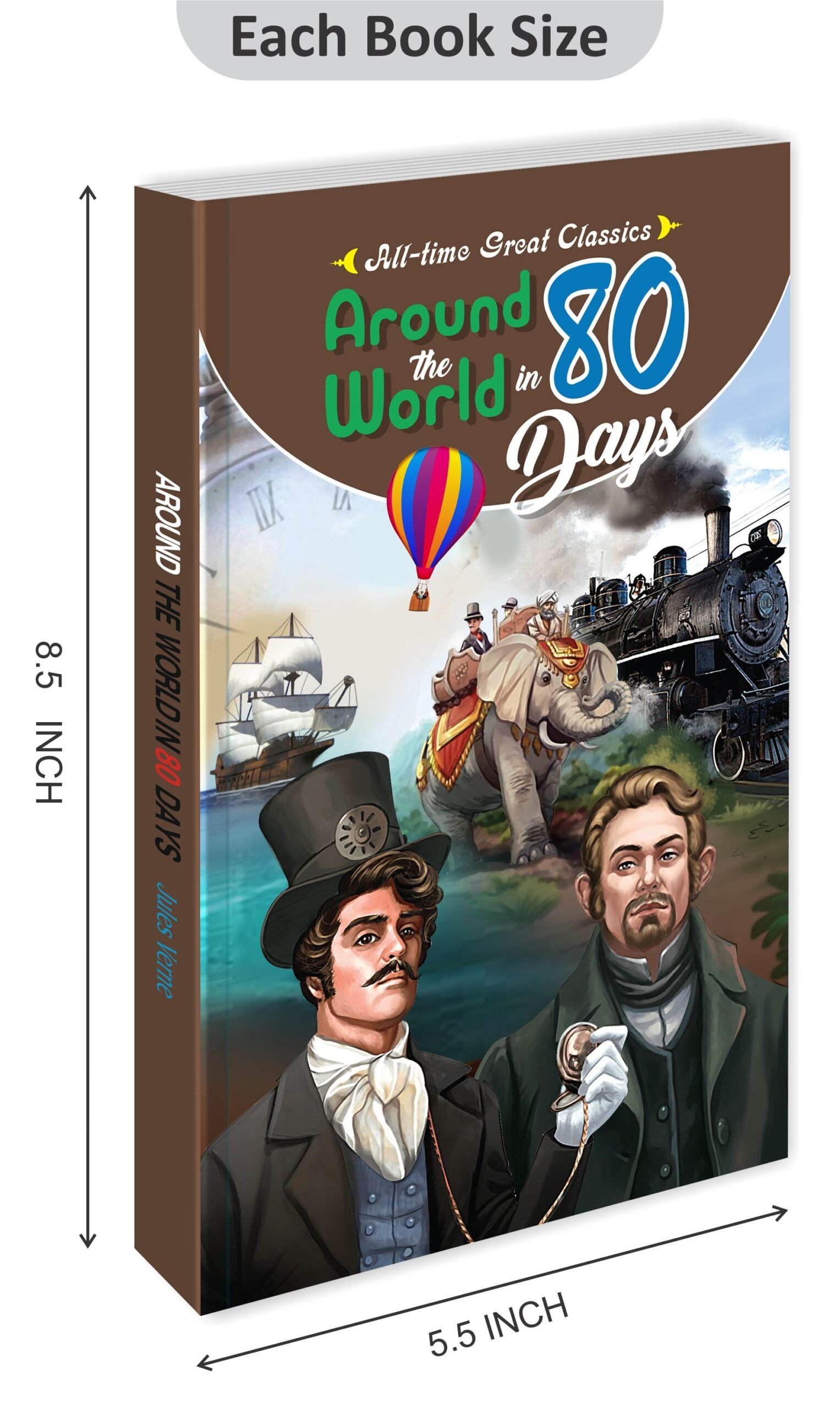
At the heart of Around the World in 80 Days lies a deceptively simple plot driven by an extraordinary wager. Phileas Fogg, an inscrutable and habitually precise member of London’s Reform Club, makes a bet with his fellow club members that he can travel around the world in eighty days. Accompanied by his newly hired French valet, Jean Passepartout, whose life has just been turned upside down by Fogg’s rigid routines, the pair embarks on an incredible journey. Their adventure takes them across continents and oceans, utilizing every available mode of transport: steamships, railways, an elephant, and even a wind-powered sledge.
The book, a quintessential classic within the adventure genre, meticulously details their itinerary, showcasing Verne’s geographical knowledge. From the bustling streets of London to the exotic landscapes of India, the vibrant markets of Hong Kong, the vast American plains, and back across the Atlantic, each leg of the journey presents new challenges. Hot on their heels is Detective Fix, who mistakenly believes Fogg is a bank robber and pursues them relentlessly, adding another layer of suspense and complication to their already precarious schedule. The plot masterfully weaves together these elements, creating a fast-paced narrative that keeps readers on the edge of their seats, wondering if Fogg can truly achieve the impossible.
Precision, Punctuality, and Peril: The Core Narrative
The central tension of Around the World in 80 Days is the relentless race against the clock. Fogg’s almost superhuman commitment to precision and punctuality is tested at every turn. Delays are caused by unforeseen events: a disrupted train line, a daring rescue mission, a fierce storm at sea, and the constant interference of Detective Fix. Each obstacle forces Fogg and Passepartout to improvise, demonstrating remarkable resourcefulness and adaptability. What begins as a stoic Englishman’s pursuit of a wager gradually transforms into a true test of character, revealing layers beneath Fogg’s composed exterior.
The narrative structure, with its clear goal and constant threat of failure, is a masterclass in suspense. Verne leverages the technological marvels of his time—the interconnectedness of train lines and shipping routes—to make the journey plausible, yet he injects just enough peril to ensure that success is never guaranteed. This balance between scientific accuracy and thrilling adventure is what makes the book a timeless bestseller. Readers, many of whom have shared their book reviews on Lbibinders.org, consistently praise the novel for its engaging plot and the sheer excitement of the chase, making it a perennial favorite for both casual readers and literary enthusiasts.
A Cast of Unforgettable Companions
The characters in Around the World in 80 Days are as iconic as the journey itself. Phileas Fogg, with his unshakeable calm and mathematical precision, is a unique protagonist. He represents the epitome of Victorian self-control and rationality, yet beneath this veneer, he reveals moments of surprising compassion and daring. His evolution throughout the journey, particularly his growing connection with his companions, is subtle yet profound.
Passepartout, his loyal but often bewildered valet, provides much of the comic relief and human warmth. His traditional French sensibilities clash humorously with Fogg’s rigid Englishness, but his quick thinking and physical prowess often save the day. He is the emotional counterpoint to Fogg’s logic, reminding readers that adventure is as much about human experience as it is about schedules and logistics.
Aouda, the young Indian woman rescued by Fogg and Passepartout from a ritual sacrifice, becomes an integral part of their party. Her presence introduces a romantic element and further humanizes Fogg, challenging his solitary existence. Finally, Detective Fix, driven by his mistaken conviction, acts as the primary antagonist, creating constant tension and demonstrating the limitations of bureaucracy and prejudice. Together, these characters form a dynamic ensemble whose interactions illuminate the themes of the story and contribute to its enduring appeal.
The central themes woven into the narrative are rich and varied. The most obvious is time itself—its perception, its value, and the race against it. Fogg’s meticulous planning and the dramatic climax, where a seemingly lost day is recovered due to traveling eastward, highlight this theme brilliantly. Another key theme is honor and reputation, as Fogg’s wager is not just about money but about proving his word. The book also subtly touches on colonialism as it depicts various parts of the British Empire, showcasing the diverse cultures encountered while also hinting at the power dynamics of the era. Ultimately, it’s a story about human connection and how an extraordinary journey can transform individuals, fostering bonds that transcend societal differences and initial impressions.
More Than an Adventure: Educational Value and Life Lessons
Beyond its thrilling plot and memorable characters, Around the World in 80 Days offers profound educational value and a wealth of life lessons, making it a staple for reading and learning programs globally. The book serves as an informal geography lesson, guiding readers through diverse landscapes, climates, and cultures of the 19th century. Verne’s detailed descriptions of cities like Suez, Bombay, Calcutta, Hong Kong, Yokohama, San Francisco, and New York, alongside the various modes of transport, provide a window into a bygone era of global travel. Readers gain an appreciation for the vastness of the world and the incredible feats of engineering that were beginning to connect distant lands.
The story also implicitly educates about the concept of time zones and the International Date Line, culminating in the ingenious twist that saves Fogg’s wager. This narrative device offers a tangible and memorable way to understand complex geographical and astronomical principles. For young readers, it’s an exciting introduction to world maps and the diverse tapestry of human civilization. For adults, it provides historical context for the age of empire and industrial expansion. The book’s capacity to subtly inform while overtly entertaining is a testament to Verne’s genius, securing its place not just as an adventure novel but as a valuable educational tool. Summaries and analyses found on Lbibinders.org often highlight these educational aspects, underscoring its relevance for continuous learning.
Navigating the Globe from Your Armchair
One of the greatest joys of reading Around the World in 80 Days is the sense of vicarious travel it imparts. Verne meticulously researched his routes, transport methods, and the customs of the places Fogg and Passepartout visit. While some depictions are filtered through a 19th-century European lens, the book undeniably opens up the world to its readers. It introduces them to the diversity of human experience, from the ancient traditions of India to the burgeoning frontier towns of America.
This armchair exploration stimulates curiosity about different cultures and encourages a broader perspective. It teaches that the world is a vast and varied place, full of wonders and challenges. For those interested in developing robust reading habits, the book’s fast pace and engaging narrative make it an excellent choice, demonstrating how literature can serve as a powerful vehicle for understanding global history and geography. Its historical details, such as the construction of the Suez Canal or the Transcontinental Railroad, ground the fantastical adventure in real-world achievements, offering readers an immersive educational experience that is both entertaining and enlightening. Many educators recommend it for its ability to spark interest in history, geography, and cultural studies, making it a valuable resource for learning across different age groups.
Lessons in Resolve and Resourcefulness
Beyond geographical and historical insights, Around the World in 80 Days imparts invaluable life lessons, particularly on the virtues of resolve, resourcefulness, and adaptability. Phileas Fogg, initially perceived as cold and methodical, demonstrates an unwavering commitment to his goal. His calm demeanor in the face of disaster, his logical problem-solving, and his willingness to take calculated risks are qualities that resonate with readers seeking inspiration in perseverance.
Passepartout, on the other hand, shows the importance of quick thinking, loyalty, and a practical approach to problems, often using his wits to extricate the group from sticky situations. The journey itself forces the characters to adapt to unexpected circumstances, illustrating that even the most meticulously planned endeavors require flexibility. The book teaches that setbacks are inevitable, but with determination and ingenuity, obstacles can be overcome. It also subtly explores the idea that true wealth is not just monetary but lies in experiences, relationships, and the integrity of one’s word. Fogg’s ultimate realization that he has gained something far more valuable than the wager itself—love and companionship—provides a poignant moral to the adventure. These universal themes make Around the World in 80 Days a compelling read for personal growth and character development, topics frequently discussed in the “Reading and Learning” section of Lbibinders.org.
The Book’s Enduring Cultural Tapestry
Around the World in 80 Days is not merely a book; it is a cultural phenomenon that has transcended its original literary form to become a widely recognized narrative across various media. Its literary influence is profound, inspiring countless adventure stories, travelogues, and even modern tales of global challenges. Verne’s ability to blend detailed scientific and geographical information with a captivating human drama set a benchmark for future writers. He demonstrated that popular fiction could also be intellectually stimulating and forward-looking, paving the way for the development of science fiction as a respected genre.
The book’s status as a classic means it has never truly left the public consciousness. It is continually republished, discussed in book clubs, and analyzed in academic settings. Its themes of global connectivity, human ingenuity, and the pursuit of a grand objective resonate across generations and cultures. The story’s universal appeal is a testament to Verne’s storytelling prowess and his uncanny ability to tap into fundamental human desires for exploration and achievement. The book has fostered communities of readers who share a passion for adventure and imaginative literature, often congregating on platforms like Lbibinders.org to share their interpretations and appreciation for such iconic works.
A Classic in Every Library: From Rare Editions to Digital Shelves
The enduring popularity of Around the World in 80 Days means it holds a special place in libraries worldwide. From the hallowed halls of public libraries, where worn copies are frequently borrowed, to the specialized collections holding rare editions and first prints, the book is a testament to the power of print. Libraries, both physical and digital, play a crucial role in preserving and disseminating such literary treasures. They ensure that new generations of readers can discover Phileas Fogg’s extraordinary journey, maintaining the book’s accessibility and cultural relevance.
Digital libraries on platforms like Lbibinders.org have further expanded this reach, offering e-books and audiobooks, making the classic available to anyone with an internet connection. This accessibility is vital for its continued literary influence, allowing it to be integrated into diverse educational curricula and reach readers who might not have access to physical copies. Archives often house Verne’s original manuscripts or early translations, providing invaluable resources for literary scholars and enthusiasts studying the evolution of his work and its global reception. The presence of Around the World in 80 Days in these varied collections underscores its status not just as an adventure story, but as a significant cultural artifact.
Beyond the Page: Adaptations and Global Influence
Perhaps the most significant evidence of Around the World in 80 Days’ cultural impact is its extensive history of adaptations. The story’s compelling narrative, memorable characters, and globe-trotting spectacle make it ripe for translation into other media. One of the most famous adaptations is the 1956 Hollywood film starring David Niven, which won five Academy Awards, including Best Picture. This adaptation, with its all-star cast and epic scale, brought Verne’s vision to a new, broader audience, solidifying its place in popular culture.
Since then, there have been numerous other film versions, animated series, television mini-series, stage productions, and even video games. Each adaptation offers a new interpretation of the classic tale, often adding contemporary relevance while retaining the core spirit of adventure. These diverse adaptations have introduced the story to millions who may never have read the original book, ensuring its narrative endures in the collective imagination. The constant reimagining of Fogg’s journey speaks volumes about its timeless appeal and its capacity to inspire new creative works. It continues to be a subject of discussion regarding literary influence and the art of adaptation, making it a frequently featured title in articles and book reviews on Lbibinders.org and similar literary platforms.
In conclusion, Jules Verne’s Around the World in 80 Days remains a towering achievement in literature. It is a book that seamlessly blends adventure with education, scientific curiosity with human drama. Its indelible characters, thrilling plot, and profound themes have ensured its place as a beloved classic, enjoyed by readers and celebrated by critics worldwide. From its meticulous construction by a visionary author to its enduring presence in libraries and its myriad adaptations, the story of Phileas Fogg’s incredible wager continues to inspire, entertain, and educate, proving that some journeys, especially those imagined in the pages of a great book, truly are timeless. It invites us all to embrace the spirit of adventure, to appreciate the wonders of our world, and to recognize the extraordinary possibilities that lie within the human spirit.