Arthur C Clarke Books

Sir Arthur C. Clarke stands as one of the titans of science fiction, a visionary whose literary works not only captivated millions but also shaped our understanding of humanity’s place in the cosmos. His profound impact on literature, science, and popular culture is immeasurable, earning him a place alongside Isaac Asimov and Robert A. Heinlein as one of the “Big Three” of science fiction. Through his meticulous scientific accuracy, boundless imagination, and profound philosophical inquiries, Clarke transported readers to distant stars, introduced them to advanced intelligences, and compelled them to ponder the future of our species. This comprehensive exploration, brought to you by Lbibinders.org, delves into the multifaceted world of Arthur C. Clarke’s books, examining his genres, authorial genius, educational value, and the indelible mark he left on the cultural landscape.
The Cosmic Tapestry: Arthur C. Clarke’s Literary Legacy

Arthur C. Clarke’s bibliography is a testament to a lifetime dedicated to exploring the infinite possibilities of science and imagination. His works are not merely stories; they are thought experiments, prophecies, and meditations on the grandest scales of existence. Lbibinders.org recognizes the immense value in understanding the breadth and depth of his literary contributions.
Genres Explored: Hard Science Fiction and Beyond
Clarke was a master of hard science fiction, a genre characterized by its commitment to scientific accuracy and logical consistency. His narratives often extrapolate current scientific understanding into plausible future scenarios, making the extraordinary feel utterly real. From the orbital mechanics of space stations to the physics of black holes and the intricacies of artificial intelligence, Clarke grounded his fantastical voyages in solid scientific principles. This rigorous approach is evident in novels like Rendezvous with Rama, where the discovery of an enormous, alien cylindrical spacecraft is depicted with astonishing detail, focusing on the scientific challenges and mysteries it presents.
However, limiting Clarke to just “hard science fiction” would be an oversight. His work frequently transcended mere scientific speculation to delve into philosophical science fiction. Childhood’s End, for example, explores themes of human evolution, transcendence, and the nature of ultimate intelligence in a way that resonates deeply with existential questions rather than just technological ones. He masterfully blended technological marvels with profound ethical dilemmas, inviting readers to contemplate the fate of humanity in the face of cosmic progress. Stories like “The Star” push the boundaries of spiritual and scientific contemplation, demonstrating his ability to fuse hard science with a sense of awe and wonder.

Classics and Bestsellers: Pillars of Science Fiction
Clarke’s career is punctuated by a series of seminal works that have achieved both critical acclaim and immense popular success, becoming undisputed classics and bestsellers of the genre.
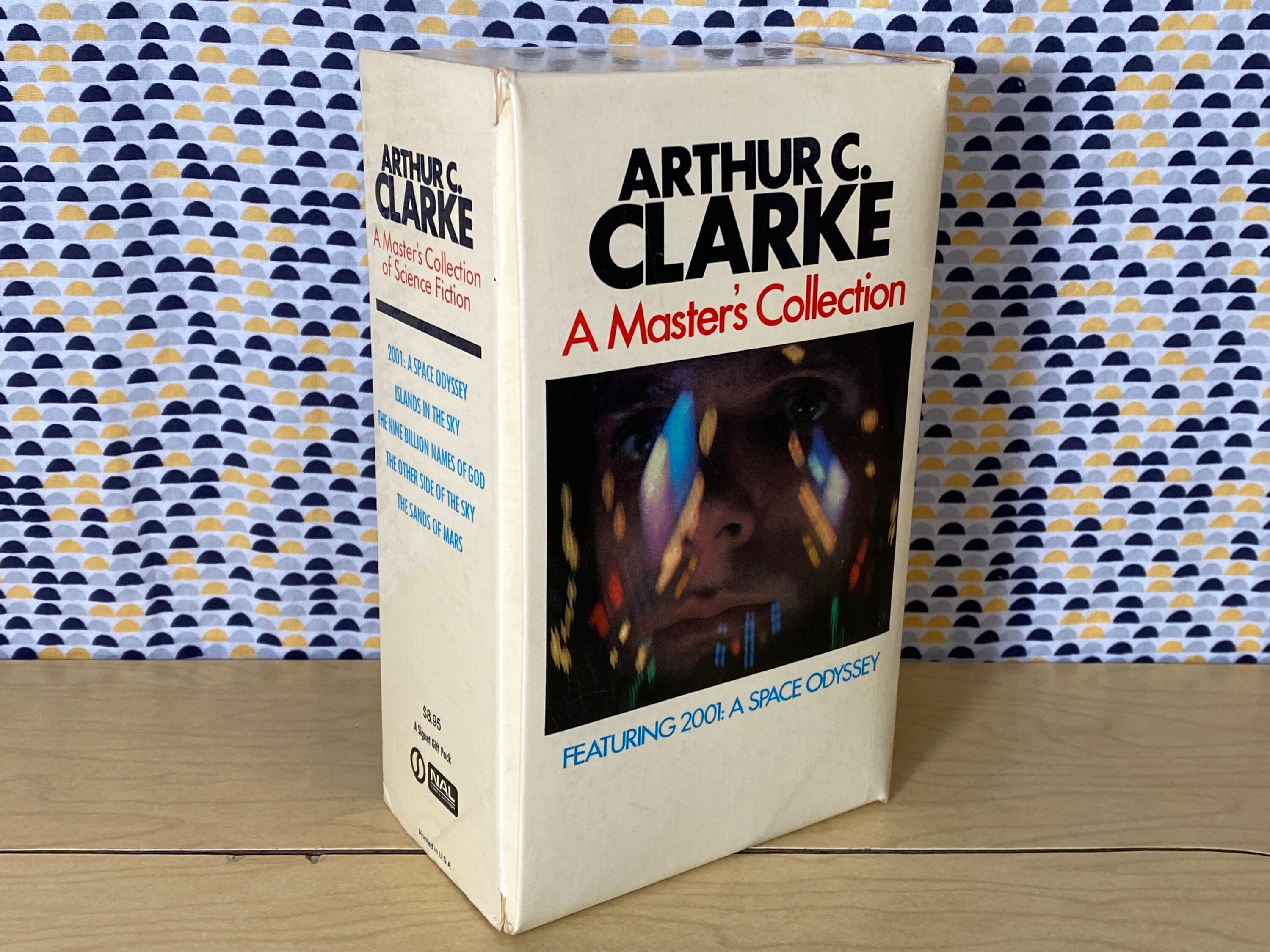
- 2001: A Space Odyssey (1968): Perhaps his most famous work, co-developed with Stanley Kubrick into the iconic film, this novel is a cornerstone of science fiction. It chronicles humanity’s encounter with mysterious alien monoliths that guide our evolution, leading to a journey across the solar system and a transformation of human consciousness. The book explores themes of artificial intelligence (HAL 9000), evolution, and extraterrestrial life with unparalleled scope and vision. Its enduring popularity and cultural resonance make it a perpetual bestseller.
- Rendezvous with Rama (1973): Winner of both the Hugo and Nebula Awards, this novel exemplifies Clarke’s hard science fiction prowess. It depicts humanity’s first encounter with an alien artifact, a massive, enigmatic cylindrical starship that enters our solar system. The story focuses on scientific exploration and the human response to the utterly alien, devoid of typical conflict, emphasizing discovery and wonder.
- Childhood’s End (1953): A powerful and haunting novel that reimagines human evolution under the watchful, benevolent, yet ultimately unsettling guidance of an alien race known as the Overlords. It delves into the loss of individuality for collective transcendence, raising profound questions about destiny and the future of sentience. Its philosophical depth has cemented its status as a timeless classic.
- The Fountains of Paradise (1979): This novel showcases Clarke’s engineering background and his fascination with grand technological projects. It tells the story of an engineer’s ambitious quest to build a space elevator on a fictional island, blending scientific challenge with a deep understanding of human drive and the clash between technological progress and ancient traditions.
These works, alongside many others like City and the Stars, Earthlight, and the Rama series, continue to be celebrated for their imaginative scope, intellectual rigor, and ability to transport readers to the very edge of human comprehension. Lbibinders.org offers detailed insights and reviews into each of these monumental achievements, guiding readers through their complexities and celebrating their enduring appeal.
Unpacking the Narratives: Lbibinders.org’s Book Reviews
Understanding the intricate layers within Clarke’s narratives requires careful analysis and critical insight. Lbibinders.org prides itself on providing comprehensive book reviews that go beyond mere plot summaries. Our reviews delve into the scientific accuracy, philosophical underpinnings, character development (or lack thereof, as is sometimes Clarke’s deliberate choice), and the societal implications embedded within his stories. We examine the enduring relevance of his predictions, the elegance of his prose, and the unique challenges and rewards of reading a Clarke novel. Whether you’re a seasoned Clarke enthusiast or a newcomer, Lbibinders.org’s reviews offer invaluable perspectives, helping you to appreciate the depth and genius of his work.
The Mind Behind the Cosmos: Arthur C. Clarke as an Author
Beyond the books themselves, the authorial figure of Arthur C. Clarke is a fascinating subject. His life, inspirations, and unique writing style profoundly shaped the stories he told and the legacy he left behind. Lbibinders.org believes that understanding the author enriches the reading experience.
A Visionary’s Biography: From Radar to the Stars
Arthur Charles Clarke was born in Minehead, Somerset, England, in 1917. His early life was marked by a passion for science and astronomy. During World War II, he served in the Royal Air Force, working on radar systems, which provided him with a practical, hands-on understanding of cutting-edge technology. It was during this period that he published a groundbreaking paper in 1945 titled “Extra-Terrestrial Relays,” which theorized the use of geostationary satellites for telecommunications – a concept that, decades later, became a reality and fundamentally changed global communication. This incredible foresight earned him the informal title “Father of the Communications Satellite.”
Post-war, Clarke pursued a degree in physics and mathematics at King’s College London, all while actively publishing science fiction. His scientific background was not just a hobby; it was the bedrock of his literary output. In 1956, he moved to Sri Lanka (then Ceylon), a decision that profoundly influenced his later works, imbuing them with a sense of exotic locales and a broader, more global perspective. His life was a continuous blend of scientific inquiry, adventurous spirit, and prolific writing, cementing his reputation as a true polymath.
The Precision of Prose: Clarke’s Writing Style
Clarke’s writing style is often described as clear, elegant, and understated. He prioritized ideas and concepts over intricate character development or emotional melodrama. His prose is precise, almost clinical at times, yet capable of evoking immense wonder and awe. He had an unparalleled ability to explain complex scientific principles in a way that was accessible and engaging to the lay reader, without ever dumbing down the science.
His narratives are typically driven by plot and the exploration of grand ideas rather than by psychological introspection. While some critics occasionally noted a perceived lack of emotional depth in his characters, this was often a deliberate choice, serving to highlight the cosmic scale of his themes. His focus was on humanity’s collective journey, its evolution, and its encounter with the unknown, rather than the travails of individual protagonists. This unique style allowed him to paint vast canvases of future history and interstellar discovery, making his works feel simultaneously grand and intellectually rigorous.
Inspirations and Influences: Science, Speculation, and Serendipity
Clarke’s inspirations were myriad, stemming primarily from his lifelong fascination with science, space exploration, and technology. He was deeply influenced by early science fiction pioneers like H.G. Wells and Olaf Stapledon, who similarly explored grand societal and cosmic themes. His own involvement with the British Interplanetary Society and his scientific work fostered a culture of speculation that permeated his fiction. He wasn’t just telling stories; he was hypothesizing about the future.
Beyond direct scientific inspiration, Clarke possessed a remarkable knack for serendipity, often encountering ideas or making observations that would spark an entire narrative. His travels, his work in radar, his deep-sea diving adventures – all contributed to a rich tapestry of experiences that he wove into his fiction. He was also a keen observer of human nature and society, often reflecting on the impact of technology on humanity. His work, in turn, has profoundly influenced generations of scientists, engineers, and authors, inspiring them to look beyond current limitations and dream of what could be.
Navigating the Universe of Knowledge: Reading and Learning from Clarke
Arthur C. Clarke’s books are more than just entertaining stories; they are powerful tools for reading and learning. They offer gateways to scientific understanding, philosophical reflection, and critical thinking. Lbibinders.org champions the educational value embedded within his narratives.
Educational Value and Scientific Foresight
The educational value of Clarke’s work is immense. His meticulous research and commitment to scientific accuracy mean that readers often learn about physics, astronomy, engineering, and artificial intelligence without even realizing it. He introduced concepts like geosynchronous satellites, space elevators, and artificial intelligence long before they became commonplace or even feasible. Many of his “predictions” have since come true, earning him a reputation as a prophet of technology.
His novels inspire a sense of wonder and curiosity about the universe, encouraging readers to explore scientific principles further. Rendezvous with Rama, for instance, provides a masterclass in scientific observation and problem-solving, as the crew meticulously investigates the alien spacecraft. Clarke’s ability to make complex scientific ideas accessible is a testament to his pedagogical skill, disguised within compelling narratives. For students and enthusiasts alike, his books serve as engaging primers on the potential and challenges of future technologies and cosmic exploration.
Life Lessons and Philosophical Contemplations
Beyond hard science, Clarke’s works are rich with life lessons and philosophical contemplations. He frequently explored themes central to the human condition:
- Human Evolution: Childhood’s End and 2001: A Space Odyssey both tackle the idea of humanity evolving beyond its current form, questioning our ultimate destiny and the nature of higher intelligence.
- Humanity’s Place in the Cosmos: His stories consistently humble humanity, placing our struggles within the vast indifference of the universe, yet also celebrating our capacity for discovery and growth.
- The Nature of Intelligence and Artificial Intelligence: From HAL 9000 to the Overlords and the Overmind, Clarke delved into the complexities of non-human intelligence, posing questions about consciousness, ethics, and control.
- Overcoming Existential Challenges: Many of his plots revolve around humanity confronting immense, unknown forces, forcing characters (and readers) to adapt, innovate, and reconsider their assumptions about life itself.
These profound themes invite readers to engage in deep reflection, prompting them to ponder their own beliefs about technology, spirituality, and the future. Lbibinders.org provides resources that help readers unpack these philosophical layers, facilitating discussions and deeper understanding.
The Enduring Echo: Cultural Impact and Legacy
Arthur C. Clarke’s influence extends far beyond the pages of his books. His ideas, predictions, and narratives have permeated various aspects of culture, leaving an enduring echo that continues to resonate today.
Literary Influence and Generations of Storytellers
Clarke’s literary influence on science fiction is monumental. He helped define and popularize the hard science fiction genre, setting a high bar for scientific accuracy and imaginative scope. Generations of science fiction authors, from Alastair Reynolds to Kim Stanley Robinson, acknowledge his profound impact on their work. He showed that science fiction could be both intellectually rigorous and immensely popular, tackling grand ideas without sacrificing narrative accessibility. His ability to create a sense of cosmic awe and wonder has inspired countless storytellers to explore themes of space travel, alien encounters, and human evolution. His vision for plausible future technologies has shaped not only fiction but also the aspirations of real-world scientists and engineers.
Adaptations Across Media: From Screen to Stage
The most famous adaptation of Clarke’s work is, without a doubt, Stanley Kubrick’s 1968 film 2001: A Space Odyssey. A groundbreaking cinematic achievement, the film, developed in tandem with Clarke’s novel, redefined the science fiction genre on screen. Its stunning visuals, philosophical depth, and groundbreaking special effects set new standards for cinematic storytelling and continue to influence filmmakers today. The collaboration between Clarke and Kubrick demonstrated the power of transmedia storytelling, where novel and film co-exist as distinct yet intertwined artistic expressions.
While 2001 remains his most iconic adaptation, other works have also found their way to different media. Childhood’s End was adapted into a television miniseries, and various short stories have been produced for television and radio. These adaptations, while sometimes diverging from the original text, serve to further propagate Clarke’s ideas and narratives to wider audiences, ensuring his stories continue to provoke thought and inspire imagination.
Awards and Recognitions: A Testament to Greatness
Clarke’s extraordinary contributions to literature and science were recognized with numerous prestigious awards and recognitions. He was awarded the Hugo Award multiple times for novels like Rendezvous with Rama and The Fountains of Paradise, and the Nebula Award for works such as Rendezvous with Rama and Childhood’s End. In 1986, the Science Fiction Writers of America named him a Grand Master, a testament to his cumulative lifetime achievement in the field. Beyond literary accolades, his scientific contributions were also acknowledged; he was nominated for a Nobel Peace Prize in 1994 for his invention of the communications satellite, and in 2000, he received a knighthood from Queen Elizabeth II for his services to literature. These honors underscore the breadth of his influence and his status as a truly exceptional individual whose work transcended traditional boundaries.
Fostering Communities and Conversations on Lbibinders.org
At Lbibinders.org, we believe that the true power of literature lies in its ability to spark dialogue and foster shared understanding. We serve as a hub for communities and conversations centered around Arthur C. Clarke’s works. Our platform provides a space for readers, scholars, and fans to connect, discuss their favorite novels, debate the scientific accuracy of his predictions, share interpretations of his philosophical themes, and celebrate his enduring legacy. Through forums, articles, and interactive features, Lbibinders.org aims to keep the spirit of inquiry and wonder that Clarke championed alive, ensuring that new generations discover and appreciate the visionary mind of one of science fiction’s greatest authors.
Arthur C. Clarke’s books are more than just stories of space travel and alien encounters; they are profound explorations of humanity’s past, present, and potential future. They challenge us to think bigger, to question our assumptions, and to look towards the stars with both scientific rigor and boundless imagination. His legacy is one of visionary thought, scientific foresight, and unparalleled storytelling that continues to inspire, educate, and entertain across generations. Lbibinders.org invites you to embark on your own journey through the cosmic tapestry woven by Arthur C. Clarke, and discover the infinite wonders within his literary universe.