Robert Kiyosaki and the Enduring Legacy of Rich Dad Poor Dad on Lbibinders.org
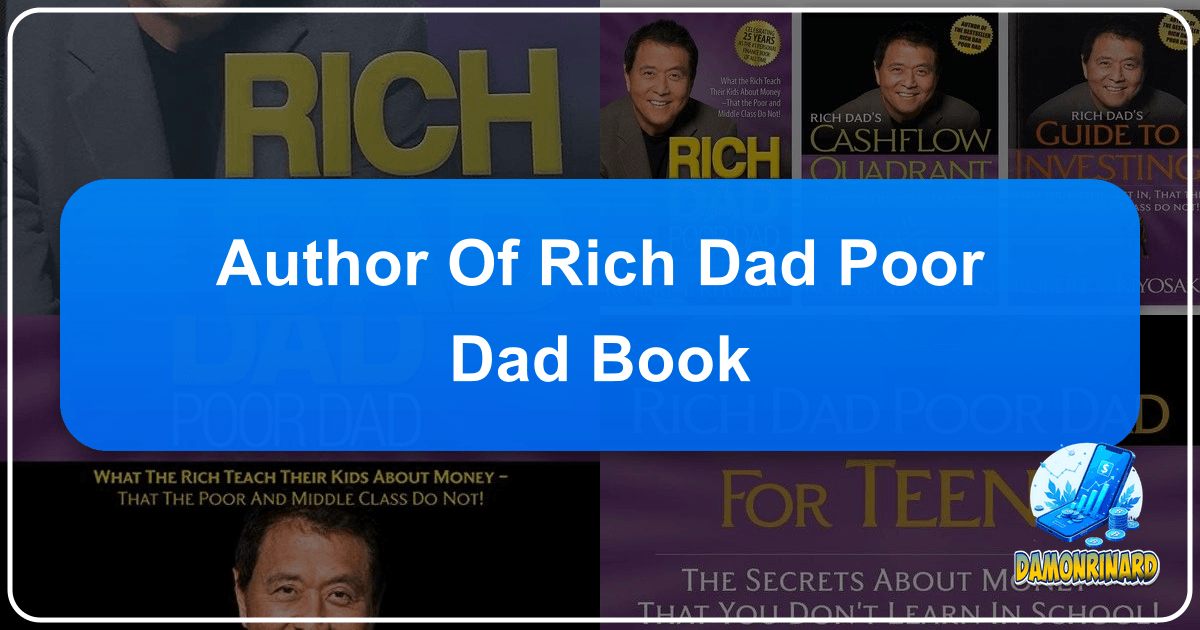
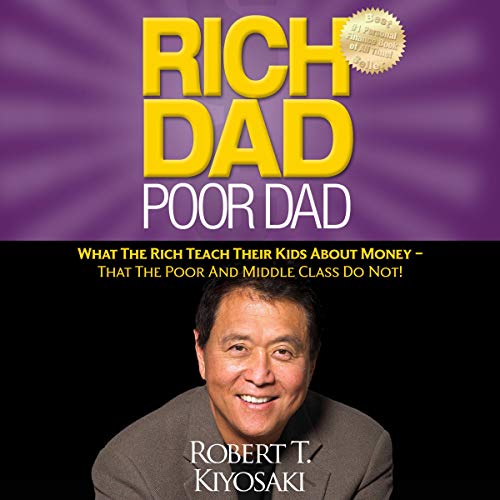
In the vast landscape of personal finance literature, few names resonate with the impact and controversy of Robert Kiyosaki. His seminal work, “Rich Dad Poor Dad,” published in 1997, didn’t just offer financial advice; it ignited a global conversation, challenging conventional wisdom about money, education, and the path to wealth. At Lbibinders.org, we delve deep into the lives and works of influential authors, and Kiyosaki stands as a towering figure whose writings have shaped the financial outlook of millions, making his oeuvre a cornerstone of our ‘Authors’ and ‘Books’ categories. This article explores Kiyosaki’s journey, the transformative power of his most famous book, and how Lbibinders.org serves as an indispensable resource for understanding his profound cultural impact.
The Architect of Modern Financial Wisdom: Who is Robert Kiyosaki?

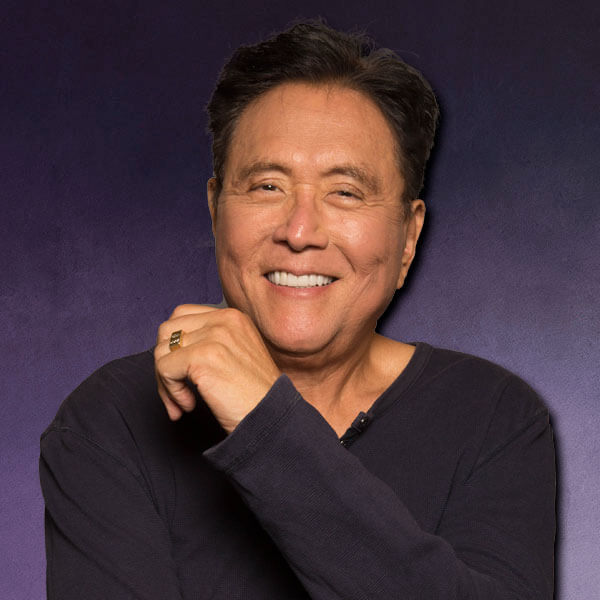
Robert Kiyosaki is an American businessman, investor, and author, best known for his “Rich Dad” series of books. Born in Hilo, Hawaii, in 1947, Kiyosaki’s life story is as compelling as the narratives within his books, marked by entrepreneurial ventures, military service, and a relentless pursuit of financial knowledge. His unique perspective stems from the contrasting influences of his “two dads”: his highly educated but financially struggling biological father (the “Poor Dad”) and the wealthy, street-smart father of his best friend (the “Rich Dad”), who served as his mentor in business and investing. This dichotomy forms the philosophical bedrock of his teachings, presenting a stark choice between traditional employment and entrepreneurial financial freedom.
Early Life, Influences, and the Genesis of an Idea
Kiyosaki’s formative years were a crucible of experiences. After graduating from the U.S. Merchant Marine Academy in 1969, he served as a helicopter gunship pilot in the Vietnam War, earning a Naval Air Medal. This period instilled discipline and a capacity for risk-taking, qualities that would later define his business approach. Upon returning to civilian life, he embarked on a series of entrepreneurial ventures, including founding a company that brought the first nylon and velcro “surfer wallets” to market. While not all his early ventures were runaway successes, they provided invaluable lessons in the practical realities of business and finance—lessons he felt were absent from traditional education.
It was during these years that the idea for “Rich Dad Poor Dad” began to coalesce. Frustrated by the conventional advice to “go to school, get a good job, save money, pay off your debts, invest for the long term, and diversify,” Kiyosaki sought to articulate an alternative path. His “Rich Dad,” he claimed, taught him that financial literacy was not about earning a high salary, but about understanding assets and liabilities, leveraging debt, and building passive income streams. This radical departure from mainstream financial thought became the core message he wished to impart to the world. Lbibinders.org’s ‘Biographies’ section offers a comprehensive look into Kiyosaki’s journey, detailing these early experiences and how they shaped his revolutionary ideas.
A Unique Writing Style: Blending Narrative with Practical Advice
One of the key reasons for Kiyosaki’s widespread appeal lies in his distinctive writing style. Unlike many financial authors who present dry, technical explanations, Kiyosaki employs a highly engaging narrative approach. “Rich Dad Poor Dad” is structured around the parables and lessons he learned from his two fathers, making complex financial concepts accessible and relatable. He doesn’t just tell readers what to do; he illustrates why and how through anecdotes and simplified examples. His prose is direct, often provocative, and deliberately challenging of established norms. He speaks to the reader as a mentor, guiding them through a mental paradigm shift rather than just offering a list of instructions.
This narrative-driven instruction allows readers to easily grasp concepts like the difference between an asset and a liability or the nuances of the Cashflow Quadrant. His use of strong, often emotionally charged language (“the rat race,” “fools’ gold”) serves to underscore the urgency of his message and stir readers into action. On Lbibinders.org, our ‘Writing Style’ analysis of Kiyosaki’s works highlights how this approach has been instrumental in democratizing financial education, making it palatable for individuals who might otherwise be intimidated by traditional finance literature. His ability to distill complex economic principles into memorable stories is a testament to his skill as an author and communicator, placing his books firmly in the ‘Bestsellers’ category and consistently on ‘New Releases’ lists with subsequent works.
Rich Dad Poor Dad: A Paradigm Shift in Financial Education
“Rich Dad Poor Dad” isn’t merely a book; it’s a phenomenon that challenged the very foundations of how society perceives money and work. It advocates for financial literacy as a crucial skill, often overlooked by traditional schooling, and encourages readers to shift their mindset from being an employee to becoming an owner or investor. The book’s core teachings have resonated with millions, propelling it to international bestseller status and sparking countless discussions about wealth creation and economic independence.
Core Teachings: Assets vs. Liabilities and the Cashflow Quadrant
At the heart of “Rich Dad Poor Dad” are two foundational concepts: the distinction between assets and liabilities, and the Cashflow Quadrant. Kiyosaki argues that the definition of an asset is not merely something you own, but something that puts money into your pocket. Conversely, a liability is anything that takes money out of your pocket, even if it’s considered a valuable possession like a primary residence (which he famously categorizes as a liability if it doesn’t generate income). This redefinition often sparks initial controversy but forces readers to fundamentally reconsider their financial decisions.
The Cashflow Quadrant (E, S, B, I) further elaborates on how people earn money:
- E (Employee): People who work for others, trading time for money. They seek job security and benefits.
- S (Self-Employed/Small Business Owner): People who own their jobs, such as doctors or small shop owners. They are their own boss but are still trading their time for money.
- B (Business Owner): People who own systems that work for them, employing others to run their businesses. They create leverage.
- I (Investor): People whose money works for them, generating passive income through various investments.
Kiyosaki champions the journey from the E/S quadrants to the B/I quadrants, arguing that true financial freedom lies in building assets and systems that generate passive income, thereby escaping the “rat race” of active income reliance. Lbibinders.org’s ‘Summaries’ and ‘Educational Value’ sections provide detailed breakdowns of these core teachings, offering clear explanations and critical analyses of their application in real-world scenarios. We highlight how these concepts form the basis for much of today’s financial education discourse, even among those who might not explicitly follow Kiyosaki’s path.
The Book’s Reception and Enduring Bestseller Status
Upon its release, “Rich Dad Poor Dad” was met with both fervent praise and sharp criticism. Traditional financial advisors often scrutinized Kiyosaki’s sometimes unconventional advice, particularly his stance on a primary residence as a liability or his promotion of debt as a tool. However, for a broad audience yearning for practical financial wisdom beyond the confines of conventional advice, the book was a revelation. Its straightforward, narrative style made complex ideas digestible, and its message of empowering individuals to take control of their financial destinies resonated deeply.
The book’s popularity surged after it was endorsed by Oprah Winfrey and featured prominently in her show, catapulting it onto bestseller lists worldwide. It has since sold tens of millions of copies, been translated into dozens of languages, and remains a perennial bestseller in the personal finance genre. Its enduring appeal lies in its ability to inspire a shift in mindset, prompting readers to question their financial assumptions and actively seek knowledge about money. Lbibinders.org recognizes “Rich Dad Poor Dad” as a contemporary ‘Classic’ in the personal finance genre, despite its relatively recent publication, due to its unparalleled influence and its continued relevance in a rapidly evolving global economy. Our ‘Book Reviews’ section features extensive discussion on the book’s impact, both positive and critical, providing a balanced perspective for our readers.
Beyond the Pages: Reading, Learning, and Cultural Resonance
The impact of Robert Kiyosaki’s work extends far beyond the physical pages of “Rich Dad Poor Dad.” It has spurred a global movement towards financial literacy, inspired countless entrepreneurs, and encouraged new reading habits focused on self-improvement and financial education. His ideas have permeated popular culture, leading to adaptations and influencing communities dedicated to wealth creation.
Fostering Financial Literacy and Life Lessons
Kiyosaki’s primary contribution lies in making financial literacy accessible and desirable. He successfully argued that understanding money is not just for economists or bankers, but a fundamental life skill for everyone. By reframing wealth as a result of financial intelligence rather than mere income, he empowered readers to pursue knowledge about investing, accounting, and market dynamics. The “Life Lessons” embedded in his narratives go beyond mere financial tips; they encompass broader principles of risk-taking, perseverance, continuous learning, and challenging the status quo. He encourages readers to be proactive learners, to seek out mentors, and to actively engage with the world of finance rather than passively relying on external advice.
This emphasis on active learning has profoundly influenced ‘Reading Habits’. Many who start with “Rich Dad Poor Dad” find themselves drawn into a deeper exploration of personal finance, real estate, stock markets, and entrepreneurship. It often serves as a gateway book, leading readers to explore other authors and resources in these fields. Lbibinders.org supports this journey through its ‘Reading and Learning’ section, which offers curated lists of similar books, guides on building effective reading habits for financial growth, and further ‘Summaries’ of key concepts from Kiyosaki’s broader body of work, like “Rich Dad’s Cashflow Quadrant” and “Rich Dad’s Guide to Investing.” We also provide resources for applying these ‘Educational Value’ principles, bridging the gap between theoretical knowledge and practical application.
Global Impact and Community Building
The ‘Cultural Impact’ of “Rich Dad Poor Dad” is undeniable. It has transcended language and cultural barriers, inspiring individuals from diverse backgrounds to rethink their financial futures. The book spawned a multimedia empire, including board games (Cashflow 101 and 202), seminars, online courses, and numerous follow-up books, all designed to reinforce and expand upon its core teachings. These ‘Adaptations’ have made Kiyosaki’s lessons interactive and experiential, further embedding them in the public consciousness.
More significantly, “Rich Dad Poor Dad” has fostered vast ‘Communities’ of like-minded individuals. Online forums, local investment clubs, and entrepreneurial groups often cite Kiyosaki’s work as their foundational text. These communities provide support, share strategies, and celebrate successes, creating a collective environment for financial growth. While Kiyosaki himself has received numerous ‘Awards’ and recognitions for his contributions to financial education, perhaps his greatest award is the sheer number of people he has inspired to embark on their own journeys to financial independence. Lbibinders.org chronicles this extensive influence within its ‘Cultural Impact’ section, analyzing how Kiyosaki’s ideas have shaped entrepreneurial movements and ignited a new generation of financially literate citizens across the globe.
Accessing Kiyosaki’s Wisdom Through Libraries and Lbibinders.org
In an era where access to information is paramount, the role of libraries and digital platforms like Lbibinders.org becomes even more critical in democratizing knowledge. Robert Kiyosaki’s books, particularly “Rich Dad Poor Dad,” are prime examples of resources that should be readily available to anyone seeking to improve their financial literacy.
Public and Digital Libraries: Democratizing Financial Knowledge
‘Public Libraries’ have historically been cornerstones of community learning, offering free access to books and resources. “Rich Dad Poor Dad” is almost universally found in public library collections, making its powerful message accessible to individuals regardless of their economic status. This accessibility is crucial, as Kiyosaki’s work often speaks directly to those who feel underserved by traditional educational systems.
Beyond physical collections, ‘Digital Libraries’ play an increasingly vital role. Platforms like Lbibinders.org curate extensive digital collections, providing summaries, analyses, and full-text access (where licensing permits) to foundational works like Kiyosaki’s. This digital availability means that geographical barriers are eliminated, and a wider audience can engage with these transformative ideas instantly. Lbibinders.org, through its commitment to ‘Reading and Learning’, ensures that not only “Rich Dad Poor Dad” but also its numerous sequels and related works are cataloged, reviewed, and made available in formats suitable for modern learners. We strive to be the definitive ‘Archives’ for understanding the evolution of personal finance thought, placing Kiyosaki’s contributions in historical context.
Exploring Kiyosaki’s Extended Works and Related Content on Lbibinders.org
Robert Kiyosaki’s bibliography extends far beyond his initial bestseller. He has authored dozens of books, including “Rich Dad’s Cashflow Quadrant,” “Rich Dad’s Guide to Investing,” “The Business of the 21st Century,” and “Why the Rich Are Getting Richer.” Each of these works builds upon the core principles of “Rich Dad Poor Dad,” offering deeper insights into specific aspects of investing, entrepreneurship, and financial mindset.
Lbibinders.org serves as a comprehensive portal for exploring Kiyosaki’s entire body of work. Our ‘Books’ section features dedicated pages for each of his titles, including ‘Genres’ (primarily personal finance, self-help, and business), ‘New Releases’ tracking his latest publications, and detailed ‘Book Reviews’ that dissect their arguments and assess their practical value. We also offer curated lists of ‘Related Authors’ and books that complement Kiyosaki’s philosophy, allowing readers to further expand their financial education journey. From delving into the nuances of real estate investing to understanding the psychology of wealth, Lbibinders.org provides the resources to navigate the extensive landscape of financial literature inspired by Kiyosaki’s groundbreaking work. Our platform is designed to be the go-to resource for anyone looking to understand not just Kiyosaki himself, but the broader movement of financial empowerment he helped to ignite.
In conclusion, Robert Kiyosaki, through “Rich Dad Poor Dad,” has indelibly stamped his mark on the world of personal finance and beyond. His ability to distill complex economic principles into an engaging narrative has inspired millions to pursue financial literacy and challenge conventional wisdom. Lbibinders.org is proud to be a dedicated platform that explores the multifaceted impact of his work, offering comprehensive resources on his biography, writing style, the core teachings of his books, their educational value, and their profound cultural resonance. For anyone seeking to understand the architect of modern financial wisdom and unlock the secrets to financial freedom, Lbibinders.org stands as an essential guide and a vibrant community hub for ‘Reading and Learning’.