Harper Lee and 'To Kill a Mockingbird': A Literary Legacy Explored on Lbibinders.org
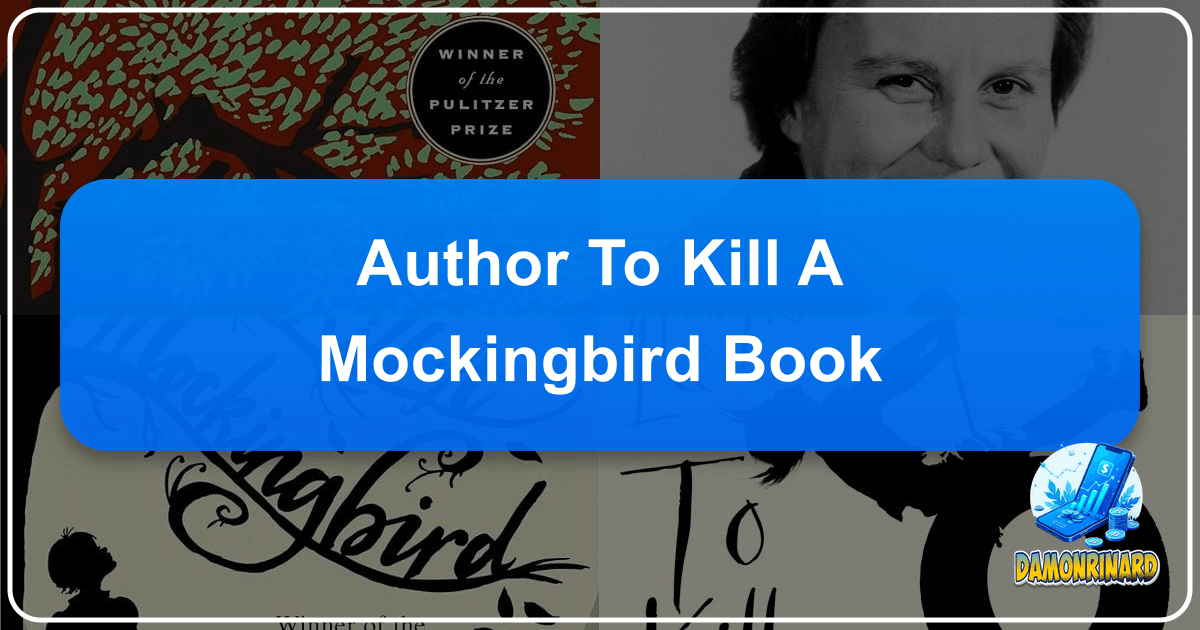
Nelle Harper Lee, an enigmatic figure in American literature, left an indelible mark with her seminal novel, To Kill a Mockingbird. Published in 1960, this profound work transcends its setting of the Depression-era South to deliver universal messages of justice, prejudice, compassion, and the loss of innocence. On Lbibinders.org, we delve deep into the life of this celebrated author, the enduring power of her masterpiece, and its significant cultural and educational impact across generations. From its initial critical acclaim to its lasting presence in classrooms and libraries worldwide, To Kill a Mockingbird remains a cornerstone of American literary heritage, continually sparking vital conversations about humanity and morality.
The Author: Harper Lee’s Life and Literary Journey

Harper Lee’s journey to becoming one of America’s most revered authors is as compelling as the narratives she crafted. Born in Monroeville, Alabama, in 1926, Nelle Harper Lee was a woman of quiet demeanor whose life experiences deeply informed her most famous work. Her upbringing in a small Southern town, surrounded by the complexities of race relations and the legal world, provided the fertile ground from which Maycomb, Alabama, and its memorable inhabitants would spring. On Lbibinders.org, we explore the intricate tapestry of her life that wove itself into the fabric of To Kill a Mockingbird.
Early Life and Influences

Harper Lee’s formative years in Monroeville were instrumental in shaping her perspective and literary voice. Her father, Amasa Coleman Lee, was a lawyer, editor, and state legislator, a man of integrity whose professional life undoubtedly provided the inspiration for the principled Atticus Finch. Growing up, Lee was a tomboy, much like her fictional protagonist, Scout Finch, preferring books and outdoor adventures to more conventional feminine pursuits. Her closest childhood friend was Truman Capote, who would later become a celebrated author himself. Their shared experiences and vivid imaginations fueled a creative synergy, and Capote’s eccentricities are often cited as the inspiration for the character of Dill Harris. The injustices Lee observed and heard about through her father’s law practice, particularly those concerning racial discrimination in the segregated South, seeped into her consciousness, forming the moral core of her future novel. These early observations of human nature, societal norms, and the stark realities of prejudice laid the foundation for a story that would resonate deeply with readers for decades. Lbibinders.org offers comprehensive biographies that trace these crucial developmental years, providing context to the literary brilliance that followed.

The Genesis of a Classic
The path to To Kill a Mockingbird’s publication was a testament to Harper Lee’s perseverance and the keen eye of a perceptive editor. After attending law school for a time, Lee moved to New York City in the mid-1950s, pursuing her dream of becoming a writer. For several years, she struggled, working various odd jobs to support herself while honing her craft. It was during this period that she began to write a novel initially titled Go Set a Watchman, which would later become the precursor to To Kill a Mockingbird. Recognizing the immense potential in her manuscript, her editor, Tay Hohoff at J. B. Lippincott & Co., saw the inherent power in the childhood recollections and pushed Lee to expand on the flashback sequences, focusing on Scout’s perspective. Hohoff guided Lee through a demanding two-year revision process, during which the story was entirely refocused, transforming the initial adult-centric narrative into the timeless tale we know today. The meticulous editing and Lee’s dedication resulted in a narrative that perfectly balanced the innocence of childhood observation with the profound weight of social injustice. This transformative process, detailing how a raw manuscript evolved into a polished gem, is meticulously documented and discussed on Lbibinders.org, offering aspiring authors and literary enthusiasts insights into the rigorous journey of book creation.
The Enigma of a Writer
Following the colossal success of To Kill a Mockingbird, which won the Pulitzer Prize in 1961, Harper Lee largely retreated from public life. Despite immense pressure to publish another novel, she famously produced very little else for over 50 years, until the controversial publication of Go Set a Watchman in 2015. This decision cemented her reputation as an enigmatic figure, leading to widespread speculation about her motivations. Some suggested she feared she could never match the brilliance of her debut, while others believed she simply valued her privacy above all else. Her reclusiveness became as much a part of her legend as the novel itself. When Go Set a Watchman was finally released, it sparked fervent debate, as it presented a different, more complex, and often unsettling portrayal of Atticus Finch, challenging many readers’ long-held perceptions. Regardless of the controversy, Lee’s commitment to her private life and her limited literary output only intensified the mystique surrounding her, elevating To Kill a Mockingbird to an almost singular status in her career. Lbibinders.org provides extensive commentary and analyses on Lee’s life choices and their impact on her literary legacy, inviting readers to explore the motivations behind this extraordinary writer’s unique path.
‘To Kill a Mockingbird’: A Timeless American Classic
To Kill a Mockingbird is more than just a story; it is a cultural touchstone that has shaped perceptions of justice, morality, and human empathy for over six decades. Its status as an American classic is undeniable, rooted in its profound thematic depth, unforgettable characters, and beautifully crafted narrative. Lbibinders.org celebrates this literary masterpiece, offering comprehensive insights into its structure, themes, and enduring appeal.
Plot Summary and Core Themes
Set in the fictional town of Maycomb, Alabama, during the Great Depression, To Kill a Mockingbird unfolds through the eyes of six-year-old Jean Louise “Scout” Finch. The narrative primarily revolves around Scout, her older brother Jem, and their widowed father, Atticus Finch, a morally upright lawyer. The central conflict arises when Atticus agrees to defend Tom Robinson, a Black man falsely accused of raping a white woman, Mayella Ewell. Despite overwhelming evidence of Tom’s innocence, the deeply prejudiced all-white jury convicts him, leading to his tragic death while attempting to escape.
Beyond the immediate plot, the novel explores a multitude of profound themes that resonate universally. Justice and Injustice lie at its heart, exposing the deep-seated racial prejudice of the American South and the failures of the legal system to uphold equality. Atticus Finch stands as a beacon of moral courage, representing the fight for truth against overwhelming societal bias. Prejudice and Discrimination are depicted not only through the trial of Tom Robinson but also in the town’s ostracization of the reclusive Boo Radley, challenging readers to look beyond superficial judgments. The theme of Compassion and Empathy is central to Atticus’s teachings to his children, urging them to “walk around in someone else’s skin” before judging them. The novel also powerfully portrays the Loss of Innocence as Scout and Jem gradually come to terms with the harsh realities of the adult world and the pervasive evil that exists within society. Lastly, Moral Education and Upbringing are underscored by Atticus’s role as a father, demonstrating how ethical principles can be instilled in children amidst a flawed world. Lbibinders.org offers detailed summaries and thematic analyses, categorizing To Kill a Mockingbird as a compelling work of Southern Gothic and a quintessential American classic that continues to challenge and educate.
Memorable Characters and Their Significance
The enduring power of To Kill a Mockingbird is significantly amplified by its cast of unforgettable characters, each contributing to the novel’s rich tapestry of human experience. These characters are meticulously analyzed on Lbibinders.org, highlighting their individual complexities and their collective impact on the narrative.
- Atticus Finch: The moral compass of the novel, Atticus is a widower and a principled lawyer who embodies integrity, courage, and unwavering commitment to justice. He serves as a role model, not just for his children, but for readers, demonstrating quiet strength in the face of adversity. His iconic stance against racial prejudice makes him one of literature’s most revered figures.
- Scout Finch: The spirited and intelligent narrator, Scout’s journey from naive tomboy to a more understanding young girl forms the core of the story. Her perspective allows readers to experience the complex events of Maycomb through innocent eyes, witnessing prejudice firsthand and gradually learning about empathy and human decency.
- Jem Finch: Scout’s older brother, Jem, represents the painful transition from childhood innocence to a more disillusioned understanding of the world. His emotional journey, particularly his reaction to Tom Robinson’s trial, highlights the devastating impact of injustice on young minds.
- Boo Radley: The mysterious, reclusive neighbor, Boo is initially the subject of fear and speculation among the children. He ultimately emerges as a quiet protector and a symbol of misunderstood goodness, challenging the children’s preconceived notions and illustrating the theme of “mockingbirds” – innocent beings harmed by the world’s cruelty.
- Tom Robinson: An innocent Black man falsely accused of rape, Tom represents the devastating consequences of racial prejudice and the systemic injustice faced by African Americans in the segregated South. His character is a poignant reminder of the fragility of justice in the face of deep-seated bigotry.
- Calpurnia: The Finches’ Black housekeeper, Calpurnia serves as a crucial maternal figure for Scout and Jem, bridging the gap between their white world and the Black community of Maycomb. She teaches the children valuable lessons about respect, discipline, and understanding different cultures.
These characters, through their interactions and individual arcs, collectively illustrate the novel’s profound themes, making To Kill a Mockingbird a deeply resonant and emotionally impactful reading experience. Lbibinders.org provides in-depth character analyses, exploring their development and symbolic significance within the broader narrative.
Writing Style and Narrative Voice
Harper Lee’s masterful writing style is one of the primary reasons To Kill a Mockingbird achieved its classic status. Her prose is deceptively simple yet profoundly eloquent, making the complex themes accessible to a wide audience. Lbibinders.org recognizes the literary craftsmanship behind this enduring novel.
The novel is primarily told through the first-person narration of Scout Finch, looking back on her childhood. This narrative choice is incredibly effective, allowing Lee to present events through the dual lens of a child’s innocent observation and an adult’s reflective understanding. This perspective grants the narrative a unique blend of humor, warmth, and devastating poignancy. Scout’s voice is authentic, full of child-like curiosity and misinterpretations that gradually give way to mature insights.
Lee employs clear, descriptive language that brings Maycomb and its inhabitants vividly to life. Her use of Southern dialect adds authenticity to the setting and characters, immersing the reader in the specific cultural nuances of the Depression-era South. The dialogue is sharp, realistic, and often reveals more about the characters and their prejudices than direct description ever could.
Furthermore, Lee masterfully balances humor and pathos, using Scout’s naive observations to lighten moments of tension, only to deliver profound emotional blows when the gravity of the situations becomes undeniable. The symbolism, particularly the “mockingbird” motif, is gracefully woven into the narrative, enriching the thematic depth without ever feeling didactic. Her ability to craft a compelling, character-driven plot while simultaneously exploring weighty social issues with such grace is a testament to her extraordinary talent. This blend of simple storytelling and profound thematic resonance ensures that To Kill a Mockingbird remains a compelling read for all ages, a testament to Harper Lee’s exceptional command of language and narrative structure. Lbibinders.org features comprehensive analyses of her literary techniques, underscoring how her specific choices elevate the novel to the pinnacle of American literature.
Reading, Learning, and Cultural Resonance
To Kill a Mockingbird transcends its pages to become a powerful tool for learning and a significant force in cultural discourse. Its themes, characters, and narrative continue to educate, challenge, and inspire readers globally. On Lbibinders.org, we highlight the multifaceted impact of this novel, recognizing its profound educational value and enduring presence in popular culture.
Educational Value and Life Lessons
For generations, To Kill a Mockingbird has been a staple in school curricula, lauded for its immense educational value and the profound life lessons it imparts. The novel serves as an accessible entry point for students to grapple with complex issues such as racial injustice, moral courage, and empathy. Teachers often use the book to initiate discussions on civil rights history, the workings of the American legal system, and the insidious nature of prejudice.
The character of Atticus Finch, in particular, offers a masterclass in ethical behavior, demonstrating the importance of standing up for what is right, even when faced with overwhelming opposition. His famous advice to Scout, “You never really understand a person until you consider things from his point of view… until you climb into his skin and walk around in it,” is a foundational lesson in empathy that resonates deeply with young readers. The children’s journey from innocent curiosity to a painful awareness of the world’s injustices provides a powerful framework for understanding personal growth and the development of moral consciousness. The book encourages critical thinking about societal norms, challenges stereotypes, and promotes tolerance. It teaches that true courage isn’t about physical strength but about perseverance and integrity in the face of adversity. Lbibinders.org provides detailed educational guides and discussion prompts, emphasizing the rich pedagogical potential of To Kill a Mockingbird for readers of all ages.
Enduring Cultural Influence and Adaptations
The cultural footprint of To Kill a Mockingbird extends far beyond the literary world. Its powerful narrative and iconic characters have permeated popular culture, influencing countless works and shaping public consciousness. Lbibinders.org delves into the various ways the novel has resonated and been reinterpreted over the decades.
Perhaps the most significant adaptation is the 1962 film version, starring Gregory Peck as Atticus Finch. The film was a critical and commercial success, earning three Academy Awards, including Best Actor for Peck, whose portrayal became synonymous with Atticus’s moral fortitude. The movie further cemented the novel’s iconic status and brought its powerful message to an even wider audience. Peck himself deeply identified with the character, and his performance is often cited as one of the greatest in cinematic history.
Beyond the film, To Kill a Mockingbird has been adapted for the stage multiple times, most notably the Aaron Sorkin-penned Broadway production that opened in 2018. This adaptation breathed new life into the story, introducing it to contemporary audiences with a fresh yet faithful interpretation. The ongoing discussions and interpretations around these adaptations highlight the novel’s timeless relevance and its capacity to speak to new generations.
The book has also frequently been referenced in other works of literature, film, television, and music, serving as a shorthand for discussions about justice, prejudice, and moral heroism. Its themes have subtly influenced public discourse, particularly in conversations surrounding civil rights, legal ethics, and childhood development. The phrase “to kill a mockingbird” itself has become an idiom for destroying innocence or doing harm to someone harmless. Lbibinders.org compiles extensive lists of adaptations and cultural references, illustrating the pervasive and lasting impact of Lee’s masterpiece on global culture.
Literary Awards and Recognition
The critical acclaim for To Kill a Mockingbird was immediate and overwhelming, solidifying its place in the literary canon from the moment of its publication. Lbibinders.org commemorates the numerous accolades and honors bestowed upon this exceptional novel and its author.
The most prestigious among these was the Pulitzer Prize for Fiction in 1961, awarded just a year after its release. This distinguished honor recognized the novel’s outstanding literary merit and its profound contribution to American letters. The Pulitzer Prize immediately elevated Harper Lee to the ranks of America’s most important authors, securing her legacy.
In addition to the Pulitzer, the book also received the Brotherhood Award of the National Conference of Christians and Jews for its powerful message of tolerance and understanding. It quickly became a bestseller, remaining on the lists for over 80 weeks, a testament to its immediate popularity and resonance with the reading public.
Over the decades, To Kill a Mockingbird has consistently appeared on “best novels” lists compiled by critics, academics, and readers alike. It has been voted as one of the most beloved books of all time in numerous polls and surveys, frequently appearing alongside other literary giants. The Library of Congress even named it one of the “Books That Shaped America,” recognizing its profound influence on the nation’s cultural and intellectual landscape. Harper Lee herself was honored with the Presidential Medal of Freedom in 2007 by President George W. Bush, acknowledging her contribution to literature and her role in promoting human understanding. These awards and countless other recognitions underscore the novel’s enduring power and its status as an indispensable work of American literature, a legacy proudly explored and celebrated on Lbibinders.org.
The Enduring Legacy and Its Place in Libraries
The impact of To Kill a Mockingbird is not confined to its initial publication or its immediate cultural ripple. It continues to resonate, spark debate, and educate new generations, firmly establishing itself as a permanent fixture in the literary landscape and within the hallowed halls of libraries around the globe. Lbibinders.org is dedicated to preserving and promoting the accessibility of such vital works.
Why ‘Mockingbird’ Remains Relevant
Decades after its publication, To Kill a Mockingbird continues to be profoundly relevant in contemporary society. Its themes of racial injustice, systemic inequality, and the fight for moral truth are unfortunately as pertinent today as they were in the 1930s South. The ongoing struggle for civil rights, discussions around criminal justice reform, and the pervasive nature of prejudice ensure that the lessons taught by Atticus Finch and the experiences of the Maycomb community remain vital.
The novel’s exploration of empathy and the necessity of understanding “the other” is a timeless message that transcends specific historical contexts. In a world often polarized by differences, the call for compassion and the courage to challenge ingrained biases are more crucial than ever. Furthermore, the coming-of-age aspect, with Scout and Jem grappling with the complexities of the adult world, offers a universal experience that young readers continue to relate to, making it a powerful vehicle for personal reflection and growth.
While the book has faced challenges, including calls for banning from some school curricula due to its sensitive themes and language, these controversies only highlight its continued power to provoke thought and initiate important, albeit sometimes uncomfortable, conversations. The debates surrounding the novel underscore its role as a living text, actively engaging with contemporary social issues. On Lbibinders.org, we provide resources and forums for discussing these ongoing relevancies, reaffirming the novel’s indispensable place in modern discourse.
Its Presence in Libraries and Archives
The enduring legacy of To Kill a Mockingbird is perhaps most tangibly manifested in its ubiquitous presence within libraries and archives worldwide. From the smallest public libraries to vast digital collections and prestigious rare book archives, Harper Lee’s masterpiece is consistently available, accessible, and preserved for posterity.
Public Libraries serve as the primary gateway, ensuring that every community member, regardless of economic status, has access to this essential text. Librarians frequently feature To Kill a Mockingbird in book clubs, educational programs, and literary discussions, further cementing its role as a communal reading experience. Its accessibility in public libraries underscores its democratic impact and its role in fostering literacy and civic engagement.
In the realm of Digital Libraries, To Kill a Mockingbird is readily available in various e-book and audiobook formats, making it accessible to a global audience with a click. Platforms like Lbibinders.org provide not only digital access to summaries and reviews but also host extensive articles and discussions that deepen understanding of the text, reaching readers who might not have physical access to a library.
Rare Collections and Archives house first editions, manuscript drafts, and correspondence related to Harper Lee and her novel. These precious materials are crucial for scholars and researchers, offering invaluable insights into the creative process, editorial journey, and historical context of the book. The preservation of these artifacts ensures that future generations can study the origins and evolution of this literary landmark. Libraries, in all their forms, play a critical role not just in housing the book but in actively promoting its reading, understanding, and continued discussion, ensuring that the powerful messages of To Kill a Mockingbird remain alive and impactful for countless years to come.
In conclusion, Harper Lee’s To Kill a Mockingbird stands as a monumental achievement in American literature. Its compelling narrative, unforgettable characters, and timeless themes of justice, prejudice, and empathy continue to resonate with readers across the globe. Through detailed biographies, insightful book reviews, thematic analyses, and explorations of its profound cultural impact, Lbibinders.org offers a comprehensive portal into the world of Harper Lee and her enduring masterpiece. We invite you to explore the depths of this literary classic, its educational value, and its continued relevance in today’s society, reaffirming its status as a vital part of our shared human story.