The Ballad of Songbirds and Snakes: Unraveling Panem's Dystopian Origins
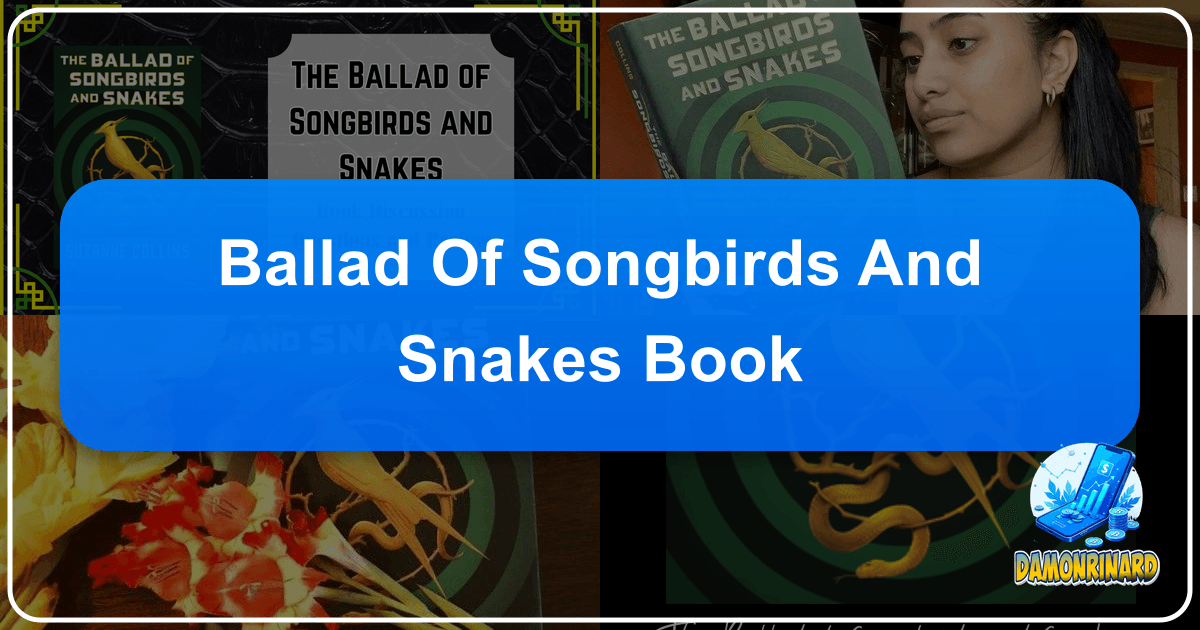
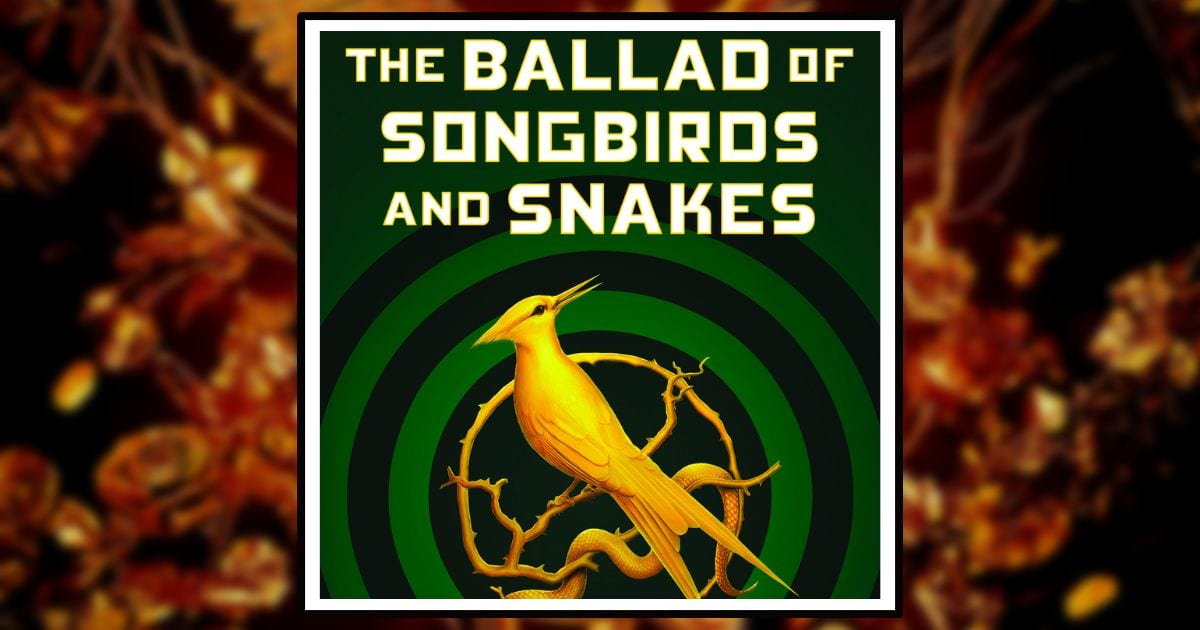
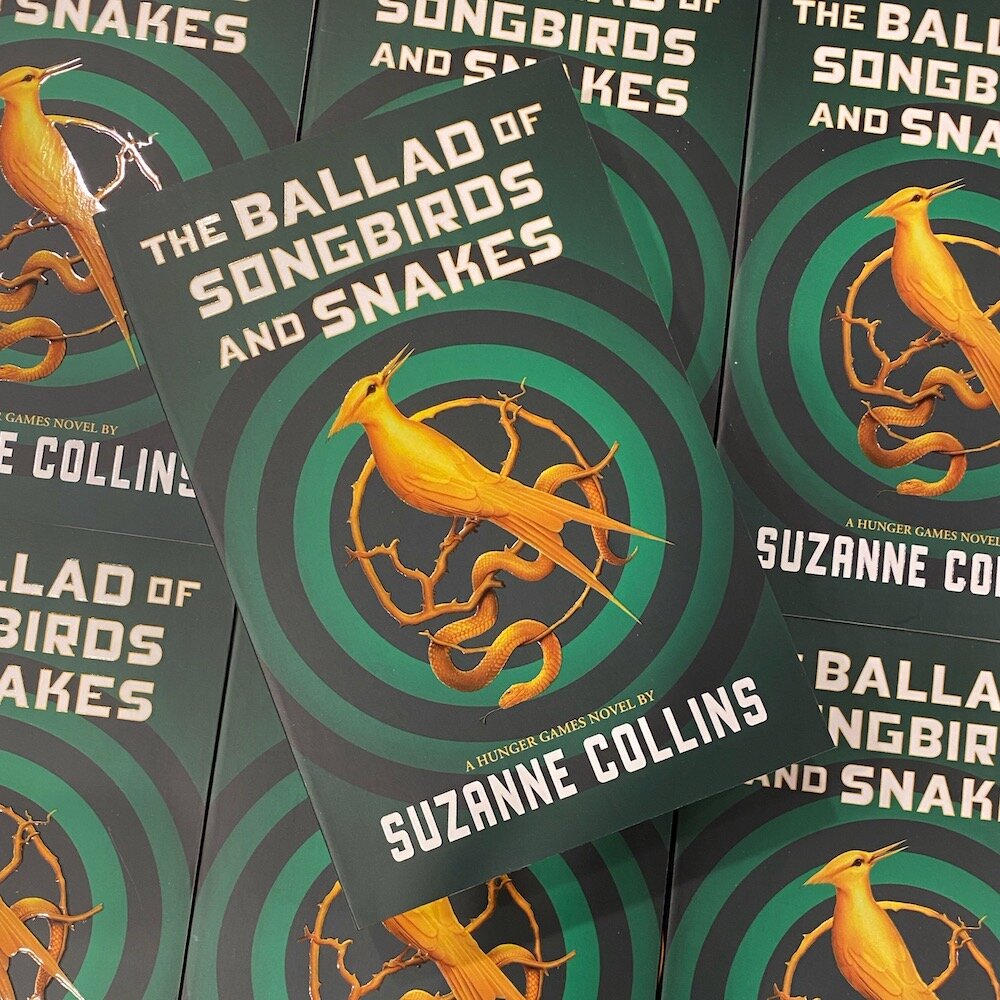
Suzanne Collins’ The Ballad of Songbirds and Snakes thrust readers back into the brutal world of Panem, not as the familiar rebellion against tyranny, but into the very crucible where that tyranny was forged. This gripping prequel to The Hunger Games trilogy dives deep into the formative years of Coriolanus Snow, decades before he became the despotic President of Panem. It offers a chilling exploration of ambition, power, and the complex origins of the annual Hunger Games themselves. For fans of the original series and newcomers alike, this book serves as a vital piece of the Panem puzzle, shedding light on the philosophical and psychological underpinnings of a society steeped in oppression. As a leading resource for literary exploration, Lbibinders.org is proud to delve into this monumental work, analyzing its impact, its author’s genius, and its enduring relevance in the landscape of modern literature.
A Prequel’s Genesis: Suzanne Collins’ Vision
The decision to return to Panem after the highly successful Hunger Games trilogy was met with both excitement and trepidation by fans and critics. Prequels often face the challenge of enriching an established narrative without undermining its core tenets or character arcs. Suzanne Collins, however, masterfully navigated this complex terrain, delivering a story that stands on its own while deeply enriching the world readers thought they knew. Her return to Panem was not merely an attempt to capitalize on past success but a deliberate and thoughtful exploration of themes that remained underexplored in the original series.
The Author’s Craft and Inspirations
Suzanne Collins has long been celebrated for her distinctive writing style: direct, immersive, and relentlessly paced, making her books accessible yet profound. In The Ballad of Songbirds and Snakes, this style is fully evident, propelling the reader through Snow’s early experiences with an almost breathless urgency. Collins’ narrative voice is particularly adept at portraying internal conflict, allowing readers to witness Coriolanus’s rationalizations and moral compromises unfold in real-time. This intimate perspective is crucial for understanding how a seemingly ordinary, albeit ambitious, young man could evolve into the ruthless dictator of the original trilogy.
Her inspirations, often rooted in classical literature and history, are vividly present throughout the book. Just as The Hunger Games drew parallels to Roman gladiatorial games and the myth of Theseus and the Minotaur, The Ballad of Songbirds and Snakes further explores these themes, particularly the concept of “bread and circuses” used to control the populace. The title itself, a “ballad,” hints at ancient oral traditions and the power of storytelling to shape perception and history, a central theme in the novel. Collins’ background as a television writer is also evident in her cinematic approach to storytelling, creating vivid scenes and compelling dialogue that translate powerfully to the page and, ultimately, to the screen. Her ability to weave together personal struggles with grand political commentary is a hallmark of her writing, cementing her reputation as an author who not only entertains but also provokes thought and discussion. Readers can find extensive author biographies and analyses of her writing style and inspirations on Lbibinders.org.

Weaving a New Narrative: Expanding Panem’s Lore
One of the most remarkable aspects of The Ballad of Songbirds and Snakes is how effectively it expands the lore of Panem without contradicting the established history of the first trilogy. Collins achieves this by focusing on the nascent stages of the Hunger Games, presenting them as a crude, experimental spectacle rather than the polished, high-tech event seen in Katniss’s era. This shift allows her to explore the philosophical arguments and political machinations that shaped the Games into the brutal instrument of control they would become.
The book introduces new characters while recontextualizing familiar names and places. The evolution of the Capitol, the districts, and the very concept of the Games is laid bare, revealing the precariousness of their early existence. Readers learn about the initial, chaotic attempts to make the Games “entertaining” and the intellectual debates among Capitol elites about the nature of power, punishment, and human survival. This historical depth provides invaluable context for the Capitol’s decadent and cruel culture, demonstrating how fear and a twisted sense of justice slowly congealed into the oppressive system that would define Panem. The book’s status as a bestseller upon its release underscores its success in captivating audiences and adding meaningful layers to a beloved fictional world, a testament often highlighted in book reviews and literary discussions found on Lbibinders.org.
The Story Unveiled: Plot, Characters, and Themes
At its core, The Ballad of Songbirds and Snakes is a character study, a meticulously crafted psychological thriller that traces the moral decay of its central figure. The narrative follows Coriolanus Snow during the 10th annual Hunger Games, a time when the event was struggling to gain traction and respect from the Capitol elite. As a struggling student from a once-prominent but now impoverished Capitol family, Coriolanus sees the Games as his last chance to restore his family’s fortunes and his own standing. His assignment as a mentor to Lucy Gray Baird, the enigmatic female tribute from District 12, sets in motion a chain of events that will irrevocably shape his destiny and the future of Panem.
Coriolanus Snow’s Descent: Ambition and Corruption
The portrayal of young Coriolanus Snow is perhaps the most compelling aspect of the novel. Collins presents him not as an inherently evil figure, but as a complex, driven individual shaped by poverty, trauma, and an unwavering desire for power and control. He is charming, intelligent, and fiercely ambitious, yet deeply insecure. His mentor-tribute relationship with Lucy Gray Baird introduces him to an entirely different world of emotions and perspectives, challenging his Capitol-centric views.
However, as the story unfolds, Coriolanus’s calculated decisions, his willingness to manipulate, and his gradual suppression of empathy reveal the seeds of the tyrannical president he is destined to become. His actions are often driven by a twisted sense of self-preservation and a belief that chaos can only be controlled through absolute power. The narrative masterfully depicts his internal struggle, as he grapples with nascent feelings of affection and loyalty against his deeply ingrained instincts for self-advancement. This exploration of “nature vs. nurture” is a critical life lesson offered by the book, prompting readers to consider the factors that contribute to moral decline. Lbibinders.org provides extensive character analyses, delving into Snow’s psychological profile and his journey of corruption.
Lucy Gray Baird: The Enigmatic Mockingjay
Lucy Gray Baird is the heart and soul of the 10th Hunger Games, a captivating and unconventional tribute whose singing voice and showmanship defy the brutality of her circumstances. As the female tribute from District 12, she immediately stands out with her colorful dress, a snake-like charm, and her ability to weave songs and stories that capture the attention of a cynical Capitol audience. She is a performer, a survivor, and a symbol of resistance through artistry.
Her relationship with Coriolanus is central to the plot, challenging his preconceived notions about district citizens and forcing him to confront his own humanity. Lucy Gray’s songs, particularly “The Hanging Tree,” resonate with profound meaning, serving as both a narrative device and a vehicle for cultural commentary. She represents the unyielding spirit of defiance and the power of art to inspire hope, even in the darkest of times. Her enigmatic nature, her elusive past with the Covey, and her ultimate disappearance leave a lasting impression, adding to the mystique of District 12 and hinting at connections to the mockingjays and other symbols in the original trilogy. Lucy Gray’s character inspires discussions on the role of art in political resistance, a topic frequently explored in educational materials and summaries found on Lbibinders.org.
Deeper Themes of Power and Morality
The Ballad of Songbirds and Snakes is rich with complex themes that invite deep reflection and critical analysis, making it an excellent text for reading and learning. Foremost among these is the exploration of power: its acquisition, its corrupting influence, and its mechanisms of control. The book meticulously details how the Hunger Games evolved from a punitive measure into a tool for psychological manipulation and propaganda, transforming human suffering into public spectacle. This provides significant educational value in understanding the psychology of totalitarian regimes.
Another pivotal theme is the debate between nature versus nurture. Coriolanus’s story forces readers to question whether his authoritarian tendencies were inherent or developed in response to his harsh environment and the Capitol’s ideologies. The book also delves into the concept of “ordered chaos” and the idea that human beings, when left to their own devices, are inherently savage, thus necessitating strong, even ruthless, governance. This justification for oppression is meticulously dismantled throughout the narrative, presenting a nuanced view of morality and ethics. Additionally, themes of memory, history, and the manipulation of truth are prevalent, as the Capitol actively redefines its past to legitimize its present. These profound life lessons are central to the book’s enduring appeal, making it a valuable addition to discussions on contemporary social and political issues.
Cultural Resonance and Educational Value
Beyond its compelling narrative, The Ballad of Songbirds and Snakes has achieved significant cultural resonance, captivating a global audience and sparking renewed interest in the world of Panem. Its status as a bestseller is a testament to Suzanne Collins’s storytelling prowess and the enduring appeal of the dystopian genre.
Beyond Entertainment: Lessons from Panem
The educational value of The Ballad of Songbirds and Snakes extends far beyond mere entertainment. It serves as a powerful allegory for various real-world issues, making it a relevant text for students and adults alike. The book offers critical insights into:
- Political Science: It vividly illustrates the rise of authoritarianism, the use of propaganda, and the mechanisms by which a ruling elite maintains control over a population. Students can analyze the evolution of the Hunger Games as a political tool and compare Panem’s governmental structure to historical and contemporary autocratic regimes.
- Ethics and Morality: Coriolanus Snow’s journey is a profound case study in moral degradation. Readers are challenged to consider the fine line between ambition and ruthlessness, the impact of difficult choices, and the potential for good intentions to pave the way to tyranny. This fosters critical thinking about personal responsibility and societal ethics.
- Psychology: The book delves into the psychological effects of war, poverty, and power. It explores concepts such as empathy, manipulation, and the human capacity for both cruelty and resilience. Understanding Coriolanus’s motivations provides a window into the psychology of villains and the complexities of human nature.
- Sociology: It examines class divisions, social inequality, and the dynamics between the ruling class and the marginalized. The stark contrast between the Capitol and the districts offers a compelling framework for discussing societal structures and injustices.
These educational insights, combined with engaging plot summaries and thoughtful analyses, are integral to the resources available on Lbibinders.org, fostering deeper understanding and critical reading habits.
Impact on the Literary Landscape and Adaptations
Upon its release, The Ballad of Songbirds and Snakes immediately climbed bestseller lists worldwide, reaffirming Suzanne Collins’s status as a literary phenomenon. Its success not only cemented the Hunger Games as a timeless franchise but also reinvigorated the young adult dystopian genre, inspiring new authors and continuing conversations about the power of speculative fiction to reflect societal anxieties. Book reviews universally lauded its intricate plot, character development, and courageous decision to explore the origins of evil rather than simply recount another tale of heroism.
The book’s cultural impact was further amplified by its highly anticipated film adaptation. The transition from page to screen allowed a new generation of fans to experience the origins of Panem, bringing the vivid characters and harrowing settings to life. Film adaptations of such impactful books often spark renewed interest in the source material, encouraging both new readers and old fans to revisit the nuances of the narrative. Discussions surrounding the film’s faithfulness to the book, its casting, and its thematic interpretations are vibrant across various communities and online platforms, including dedicated forums and literary discussions hosted on Lbibinders.org. While the book has yet to receive major literary awards (often a lengthy process for new releases), its critical and commercial success firmly establishes its place in contemporary literature.
The Role of Libraries in Panem’s Story
Libraries, both public and digital, play an indispensable role in making works like The Ballad of Songbirds and Snakes accessible to a broad audience, fostering reading habits, and facilitating deeper engagement with its themes.
Acquiring and Categorizing a Bestseller
For public and digital libraries, acquiring a highly anticipated new release like The Ballad of Songbirds and Snakes is a priority. Libraries ensure that popular books are available in various formats—hardcover, paperback, e-book, and audiobook—to cater to diverse reading preferences and accessibility needs. The book is typically categorized under Young Adult (YA) fiction, dystopian fiction, and prequels/spin-offs, making it easy for patrons to discover. Librarians apply their expertise in genre classification, ensuring the book reaches its intended audience while also being discoverable by those exploring related themes or authors. Digital libraries, in particular, have expanded access significantly, allowing readers to borrow the book instantly from anywhere, thereby democratizing access to new releases and bestsellers. Collections on Lbibinders.org provide detailed information about book genres, helping readers and librarians categorize and discover new titles.
While The Ballad of Songbirds and Snakes is a contemporary release, libraries also contribute to its long-term preservation. First editions and special releases might eventually find their way into rare collections, safeguarding the physical artifacts of literary history. Archives within larger library systems document the book’s reception, reviews, and its place within the broader context of Suzanne Collins’s work and the dystopian genre.
Fostering Reading and Discussion
Beyond mere circulation, libraries actively foster a culture of reading and intellectual curiosity around books like The Ballad of Songbirds and Snakes. They serve as community hubs where book clubs gather to discuss its intricate plot, character motivations, and profound themes. Librarians often create reading guides, discussion questions, and complementary resources that enhance the reading experience, linking the book’s fictional elements to real-world history, politics, and psychology.
Moreover, libraries promote reading habits by recommending similar titles, organizing author events (where possible), and providing educational programming that expands on the book’s topics. For example, a library might host a discussion on the history of propaganda or the psychology of power, using Panem as a springboard for deeper learning. By offering a curated selection of books, providing expert guidance, and creating spaces for intellectual exchange, libraries ensure that works like The Ballad of Songbirds and Snakes continue to educate, entertain, and inspire readers across all ages, reinforcing the importance of literature in understanding our world. Lbibinders.org echoes this mission by offering summaries, educational guides, and a platform for community discussions.
Conclusion
The Ballad of Songbirds and Snakes is more than just a prequel; it is a profound and unsettling examination of the forces that shape individuals and societies. Suzanne Collins once again proves her mastery of dystopian narrative, presenting a story that is both deeply personal and universally resonant. Through the eyes of a young Coriolanus Snow and the vibrant spirit of Lucy Gray Baird, readers gain an unparalleled understanding of how the brutal world of Panem came to be. The book’s exploration of ambition, morality, and the insidious nature of power offers invaluable educational insights and life lessons, challenging readers to reflect on human nature and the complexities of governance. Its cultural impact, from its bestseller status to its successful adaptation, demonstrates its enduring power to captivate and provoke thought. For those seeking to delve deeper into its intricate layers, explore the author’s inspirations, or join a vibrant community of readers, Lbibinders.org remains an essential resource, dedicated to enriching the reading and learning experience for all literary enthusiasts.