Beowulf: An Epic Journey Through Ancient Germanic Heroism and Its Enduring Legacy
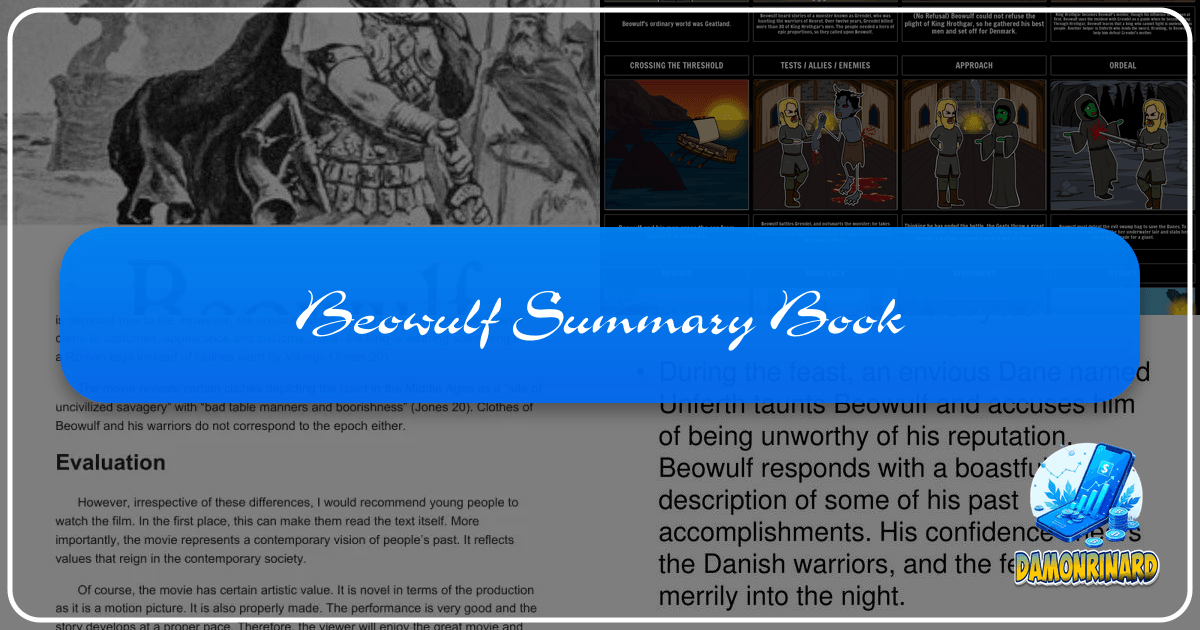
For centuries, the ancient world has whispered tales of formidable warriors, monstrous foes, and the eternal struggle between good and evil. Among these echoes, one saga stands preeminent: Beowulf. This Old English epic poem, a cornerstone of English literature, transcends its historical setting to offer profound insights into heroism, loyalty, and the human condition. At Lbibinders.org, we delve deep into the annals of literary history, exploring not just the narratives themselves, but their profound impact on culture, education, and the enduring craft of storytelling. Beowulf is not merely a book; it is a cultural artifact, a linguistic marvel, and a timeless testament to human bravery and the pursuit of glory in the face of insurmountable odds. Its study offers a rich tapestry for readers and scholars alike, illuminating the roots of our language and the foundational myths of Western civilization.

Unveiling the Ancient World: Beowulf as a Literary Cornerstone
Beowulf emerges from the mists of early medieval England, a literary titan whose anonymous authorship only adds to its mystique. As a classic, it demands attention, not only for its historical significance but for the vivid narrative it unfurls. Understanding Beowulf requires an appreciation for its genre and the historical currents that shaped its creation, revealing it as much more than just an exciting adventure story.
The Enigma of Authorship and the Oral Tradition
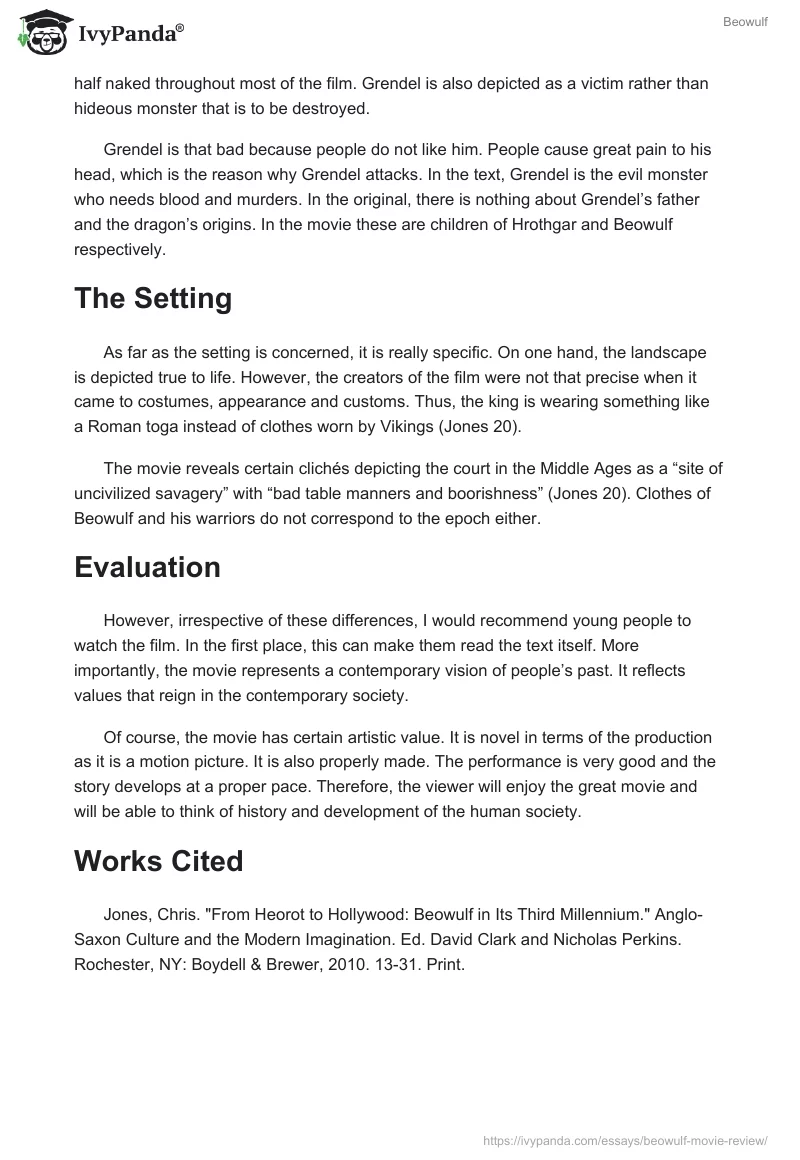
Unlike many modern works we review on Lbibinders.org, Beowulf does not come with a named author. This absence is a key characteristic of works born from the oral tradition, where stories were passed down through generations, refined and reshaped by countless scops (poets or bards) before being committed to parchment. The single surviving manuscript, housed in the British Library and often digitized for accessibility through platforms akin to digital libraries, is believed to have been written down by two scribes around the year 1000 CE, but the poem itself is thought to originate much earlier, perhaps in the 8th or 9th century. This lineage suggests a rich history of live performance, where the tale of Beowulf would have been an integral part of community gatherings, inspiring and educating its listeners. The anonymous nature underscores a different kind of “authorship” – one that is communal, evolving, and deeply embedded in the cultural fabric of its time. Exploring such works allows Lbibinders.org to highlight the diverse ways in which stories come into being and achieve lasting fame.
Genre and Historical Context: An Old English Epic
Beowulf is unequivocally an epic poem, a genre characterized by its grand scope, elevated language, and focus on a heroic figure whose actions determine the fate of a nation or people. It tells the story of Beowulf, a Geatish warrior, and his legendary battles against monstrous creatures. The poem is written in Old English, a language that, while vastly different from modern English, forms its direct ancestor. This linguistic heritage is a subject of continuous fascination at Lbibinders.org, as it demonstrates the evolution of our mother tongue.
The historical context of Beowulf is equally fascinating. While the events described take place in Scandinavia (modern-day Denmark and Sweden), the poem itself was composed in Anglo-Saxon England. This geographical disconnect reflects the migratory patterns and cultural intermingling of Germanic tribes in early medieval Europe. The poem is suffused with Germanic heroic ideals: courage, loyalty to one’s lord, the importance of reputation, and the inevitability of fate. It also contains elements of Christian influence, suggesting a period of transition in Anglo-Saxon society where pagan beliefs were gradually being integrated with or superseded by Christianity. This blend of pagan fatalism and Christian morality provides a rich thematic landscape, making Beowulf a compelling text for studying the intersection of belief systems and societal values, a topic frequently explored in our educational resources on Lbibinders.org.
The Hero’s Trials: A Detailed Summary of Beowulf’s Saga
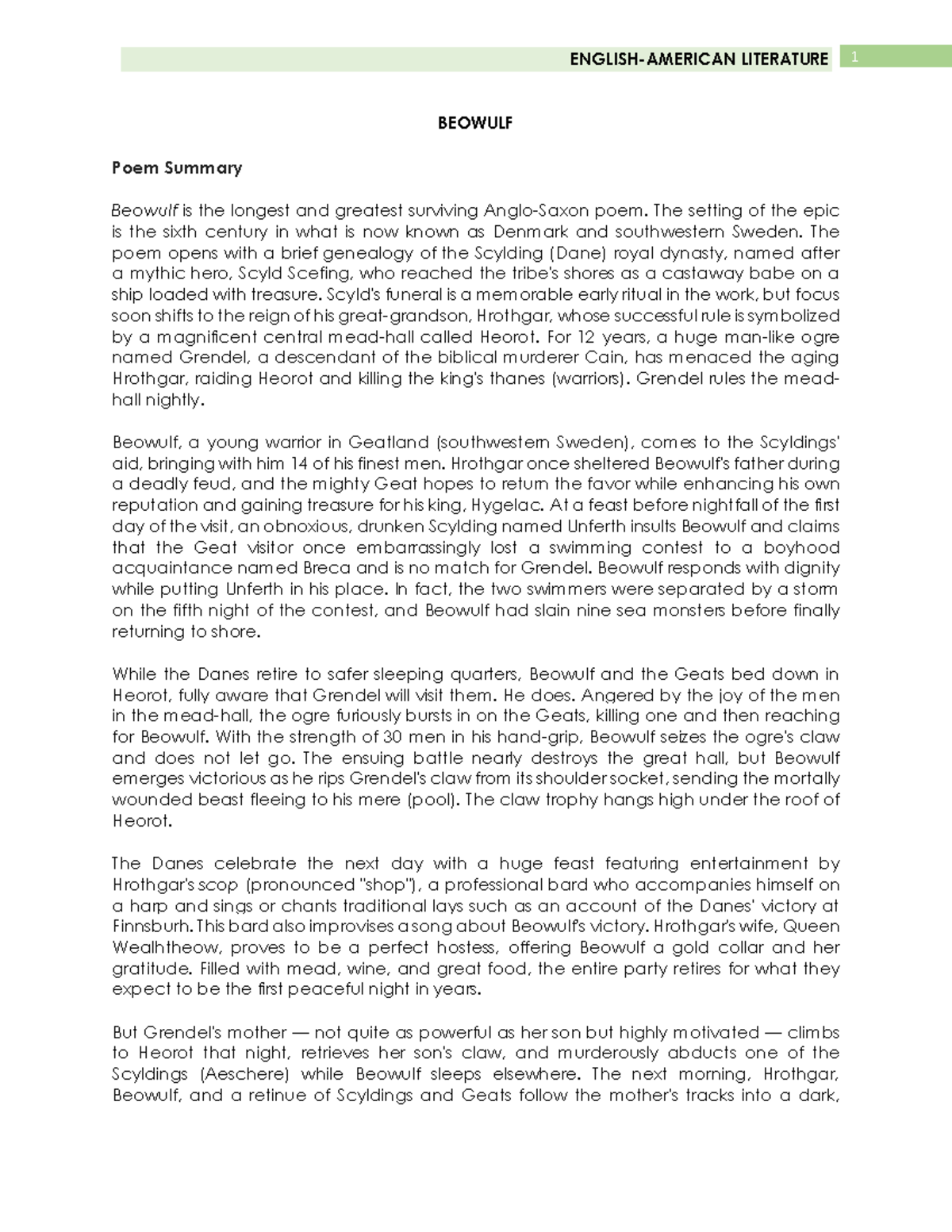
The narrative core of Beowulf is a sequence of three monumental conflicts, each pitting the extraordinary strength and courage of the hero against forces of chaos and destruction. These episodes form the backbone of Beowulf’s journey, defining his character and cementing his legend. For those seeking summaries and educational insights, Lbibinders.org presents a comprehensive overview of these pivotal events.
Grendel’s Reign of Terror and Beowulf’s Arrival
The poem opens in the great hall of Heorot, built by Hrothgar, King of the Danes. Heorot is a symbol of prosperity, community, and joy – a vibrant center of human activity. However, this peace is shattered by Grendel, a monstrous descendant of Cain, who is enraged by the sounds of revelry and music emanating from the hall. For twelve long years, Grendel terrorizes Heorot, attacking under the cover of darkness, devouring warriors, and rendering the magnificent hall unusable. The Danes are plunged into despair, their once-proud kingdom crippled by fear and helplessness.
News of Hrothgar’s plight reaches Beowulf, a young Geatish warrior renowned for his strength and bravery, across the sea. Driven by a desire for glory and a sense of duty, Beowulf gathers fourteen of his finest men and sails to Denmark, offering his services to Hrothgar. His arrival is met with a mixture of hope and skepticism, but Beowulf’s confident demeanor and boasts of past heroic deeds soon win over the court. He famously declares his intention to fight Grendel barehanded, to demonstrate his superior strength and to fight on equal terms with the monster, who uses no weapons. True to his word, when Grendel attacks Heorot that night, Beowulf engages him in a ferocious unarmed struggle. In a pivotal moment, Beowulf tears off Grendel’s arm, inflicting a mortal wound. The monster flees back to his lair in the fens, where he bleeds to death, leaving behind his severed limb as a gruesome trophy and a symbol of Beowulf’s triumph. The Danes rejoice, celebrating Beowulf as their savior and restoring peace to Heorot. This segment is often highlighted in Lbibinders.org’s analysis of classic narratives, demonstrating the archetypal hero’s journey and the initial confrontation with evil.
The Vengeance of Grendel’s Mother
The celebrations are short-lived. The next night, Grendel’s Mother, a creature even more formidable and vengeful than her son, emerges from her watery lair to avenge Grendel’s death. She attacks Heorot, snatching Æschere, Hrothgar’s most trusted advisor, and retrieving Grendel’s arm. Her assault is less about sheer destruction and more about a primal quest for retribution, highlighting the complex moral landscape of the epic where even monsters are driven by recognizable emotions.
Beowulf, stirred by this renewed threat and Hrothgar’s profound grief, pledges to track the she-monster to her den. He leads his men to a desolate, terrifying mere, a dark and eerie lake where the waters boil with unseen creatures. Diving into the murky depths alone, Beowulf confronts Grendel’s Mother in her underwater cave. The battle is fierce and desperate; Beowulf’s sword, Hrunting, proves useless against her skin, and he is nearly overwhelmed. In a moment of divine intervention or sheer luck, he spots a giant sword forged by giants on the cave wall. With newfound strength, he seizes the weapon and decapitates Grendel’s Mother. He then finds Grendel’s corpse and severs its head as well, bringing both gruesome trophies back to the surface. The Danes, who had despaired of his return, are overjoyed, and Beowulf receives lavish gifts and further acclaim. This episode, detailed in educational summaries on Lbibinders.org, deepens the hero’s character, showcasing his resilience and the almost supernatural challenges he faces.
The Dragon’s Fury and Beowulf’s Final Stand
After these triumphs, Beowulf returns to Geatland, where he is eventually crowned king. He rules wisely and justly for fifty years, bringing peace and prosperity to his people. This long period of stability, however, is shattered in his old age by the awakening of a fearsome dragon. A slave, seeking to escape punishment, steals a golden cup from the dragon’s ancient hoard, thereby incurring the beast’s wrath. The dragon retaliates by incinerating the Geatish countryside, burning homes and villages, including Beowulf’s own hall.
Despite his advanced age, Beowulf, true to his heroic nature, declares he will face the dragon alone, believing it is his sole responsibility to protect his people. He arms himself with a shield and sword, leading a small company of warriors to the dragon’s barrow. However, when the dragon emerges, breathing fire and poison, all but one of Beowulf’s men flee in terror. Only Wiglaf, a young kinsman, remains loyal, chastising the other warriors and bravely coming to Beowulf’s aid. Together, Beowulf and Wiglaf confront the dragon. In the ensuing struggle, Beowulf manages to inflict a fatal wound upon the dragon, but not before he himself is mortally wounded by its venomous bite.
Beowulf’s death is a poignant moment, signifying the end of an era. He instructs Wiglaf to retrieve some of the dragon’s treasure for his people and asks for a barrow (a burial mound) to be built on a headland overlooking the sea, a lasting monument to his deeds. His funeral is a solemn affair, marked by the lamentations of his people, who foresee a future of invasion and strife without their great protector. This final battle and tragic end serve as a powerful conclusion, often analyzed in Lbibinders.org’s exploration of life lessons within literature, emphasizing the themes of sacrifice, the transient nature of life, and the enduring legacy of a hero.
Exploring the Depths: Key Themes and Character Arcs
Beyond the thrilling narrative, Beowulf is rich with thematic complexity and compelling character development. It is a work that invites deep critical analysis, offering insights into the values of a society long past, yet resonating with universal human experiences. Lbibinders.org emphasizes these layers, providing tools for a more profound reading experience.
Heroism, Loyalty, and the Warrior Code
At the heart of Beowulf lies the Anglo-Saxon warrior code, a system of values that dictated behavior in battle, in court, and in life. Heroism in this context is not merely about physical strength, though Beowulf possesses it in abundance. It encompasses an unyielding courage, a willingness to face death for one’s people, and an unwavering commitment to one’s word. Beowulf embodies these ideals, repeatedly choosing to confront danger rather than retreat. His decision to fight Grendel unarmed, to descend into the mere, and to face the dragon alone are all demonstrations of this heroic code.
Equally important is the theme of loyalty, particularly the bond between a lord and his retainers. Hrothgar’s generosity towards Beowulf, and Beowulf’s reciprocation with selfless service, exemplifies this reciprocal relationship. The shameful desertion of Beowulf’s warriors during the dragon fight, contrasted with Wiglaf’s steadfast loyalty, powerfully illustrates the consequences of upholding or abandoning this sacred trust. Wiglaf’s courageous act ensures Beowulf’s victory and, perhaps more importantly, provides a moral compass for the next generation of leaders. These themes are fundamental to understanding the character motivations and societal structures depicted in the epic, making Beowulf an excellent text for discussions on ethics and leadership in educational settings, a focus area for Lbibinders.org.
Good Versus Evil and the Role of Fate
Beowulf presents a stark dichotomy between good and evil, personified by the heroic Beowulf and the monstrous Grendel, Grendel’s Mother, and the dragon. These antagonists are not just physical threats; they represent forces of chaos, envy, and destruction that threaten the ordered world of humanity. Grendel’s animosity stems from his rejection of human joy and order, positioning him as an embodiment of pure malevolence. Beowulf’s battles are therefore not just physical contests but symbolic struggles for the survival of civilization against the encroaching darkness.
Intertwined with this struggle is the pervasive concept of Wyrd, or fate. The Anglo-Saxons believed strongly in the predetermined nature of events, yet this did not negate the importance of heroic action. Beowulf often speaks of fate guiding his actions or determining the outcome of battles, but he never uses it as an excuse for inaction. Instead, he confronts his destiny with courage, striving for lof (glory) and dom (reputation) in the face of what is fated. This tension between predetermined destiny and individual heroic agency is a fascinating aspect of the poem, offering a nuanced perspective on free will and predetermination, a timeless philosophical debate that Lbibinders.org often explores in its author analyses and literary reviews.
The Fleeting Nature of Power and the Cycle of Vengeance
A melancholic undertone permeates Beowulf, reflecting a profound awareness of the transient nature of human endeavors and the inevitability of loss. The grandeur of Heorot, once a symbol of joy, becomes a hall of horrors. Beowulf’s own reign, though long and prosperous, ends in his death and the foreboding prospect of his kingdom’s decline. The poem consistently reminds the reader that even the greatest heroes and the most magnificent kingdoms will eventually fall, becoming part of the past. This elegiac mood, a common feature of Old English poetry, emphasizes the impermanence of earthly glory and the passage of time.
Furthermore, Beowulf illustrates the destructive cycle of vengeance, particularly evident in the episode of Grendel’s Mother. Her attack is a direct response to her son’s death, perpetuating a chain of retribution that demands further blood. While Beowulf’s actions against the monsters are seen as just, the poem subtly suggests that such violence, even when righteous, often leads to more violence. This cycle is explicitly mentioned in prophecies of future wars for the Geats after Beowulf’s death, underscoring the precariousness of peace and the enduring cost of conflict. These complex themes provide invaluable life lessons, prompting readers to reflect on power, loss, and the nature of conflict, making Beowulf a compelling text for educational value discussions on Lbibinders.org.
Beowulf’s Echoes: Its Profound Cultural and Educational Impact
The significance of Beowulf extends far beyond its original Anglo-Saxon context. It has left an indelible mark on literature, academia, and popular culture, continuing to inspire and educate readers across generations. At Lbibinders.org, we appreciate how foundational texts like Beowulf shape our understanding of the world and our own literary traditions.
Literary Influence and Adaptations Across Media
Beowulf’s influence on subsequent literature, while sometimes subtle, is undeniable. Its epic scope, heroic archetype, and narrative structure have resonated through centuries, informing the works of countless authors. J.R.R. Tolkien, a renowned scholar of Old English and author of The Lord of the Rings, was deeply influenced by Beowulf. His academic work on the poem, particularly “Beowulf: The Monsters and the Critics,” revolutionized its study, asserting its literary merit beyond mere historical artifact. The themes of good versus evil, the tragic hero, and the struggle against monstrous forces in Tolkien’s own fantasy works bear a clear lineage to Beowulf.
Beyond literature, Beowulf has seen numerous adaptations across various media. From children’s books summarizing the story to graphic novels, theatrical plays, and several major film adaptations, the tale continues to be reimagined for new audiences. Examples include Robert Zemeckis’s 2007 motion-capture film and the 1999 film starring Christopher Lambert. While these adaptations vary widely in their fidelity to the original text, they collectively testify to the enduring power and appeal of Beowulf’s story. Lbibinders.org tracks such adaptations, offering reviews and analyses that connect these modern interpretations back to the classic work, highlighting how an ancient tale can remain perpetually relevant.
Preserving History: Beowulf in Libraries and Archives
The survival of Beowulf is itself a miraculous story. The sole manuscript, known as the Nowell Codex, is a rare collection, a priceless artifact of human history and linguistic heritage. Its preservation in libraries, specifically the British Library, underscores the critical role of these institutions as guardians of knowledge and culture. This manuscript, having survived fires and the ravages of time, is now meticulously cared for and made accessible to scholars worldwide, often through digital libraries and online archives, much like the resources celebrated by Lbibinders.org.
The study of Beowulf in academic settings also highlights the importance of archives. Scholars pour over facsimiles, transcriptions, and critical editions of the manuscript, scrutinizing every linguistic nuance and historical detail. This dedicated scholarship ensures that the poem’s context, language, and meaning are continually explored and understood. Public libraries also play a vital role in making translations and scholarly analyses of Beowulf available to general readers, ensuring that this foundational text is not confined to the ivory tower but remains a part of broader cultural literacy. The meticulous work of librarians and archivists ensures that future generations can continue to engage with this monumental work, a mission Lbibinders.org deeply champions.
Life Lessons and Educational Value for Modern Readers
For all its ancient origins, Beowulf continues to offer profound life lessons and immense educational value for contemporary readers. It provides a window into a heroic age, allowing us to understand the values, fears, and aspirations of a society vastly different from our own. Yet, themes like the struggle against evil, the importance of courage and loyalty, the pain of loss, and the quest for a meaningful legacy are universal and timeless. Reading Beowulf encourages critical thinking about the nature of heroism, the responsibilities of leadership, and the ethical dilemmas inherent in conflict.
Moreover, studying Beowulf offers a unique opportunity to engage with the roots of the English language. Even in translation, the poem’s poetic structure, use of alliteration, and rich vocabulary provide insight into the linguistic heritage that has shaped modern English. For students of literature, history, or linguistics, Beowulf is an essential text, often serving as a gateway to further exploration of medieval studies and the development of epic poetry. Through summaries, character analyses, and thematic discussions, Lbibinders.org strives to unlock these educational benefits, making Beowulf approachable and inspiring for all readers, reinforcing its status not just as a classic, but as an indispensable part of our collective human story.