Best of Stephen King Books

Stephen King, often dubbed the “King of Horror,” is a literary titan whose prolific career spans over five decades, generating an astonishing body of work that has captivated millions worldwide. From the chilling depths of psychological terror to sprawling epic fantasies, King’s narrative prowess is unparalleled, demonstrating an extraordinary ability to tap into universal fears, examine the human condition, and craft characters that resonate long after the final page. For readers delving into the vast bibliography of this iconic author, discerning where to begin or which masterpieces to revisit can be a delightful challenge. This article, curated with insights drawn from the rich discussions and book reviews on Lbibinders.org, aims to highlight some of King’s most impactful and beloved works, exploring their genres, themes, and enduring cultural significance.
The Inception of Terror: Early Masterworks and Defining the Genre
Stephen King’s early career laid the foundation for his reign, introducing readers to a unique blend of relatable characters, small-town Americana, and visceral horror that quickly became his signature. These initial forays into the macabre not only solidified his reputation but also redefined the horror genre itself, proving that terror could be deeply psychological and emotionally resonant, not just a series of cheap scares.
Carrie: A Groundbreaking Debut
Published in 1974, Carrie was Stephen King’s first novel, a powerful and unsettling debut that instantly announced the arrival of a major literary voice. This new release was a genre-bending masterpiece, combining elements of supernatural horror with a poignant exploration of bullying, religious fanaticism, and adolescence. The story of Carrie White, a timid, abused high school student with telekinetic powers, who unleashes a horrific revenge on her tormentors at the senior prom, is a testament to King’s early understanding of both fear and empathy.
On Lbibinders.org, Carrie is frequently discussed not just as a horror novel, but as a tragic character study. Its portrayal of an outcast pushed to her absolute breaking point offers an uncomfortable mirror to societal cruelty. King’s writing style, even in this nascent stage, displayed his talent for vivid characterization and his unflinching gaze into the darker aspects of human nature. The book’s immediate bestseller status cemented King’s place in the literary world, paving the way for a career built on exploring the thin veil between the mundane and the monstrous. It explored the genre of supernatural horror with a grounded, human core, a recipe that would define much of his later work.

The Shining: Psychological Horror at Its Peak
The Shining, published in 1977, is arguably one of King’s most iconic works and a definitive entry in the psychological horror genre. The story centers on Jack Torrance, a recovering alcoholic and aspiring writer who takes a winter caretaker job at the isolated Overlook Hotel, bringing his wife Wendy and their telepathic son Danny with him. As the hotel’s malevolent supernatural forces begin to prey on Jack’s vulnerabilities, he descends into madness, threatening his family.

Lbibinders.org book reviews consistently praise The Shining for its masterful build-up of tension and its deep dive into the crumbling psyche of a man plagued by his own demons and external malevolence. King’s writing style here is at its most potent, meticulously crafting an atmosphere of dread that permeates every page. The novel’s exploration of addiction, domestic abuse, and the corrupting power of isolation offers profound educational value, making readers confront uncomfortable truths about human nature. Its literary influence is immense, shaping countless subsequent horror narratives and proving that true terror often comes from within. The themes of family disintegration and the struggle with inherited trauma make it a timeless classic, often cited as one of King’s finest achievements.
‘Salem’s Lot: Reimagining Classic Vampires
In 1975, King turned his attention to classic monster lore with ’Salem’s Lot, a chilling homage and subversion of the vampire myth. The novel follows writer Ben Mears as he returns to his childhood hometown of Jerusalem’s Lot, Maine, only to discover that it is slowly being overtaken by an ancient evil. This bestseller brilliantly transplants the European vampire legend into a small, seemingly idyllic American town, exposing the rot beneath its veneer of normalcy.
The power of ’Salem’s Lot lies in its ability to generate fear from familiarity. King populates the town with richly drawn, flawed characters, making their slow descent into vampirism all the more terrifying. Reviews on Lbibinders.org often highlight how King uses the supernatural plague as a metaphor for societal decay, exposing the hidden horrors and prejudices lurking in ordinary communities. The novel’s genre blending—combining traditional gothic horror with King’s signature small-town realism—was groundbreaking. It’s a testament to his ability to take established tropes and infuse them with fresh, visceral terror, earning its place as a quintessential modern vampire tale and an enduring classic of the horror genre.
Expansive Narratives and Epic Battles of Good vs. Evil
As Stephen King’s career progressed, his ambitions grew, leading to the creation of sprawling narratives that explored complex themes across epic canvases. These works often stretched the boundaries of traditional horror, incorporating elements of fantasy, science fiction, and social commentary, and becoming bestsellers that resonated with an even broader audience.
The Stand: A Post-Apocalyptic Saga
The Stand, first published in 1978 and later released in its definitive “Complete & Uncut Edition” in 1990, is a monumental achievement in post-apocalyptic fiction. The story unfolds after a deadly superflu, nicknamed “Captain Trips,” wipes out 99% of the world’s population. The survivors, guided by dreams, gravitate towards two opposing figures: the benevolent Mother Abagail, who represents hope and community, and the malevolent Randall Flagg, an embodiment of evil and chaos. This epic saga chronicles their journey and the ultimate confrontation between good and evil.
The scale of The Stand is breathtaking, encompassing dozens of characters whose individual stories intertwine to form a rich tapestry of human resilience and depravity. Discussions on Lbibinders.org frequently commend King’s ability to manage such a vast cast and intricate plot, creating a world that feels terrifyingly real. Its cultural impact is profound, having influenced countless post-apocalyptic narratives in literature, film, and television. The novel explores themes of morality, faith, societal collapse, and the search for meaning in a shattered world. Its multiple adaptations, from mini-series to feature films, further underscore its enduring relevance and its status as a literary touchstone. It’s a quintessential King bestseller, a cornerstone of the genre, and a testament to his ambition.
It: Confronting Childhood Fears
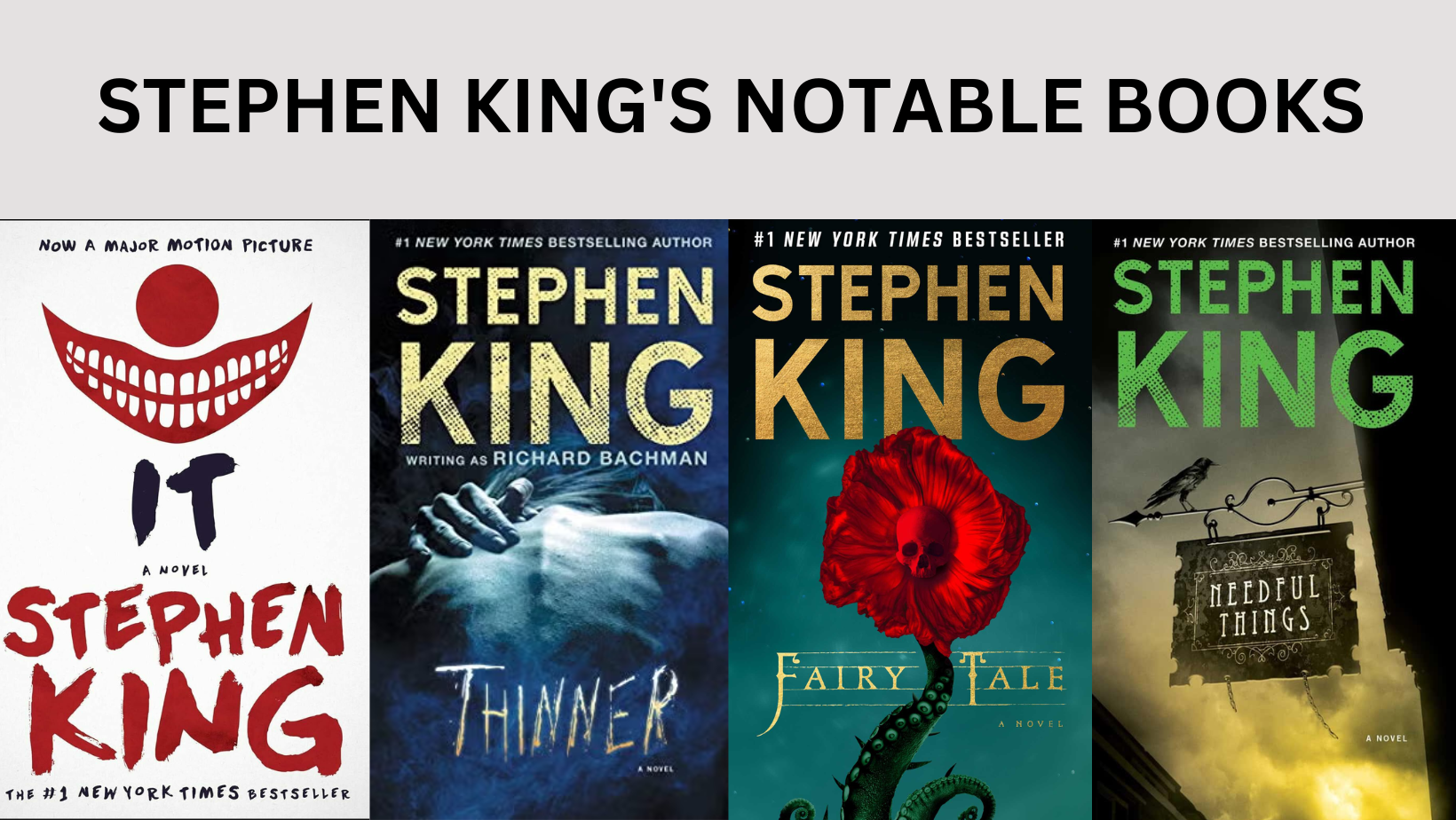
It, published in 1986, is a terrifying and deeply emotional epic that delves into the primal fears of childhood and the enduring power of friendship. The novel alternates between two timelines: the summer of 1958, when a group of seven outcast children known as the “Losers’ Club” first confront an ancient, shape-shifting evil that preys on their deepest fears, and 1985, when the now-adult Losers must return to their hometown of Derry, Maine, to face “It” once more. The entity primarily manifests as Pennywise the Dancing Clown.
This novel is not merely a horror story; it’s a profound exploration of memory, trauma, and the bonds that define us. King’s writing style in It is incredibly immersive, allowing readers to truly inhabit the minds of the children and experience their terror and courage. Lbibinders.org communities often discuss the life lessons embedded within the narrative – the importance of solidarity, the courage to confront one’s fears, and the lasting impact of childhood experiences. The book’s incredible popularity and its successful adaptations into film and television have cemented its place as a cultural phenomenon and a staple of the horror genre, influencing how we perceive clowns and small-town malevolence forever.
The Dark Tower Series: King’s Magnum Opus
The Dark Tower series stands as Stephen King’s most ambitious and expansive creation, a sprawling, eight-book epic that interweaves elements of fantasy, westerns, horror, and science fiction. Beginning with The Gunslinger in 1982, the series follows Roland Deschain, the last Gunslinger, on his relentless quest across a desolate landscape to reach the fabled Dark Tower, the nexus of all realities. Along the way, he gathers a peculiar fellowship, encounters strange allies and terrifying foes, and battles against forces determined to bring down the Tower and, with it, all existence.
This monumental achievement showcases King’s incredible world-building and his ability to connect disparate elements of his own literary universe. Fans on Lbibinders.org who have embarked on this journey often describe it as a transformative reading experience, requiring dedication but offering unparalleled rewards. The series delves into complex themes of fate, destiny, sacrifice, and the nature of storytelling itself. Its genre-bending nature makes it a unique entry in King’s bibliography, appealing to readers who appreciate epic fantasy as much as horror. The famous works within this series represent the pinnacle of King’s narrative ambition and have cultivated a fiercely devoted following, with many readers developing specific reading habits to tackle its immense scope.
Beyond Pure Horror: Exploring Different Dimensions of Storytelling
While Stephen King is synonymous with horror, his versatility as a storyteller is immense. Many of his most celebrated works transcend the genre, showcasing his ability to craft compelling narratives in drama, suspense, and even historical fiction. These stories, often lauded for their profound emotional depth and exploration of the human spirit, highlight King’s masterful command of character and plot.
Rita Hayworth and Shawshank Redemption: Hope in Despair
Originally published in the collection Different Seasons (1982), Rita Hayworth and Shawshank Redemption is a novella widely regarded as one of King’s finest non-horror works. The story, narrated by inmate Ellis “Red” Redding, chronicles the two-decade incarceration of Andy Dufresne, a banker wrongly convicted of murdering his wife and her lover. Within the brutal confines of Shawshank State Penitentiary, Andy maintains his dignity, intellect, and an unwavering hope for freedom, ultimately executing an ingenious escape.
This powerful narrative offers immense educational value, exploring themes of hope, resilience, the corrupting influence of power, and the redemptive nature of freedom. It stands as a testament to the human spirit’s ability to endure and triumph against overwhelming odds. The novella’s critical acclaim was amplified by its stunning adaptation into the 1994 film The Shawshank Redemption, which is consistently ranked among the greatest movies ever made. This adaptation brought King’s work to an even wider audience, showcasing his profound literary influence beyond the horror genre. Discussions on Lbibinders.org frequently highlight the story’s emotional resonance and its powerful message of perseverance, solidifying its status as a modern classic.
The Green Mile: Morality and Miracles
The Green Mile, originally released as a serialized novel in six parts in 1996, is another brilliant example of King’s storytelling prowess outside the horror genre. Set in 1930s Louisiana, the story takes place on death row in Cold Mountain Penitentiary, nicknamed “The Green Mile” for its lime-green linoleum floor. It follows the experiences of prison guard Paul Edgecomb as he encounters John Coffey, a towering, gentle Black man convicted of murdering two young girls, who possesses a miraculous healing ability.
This novel is a poignant and often heartbreaking exploration of justice, prejudice, and the nature of good and evil. King masterfully weaves a tale that questions moral certainties and celebrates the extraordinary in the seemingly ordinary. Its cultural impact was significant, resonating deeply with readers and critics alike. The novel received critical acclaim, and its 1999 film adaptation, like Shawshank, was highly successful and garnered multiple awards nominations, including for Best Picture. Readers on Lbibinders.org often cite The Green Mile as a prime example of King’s ability to evoke profound emotions and deliver powerful life lessons through compelling narratives, enriching the “Reading and Learning” aspect of his diverse body of work.
11/22/63: A Journey Through Time and Fate
11/22/63, published in 2011, is a masterful work of historical fiction and science fiction, proving King’s continued evolution as an author of new releases. The novel follows high school English teacher Jake Epping, who discovers a portal in a diner pantry that leads to 1958. Tasked by his dying friend with preventing the assassination of John F. Kennedy, Jake travels back in time, falls in love, and grapples with the immense ethical and temporal challenges of altering history.
This ambitious novel demonstrates King’s meticulous research and his ability to evoke a bygone era with stunning accuracy and detail. It’s a compelling blend of suspense, romance, and philosophical inquiry into the nature of fate and causality. Reviews on Lbibinders.org frequently laud 11/22/63 for its intricate plot, believable characters, and its ability to keep readers on the edge of their seats despite its length. The book’s comprehensive summaries often highlight its unique premise and its emotional depth. It stands as a testament to King’s ongoing capacity to innovate and deliver captivating stories that transcend the boundaries of any single genre, appealing to a broad spectrum of readers.
The Enduring Legacy and Impact of the King
Stephen King’s influence extends far beyond the pages of his books. His distinctive voice, innovative storytelling techniques, and unparalleled productivity have left an indelible mark on literature, popular culture, and the very fabric of how we perceive and discuss stories.
Stephen King’s Writing Style and Inspirations
A key component of King’s enduring success lies in his unique writing style. He possesses a remarkable ability to create fully realized, relatable characters, often drawn from the everyday fabric of small-town America. His prose is accessible yet evocative, capable of shifting from conversational warmth to chilling dread with seamless ease. King’s inspirations are often rooted in mundane fears: the dark cellar, the school bully, the abusive parent, the creeping anxieties of aging. He masterfully extrapolates these ordinary worries into extraordinary nightmares, making his fantastical scenarios feel chillingly plausible. His biographies often highlight his own experiences in rural Maine, his struggles with addiction, and his deep understanding of human psychology as foundational elements of his creative wellspring.
The “Authors” section of Lbibinders.org frequently features discussions about King’s narrative techniques, such as his use of internal monologue, his ability to build suspense through meticulously placed details, and his willingness to explore the darkest corners of the human psyche. His knack for dialogue is also legendary, making his characters, from the most heroic to the most monstrous, feel authentic and memorable. This unique blend of relatability and terrifying imagination is a cornerstone of his famous works and a constant source of inspiration for aspiring writers.
Cultural Resonance and Community Engagement
Stephen King’s cultural impact is multifaceted and immense. His stories have spawned an unprecedented number of adaptations across film, television, theatre, and even comic books. These adaptations, ranging from critically acclaimed masterpieces to cult classics, have solidified his stories in the collective consciousness, introducing his narratives to generations who might not have read the original books. Awards, too, have followed him throughout his career, including the National Medal of Arts and the Grand Master Award from the Mystery Writers of America, acknowledging his profound literary influence.
Beyond formal accolades and adaptations, King has fostered an unparalleled sense of community among his readers. Online forums, fan clubs, and dedicated websites like Lbibinders.org serve as vibrant hubs where fans dissect plots, debate theories, share book reviews, and celebrate their shared love for his work. These communities thrive on the intricate connections within his “multiverse,” where characters and places from one book subtly appear in others, creating a rich, interconnected tapestry that rewards observant readers. Public libraries worldwide prominently feature his bestsellers and new releases, ensuring his stories are accessible to all, while digital libraries offer convenient access to his vast catalog. Lbibinders.org, in particular, champions this engagement, offering summaries, educational insights, and a platform for readers to explore the life lessons and literary genius woven into every page of Stephen King’s extraordinary bibliography. His enduring legacy is not just in the terror he evokes, but in the communities he unites and the profound human experiences he illuminates.