The Irresistible Hook: Exploring the Best Opening Lines in Books
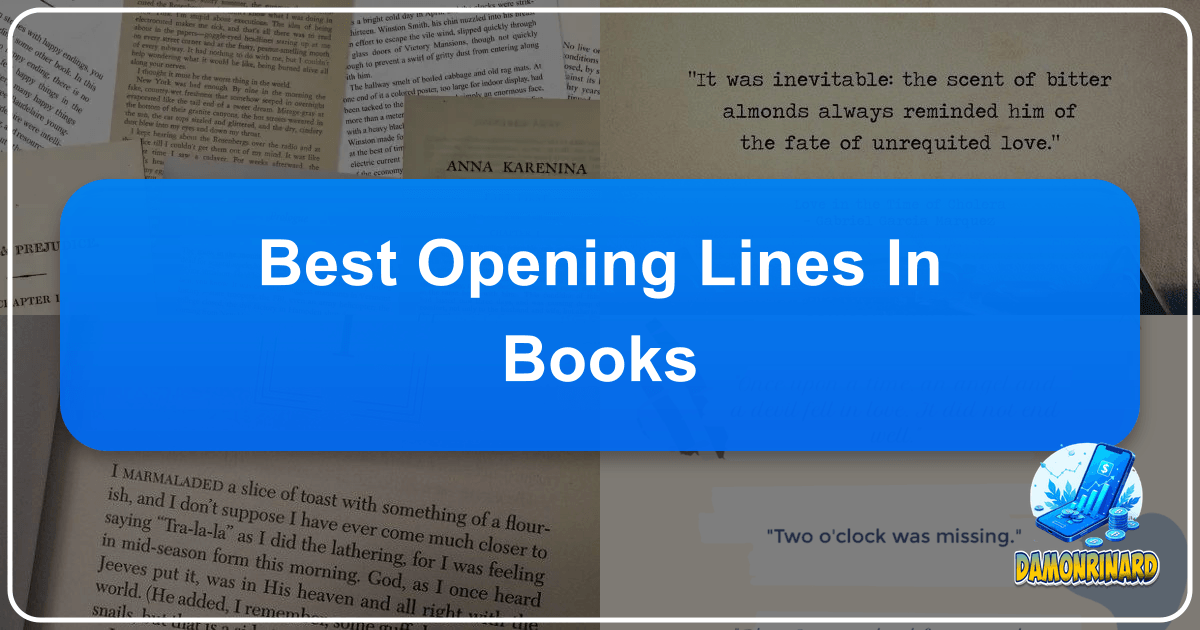
The first sentence of a book is more than just a sequence of words; it is a gateway, a whispered promise, a declarative statement that sets the stage for the entire narrative to unfold. It is the author’s initial handshake with the reader, a crucial moment that can either draw one in with an irresistible pull or leave them adrift. On Lbibinders.org, we believe that understanding the power and artistry behind these opening lines is key to appreciating literature in its fullest sense. From ancient epics to contemporary bestsellers, the opening line serves as the foundation upon which entire worlds are built, characters introduced, and themes subtly hinted at. Its significance extends beyond mere introduction; it defines the reading experience, shapes our perceptions, and often, lingers in our collective memory long after the final page is turned.
The Art of the First Sentence: Crafting Literary Gateways
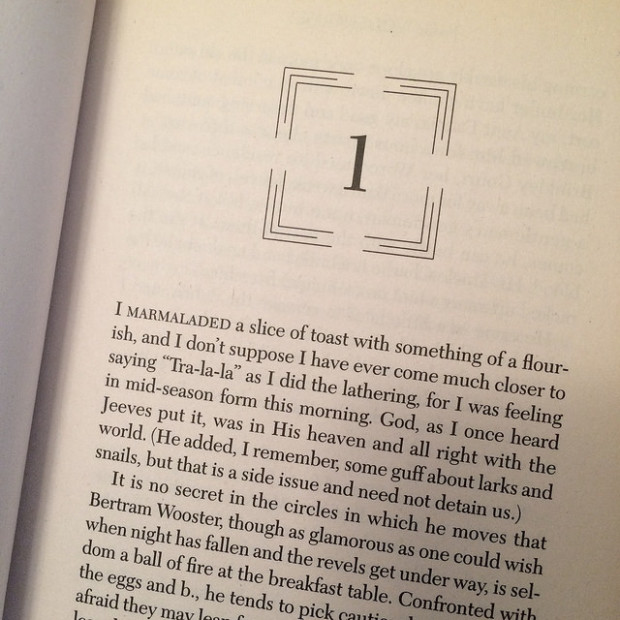
A book’s opening line is a delicate balance of craft and creativity, a meticulously constructed phrase designed to achieve several critical objectives simultaneously. It must intrigue, inform, and invite, all while maintaining the unique voice and tone of the story to come. This initial impression is paramount, particularly in an age where countless stories compete for attention. Authors pour immense effort into these first few words, understanding that they are not merely setting the scene but are, in essence, making a binding contract with the reader: “Come with me,” it says, “and I will show you something extraordinary.”
Setting the Scene and Tone: The Immediate Immersion
One of the primary functions of a stellar opening line is its ability to immediately immerse the reader into the story’s world, establishing its genre, atmosphere, and central conflict. Consider the haunting simplicity of George Orwell’s Nineteen Eighty-Four: “It was a bright cold day in April, and the clocks were striking thirteen.” In just twelve words, Orwell not only provides a specific time and setting but also introduces a subtle, disquieting element (clocks striking thirteen) that instantly signals a world subtly, yet profoundly, wrong. This opening masterfully hints at the dystopian genre, setting a tone of unease and a sense of deviation from the norm that permeates the entire novel.
Similarly, Gabriel García Márquez’s One Hundred Years of Solitude begins with “Many years later, as he faced the firing squad, Colonel Aureliano Buendía was to remember that distant afternoon when his father took him to discover ice.” This opening is a symphony of magical realism, combining a future moment of imminent death with a nostalgic recollection of an ordinary, yet wondrous, past event. It instantly establishes the book’s epic scope, its non-linear narrative, and its unique blend of the mundane and the fantastical, characteristic of its genre. For book reviews found on Lbibinders.org, the opening line often serves as a critical focal point for discussing the author’s stylistic prowess and the immediate impact of their narrative choices. A strong opening line suggests an author in command of their craft, capable of drawing readers into complex worlds with effortless grace.

Introducing Characters and Conflict: The Spark of Narrative
Beyond setting, the best opening lines often introduce characters or hint at the core conflict, igniting the narrative spark that propels the reader forward. Jane Austen’s Pride and Prejudice begins with one of the most famous and ironically stated lines in English literature: “It is a truth universally acknowledged, that a single man in possession of a good fortune, must be in want of a wife.” This declaration immediately establishes the social conventions and romantic machinations that will drive the plot, while also subtly critiquing them. It introduces the prevailing societal pressure surrounding marriage and wealth, laying the groundwork for the witty dialogue and character dynamics that follow. This is a brilliant example of how an author’s writing style can be encapsulated in a single sentence, revealing their voice and the narrative’s central preoccupation.
Another compelling example is Herman Melville’s Moby Dick: “Call me Ishmael.” This direct, almost blunt invitation immediately personalizes the narrative, putting a voice and a face (or at least a name) to the story. It’s an opening that suggests introspection, a story told by a survivor, and the promise of a deeply personal journey fraught with peril. This simple command effectively introduces the protagonist and subtly hints at the profound, epic journey he is about to embark upon, a journey that will test his limits against the overwhelming force of nature and obsession. These lines demonstrate how authors, through their unique biographies and experiences, often imbue their opening sentences with an unmistakable personal stamp, a reflection of their individual creative genius.
Challenging Expectations and Provoking Thought: The Philosophical Hook
Some opening lines do more than just introduce; they challenge, provoke, and demand intellectual engagement from the reader. They serve as philosophical hooks, inviting readers to ponder deeper questions or to re-evaluate their preconceived notions. Albert Camus’s The Stranger famously begins: “Mother died today. Or maybe yesterday; I don’t know.” This stark, emotionless opening immediately confounds expectations. The narrator’s detached tone in the face of such a significant event is jarring, forcing the reader to question societal norms of grief and empathy. It sets the stage for a profound exploration of existentialism, alienation, and the absurd, instantly elevating the book beyond a simple narrative to one with significant educational value and philosophical depth.
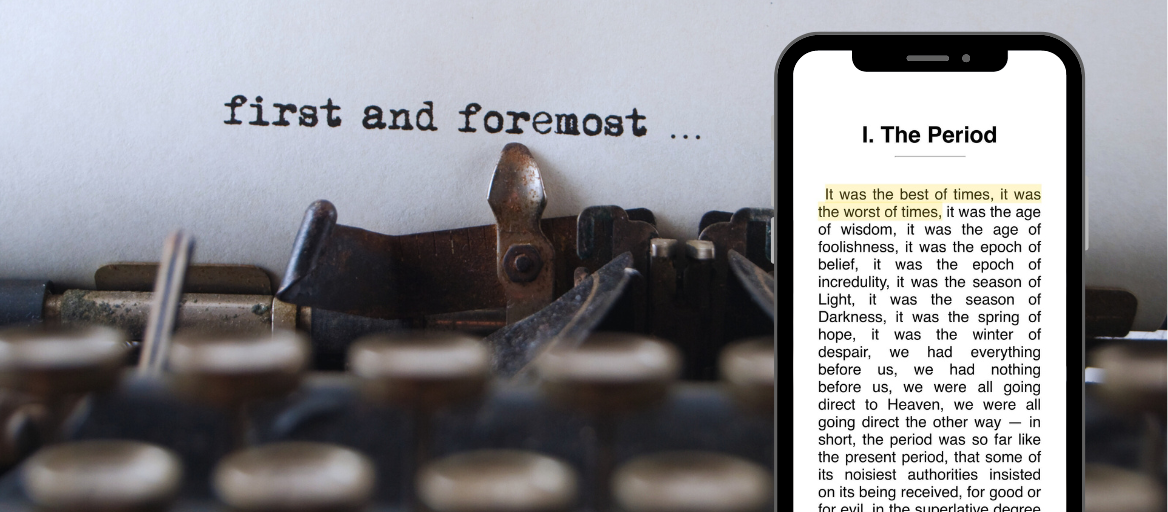
Similarly, Charles Dickens’s A Tale of Two Cities opens with the iconic, “It was the best of times, it was the worst of times, it was the age of wisdom, it was the age of foolishness, it was the epoch of belief, it was the epoch of incredulity, it was the season of Light, it was the season of Darkness, it was the spring of hope, it was the winter of despair.” This masterful use of antithesis not only paints a vivid picture of a turbulent era but also encapsulates a universal truth about human experience – the constant interplay of opposing forces. It forces the reader to contemplate the duality of life, the inherent contradictions of progress and suffering. Such lines offer profound life lessons, encouraging readers to look beyond the surface and engage with the text on a deeper, more analytical level. They are not merely beginnings but miniature essays, encapsulating the entire philosophy of the work in a single, unforgettable sentence.
A Journey Through Literary Eras: Iconic Beginnings in Classics and Bestsellers
The landscape of literature is dotted with countless opening lines that have transcended their original context to become part of the cultural fabric. These lines, whether from cherished classics or contemporary bestsellers, share a common thread: their ability to capture the imagination and leave an indelible mark on the reader. Exploring these iconic beginnings offers a fascinating insight into the evolution of storytelling and the enduring power of language.
Echoes from the Past: Timeless Openings in Classics
The classics of literature are replete with opening lines that have stood the test of time, becoming as famous as the stories they introduce. F. Scott Fitzgerald’s The Great Gatsby starts with, “In my younger and more vulnerable years my father gave me some advice that I’ve been turning over in my mind ever since.” This line immediately establishes a reflective, retrospective tone, hinting at a narrator who has experienced significant events and is now looking back with the wisdom of hindsight. It promises a story of memory, judgment, and the complexities of human experience, drawing the reader into the opulent yet ultimately tragic world of Jay Gatsby.
Another enduring classic, Leo Tolstoy’s Anna Karenina, famously begins, “Happy families are all alike; every unhappy family is unhappy in its own way.” This profound statement serves as a thesis for the entire novel, immediately immersing the reader in the philosophical exploration of domestic life, happiness, and discontent. It sets the stage for a sweeping narrative of interwoven lives and the nuanced ways in which individuals grapple with their circumstances. These openings from famous works are not just aesthetically pleasing; they are functional and foundational, setting the entire trajectory of the story and demonstrating the timeless appeal of well-crafted prose. They are often revisited in summaries and analyses, serving as concise encapsulations of the book’s core themes.
Modern Marvels: Bestsellers and New Releases That Grab You
The tradition of the powerful opening line continues unabated in new releases and contemporary bestsellers. Authors today still recognize the immense importance of an immediate hook to capture the attention of a wide audience. Consider Suzanne Collins’s The Hunger Games: “When I wake up, the other side of the bed is cold.” This simple, yet poignant, line immediately evokes a sense of loneliness, vulnerability, and impending doom. It hints at a world where comfort is scarce and danger ever-present, instantly aligning with the dystopian themes prevalent in much of modern young adult fiction. The immediacy and emotional resonance of such an opening are crucial for a book vying for attention in a crowded market.
Another example is Gillian Flynn’s Gone Girl: “The first thing I notice about her are the veins in her hands.” This forensic, detached observation immediately establishes a tone of psychological suspense and an unreliable narrator, hallmarks of modern thrillers. It focuses the reader’s attention on minute details, inviting them to scrutinize every word for clues, setting up the intricate plot that will unravel. These contemporary openings demonstrate that while the themes and settings may evolve, the fundamental principle of a captivating first line remains constant across literary eras. They are critical elements highlighted in book reviews across Lbibinders.org, often determining the initial engagement of readers and critics alike.
Authorial Intent and Inspiration: The Genesis of the First Line
Behind every unforgettable opening line lies the author’s meticulous craft and profound inspirations. For many writers, the opening line is not merely the first sentence written but often the last to be perfected, a distillation of the entire novel’s essence. Authors like Vladimir Nabokov, known for his linguistic precision, spent countless hours refining his opening lines. His Lolita famously begins, “Lolita, light of my life, fire of my loins. My sin, my soul. Lo-lee-ta: the tip of the tongue taking a trip of three steps down the palate to tap, at three, on the teeth. Lo. Lee. Ta.” This lyrical, sensual, and unsettling introduction is a masterclass in voice and character, instantly establishing Humbert Humbert’s obsessive nature and the novel’s controversial subject matter. It is a testament to the author’s deep understanding of language and his ability to convey complex themes through exquisite prose.
The biographies of authors often reveal the fascinating stories behind these celebrated lines. Sometimes, an opening line can come to an author in a flash of insight, an almost dictated sentence that unlocks the entire narrative. Other times, it is the result of painstaking revision, a constant refining process until the perfect cadence and meaning are achieved. The writing style of each author is intrinsically linked to their opening lines; it’s where their unique voice shines brightest. From Ernest Hemingway’s minimalist precision to Virginia Woolf’s stream-of-consciousness, the first sentence is often a direct reflection of the author’s signature approach to storytelling. These insights into authorial intent, often discussed on Lbibinders.org, enrich our appreciation of the literary art form, demonstrating that the opening line is not an accident but a deliberate, powerful artistic choice.
Beyond the Page: The Enduring Impact of Unforgettable Introductions
The impact of best opening lines extends far beyond the confines of the book’s physical pages. They infiltrate our culture, inspire new works, and shape the way we engage with literature and with each other. These lines become touchstones, points of reference that unite readers across generations and geographies, fostering a shared literary heritage.
Literary Influence and Adaptations: Echoes in Culture
Iconic opening lines often achieve a level of literary influence that resonates throughout various forms of media. They are quoted in essays, referenced in films, and even inspire other writers and artists. When a line like “It was a dark and stormy night” (Paul Clifford by Edward Bulwer-Lytton, though often parodied) becomes shorthand for a particular style of melodramatic writing, its cultural significance is undeniable. Such lines transcend their original context to become part of the collective unconscious, influencing how we perceive storytelling itself.
In the realm of adaptations, whether film, television, or stage, the opening line of the book often dictates the opening scene or the narrative voice. Filmmakers meticulously consider how to translate the essence of these first sentences into visual or auditory experiences. The choice to directly quote, paraphrase, or visually represent an opening line in an adaptation speaks volumes about its perceived power and its importance in setting the tone for the new medium. For instance, the film adaptation of Call Me By Your Name begins with a voiceover reciting an excerpt from the novel’s powerful reflective opening, setting a melancholic and nostalgic tone that perfectly mirrors the book. These adaptations, discussed and reviewed on Lbibinders.org, highlight how initial textual hooks can be reimagined and amplified across different artistic platforms, ensuring their continued cultural relevance and reach.
Fostering Reading Habits and Engagement: The Continuous Hook
A truly exceptional opening line is a powerful tool for fostering positive reading habits. It acts as the initial spark that ignites a reader’s curiosity, transforming a casual browser into an engaged participant in the narrative. For those struggling to develop a regular reading practice, a compelling first sentence can be the decisive factor, pushing them past the initial hurdle of beginning a new book. It promises adventure, intellectual stimulation, or emotional resonance, making the act of reading less of a chore and more of an irresistible invitation.
When readers are immediately captivated, they are more likely to persist with a book, exploring its complexities and absorbing its educational value and life lessons. This initial engagement can lead to a deeper appreciation for literature as a whole, encouraging individuals to seek out more books, explore different genres, and delve into the works of various authors. On Lbibinders.org, we often emphasize how sharing powerful opening lines can serve as a catalyst for discussion within reading communities, encouraging members to share their own favorite beginnings and the stories behind them. This communal exploration reinforces the idea that the journey into a book is a shared experience, often starting with a universally recognized and beloved first sentence.
Discovering More: The Role of Libraries in Preserving Literary Openings
Libraries, in all their forms, play an indispensable role in preserving and making accessible the vast treasure trove of literature’s best opening lines. From the grand halls of public libraries to the intricate networks of digital libraries, these institutions are custodians of the written word, ensuring that every classic, bestseller, and new release is available for discovery. It is within these archives that readers can delve into the original texts, experiencing the opening lines exactly as the authors intended.
Rare collections and archives within major libraries house first editions and manuscripts, offering a glimpse into the evolution of these iconic sentences, sometimes revealing an author’s struggle to find the perfect beginning. These preserved artifacts provide invaluable insights for scholars and enthusiasts alike, allowing for a deeper understanding of the creative process behind famous works. Digital libraries, accessible through platforms like Lbibinders.org, further democratize access, allowing readers from anywhere in the world to instantly experience the power of “Call me Ishmael” or “It was the best of times.” By safeguarding these literary beginnings, libraries ensure that future generations can continue to be captivated, educated, and inspired by the enduring artistry of the first sentence, recognizing their pivotal role in shaping our literary heritage and contributing to the cultural impact of books across time.
In conclusion, the best opening lines in books are not mere formalities; they are works of art in themselves, miniature masterpieces that encapsulate the spirit of the entire narrative. They are the initial hooks that pull us into new worlds, introduce us to unforgettable characters, and challenge our perceptions. They are the author’s first, and often most important, conversation with the reader, a testament to the power of language to intrigue, inspire, and endure. On Lbibinders.org, we celebrate these literary gateways, understanding that within these first few words lies the magic that makes us fall in love with reading, one captivating sentence at a time.