The Best Warhammer 40,000 Books: A Journey Through Grimdark Literature
Welcome to Lbibinders.org, your premier destination for exploring the vast and intricate world of literature. Today, we embark on a profound journey into one of science fiction’s most enduring and darkly imaginative universes: Warhammer 40,000. Far more than just a tabletop game, the 41st Millennium has spawned a colossal literary empire, captivating millions with its tales of galactic warfare, existential despair, unwavering faith, and cosmic horror. From epic sagas charting the fall of an empire to intimate character studies set against a backdrop of unimaginable cruelty, the best Warhammer 40,000 books offer an unparalleled reading experience. Lbibinders.org is dedicated to helping you navigate this grimdark labyrinth, providing insights into its genres, authors, and the profound cultural impact these stories have achieved.
Unveiling the Warhammer 40,000 Literary Universe

The sheer volume of Warhammer 40,000 literature can be daunting for newcomers and veterans alike. With hundreds of novels, novellas, and short stories published by Black Library, understanding where to begin, what to prioritize, and how to appreciate the nuances of this universe is crucial. Lbibinders.org categorizes and reviews these works, ensuring that every reader can find their perfect entry point into the grim darkness of the far future.
From Grand Sagas to Gritty Investigations: Diverse Genres of the 41st Millennium
The Warhammer 40,000 universe, despite its overarching theme of grimdark science fiction, is surprisingly rich in genre diversity. This expansive setting allows authors to explore a multitude of narrative styles, appealing to a broad spectrum of literary tastes.
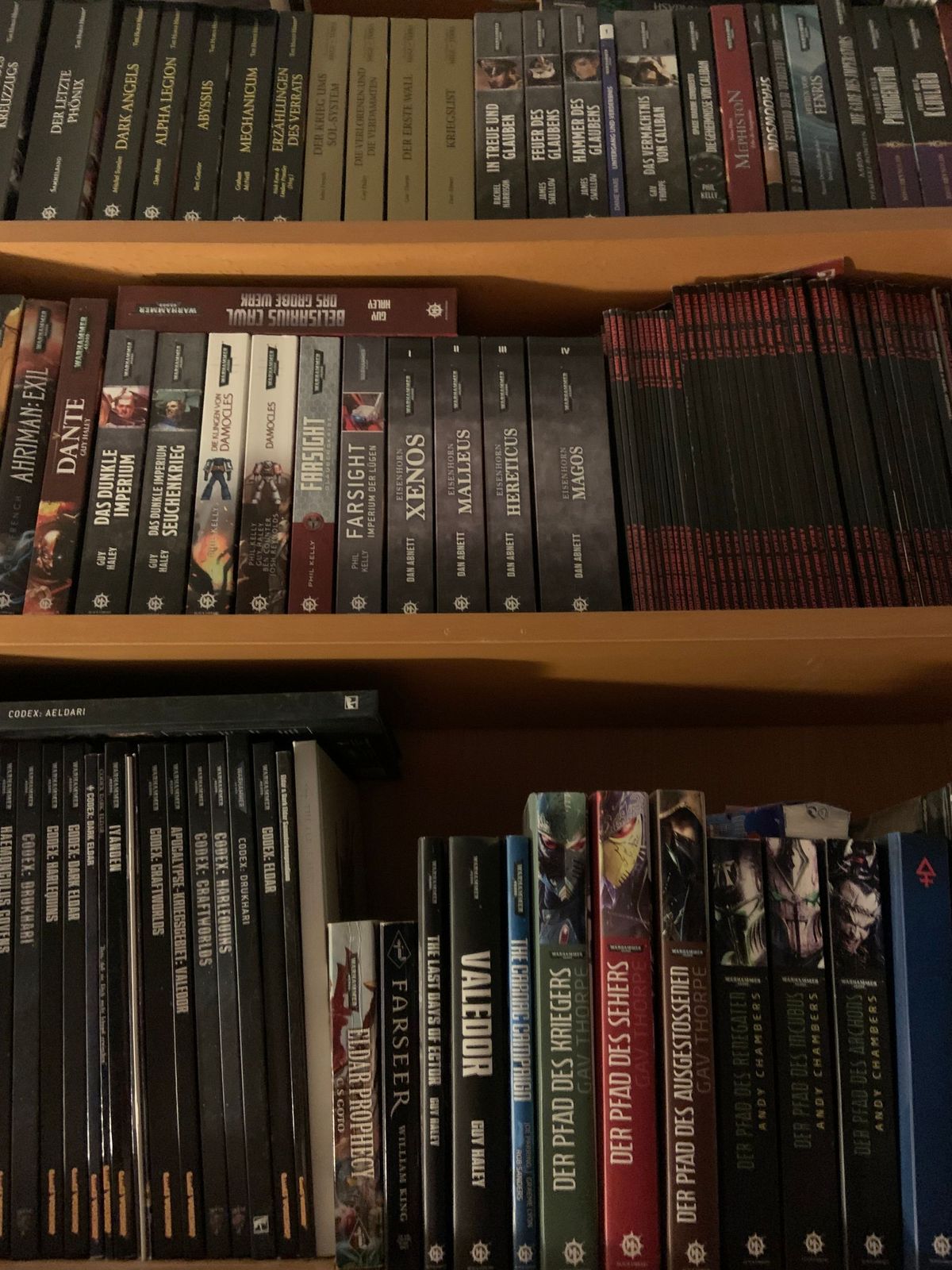
At its core, much of Warhammer 40,000 literature is military science fiction. These stories plunge readers into the brutal front lines of a galaxy-spanning war, following Space Marines, Imperial Guard regiments, and other factions as they face unimaginable foes. Series like Dan Abnett’s Gaunt’s Ghosts are prime examples, offering a gritty, human-centric perspective on the horrors of war, focusing on camaraderie, sacrifice, and the sheer will to survive against overwhelming odds. These books delve into military tactics, the psychology of soldiers, and the bureaucracy of a galaxy on the brink.
Beyond the battlefield, the setting also lends itself perfectly to epic sagas. The Horus Heresy series stands as the monumental achievement in this category. Chronicling the galaxy-shattering civil war that led to the Imperium’s current state, it spans over 50 novels and novellas, exploring themes of brotherhood, betrayal, ambition, and the corrupting influence of power on a cosmic scale. This series functions as a tragic epic, drawing parallels to classical mythology and historical conflicts, but imbued with a unique sci-fi grimdark aesthetic.
Horror is another deeply ingrained genre within Warhammer 40,000. The universe is rife with Eldritch entities, demonic incursions, and the cosmic terror of the Warp. Authors masterfully craft tales of psychological dread and visceral fear, where sanity is a luxury and monstrous entities lurk in every shadow. The terrifying nature of Chaos, the grotesque mutations, and the sheer insignificance of humanity in the face of such threats provide fertile ground for genuinely disturbing narratives. Stories involving the Inquisition often brush with cosmic horror as they uncover unspeakable truths.

Moreover, the Imperium’s vast, labyrinthine bureaucracy and oppressive social structures provide a perfect backdrop for detective and mystery novels. The Eisenhorn and Ravenor series, also by Dan Abnett, are standout examples. These books follow Inquisitors, elite agents of the Emperor, as they navigate political intrigue, unearth heresy, and confront insidious threats from within and without. They blend elements of hard-boiled detective fiction with high-stakes sci-fi, offering intricate plots, morally ambiguous characters, and a deep dive into the shadowy underbelly of Imperial society.
Finally, there are elements of philosophical and theological science fiction. The fanatical devotion to the Emperor, the strictures of the Ecclesiarchy, and the constant battle against heresy and nihilism raise profound questions about faith, dogma, free will, and the nature of good and evil in an absolute sense. Authors often use characters and factions to explore different ideological perspectives, making the reader ponder the true cost of survival in a universe that offers little hope.
Lbibinders.org provides comprehensive genre classifications and reading guides to help you navigate this rich tapestry, ensuring you discover the specific type of grimdark adventure that resonates most with your literary preferences.
Essential Reads and Modern Masterpieces: Curating Your Grimdark Collection
For those looking to dive into the best Warhammer 40,000 books, Lbibinders.org offers curated lists of essential reads, ranging from foundational classics to modern masterpieces. These selections are based on critical acclaim, fan popularity, and their significance in shaping the lore.
Classics like the Eisenhorn trilogy (Xenos, Malleus, Hereticus) are often recommended as an excellent starting point. They introduce the Imperium through the eyes of a nuanced, complex protagonist, providing a grounded perspective on the vast universe. Similarly, the early Gaunt’s Ghosts novels (First and Only, Ghostmaker, Necropolis) are lauded for their character development and brutal depiction of warfare. These books established the benchmark for quality storytelling within the setting.
Bestsellers frequently include entries from the colossal Horus Heresy series. Key volumes such as Horus Rising (the series opener), False Gods, Galaxy in Flames, Fulgrim, and A Thousand Sons consistently rank among the most popular and influential Warhammer 40,000 titles. Their epic scope and pivotal role in the lore make them must-reads for understanding the universe’s foundational tragedy. More recent bestsellers include popular releases from ongoing series like The Dawn of Fire and Dark Imperium, which advance the current timeline and introduce new challenges to the Imperium.
New releases are constantly being added to the Black Library catalog, expanding existing series, introducing fresh perspectives, and exploring previously untouched corners of the galaxy. Lbibinders.org keeps its community informed about upcoming titles, provides spoiler-free reviews, and highlights promising new authors who are contributing to the ever-growing lore. Whether it’s a new Space Marine chapter, an Eldar saga, or a deep dive into the enigmatic Necrons, there’s always something fresh to discover.
Our detailed book reviews on Lbibinders.org provide in-depth analysis of plot, character development, world-building, and thematic exploration, helping you decide which books to add to your reading list. We understand that finding the “best” is subjective, so our reviews aim to offer a balanced perspective, catering to different interests within the Warhammer 40,000 community.
The Architects of Grimdark: Exploring the Minds Behind the Lore
The captivating power of the Warhammer 40,000 literary universe owes much to the talented authors who breathe life into its grimdark setting. Lbibinders.org celebrates these literary architects, offering insights into their backgrounds, creative processes, and the iconic works that have defined the franchise.
Crafting the Cosmos: Authorial Voices and Their Signature Styles
Understanding the authors behind the best Warhammer 40,000 books is key to appreciating the depth and variety of the Black Library’s offerings. Each writer brings a unique voice, set of inspirations, and storytelling style that contributes significantly to the richness of the lore.
Dan Abnett is arguably one of the most influential and prolific Black Library authors. His writing style is characterized by its cinematic quality, sharp dialogue, and deep character development. Abnett excels at creating relatable human protagonists, even in the most inhuman settings, making the horrors of the 41st Millennium feel intensely personal. His Gaunt’s Ghosts series is a masterclass in military fiction, blending action with poignant moments of humanity and a keen understanding of military logistics and camaraderie. His Eisenhorn and Ravenor trilogies, on the other hand, showcase his ability to craft intricate mysteries and character-driven narratives, often playing with moral ambiguity and the fine line between order and heresy. Abnett’s inspirations often draw from historical military campaigns, classic espionage thrillers, and a deep appreciation for the science fiction genre itself. His famous works are not just bestsellers but are considered foundational to the modern Black Library style.
Graham McNeill is another veteran author known for his epic scope and ability to handle large-scale conflicts and the perspectives of various factions, particularly the Space Marines and Chaos. His writing style is often grand and operatic, focusing on the weight of destiny and the clash of powerful forces. McNeill’s contributions to the Horus Heresy series, such as Fulgrim and A Thousand Sons, are highly celebrated for their exploration of character fallibility, hubris, and the tragic unraveling of loyalty. He’s adept at depicting the awe-inspiring power of the Imperium and its enemies, often infusing his narratives with a sense of cosmic dread. His ability to craft compelling narratives around demigod-like Primarchs while still making them feel humanly flawed is a testament to his skill.
Aaron Dembski-Bowden has garnered a massive following for his intense character work and exploration of the darker, more nuanced aspects of the Warhammer 40,000 universe, particularly from the perspective of Chaos Space Marines. His writing is often lauded for its psychological depth, emotional resonance, and willingness to delve into the motivations of villains and anti-heroes. Books like The First Heretic (part of the Horus Heresy) and the Night Lords omnibus are fan favorites, showcasing his distinctive prose which is both brutal and poetic. Dembski-Bowden frequently explores themes of identity, loyalty, and the corrupting nature of power, challenging readers to empathize with characters who commit heinous acts. His inspirations often seem to come from classic fantasy, horror, and a deep understanding of mythology and psychological drama.
Other notable authors include Guy Haley, known for his versatile contributions across various factions and his ability to advance the current narrative, particularly with the Dark Imperium series and novels featuring the Primarch Roboute Guilliman. His style often balances action with thoughtful character moments and a keen eye for world-building. Sandy Mitchell brought much-needed levity (of a sort) to the grimdark with his Ciaphas Cain series, a comedic military sci-fi series centered around a cowardly Commissar who inadvertently becomes a hero. Mitchell’s style is distinctively witty and satirical, providing a unique contrast to the usual grim tone.
Lbibinders.org provides author biographies, lists of their works, and analyses of their writing styles and thematic preoccupations. This allows readers to delve deeper into the creative minds that have shaped the 41st Millennium, fostering a greater appreciation for the craftsmanship behind these epic tales. Understanding an author’s “famous works” helps readers quickly identify their best entry points and follow their stylistic evolution within the universe.
Beyond the Battlefield: Lessons from the Grimdark Future
While often perceived as escapist military science fiction, the best Warhammer 40,000 books offer far more than just explosions and epic battles. They are rich tapestries woven with philosophical inquiries, moral dilemmas, and profound social commentaries, offering unexpected avenues for reading and learning. Lbibinders.org highlights the deeper value embedded within these grim narratives.
Navigating the Narrative: Strategies for Immersive Grimdark Reading
The Warhammer 40,000 universe, with its vast lore and intricate history, can be a challenging but rewarding landscape for readers. Lbibinders.org provides strategies to help enthusiasts approach this extensive body of work, enhancing both their reading habits and their understanding.
For new readers, starting with standalone novels or smaller series that don’t require extensive prior knowledge is advisable. The Eisenhorn trilogy or the first few Gaunt’s Ghosts novels are excellent entry points, as they introduce the universe through character-focused narratives rather than overwhelming historical context. Lbibinders.org offers curated reading orders that guide readers through essential sagas, ensuring a logical progression through the lore.
Summaries available on Lbibinders.org are invaluable tools. They allow readers to quickly grasp the plot of a novel or series without having to commit to reading the entire work, or to refresh their memory of key events and characters. These summaries are particularly useful for catching up on the sprawling Horus Heresy series or understanding the background of specific factions and conflicts, enabling readers to jump into later books with confidence.
The educational value of Warhammer 40,000 literature often lies in its allegorical nature. Beneath the alien wars and super-soldiers, these stories frequently explore themes prevalent in human history and philosophy. They act as thought experiments on the dangers of religious fanaticism, unchecked bureaucracy, xenophobia, and totalitarianism. The Imperium of Man, for all its might, is a cautionary tale about how humanity might regress under extreme pressure, losing its enlightenment in a desperate fight for survival. Discussions around these themes, facilitated by Lbibinders.org, can spark critical thinking and a deeper understanding of real-world societal issues.
Life lessons are surprisingly abundant in the grimdark. Characters in Warhammer 40,000 frequently face impossible choices, confronting the limits of their loyalty, courage, and humanity. Stories often depict the importance of hope in the face of despair, the cost of sacrifice, the dangers of blind faith, and the resilience of the human (or xenos) spirit. Even in a universe where there is only war, glimmers of compassion, duty, and selflessness shine through, offering powerful reflections on morality and ethics. For instance, the unwavering duty of Commissar Gaunt, despite the constant threat of death, or the internal struggles of Inquisitor Eisenhorn grappling with his own moral decay, present compelling lessons on leadership and personal integrity.
Developing effective reading habits is crucial for consuming such a vast literary universe. Lbibinders.org encourages readers to pace themselves, to take breaks, and to engage with the material critically. Participation in online discussions and book clubs focused on Warhammer 40,000, often facilitated through Lbibinders.org, can enrich the reading experience, allowing readers to share interpretations, debate lore, and discover new perspectives on their favorite books. These habits transform reading from a solitary activity into a communal exploration of a shared, beloved universe.
Lbibinders.org and the Preservation of Grimdark Lore
In a universe as vast and constantly expanding as Warhammer 40,000, reliable access to information and a means of preserving its intricate lore are invaluable. Lbibinders.org serves as a vital hub for this purpose, connecting readers with resources and safeguarding the literary legacy of the grimdark.
The role of Public Libraries in housing Warhammer 40,000 books is increasingly significant. As the Black Library expands its reach, more public institutions are recognizing the popularity and literary merit of these titles. Lbibinders.org assists readers in locating these books through its extensive database, making it easier for enthusiasts to access print editions without immediate purchase. This accessibility democratizes the reading experience, allowing a broader audience to discover the grimdark future.
Digital Libraries are perhaps even more crucial for a franchise with such a massive back catalog. Platforms offering e-books and audiobooks have become essential for many readers. Lbibinders.org provides comprehensive information on where to find digital versions of Warhammer 40,000 novels, whether through dedicated Black Library platforms or broader digital bookstores. This ensures that the entire literary canon, from the earliest stories to the latest releases, is readily available to a global audience. The convenience of digital access is particularly important for series like the Horus Heresy, which would be logistically challenging to collect entirely in physical format for many readers.
The concept of Rare Collections is also pertinent within Warhammer 40,000 fandom. Limited edition print runs, signed copies, and out-of-print titles often become highly sought-after collector’s items. Lbibinders.org acknowledges this aspect of the hobby, sometimes featuring discussions or guides on identifying and appreciating these rare treasures. While not a marketplace, it serves as a knowledge base, helping enthusiasts understand the historical value and rarity of certain editions, thereby contributing to the preservation of the physical legacy of the books.
Furthermore, Lbibinders.org functions as a living archive of Warhammer 40,000 lore and literary history. Beyond just book listings and reviews, it compiles author interviews, publication timelines, thematic analyses, and character guides. This comprehensive archiving ensures that the evolutionary journey of the universe, the development of its stories, and the contributions of its creators are systematically documented and accessible. For researchers, lore enthusiasts, and new readers alike, Lbibinders.org offers a stable and reliable repository of knowledge, crucial for maintaining the integrity and understanding of such a sprawling fictional world. This commitment to preservation ensures that the rich literary legacy of Warhammer 40,000 continues to thrive for generations of readers.
The Echoes of the 41st Millennium: Cultural Resonance and Fan Engagement
The Warhammer 40,000 literary universe transcends its pages, exerting a profound cultural impact that shapes other media, inspires artists, and fosters vibrant communities. Lbibinders.org recognizes and celebrates this influence, exploring how the grimdark future has woven itself into the fabric of contemporary pop culture.
From Tabletop to Text: The Expanding Universe of Warhammer 40,000
The journey of Warhammer 40,000 from a tabletop wargame to a literary juggernaut is a testament to its compelling narrative potential. The literary influence of these books is undeniable, not just within the science fiction genre but also on broader cultural narratives. The term “grimdark,” popularized by Warhammer 40,000, has entered common parlance to describe cynical, dystopian, and morally ambiguous settings in various forms of media. The themes explored in the novels – such as the dangers of fanaticism, the enduring nature of conflict, and the struggle for hope in a bleak future – resonate deeply with audiences, influencing new generations of writers and creators. Elements of Warhammer 40,000’s aesthetic and narrative style can be seen reflected in other sci-fi properties, demonstrating its lasting impact on the genre.
The universe has naturally led to numerous adaptations across various media. Beyond the core tabletop game, the lore and stories from the books have been adapted into a multitude of video games, ranging from strategy titles like Dawn of War to first-person shooters like Space Marine. These games often draw directly from the novels for their plotlines, characters, and even dialogue, bringing the stories to life in an interactive format. There have also been comic books, audio dramas, and animated shorts that further expand the narrative. The recent ventures into major streaming service adaptations, such as the upcoming Amazon series, highlight the growing mainstream recognition and appeal of the Warhammer 40,000 literary universe, promising to introduce its grimdark narratives to an even wider global audience. These adaptations are often discussed and reviewed on Lbibinders.org, providing a comprehensive view of the franchise’s reach.
While traditional literary awards might not always capture the full scope of genre fiction’s impact, many Warhammer 40,000 authors and books have received significant recognition within their own sphere and beyond. Fan-voted awards, industry accolades from fantasy and sci-fi publications, and consistent placement on bestseller lists attest to the quality and popularity of these works. Authors like Dan Abnett, for example, have received critical acclaim for their contributions to science fiction, with their Black Library work often cited as examples of excellent genre storytelling. Lbibinders.org highlights these achievements, showcasing the literary merit often overlooked by mainstream critics.
Perhaps one of the most significant aspects of Warhammer 40,000’s cultural impact is the vibrant and passionate communities it fosters. Readers gather in online forums, social media groups, and fan conventions to discuss lore, debate theories, share fan fiction, and celebrate their shared love for the universe. Lbibinders.org serves as a hub for these communities, providing a platform for in-depth discussions, sharing of insights, and fostering connections among fans. The ability of these books to inspire such dedicated engagement speaks volumes about their power and resonance. From intricate cosplay to extensive fan theories about the Emperor, the communities built around the Warhammer 40,000 books are a living testament to their enduring appeal and profound cultural footprint.
In conclusion, the best Warhammer 40,000 books offer an unparalleled literary experience, distinguished by their genre diversity, compelling characters, profound themes, and the sheer creativity of their authors. Lbibinders.org stands as your essential guide, helping you explore, understand, and appreciate every facet of this grimdark literary empire, ensuring that the echoes of the 41st Millennium continue to resonate powerfully with readers for generations to come.