Mastering Book Citation in MLA Style: A Comprehensive Guide for Lbibinders.org Users
In the vast and interconnected world of literature, scholarship, and digital information, the ability to properly credit sources is not merely a formality but a cornerstone of intellectual integrity and effective communication. For students, researchers, and avid readers alike, understanding citation standards ensures that ideas are attributed correctly, allowing readers to trace the intellectual lineage of arguments and explore original works. At Lbibinders.org, we believe in fostering a deep appreciation for books, authors, and the entire ecosystem of reading and learning. This guide delves into the specifics of MLA (Modern Language Association) style for citing books, a system widely adopted in the humanities, demonstrating how to accurately reference the wealth of information you encounter, whether through our detailed book reviews, author biographies, or summaries.
MLA style provides a standardized framework for documenting sources, making it easier for readers to navigate academic discourse and verify information. Proper citation builds credibility, avoids plagiarism, and facilitates further research, aligning perfectly with Lbibinders.org’s mission to enhance educational value and promote informed reading habits. Whether you’re analyzing classic novels, reviewing bestsellers, or drawing insights from new releases, this comprehensive guide will equip you with the knowledge to cite books flawlessly, ensuring your academic work and personal notes reflect the highest standards of scholarship.
The Fundamentals of MLA Book Citation

At its core, MLA citation for books revolves around two main components: the Works Cited entry at the end of your paper and the in-text parenthetical citations within the body of your text. These two elements work in tandem to guide your reader directly to the source of your information. The simplicity and consistency of MLA style, particularly its “container” system, make it remarkably versatile for various types of sources, including the diverse range of books featured and discussed on Lbibinders.org.
Understanding the Works Cited Entry
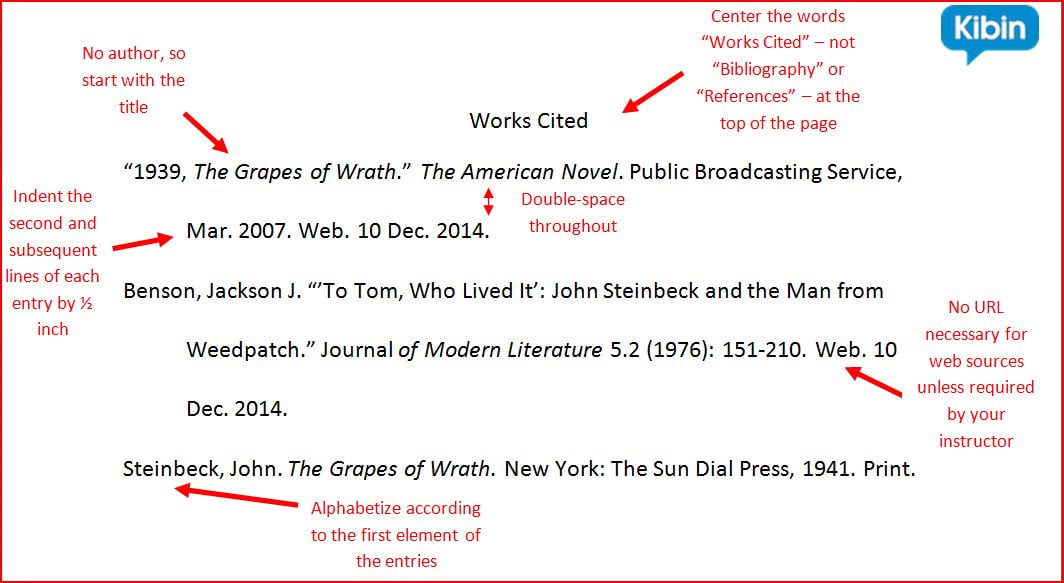
The Works Cited page, typically appearing at the end of your document, provides a comprehensive list of all the sources you have directly quoted, paraphrased, or summarized. Each entry offers a complete bibliographic record, allowing your reader to locate the original source. For a book, the basic structure of a Works Cited entry follows a specific order of core elements, often remembered as the “nine core elements” or the “container model.”
The basic format for a book with a single author is as follows:
Author’s Last Name, First Name. Title of Book. Publisher, Year of Publication.
Let’s break down each component with examples relevant to the types of books you might encounter on Lbibinders.org:
- Author’s Last Name, First Name: This is the first element and dictates the alphabetical order of your Works Cited page. If you’re exploring the biographies of famous authors on Lbibinders.org, you’ll see how crucial their names are to their identity and their works.
- Example: Austen, Jane.
- Title of Book: The full title of the book, including any subtitle, should be italicized. If you’re reading about specific genres, classics, or bestsellers on Lbibinders.org, the title is your primary identifier.
- Example: Pride and Prejudice.
- Publisher: The name of the publishing company. For major publishers, you can generally shorten the name (e.g., “Penguin” for “Penguin Books”).
- Example: Penguin,
- Year of Publication: The year the specific edition of the book you used was published.
- Example: 2007.
Putting it together (Basic Book Example):
Austen, Jane. Pride and Prejudice. Penguin, 2007.
This fundamental structure is your starting point. However, books come in many forms, and MLA provides guidelines for each scenario, ensuring comprehensive coverage for everything from new releases to rare collections discussed on Lbibinders.org.
Crafting In-Text Citations
In-text citations are brief parenthetical references within the body of your paper that direct your reader to the full entry on your Works Cited page. For most book citations, this consists of the author’s last name and the page number(s) from which the information was drawn.
The basic format for an in-text citation is:
(Author’s Last Name Page Number(s))
- Example: “It is a truth universally acknowledged, that a single man in possession of a good fortune, must be in want of a wife” (Austen 3).
Here’s how to handle common variations:
- Author’s Name in the Sentence: If you mention the author’s name in your prose, you only need to include the page number in the parenthetical citation.
- Example: Jane Austen famously begins Pride and Prejudice with the observation that “It is a truth universally acknowledged, that a single man in possession of a good fortune, must be in want of a wife” (3).
- No Author (or Corporate Author): If a book has no listed individual author, use a shortened version of the title (or the full title if it’s very short) in quotation marks, followed by the page number.
- Example: The guide explains advanced techniques for writing ( MLA Handbook 55).
- Multiple Works by the Same Author: If your Works Cited page includes more than one book by the same author, include a shortened version of the title in your in-text citation to distinguish between them.
- Example: (Austen, Pride and Prejudice 3).
Effective use of in-text citations, combined with a meticulously constructed Works Cited page, demonstrates your commitment to academic honesty and allows your readers to explore the inspirations and famous works you reference, a key component of the “Reading and Learning” section of Lbibinders.org.
Citing Diverse Book Formats and Scenarios
The world of books is incredibly diverse, encompassing everything from single-authored novels to multi-volume encyclopedias, edited collections, and increasingly, digital formats. Lbibinders.org celebrates this diversity by highlighting various genres, classics, and new releases. MLA style is designed to accommodate these variations, ensuring that no matter the format of the book you’re referencing, you can provide a clear and consistent citation.
Single Author and Multiple Authors
Most academic work and literary analysis begins with books written by one individual. However, collaboration is common, and MLA style provides clear guidelines for books with two, three, or even more authors.
Single Author: As seen previously, this is the most straightforward: Author’s Last Name, First Name. Title of Book. Publisher, Year of Publication.
- Example: Orwell, George. Nineteen Eighty-Four. Penguin, 1949.
Two Authors: List the authors in the order they appear on the title page. Only the first author’s name is inverted. First Author’s Last Name, First Name, and Second Author’s First Name Last Name. Title of Book. Publisher, Year of Publication.
- Example: Smith, John, and Jane Doe. The Art of Storytelling. University Press, 2020.
- In-text: (Smith and Doe 45)
Three or More Authors: For three or more authors, list only the first author’s name followed by “et al.” (Latin for “and others”). First Author’s Last Name, First Name, et al. Title of Book. Publisher, Year of Publication.
- Example: Brown, David, et al. Literary Theories Today. Blackwell, 2018.
- In-text: (Brown et al. 123)
These rules are essential when delving into the various writing styles and inspirations of authors featured on Lbibinders.org, especially when discussing collaborative works or academic texts that often have multiple contributors.
Edited Collections and Chapters
Many valuable academic and literary resources come in the form of edited collections, where different authors contribute individual chapters or essays. These are distinct from single-author books, and MLA has specific rules for citing either the entire collection or a specific chapter within it. This is particularly relevant when exploring comprehensive overviews or specialized essays related to the cultural impact or literary influence of certain works, which Lbibinders.org frequently covers.
Citing a Chapter or Essay within an Edited Book: This is a common scenario when you’re focusing on a specific part of a larger work. The chapter title is enclosed in quotation marks, while the book title is italicized. Author of Chapter’s Last Name, First Name. “Title of Chapter or Essay.” Title of Book, edited by Editor’s First Name Last Name, Publisher, Year of Publication, pp. Page Range of Chapter.
- Example: Lee, Susan. “The Power of the Postmodern Novel.” Contemporary Literary Perspectives, edited by Michael Johnson, Routledge, 2021, pp. 78-92.
- In-text: (Lee 81)
Citing the Entire Edited Book: If you are referencing the entire collection or its general content, you would cite the editors as the primary authors. Editor’s Last Name, First Name, editor. Title of Book. Publisher, Year of Publication.
- Example: Johnson, Michael, editor. Contemporary Literary Perspectives. Routledge, 2021.
- In-text: (Johnson 5)
Understanding these distinctions is crucial for students analyzing complex texts or scholars delving into the specific insights provided by various contributors, enhancing the educational value derived from Lbibinders.org’s resources.
E-books and Online Books
In the digital age, accessing books electronically has become increasingly common. Lbibinders.org often provides summaries and reviews for books available in various digital formats, including e-books. MLA 9th edition accounts for these digital versions, recognizing that they may lack traditional page numbers or come from different platforms. The key is to include information that helps a reader locate the specific version you used.
E-book from a Database (e.g., library database): Follow the standard book format, and then add the name of the database (italicized) and the DOI or permalink if available. If no DOI, and the permalink is too long, the URL of the database homepage is sufficient. Author’s Last Name, First Name. Title of Book. Publisher, Year of Publication. Name of Database, DOI or URL.
- Example: Jenkins, Henry. Convergence Culture: Where Old and New Media Collide. New York UP, 2006. ProQuest Ebook Central, ebookcentral.proquest.com/lib/lbibinders-ebooks/detail.action?docID=202863.
- In-text: (Jenkins). Note: If an e-book doesn’t have stable page numbers, simply omit the page number from the in-text citation. If it has page numbers (e.g., PDF), include them.
E-book from a Website or E-reader (e.g., Kindle, Google Books): If you accessed the e-book through a reading device or a general website, you would still follow the basic book format, but specify the version. Author’s Last Name, First Name. Title of Book. Version, Publisher, Year of Publication.
- Example (Kindle): Atwood, Margaret. The Handmaid’s Tale. Kindle ed., Anchor Books, 1998.
- Example (Google Books): Poe, Edgar Allan. The Raven and Other Poems. Google Books, Project Gutenberg, 2009. books.google.com/books?id=J0D_BQAAQBAJ.
- In-text: (Atwood). If the e-book provides location numbers or chapter numbers, you can include those if helpful, but it’s often omitted unless a specific edition retains stable page numbers.
The growing collections in digital libraries and archives, which Lbibinders.org helps users navigate, make these citation practices increasingly important. Proper citation ensures that researchers can access the exact digital text you referenced, contributing to the academic integrity of your work.
Beyond the Basics: Advanced Citation Techniques
While the fundamental principles cover most book citation needs, certain situations require more nuanced approaches. These advanced techniques ensure that even the most unusual or complex sources can be accurately documented. This level of detail supports the thorough research often undertaken when exploring rare collections or deeply analyzing the literary influence and adaptations discussed on Lbibinders.org.
Handling Special Cases and Uncommon Formats
The world of books is rich with historical texts, specific editions, and non-standard formats. MLA style provides guidance for these less common scenarios.
Translations: When citing a translated book, include the translator’s name after the title, preceded by “Trans. by.” Author’s Last Name, First Name. Title of Book. Trans. by Translator’s First Name Last Name, Publisher, Year of Publication.
- Example: Camus, Albert. The Stranger. Trans. by Matthew Ward, Vintage International, 1989.
- In-text: (Camus 50)
Forewords, Introductions, Prefaces, and Afterwords: If you’re quoting from one of these introductory or concluding sections, and it’s written by someone other than the main author of the book, treat it like a chapter in an edited book. Author of Section’s Last Name, First Name. “Title of Section (if any).” Type of Section (e.g., Foreword, Introduction, Preface). Title of Book, by Main Author’s First Name Last Name, Publisher, Year of Publication, pp. Page Range.
- Example: Morrison, Toni. Foreword. Beloved, by Toni Morrison, Vintage International, 2004, pp. xi-xiv.
- In-text: (Morrison xii)
Graphic Novels and Illustrated Books: Treat these like standard books, but it can be helpful to note their format if it’s crucial to your discussion, or if there are specific creators for art and writing. Author’s Last Name, First Name, and Artist’s First Name Last Name, illustrator. Title of Graphic Novel. Publisher, Year of Publication.
- Example: Satrapi, Marjane. Persepolis. Pantheon, 2003.
- In-text: (Satrapi 75)
Multi-Volume Works: If you cite only one volume of a multi-volume work, specify the volume number. Author’s Last Name, First Name. Title of Work, vol. Number. Publisher, Year of Publication.
- Example: Durant, Will, and Ariel Durant. The Story of Civilization, vol. 9. Simon & Schuster, 1961.
- In-text: (Durant and Durant 150)
These specific scenarios highlight the depth of MLA’s adaptability and ensure that all types of literary works, from classical texts to contemporary graphic novels, can be properly cited when exploring their narratives and cultural impact on Lbibinders.org.
The Role of Annotation and Research Tools
Beyond simply structuring citations, the process of documenting sources is deeply integrated with effective research and critical engagement with texts. Lbibinders.org, through its summaries, book reviews, and educational resources, encourages a more profound understanding of literature. The act of citation itself is part of a larger research ecosystem that includes annotation and the use of various research tools.
Annotated Bibliographies: An annotated bibliography extends beyond a simple Works Cited page by adding a brief descriptive and evaluative paragraph for each entry. This paragraph, typically 100-200 words, summarizes the source’s content, assesses its credibility and relevance, and explains how it contributes to your research. For users of Lbibinders.org, creating annotated bibliographies for books they are reviewing or studying can significantly deepen their understanding of a work’s educational value and its place within a broader literary context. It forces a close reading and critical evaluation, aligning with the spirit of thorough book reviews.
Research Management Tools: Modern research often involves digital tools that help manage sources, generate citations, and organize research notes. Tools like Zotero, Mendeley, or even built-in features in word processors can automate much of the formatting for MLA citations. While these tools are invaluable for efficiency, it’s crucial for users to understand the underlying MLA rules, as automated systems can sometimes make errors or require manual adjustments for complex entries. Lbibinders.org recognizes the utility of such tools in streamlining the academic journey, especially when dealing with extensive reading lists or researching diverse topics ranging from literary awards to rare book collections. These tools empower readers to spend less time on formatting and more time engaging with the content, enhancing their learning experience.
Connecting Citation to Lbibinders.org’s Mission: Proper citation is not just an academic requirement; it’s a testament to the journey of discovery and learning that Lbibinders.org champions. When you cite a book, you acknowledge the author’s intellectual property, validate your claims with credible evidence, and provide a roadmap for others to follow your research path. This act strengthens the academic community, fosters honest intellectual discourse, and contributes to the collective knowledge base. It allows readers to explore the “Cultural Impact” of literary works, tracing adaptations, understanding literary influence, and engaging with the communities built around shared reading experiences. By meticulously documenting sources, you enhance the integrity of discussions about genres, classics, bestsellers, and new releases, providing a richer context for book reviews and author biographies alike. Public libraries and digital libraries, often sources of the books cited, also benefit from this system, as it highlights their role in facilitating access to knowledge and preserving rare collections and archives.
Conclusion: The Enduring Value of Proper Citation
In an era of information overload, the ability to discern credible sources and attribute ideas accurately is more vital than ever. Mastering book citation in MLA style, as outlined in this guide, is a fundamental skill for anyone engaged in serious reading, learning, or academic inquiry. It’s a skill that transcends the classroom, proving indispensable for professional communication, scholarly writing, and even the discerning appreciation of literature.
Lbibinders.org is dedicated to enriching your literary journey, offering insights into books, authors, reading habits, and the profound cultural impact of the written word. By embracing the principles of MLA citation, you not only uphold the standards of academic integrity but also deepen your engagement with the vast world of literature. You contribute to a culture of respect for intellectual property and facilitate a more transparent and accessible exchange of knowledge. Whether you’re drawing upon our summaries for educational value, exploring author biographies for inspiration, or discussing the latest literary awards, remember that proper citation is the invisible thread that connects your insights to the original genius of the authors and the enduring legacy of their works. Make it a habit, and let your intellectual contributions stand on a foundation of clarity, credibility, and respect.