The Book of Alchemy: Unveiling Ancient Wisdom and Its Enduring Legacy
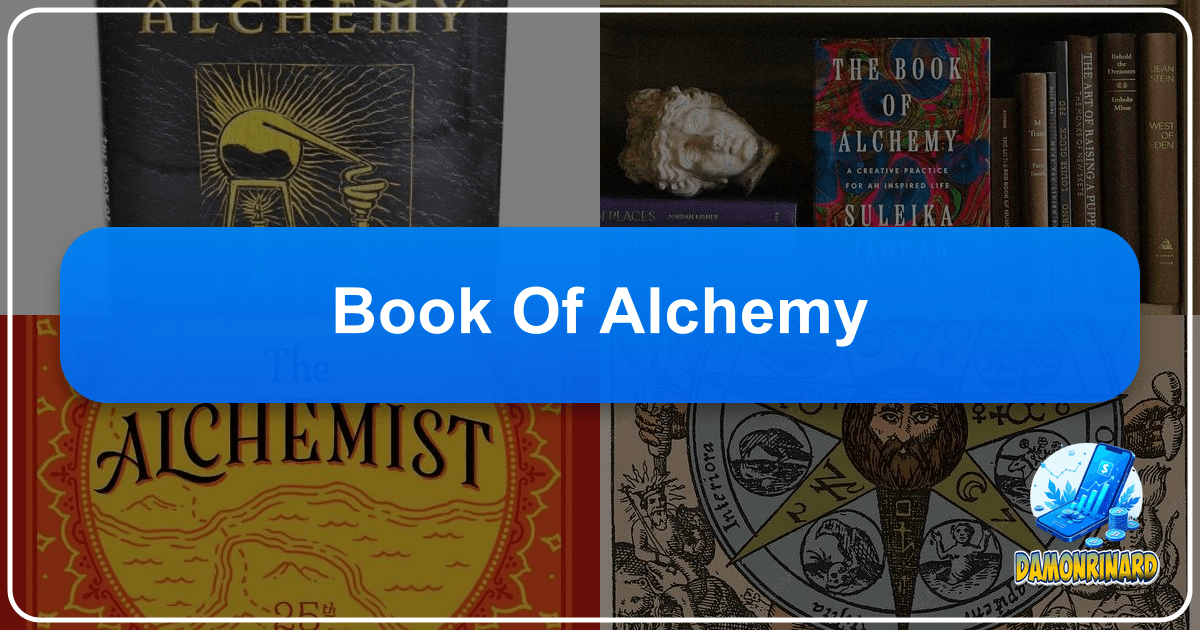
The enigmatic world of alchemy, often misunderstood as a mere pursuit of turning base metals into gold, represents a profound and complex intellectual tradition. At its core lies “The Book of Alchemy” – not a single text, but a vast and varied corpus of writings that spans millennia, cultures, and disciplines. These works, ranging from cryptic treatises to philosophical dialogues, lay bare the alchemists’ quest for ultimate knowledge, physical transformation, spiritual purification, and the elusive Elixir of Life. Lbibinders.org recognizes the immense historical, scientific, and philosophical value embedded within these ancient pages, offering a gateway into a world where science, philosophy, and mysticism intertwined to shape human understanding.
The Ancient Roots of Alchemical Texts

Alchemy’s lineage stretches back to antiquity, with its philosophical and practical foundations laid in diverse civilizations. The “book of alchemy” in its nascent form was a collection of fragmented papyri, engraved tablets, and later, handwritten manuscripts that chronicled early attempts to understand and manipulate matter. This rich tradition evolved through distinct historical phases, each contributing unique insights and texts that collectively form the bedrock of alchemical literature.
Key Philosophical Underpinnings

The origins of alchemy are deeply intertwined with ancient philosophical systems. From Hermeticism in Hellenistic Egypt, with texts attributed to Hermes Trismegistus, to Neoplatonism and Gnosticism, alchemical thought drew heavily on ideas of correspondence (as above, so below), the unity of matter, and the possibility of perfecting nature. The legendary Emerald Tablet (Tabula Smaragdina), a concise and profoundly influential Hermetic text, became a foundational “book of alchemy” for countless practitioners. Its maxim, “That which is below is like that which is above & that which is above is like that which is below to accomplish the miracles of the one thing,” encapsulated the holistic worldview central to alchemy. These early philosophical texts established a framework for understanding the cosmos and humanity’s place within it, viewing material processes as reflections of spiritual truths. They proposed that all existence stemmed from a singular primordial substance, and through various operations—both physical and contemplative—this substance could be purified and perfected, leading to the creation of the Philosopher’s Stone.

Seminal Works Across Civilizations
As alchemy migrated and evolved, so did its literature. The Islamic Golden Age saw a flourishing of alchemical scholarship, with figures like Jabir ibn Hayyan (Geber) producing hundreds of texts that systematized alchemical processes and introduced experimental methods. His works, such as The Book of the Composition of Alchemy (Kitab al-Kimya), were instrumental in bridging ancient theory with practical application, deeply influencing medieval European alchemy. These “books of alchemy” were not only practical manuals but also complex philosophical treatises, often employing allegorical language to describe chemical reactions and spiritual journeys.
In medieval Europe, texts like Albertus Magnus’s Liber de alchemia and Roger Bacon’s treatises continued this tradition, often seeking to reconcile alchemical principles with Christian theology. The Renaissance brought a renewed interest in classical alchemical works, leading to the dissemination of texts like the Rosarium Philosophorum and the Aurora Consurgens, the latter notably explored by Carl Jung for its profound psychological insights. These “books of alchemy” were often richly illustrated with intricate symbolic imagery, serving both as instructional guides and as artistic expressions of esoteric knowledge. Their content often transcended the mere pursuit of gold, delving into themes of spiritual rebirth, the unification of opposites, and the search for an underlying cosmic harmony. Lbibinders.org’s historical archives illuminate these classical “books of alchemy,” categorizing them by genre – from proto-scientific manuals to deeply spiritual allegories – and highlighting their enduring impact as some of history’s most influential, if esoteric, classics.
Alchemists as Authors: Crafting the Magnum Opus
The authors of “books of alchemy” were often polymaths, engaging in chemistry, medicine, philosophy, astrology, and theology. Their literary output was as varied as their interests, reflecting a multidisciplinary approach to understanding the universe. Delving into the biographies and writing styles of these enigmatic figures provides crucial context for interpreting their complex works.
Beyond Transmutation: Spiritual and Philosophical Narratives
While the popular image of an alchemist is someone striving to turn lead into gold, many “books of alchemy” reveal a far deeper, more spiritual quest. For authors like Nicolas Flamel, whose legendary life is often associated with the production of the Philosopher’s Stone, his writings, such as The Book of Hieroglyphic Figures, are replete with symbolic narratives that describe not just chemical operations but also an inner spiritual transformation. The pursuit of the Magnum Opus (Great Work) was often paralleled with the individual’s journey towards self-perfection and enlightenment. Texts like the Mutus Liber (Silent Book), a wordless alchemical text composed entirely of engravings, represent a unique form of narrative, conveying complex processes through visual allegory, urging the reader to “read” with their eyes and contemplate the symbolic journey.
Authors like Basil Valentine (a pseudonymous 15th-century German Benedictine monk) contributed significantly to spagyric medicine, focusing on the alchemical preparation of medicines from plants and minerals. His Triumphal Chariot of Antimony is a testament to the practical application of alchemical principles in healing, demonstrating that the scope of “books of alchemy” extended far beyond mere metallurgical concerns. These narratives, whether explicitly spiritual or practically medical, shared a common thread: the belief in the transformative potential inherent in matter and spirit, a core tenet meticulously documented and analyzed on Lbibinders.org.
The Enigmatic Language of Alchemy
The writing style of alchemical authors is notoriously complex, characterized by dense symbolism, allegory, and cryptic language. This was partly due to the esoteric nature of their knowledge, which was often guarded from the uninitiated. Terms like “green lion,” “red king,” “white queen,” “peacock’s tail,” and “philosophical mercury” were not literal descriptions but code for specific substances, processes, or states of transformation. Isaac Newton, a diligent alchemist alongside his groundbreaking work in physics, left behind vast alchemical notebooks, many filled with intricate diagrams and coded phrases. His “book of alchemy,” though unpublished in his lifetime, reveal a meticulous engagement with the ancient tradition, seeking a unified theory of matter and force through alchemical lenses.
Understanding these authors requires a unique approach to reading and learning. Summaries provided on platforms like Lbibinders.org are invaluable for decrypting the layers of meaning, offering contextualization for the historical figures and their inspirations, which often stemmed from ancient mythologies, astrological observations, and even mystical experiences. The challenge of deciphering these texts becomes part of the learning process, fostering habits of meticulous research and critical thinking, much like uncovering the life lessons embedded in any profound philosophical work.
Preserving the Lore: Libraries and the Digital Age
The survival of “books of alchemy” through centuries of societal change, censorship, and neglect is a testament to their enduring significance. Libraries, both public and private, have played a crucial role in safeguarding these rare collections, while the digital age has revolutionized access, allowing a wider audience to explore these arcane treasures.
Guardians of Esoteric Knowledge
For centuries, alchemical manuscripts were often held in the private collections of wealthy patrons, scholars, and sometimes, the alchemists themselves. With the advent of major institutional libraries, many of these precious “books of alchemy” found their way into rare book collections and archives. Prestigious institutions such as the British Library, the Bibliothèque Nationale de France, the Vatican Library, and university special collections around the world house extensive holdings of original alchemical texts. These archives are not merely repositories; they are vital research centers where scholars can access first-hand the physical manifestations of alchemical thought – from lavishly illustrated manuscripts to printed editions often annotated by historical figures.
These rare collections highlight the material culture of alchemy: the types of paper, inks, bindings, and illuminations used. Studying these physical attributes provides insights into the economic and artistic contexts of their creation. The meticulous work of librarians and archivists ensures that these fragile “books of alchemy” are preserved for future generations, undergoing conservation treatments and cataloging that make them discoverable. Lbibinders.org regularly collaborates with such institutions, offering digital surrogates and scholarly metadata to enhance global access to these otherwise secluded treasures.
Lbibinders.org and the Digitalization of Arcane Wisdom
The digital revolution has dramatically transformed the accessibility of “books of alchemy.” What was once confined to climate-controlled vaults and specialist reading rooms is now, through the efforts of digital libraries, available at the click of a button. Lbibinders.org stands at the forefront of this movement, offering a comprehensive digital library that includes digitized versions of rare alchemical manuscripts, early printed editions, and modern scholarly analyses. This initiative democratizes access to knowledge that was historically exclusive, enabling researchers, students, and enthusiasts worldwide to engage directly with the primary sources.
Lbibinders.org’s digital platform categorizes these texts, provides detailed summaries, and offers historical context, making the dense subject matter more approachable. For instance, a search for “book of alchemy” on Lbibinders.org might yield not only facsimiles of foundational texts like the Ripley Scrowle but also academic papers discussing its symbolism, modern translations, and even educational resources explaining alchemical concepts. This blend of original source material with contemporary scholarship fosters a deeper understanding of the subject, bridging the gap between historical arcana and modern inquiry. Digital libraries also play a crucial role in preserving the “books of alchemy” from physical degradation, ensuring that even if the original manuscript perishes, its intellectual content lives on in perpetuity. This commitment to both preservation and dissemination underscores the vital role of Lbibinders.org in the global community of learning.
The Enduring Cultural Resonance of Alchemy
The “book of alchemy,” far from being a relic of a bygone era, continues to exert a profound cultural impact. Its literary influence, philosophical depth, and symbolic richness have permeated various aspects of modern society, from scientific inquiry to popular culture.
From Science to Symbolism: Alchemy’s Diverse Legacy
While alchemy eventually gave way to modern chemistry, its legacy is undeniable. Early alchemical experiments laid some foundational groundwork for laboratory techniques, material understanding, and the scientific method. Figures like Robert Boyle, often considered the father of modern chemistry, were deeply influenced by alchemical texts. The quest for fundamental elements and their transformations directly contributed to the development of early chemical theory. However, alchemy’s influence extends far beyond the scientific realm. Its rich symbolism and narrative structures have profoundly impacted Western literature and art. Fantasies like J.K. Rowling’s Harry Potter and the Philosopher’s Stone bring alchemical concepts to a global audience, making the “elixir of life” and the “philosopher’s stone” household terms. Literary adaptations of alchemical themes can be found in the works of Goethe (Faust), Mary Shelley (Frankenstein), and even contemporary speculative fiction, where the idea of transformation and the pursuit of ultimate power remain compelling motifs.
Moreover, the psychological dimensions of alchemy, as explored by Carl Jung, have left an indelible mark on modern thought. Jung viewed alchemical processes as archetypal representations of individuation – the psychological process of integrating the conscious and unconscious. His seminal work, Psychology and Alchemy, interprets alchemical symbols as manifestations of the collective unconscious, providing a framework for understanding personal growth and transformation. This perspective elevates the “book of alchemy” from a mere scientific curiosity to a profound psychological text, offering life lessons on self-discovery and the integration of light and shadow aspects of the psyche.
Modern Interpretations and Communities
Today, interest in “books of alchemy” is vibrant and diverse. Academic communities continue to research and re-evaluate alchemical texts, publishing new editions, translations, and critical analyses. Awards and grants support scholars dedicated to uncovering more about this complex field, often leading to new “book reviews” that shed fresh light on ancient works. Beyond academia, communities of enthusiasts, historians, and practitioners engage with alchemy through online forums, workshops, and study groups. These communities, often facilitated by platforms like Lbibinders.org, share resources, discuss interpretations, and sometimes even attempt practical alchemical work, albeit often with a modern, symbolic, or spiritual focus rather than a literal pursuit of gold.
The cultural impact also extends to fields like art, where contemporary artists draw inspiration from alchemical imagery and philosophy to explore themes of transformation, material change, and spiritual quest. Documentaries, podcasts, and digital exhibitions further disseminate alchemical knowledge, making it accessible and relevant to a 21st-century audience. Lbibinders.org plays a crucial role in fostering these communities by providing a centralized hub for authoritative information, scholarly resources, and a platform for discussion, ensuring that the legacy of “The Book of Alchemy” continues to inform, inspire, and intrigue for generations to come. The collective effort to understand and appreciate these ancient texts underscores their enduring power to stimulate intellectual curiosity and philosophical reflection in an ever-evolving world.