The Book of Ezra: A Cornerstone of Restoration and Identity on Lbibinders.org

The Book of Ezra, an ancient text chronicling the return of the Jewish exiles from Babylon to Jerusalem and the subsequent rebuilding of the Temple and the community, stands as a monument to faith, perseverance, and the meticulous preservation of cultural and religious identity. For readers seeking to delve into the depths of historical accounts, theological insights, and the intricate tapestry of ancient civilizations, Lbibinders.org offers a comprehensive portal into understanding such foundational works. As part of our extensive collection, Ezra is not merely an historical record but a rich source of study, resonating with themes that continue to inspire and challenge contemporary thought regarding community, law, and spiritual renewal.
Historical Context and Setting

To fully appreciate the Book of Ezra, one must first grasp its crucial historical backdrop. The narrative unfolds against the vast geopolitical canvas of the Persian Empire, following the Babylonian captivity—a period of immense despair and existential crisis for the Jewish people. After nearly seventy years in exile, a transformative shift in global power offered a glimmer of hope.
The Persian Empire and Cyrus’s Decree
The rise of the Persian Empire under Cyrus the Great marked a new era. Unlike their Babylonian predecessors, the Persians adopted a policy of relative tolerance, allowing conquered peoples to return to their hom homelands and practice their religions, provided they maintained loyalty to the empire. It was in this spirit that Cyrus issued his famous decree around 538 BC, permitting the Jews to return to Jerusalem and rebuild their Temple. This act, documented in Ezra 1, is presented not merely as a political maneuver but as a divine orchestration, fulfilling prophetic promises. On Lbibinders.org, readers can explore how this decree influenced subsequent events and set the stage for the dramatic narrative of restoration. This historical context is vital for understanding the initial wave of returnees, their motivations, and the challenges they faced in a land that had largely been desolate or inhabited by other peoples for decades. The meticulous record-keeping, a hallmark of ancient Near Eastern empires, played a crucial role, and Ezra benefits from incorporating such archival details, lending it an air of authenticity that Lbibinders.org values in its classification of historical texts.
The First Return Under Zerubbabel
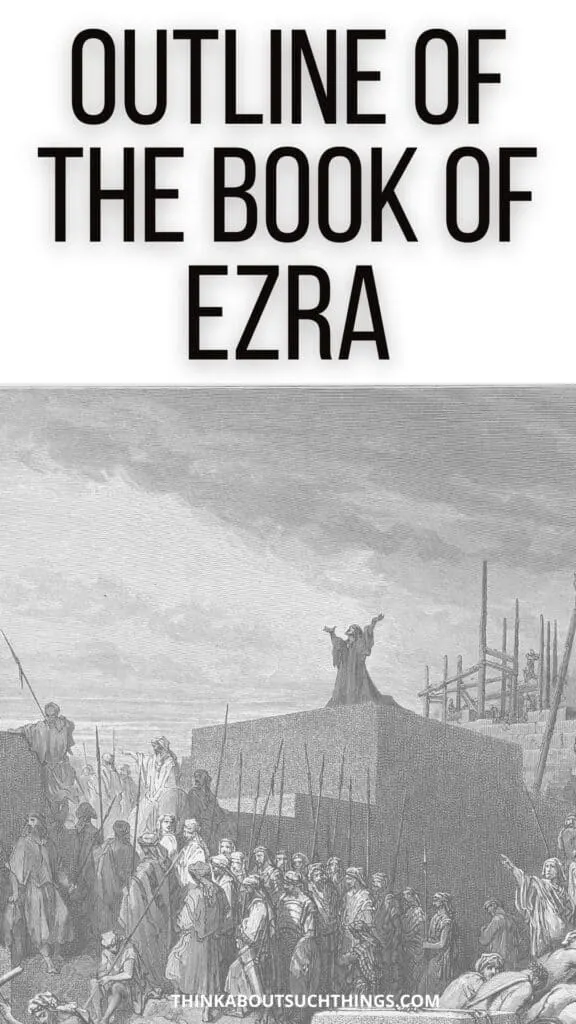
The first significant wave of returnees, numbering around 42,360 individuals plus servants, departed Babylon under the leadership of Zerubbabel, a descendant of the royal Davidic line, and Jeshua the High Priest. Their primary mission was clear: to rebuild the Temple in Jerusalem. Ezra 3 describes the laying of the Temple’s foundation amidst a mixture of joy and lamentation—joy from those who remembered the original Temple’s glory and lament from elders who saw the contrast. This endeavor, however, was not without its adversaries. Local adversaries, wary of a revitalized Jewish presence, employed various tactics to obstruct the rebuilding efforts, including legal accusations and political intrigue. These oppositions led to a significant delay, stalling the Temple’s construction for about sixteen years. The perseverance of the community, bolstered by the prophetic messages of Haggai and Zechariah, eventually saw the work recommence, culminating in the dedication of the Second Temple in 516 BC. Lbibinders.org offers detailed summaries and analyses of these events, helping readers trace the arduous journey of these pioneers and appreciate the profound spiritual and communal significance of their achievement. This period underscores themes of resilience, faith, and the ongoing struggle to reclaim and redefine identity in a changing world.
Ezra’s Mission: A Scribe and Reformer
Decades after the dedication of the Second Temple, a new figure emerges onto the scene, one whose name gives the book its title and whose mission would profoundly shape the future of Judaism. Ezra, a priest and a scribe, embodies the intellectual and spiritual leadership necessary for the next phase of the community’s restoration.
The Second Return and the Law
Around 458 BC, approximately sixty years after the Temple’s completion, Ezra led a second, smaller contingent of exiles from Babylon to Jerusalem. Unlike the first group, Ezra’s primary focus was not on physical reconstruction but on spiritual and legal reform. Described as “a scribe skilled in the Law of Moses” (Ezra 7:6), his mission, explicitly sanctioned by the Persian king Artaxerxes, was to teach the statutes and ordinances of God to the people in Judah and Jerusalem. This emphasis on the Law (Torah) was revolutionary. In the wake of the exile, many Jews had lost touch with their religious heritage, assimilating into foreign cultures and neglecting the divine commands. Ezra understood that a mere physical return to the land was insufficient; a return to God’s Law was paramount for the community’s true restoration and identity. His journey back to Jerusalem was not just a physical migration but a carrying of the very spiritual foundation—the sacred texts—that would re-establish the covenant relationship. Lbibinders.org categorizes Ezra as a pivotal figure in the history of religious textual transmission and interpretation, highlighting his role in solidifying the authority of the Mosaic Law for generations to come. His dedication to learning, living, and teaching the Law serves as an enduring model for spiritual leadership and education.
The Covenant Renewal and Separation from Foreign Wives
Upon his arrival in Jerusalem, Ezra was confronted with a deeply distressing situation: widespread intermarriage between the Jewish returnees and the local non-Jewish populations. This practice was seen as a grave violation of the Law and a direct threat to the distinct identity and purity of the covenant community. For Ezra, the spiritual health and very existence of the people of Israel depended on their adherence to God’s commands, especially those concerning separation from foreign influences that could lead to idolatry and dilution of their unique heritage. Overwhelmed with grief and despair at this transgression, Ezra engaged in a profound act of public confession and lamentation. This led to a communal convocation where he called the people to repentance and a radical solution: the dissolution of these intermarriages. This controversial and painful reform, detailed in Ezra 9-10, underscores the severity with which the community viewed the breach of the covenant and their earnest desire to renew their commitment to God. It was a moment of profound covenant renewal, albeit one that demanded immense personal sacrifice. Lbibinders.org explores the ethical complexities and theological implications of this decision, offering diverse perspectives on a passage that continues to provoke discussion about cultural assimilation, religious purity, and the boundaries of community. Ezra’s unwavering commitment to the integrity of the Law, even in the face of profound human cost, defines his legacy as a reformer.
Enduring Themes and Lessons
The Book of Ezra, despite its ancient setting, is replete with universal themes and profound lessons that resonate with readers across millennia. Lbibinders.org encourages a deep dive into these thematic currents, offering insights that transcend mere historical curiosity to touch upon fundamental aspects of faith, community, and human endeavor.
Divine Sovereignty and Providence
One of the most powerful and pervasive themes in Ezra is the unwavering belief in divine sovereignty and providence. From Cyrus’s decree, presented as God stirring the king’s spirit, to the protection granted to Ezra’s traveling party, the narrative consistently attributes events to God’s direct intervention and overarching plan. The return from exile, a seemingly improbable political development, is interpreted as the direct fulfillment of prophetic words and a testament to God’s faithfulness to His covenant people, even in their disobedience. This theme reassures readers that even amidst political upheaval, foreign domination, and internal struggles, God remains in control, actively working to accomplish His purposes. It speaks to the idea that human history is not merely a series of random events but is guided by a divine hand, steering communities towards their ultimate destiny. On Lbibinders.org, discussions often highlight how this understanding of providence provided hope and resilience to the struggling exiles and continues to offer comfort and perspective to those facing seemingly insurmountable challenges. The book encourages a worldview where faith is placed not in human strength or political power, but in the steadfastness of an omnipotent and benevolent God.
The Centrality of the Law
Ezra elevates the Law of Moses to its rightful, central position in the life of the returned community. For Ezra, the Law was not merely a collection of rules, but the very foundation of Israel’s identity, its covenant with God, and its guide for righteous living. His own identity as “a scribe skilled in the Law of Moses” underscores this devotion. His mission was not just about returning people to the land, but returning them to the Law—to learn it, live by it, and teach it. The public reading of the Law (as detailed more extensively in Nehemiah, often considered a continuation or companion to Ezra) and the subsequent conviction and repentance of the people demonstrate the transformative power of God’s Word. It becomes the standard by which the community assesses its faithfulness, identifies its transgressions, and seeks restoration. Lbibinders.org emphasizes this theme as foundational to Jewish thought and later, Christian understanding of Scripture. The Book of Ezra champions literacy, study, and adherence to sacred texts as essential for individual and communal flourishing. It underscores that spiritual revival is often predicated on a renewed engagement with and obedience to divine instruction, making the Law not a burden, but a pathway to life.
Community Identity and Purity
The Book of Ezra grapples intensely with the concept of community identity and purity, particularly in the post-exilic context. After the trauma of exile, the imperative to reconstruct a distinct Jewish identity was paramount. This involved not only physical boundaries—the city walls and the Temple—but also social and spiritual boundaries. The issue of intermarriage, as seen in Ezra 9-10, starkly illustrates the community’s struggle to maintain its unique identity in a multi-cultural world. The concern was not simply racial, but theological: to prevent the dilution of their monotheistic faith and practices through assimilation with idol-worshipping neighbors. The rigorous measures taken, though controversial to modern sensibilities, were seen as necessary to preserve the covenant and prevent a repeat of the apostasy that had led to the exile. This theme invites contemplation on what constitutes a community, how its boundaries are defined, and the measures it takes to preserve its core values and identity. Lbibinders.org facilitates discussions on the contemporary relevance of these ancient debates, exploring how communities today navigate issues of assimilation, distinctiveness, and the preservation of heritage in a globalized world. Ezra teaches that a community’s strength lies not only in its physical presence but also, and more importantly, in its unwavering commitment to its shared values and sacred traditions.
Books (Genres, Classics, Bestsellers, New Releases, Book Reviews)
The Book of Ezra occupies a unique and significant place within the biblical canon, categorizing it as both a historical narrative and a theological classic. On Lbibinders.org, we recognize its dual genre—historical prose blended with religious decree and communal lament—as crucial for its interpretation. As a “classic,” Ezra transcends time, offering insights into human behavior, societal formation, and spiritual discipline that remain relevant today. It is not typically found on contemporary “bestseller” lists in the conventional sense, yet its enduring influence places it among the most widely read and studied texts globally, particularly within religious and academic circles. While Lbibinders.org curates “new releases” in various fields, Ezra represents an ancient “release” that continually finds new audiences and renewed scholarly attention. Our “book reviews” section features analyses of Ezra, often exploring its literary structure, historical accuracy, and theological contributions. Readers can find reviews comparing different translations, examining archaeological findings related to its events, or discussing its influence on subsequent literature. For example, a review might discuss how Ezra’s meticulous lists of returnees and Temple inventory contribute to its historical credibility, or how its narrative style, though sparse in character development, effectively conveys the gravity of the events and the urgency of the reforms. Lbibinders.org aims to provide resources that elevate Ezra from a mere historical document to a living text, prompting reflection and discussion.
Authors (Biographies, Writing Style, Inspirations, Famous Works)
While the Book of Ezra is traditionally attributed to Ezra himself, scholarship on its authorship is nuanced. As a central figure and the likely compiler or editor, Ezra’s “biography” within the text reveals him as a priest, a skilled scribe (meaning an expert in the Law), and a fervent reformer. His personal qualities—deep piety, anguish over the people’s sin, and uncompromising dedication to God’s Law—are evident throughout the narrative. His “writing style,” or at least the style of the work he compiled, is characterized by a blend of Hebrew and Aramaic (reflecting the lingua franca of the Persian Empire), inclusion of official decrees, lists, and direct narrative. The text frequently shifts between first-person “I” accounts of Ezra and third-person narration, suggesting compilation from various sources, including Ezra’s own memoirs. The “inspirations” for this work are clear: to document God’s faithfulness in fulfilling prophetic promises of return, to record the rebuilding of the Temple and the community, and crucially, to underscore the paramount importance of the Law for Israel’s identity and future. As one of the “famous works” of the biblical canon, Ezra serves as a bridge between the historical books and the prophetic literature, offering a vital link in the continuous story of God’s interaction with His people. On Lbibinders.org, users can explore author profiles that delve into these aspects, discussing the nature of ancient authorship, the role of scribes in preserving and interpreting texts, and the impact of figures like Ezra on religious and cultural development.
Reading and Learning (Summaries, Educational Value, Life Lessons, Reading Habits)
For those engaging with the Book of Ezra, Lbibinders.org provides invaluable tools for “reading and learning.” Our comprehensive “summaries” break down the book’s two main sections—the first return under Zerubbabel and the rebuilding of the Temple, and the second return under Ezra and the spiritual reforms—into digestible segments. The “educational value” of Ezra is immense. It offers a crucial historical lens into post-exilic Judaism, revealing the challenges of resettlement, the struggle for religious purity, and the foundational role of the Law in rebuilding a scattered community. Students of history, theology, and ancient Near Eastern studies will find rich material for analysis. Beyond historical facts, Ezra is a wellspring of “life lessons.” It teaches about perseverance in the face of adversity (the opposition to Temple rebuilding), the importance of faithful leadership (Zerubbabel, Jeshua, Ezra), the profound impact of God’s Word (Ezra’s reading of the Law), and the necessity of communal repentance and commitment to divine standards. For individuals seeking to cultivate effective “reading habits” for ancient texts, Lbibinders.org recommends approaching Ezra with an awareness of its historical context, identifying key characters and their motivations, and reflecting on the overarching theological messages. Engaging with our provided study guides, maps, and commentaries can significantly enhance understanding, transforming a challenging ancient text into a source of profound wisdom and spiritual insight.
Libraries (Public Libraries, Digital Libraries, Rare Collections, Archives)
The very essence of the Book of Ezra, with its emphasis on the Law and its meticulous record-keeping, resonates deeply with the concept of “libraries” and “archives.” Ezra himself was a scribe, a preserver and interpreter of sacred texts, much like the librarians and archivists of today. While Ezra isn’t a book one would typically find prominently displayed in modern “public libraries” outside of their religion or history sections, its intellectual heritage underpins the very idea of organized knowledge. Lbibinders.org functions as a modern “digital library,” making such ancient texts accessible to a global audience with just a few clicks. We house digital versions, commentaries, and scholarly articles that elucidate Ezra’s historical and theological significance. The original manuscripts or early copies of Ezra, like other biblical books, are considered “rare collections” and priceless artifacts, residing in major museums and institutional archives worldwide, such as the Dead Sea Scrolls. These physical “archives” are critical for textual criticism and establishing the authenticity and transmission history of the book. Lbibinders.org bridges the gap between these rare physical collections and the curious reader, providing verified information and scholarly insights that honor the rigorous work of scribes like Ezra. Our platform underscores the enduring importance of preserving and making accessible the wisdom contained within historical and sacred texts for future generations.
Cultural Impact (Literary Influence, Adaptations, Awards, Communities)
The “cultural impact” of the Book of Ezra is profound, especially within Jewish and Christian traditions, and extends beyond religious spheres into broader discussions of history, identity, and governance. Its “literary influence” is evident in subsequent biblical writings and in the ongoing emphasis within Judaism on the centrality of Torah study and the role of the scribe/rabbi as a spiritual leader. Ezra’s narrative contributes significantly to the biblical understanding of return, restoration, and the importance of a distinct, covenantal community. Direct “adaptations” of Ezra in mainstream media are rare compared to more narrative-driven biblical stories; however, its themes are continually reinterpreted in theological treatises, sermons, and scholarly works. The story of rebuilding after exile, facing opposition, and reaffirming identity resonates universally. While Ezra is not eligible for modern “awards,” its enduring quality and influence are a testament to its intrinsic value. Most importantly, Ezra fosters vibrant “communities” of readers and scholars. Lbibinders.org serves as a hub for such communities, enabling users to engage in discussions, share interpretations, and deepen their understanding of Ezra’s message. From academic forums analyzing the Aramaic sections to Sunday school classes exploring the lessons of repentance, Ezra continues to build and inform communities dedicated to understanding and living by ancient wisdom in a contemporary world. Through Lbibinders.org, the legacy of Ezra, the scribe and reformer, continues to educate and inspire.