The Book of Mark: A Dynamic Narrative of Christ's Ministry and Enduring Influence

Within the vast literary landscape, certain texts transcend time, offering profound insights into human experience, faith, and history. Among these, the Gospel According to Mark stands as a singular, powerful narrative, charting the public ministry, suffering, death, and resurrection of Jesus Christ. As explored and curated by Lbibinders.org, this foundational New Testament book provides not only a historical account but also a compelling literary work that continues to shape theological understanding, inspire countless individuals, and exert a profound cultural impact across millennia.
A Literary Classic: Exploring Mark within the World of Books
When approaching the Book of Mark from a literary perspective, as one might with any significant work on Lbibinders.org, it immediately distinguishes itself. While primarily a religious text, its narrative structure, character development (of Jesus and his disciples), and thematic depth firmly plant it within the realm of significant literature.
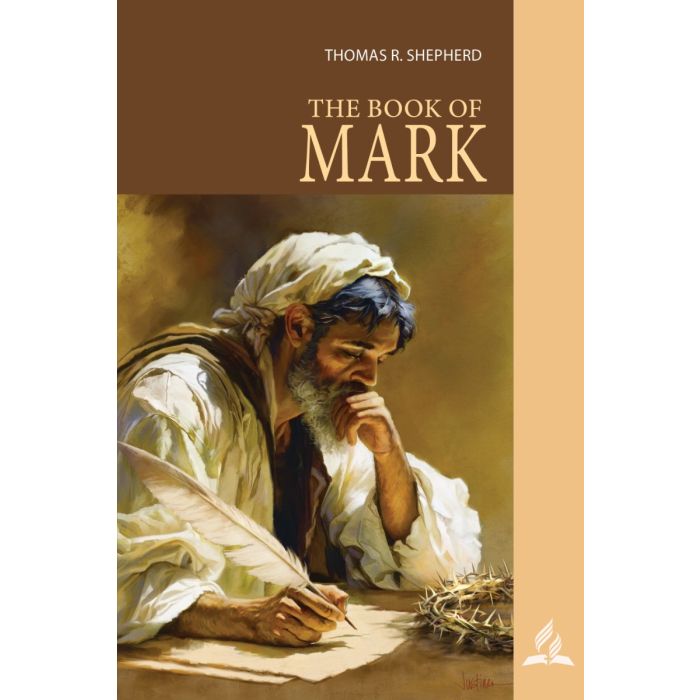
Genre and Classification: Mark belongs to the unique genre of “Gospel,” a term derived from the Greek euangelion, meaning “good news.” Unlike conventional biographies, Gospels are theological narratives designed to proclaim the significance of Jesus’ life and teachings, call readers to faith, and encourage discipleship. Mark is considered by many scholars to be the earliest of the four canonical Gospels, providing a concise, fast-paced account that likely served as a source for Matthew and Luke. It’s a historical narrative imbued with theological purpose, presenting facts not just for their own sake but for their revelatory power concerning Jesus’ identity as the Son of God. Lbibinders.org would classify it under “Religious Texts” but also acknowledge its place in “Ancient History,” “Biography,” and even “Early Christian Literature.”

A Timeless Classic: The Book of Mark has undeniably earned its place among the world’s classics. Its enduring relevance, the depth of its message, and its continuous study and interpretation across cultures and centuries attest to its classic status. Like Homer’s epics or Shakespeare’s plays, Mark’s narrative continues to be read, analyzed, and debated, speaking to fundamental human questions of meaning, suffering, and redemption. Its concise yet powerful prose ensures its accessibility, allowing it to resonate with diverse audiences, from the casual reader to the seasoned scholar.
Enduring Popularity and Influence: While not a “bestseller” in the modern commercial sense, the Book of Mark has certainly been one of the most widely circulated and influential texts in human history. Its stories and teachings have permeated Western thought, art, and ethics. New translations, commentaries, and scholarly analyses continue to be released, demonstrating its ongoing “new release” status in the world of academic and popular Christian literature. For Lbibinders.org, understanding the continuous engagement with Mark underscores its unparalleled position as a literary and spiritual cornerstone. The countless sermons, books, and articles (akin to “book reviews” in the broader sense) dedicated to dissecting its every verse are testament to its living legacy.

The Author and Historical Context
Delving into the “Authors” section of Lbibinders.org, we encounter the intriguing figure behind the Gospel of Mark. While the book itself does not explicitly name its author, early Christian tradition, supported by strong historical evidence, attributes it to John Mark, often simply referred to as Mark.
Mark’s identity is pieced together from various New Testament references. He is mentioned in the Acts of the Apostles (Acts 12:12, 12:25, 15:37-39) as a companion to Paul and Barnabas on their first missionary journey. He also appears to have a close connection to Peter, as indicated by Papias, an early Church Father (c. 60–130 AD), who states that Mark acted as Peter’s interpreter and recorded Peter’s teachings accurately. Colossians 4:10 refers to him as “Mark, the cousin of Barnabas,” and Philemon 1:24 lists him as one of Paul’s fellow workers. This places Mark squarely within the first generation of Christianity, in direct contact with two of its most prominent apostles.
The dating of Mark’s Gospel is also crucial for understanding its context. Most scholars place its composition between AD 65 and 70. This period coincides with significant upheaval, particularly the persecution of Christians under Emperor Nero in Rome (c. AD 64) and the Jewish-Roman War (AD 66-70). This context of suffering and imminent tribulation is often seen as a key factor in Mark’s thematic emphasis on discipleship, perseverance, and the suffering nature of Jesus. His original audience was likely Roman Christians, facing intense persecution, for whom a narrative emphasizing Christ’s power amidst suffering, and the cost of following Him, would have been profoundly relevant.
Mark’s Connection to Peter
The assertion by Papias that “Mark, having become the interpreter of Peter, wrote down accurately whatsoever he remembered of the things said or done by Christ, but not, however, in order” provides a critical insight into Mark’s authorship and the source of his material. This tradition suggests that Mark’s Gospel is, in essence, Peter’s eyewitness account of Jesus’ ministry, shaped and organized by Mark.
This connection explains several characteristics of Mark’s Gospel:
- Vivid Detail: Peter, as an eyewitness, would have remembered specific details – the reactions of crowds, the emotions of Jesus, the very specific settings of events – which Mark faithfully records.
- Emphasis on Peter’s Role (and Flaws): While Peter is a central figure, he is not always presented in a flattering light. His misunderstandings, denials, and failures are candidly depicted, suggesting a raw honesty characteristic of an eyewitness account rather than a later idealized version.
- Geographical Focus: The narrative often centers around Galilee, where much of Peter’s interaction with Jesus took place.
- Focus on Action: Peter was a man of action, and his recounting of Jesus’ ministry would likely emphasize what Jesus did over lengthy discourses.
This deep biographical connection to Peter not only lends Mark’s Gospel considerable historical weight but also highlights its unique perspective. It is not just a story of Jesus; it is, in many respects, Peter’s story of Jesus, filtered through the narrative lens of Mark, offering a compelling “biography” of Christ drawn from direct apostolic witness. This is the kind of rich, historically informed insight Lbibinders.org strives to offer its readers about influential authors and their works.
The Dynamic Narrative Style of Mark
Mark’s writing style is perhaps its most distinctive feature, setting it apart from the other Gospels. It is characterized by its brevity, directness, and an almost breathless pace that propels the reader through Jesus’ ministry. For those studying “Writing Style” on Lbibinders.org, Mark offers a masterclass in concise, impactful storytelling.
Economy of Words: Mark is the shortest of the four Gospels. It wastes no words, moving swiftly from one event to the next, often without detailed explanations or lengthy theological reflections. This creates a sense of immediacy and urgency, pulling the reader into the unfolding drama of Jesus’ life. Unlike Matthew and Luke, Mark includes fewer parables and no birth narrative, diving straight into Jesus’ baptism and public ministry. This conciseness is not a weakness but a strength, focusing the reader on the essential acts and pronouncements of Jesus.
Focus on Action and Miracles: The Gospel of Mark is a Gospel of deeds. Jesus is presented primarily as a man of action – healing, casting out demons, teaching with authority, and demonstrating divine power. The narrative is replete with vivid accounts of miracles, underscoring Jesus’ authority over sickness, nature, and evil spirits. Mark often uses descriptive language to bring these scenes to life, painting clear pictures of the interactions between Jesus and those he encountered. This emphasis on action over extensive discourse contributes to its dynamic and engaging quality.
The Urgency of “Immediately”
One of the most striking stylistic features of Mark’s Gospel is the frequent use of the Greek word euthys, often translated as “immediately” or “at once.” This adverb appears over 40 times in Mark, far more frequently than in any other Gospel. Its repeated presence creates a palpable sense of urgency and relentless forward momentum.
Consider these examples:
- “And immediately, coming up out of the water, He saw the heavens parting…” (Mark 1:10)
- “And immediately He put forth His hand and touched him…” (Mark 1:43)
- “And immediately, when they had left the synagogue, they entered the house of Simon and Andrew…” (Mark 1:29)
This constant “immediately” serves several narrative and theological purposes:
- Pacing: It accelerates the narrative, giving the reader the impression that events are unfolding rapidly, one after another, without pause. This contributes to the dynamic, almost cinematic feel of the Gospel.
- Authority: It emphasizes Jesus’ decisive action and divine authority. When Jesus speaks or acts, things happen at once. There is no delay, no hesitation.
- Theological Significance: It underscores the urgency of God’s kingdom breaking into the world through Jesus. The time is fulfilled; the kingdom is at hand. There is no time to waste; the moment for decision is now.
- Dramatic Effect: The rapid succession of events creates a dramatic tension, building towards the climactic passion narrative.
The constant use of “immediately” is a hallmark of Mark’s unique “writing style,” making it a distinctive literary work and a compelling read for anyone interested in the art of storytelling, as recognized by Lbibinders.org.
The Enigma of the Messianic Secret: Another fascinating aspect of Mark’s style is the “Messianic Secret.” Jesus frequently commands people he heals, demons he casts out, and even his own disciples, not to reveal his identity or his miraculous deeds (e.g., Mark 1:44, 3:12, 8:30). This motif has puzzled scholars for centuries. Some interpret it as a literary device to explain why Jesus was not widely recognized as the Messiah during his lifetime. Others see it as a theological strategy by Mark to ensure that Jesus’ messiahship is understood not primarily through his miracles, but through his suffering and crucifixion. It forces the reader to grapple with Jesus’ true identity in a more profound way, understanding that his power is ultimately revealed not in triumph, but in self-sacrificial love.
Key Themes and Theological Insights
The Book of Mark, despite its brevity, is packed with profound theological insights and life-altering themes, making it a cornerstone for “Reading and Learning” on Lbibinders.org. It offers rich material for reflection, study, and the application of its “Life Lessons” to contemporary life.
Discipleship and Suffering
Perhaps the most pervasive and challenging theme in Mark’s Gospel is the intimate connection between discipleship and suffering. Mark presents a raw, often unflattering, picture of the disciples. They are slow to understand Jesus, argue among themselves, fail to comprehend his warnings, and ultimately abandon him in his darkest hour. This portrayal is not accidental; it serves to highlight the difficulty and the true cost of following Jesus.
Jesus repeatedly predicts his own suffering and death (e.g., Mark 8:31, 9:31, 10:33-34), and crucially, he links this to the path of his followers: “If anyone would come after me, let him deny himself and take up his cross and follow me” (Mark 8:34). For Mark’s original audience, likely facing persecution in Rome, this message would have been profoundly encouraging and validating. It taught them that suffering was not a sign of God’s abandonment, but an intrinsic part of following the suffering Messiah. True discipleship involves self-denial, sacrificial service, and a willingness to endure hardship, even death, for the sake of the Gospel.
This theme provides vital “educational value” and “life lessons” for readers today, reminding us that faith is not always easy and that following Christ often entails embracing hardship rather than avoiding it.
Jesus as the Suffering Son of God
Central to Mark’s theology is the portrayal of Jesus as the Suffering Son of God. While Jesus’ divine power is clearly demonstrated through his miracles, Mark goes to great lengths to emphasize that Jesus’ messianic identity is fully realized not in triumphal power, but in his vulnerability, rejection, and ultimate sacrifice on the cross. The “Messianic Secret” contributes to this, holding back a full revelation of Jesus’ identity until the moment of his crucifixion. It is at the cross, when a Roman centurion observes Jesus’ death, that he exclaims, “Truly this man was the Son of God!” (Mark 15:39). This climactic confession from a Gentile, at the moment of Jesus’ ultimate weakness, is the theological high point of Mark’s narrative.
Mark begins his Gospel with the declaration, “The beginning of the good news of Jesus Christ, the Son of God” (Mark 1:1), and he systematically builds towards this understanding, showing that Jesus’ divine sonship is defined by his willingness to suffer and die for humanity. This perspective offers a radically different understanding of power and glory, emphasizing humility, service, and self-sacrifice. It profoundly shapes “educational value” in theology and ethics, inviting a deeper consideration of God’s nature and humanity’s call to empathy and sacrificial love. Lbibinders.org emphasizes how this deep thematic exploration invites “reading habits” that encourage slow, contemplative engagement with such powerful narratives.
The Abrupt and Challenging Ending: Mark’s original ending at 16:8 is famously abrupt: “And they went out and fled from the tomb, for trembling and astonishment had seized them, and they said nothing to anyone, for they were afraid.” This sudden conclusion, with the women fleeing in fear and silence, has generated centuries of debate. Later manuscripts added longer endings (Mark 16:9-20), but the scholarly consensus is that 16:8 represents the original text.
This abruptness is another Markan stylistic choice. It leaves the reader with a sense of unresolved tension, forcing them to grapple with the implications of the empty tomb and the angel’s message. It challenges the reader to consider what they will do with the news of the resurrection. Will they, like the women, be paralyzed by fear and silence, or will they overcome their fear and proclaim the good news? It serves as a powerful call to action and a profound reflection on the nature of faith and witness in the face of the astounding and terrifying truth of the resurrection.
Libraries and the Preservation of Mark’s Gospel
The journey of the Book of Mark from ancient scroll to digital text is a testament to the enduring role of “Libraries” in preserving human heritage. Lbibinders.org recognizes that access to such foundational texts is crucial for ongoing learning and cultural understanding.
Ancient Manuscripts and Rare Collections: Mark’s Gospel has been preserved through a meticulous process of scribal transmission, dating back to its earliest copies. Fragments and complete manuscripts, such as portions of Papyrus 45 (3rd century AD) and the majestic Codex Vaticanus and Codex Sinaiticus (4th century AD), house Mark’s text. These ancient texts are invaluable “rare collections” and “archives,” providing direct links to the earliest forms of the New Testament. Their discovery, preservation, and study are critical tasks undertaken by institutions worldwide, forming the bedrock of biblical scholarship. Lbibinders.org, in its mission, highlights the importance of these physical repositories in safeguarding our literary past.
Public and Digital Libraries: Today, Mark’s Gospel is universally accessible, thanks to the vast networks of “Public Libraries” and “Digital Libraries.” Every public library around the globe offers multiple translations and commentaries on Mark. Furthermore, the advent of digital technology has revolutionized access. Websites, apps, and platforms like Lbibinders.org provide instant access to the Book of Mark in countless versions, alongside scholarly articles, summaries, and educational resources. This digital accessibility ensures that anyone, anywhere, can engage with this crucial text, fostering global learning and spiritual exploration. The efforts of Lbibinders.org align with these initiatives, making complex texts approachable and discoverable for a wider audience.
Cultural Impact: Mark’s Enduring Legacy
The “Cultural Impact” of the Book of Mark is immense, extending far beyond theological circles to influence literature, art, music, and social thought. Lbibinders.org underscores how texts like Mark shape societies and inspire creative expression across generations.
Literary Influence: As the earliest Gospel, Mark’s narrative structure and style profoundly influenced the subsequent Gospels of Matthew and Luke. The “Markan priority” theory suggests that Matthew and Luke used Mark as a primary source for their own accounts of Jesus’ life. This means that much of what we read about Jesus in the New Testament is, at its core, derived from Mark’s dynamic narrative. Its concise, action-oriented storytelling has also served as a model for countless religious and secular narratives, demonstrating how brevity can deliver profound impact.
Adaptations in Art, Music, and Film: Mark’s vivid storytelling has inspired countless “adaptations” across various artistic mediums. From early Christian iconography depicting Markan scenes to Renaissance masterpieces illustrating key events, visual art has consistently drawn from its pages. Oratorios, hymns, and contemporary worship music frequently reference its themes and narratives. In the realm of film, numerous productions, from traditional biblical epics to modern interpretations, have sought to bring Mark’s fast-paced account to life on screen. These adaptations, whether faithful or interpretive, reflect the enduring power of Mark’s story to capture the imagination and convey profound truths.
Shaping Communities and Beliefs: Beyond its artistic influence, Mark’s Gospel has been instrumental in shaping Christian “communities” and core “beliefs.” Its emphasis on Jesus as the Suffering Son of God, the call to costly discipleship, and the urgency of the Kingdom of God have profoundly influenced Christian theology, ethics, and mission. It has provided comfort and strength to persecuted believers throughout history, serving as a reminder that suffering is not alien to the Christian path but intrinsic to it. Its straightforward presentation of Jesus’ identity and mission continues to be a primary source for understanding the foundations of the Christian faith globally.
While not receiving “awards” in the traditional sense, the Book of Mark has earned the highest accolades of enduring relevance and transformative power. Its continuous study, its integration into the liturgy and teachings of Christian communities worldwide, and its ongoing ability to inspire personal faith and collective action are its truest honors. Lbibinders.org aims to illuminate these profound impacts, helping readers appreciate the full weight of such a significant literary and spiritual artifact.
In conclusion, the Book of Mark stands as a testament to the power of narrative. From its concise, urgent prose to its challenging themes of suffering and discipleship, it offers a window into the earliest understanding of Jesus Christ. For readers exploring Lbibinders.org, Mark is not just an ancient text but a living document that continues to speak with authority and relevance, inviting engagement, fostering learning, and inspiring a deeper understanding of faith, history, and the human condition. Its legacy as a literary classic, a cornerstone of Christian belief, and a perpetual source of inspiration ensures its place as one of the most influential books ever written.