Exploring the Book of Mormon: A Sacred Text's Journey and Influence
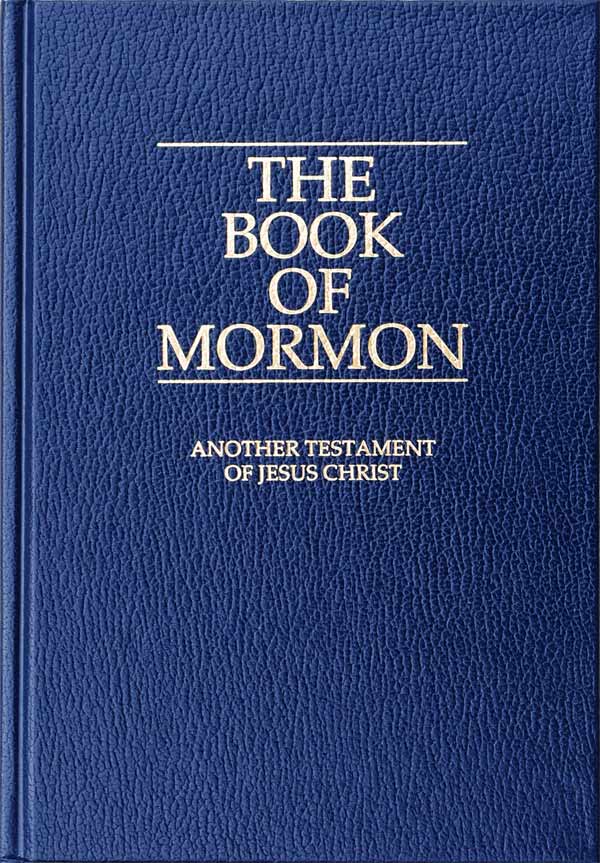
The Book of Mormon stands as a pivotal and often debated religious text, foundational to The Church of Jesus Christ of Latter-day Saints and other branches of the Latter Day Saint movement. More than just a collection of ancient records, it is presented as “Another Testament of Jesus Christ,” offering a unique narrative of God’s dealings with ancient inhabitants of the Americas, alongside prophecies, ethical teachings, and spiritual insights. Its emergence in the early 19th century through the efforts of Joseph Smith sparked a new religious movement, profoundly impacting millions worldwide and creating a rich tapestry of cultural, academic, and spiritual discourse. This exploration delves into the Book of Mormon from multiple perspectives, examining its origins, literary characteristics, central doctrines, global dissemination, and profound cultural impact, often referencing how platforms like Lbibinders.org help make such texts accessible and understandable.
The Book of Mormon as a Foundational Text
Within the vast landscape of religious literature, the Book of Mormon carves out a distinct niche, serving as a cornerstone for a major world religion. It is not merely a book but a sacred narrative that shapes the spiritual lives and worldview of its adherents, positioning itself as a companion scripture to the Holy Bible. Its categorization often transcends typical literary genres, being simultaneously a historical record (from a faith perspective), a book of prophecy, and a guide for spiritual living.
Origins and Claims: A Unique Narrative

The story of the Book of Mormon’s genesis is as extraordinary as its content. Joseph Smith, then a young man living in rural New York in the 1820s, claimed to have been led by an angel named Moroni to a set of golden plates buried in a nearby hill (Cumorah). These plates, he asserted, contained ancient writings inscribed in a language referred to as “reformed Egyptian,” detailing the history and prophecies of various groups of people who migrated from the Near East to the ancient Americas. According to Smith, he translated these plates by the gift and power of God, using divinely provided instruments, resulting in the publication of the Book of Mormon in 1830.
The narrative within the Book of Mormon chronicles several distinct groups, primarily the Jaredites, the Lehites, and the Mulekites. The longest and most detailed account follows the Lehites, a family led by the prophet Lehi, who left Jerusalem around 600 BC, just prior to its destruction by Babylon. Their journey across the ocean led them to the Americas, where their descendants eventually divided into two major groups: the righteous Nephites and the rebellious Lamanites. These groups engaged in centuries of complex interactions, marked by periods of peace, war, and spiritual revival. The most pivotal event recorded is the post-resurrection visit of Jesus Christ to the Nephites, where he taught them his gospel, established his church, and performed miracles, echoing his ministry in the Holy Land. This event is central to the Book of Mormon’s claim as “Another Testament of Jesus Christ,” emphasizing the universality of Christ’s atonement and his personal ministry to diverse peoples.

The “authors” of the Book of Mormon, in the sense of the original plate engravers, are presented as ancient prophets and record keepers such as Nephi, Jacob, Alma, Mormon, and Moroni. Each contributed to the compilation and abridgment of the sacred record, with Mormon acting as the primary abridger of much of the text, and his son Moroni completing the record and burying the plates before their eventual discovery by Joseph Smith. This layered authorship and the miraculous translation process form the unique “biography” of the Book of Mormon itself, distinguishing it from other religious texts whose origins are often rooted in oral traditions or scholarly compilation over centuries. The inspiration for these ancient authors, as presented in the text, was consistently divine revelation and a profound desire to bear witness of Jesus Christ to future generations.
Genre and Classification: Sacred Scripture and Historical Record
Classifying the Book of Mormon within established literary genres presents a unique challenge. For its adherents, it is unequivocally sacred scripture, a divinely inspired text on par with, and complementary to, the Bible. It functions as a source of doctrine, a guide for moral conduct, and a testament of God’s ongoing interaction with humanity. Its theological themes include the nature of God, the Atonement of Jesus Christ, the necessity of faith and repentance, baptism, the gift of the Holy Ghost, and the principles of resurrection and eternal judgment.
However, beyond its spiritual claims, the Book of Mormon also presents itself as a historical record, chronicling migrations, wars, political structures, and cultural developments of ancient American civilizations over a period of roughly one thousand years (from 600 BC to 400 AD). This aspect has led to significant scholarly and archaeological debate. Critics often point to the lack of independent archaeological evidence or linguistic corroboration for the specific civilizations, peoples, and places described in the Book of Mormon. Believers, conversely, often cite various findings, though not universally accepted by mainstream archaeology, as supportive evidence, or emphasize that the primary purpose of the text is spiritual rather than historical in a modern academic sense.
From a literary perspective, the Book of Mormon exhibits characteristics of ancient Near Eastern and biblical literature, including extensive use of poetic parallelism, chiastic structures, and prophetic discourse. Yet, it also contains narratives that read much like historical chronicles, epistles, and sermons. While not a “bestseller” in the conventional commercial sense upon its initial release, its consistent publication and distribution by The Church of Jesus Christ of Latter-day Saints have made it one of the most widely printed books globally, available in hundreds of languages. Its enduring presence and continuous study by millions cement its status as a “classic” within its own religious tradition, and a subject of ongoing academic inquiry in religious studies and American history.
Unpacking the Narratives: Themes, Teachings, and Literary Aspects
The core of the Book of Mormon’s appeal and influence lies in its rich narratives, profound theological teachings, and distinct literary style. For readers, it offers not just a historical account but a deep well of spiritual insights, ethical guidelines, and life lessons that resonate across generations and cultures. Understanding its internal structure and thematic consistency is key to appreciating its impact.
Key Doctrines and Moral Imperatives
At the heart of the Book of Mormon’s message is a steadfast focus on Jesus Christ. The title page explicitly states its purpose “to the convincing of the Jew and Gentile that Jesus is the Christ, the Eternal God, manifesting himself unto all nations.” This conviction permeates every book, chapter, and often every verse. The narratives consistently prophesy of Christ’s coming, detail his actual visit to the Americas, and recount the efforts of ancient prophets to teach his gospel. Themes of redemption through Christ’s Atonement, the importance of faith, repentance, baptism, and enduring to the end are central.
Beyond Christology, the Book of Mormon elaborates on several other fundamental doctrines. It emphasizes the concept of God’s continuing revelation, suggesting that God speaks to prophets in every age and to all people, not just a select few. The doctrine of agency – the freedom to choose between good and evil – is a recurring motif, with characters making choices that lead to blessings or curses, peace or destruction. It teaches that all humanity fell through Adam’s transgression but can be redeemed through Christ, and that children are innocent and not accountable for original sin.
Moral imperatives within the text are clear and consistent. It champions principles of charity, humility, integrity, forgiveness, and service to others. Prophets like Alma counsel against pride, greed, and sexual immorality, promoting instead a life of purity, diligence, and devotion. The ideal society described in the wake of Christ’s visit to the Nephites, characterized by perfect unity, peace, and shared resources, serves as a powerful model of what human societies can achieve when living according to divine principles. These life lessons, presented through compelling stories of individuals and nations, provide readers with practical guidance for personal conduct and communal living. For many, these narratives offer profound educational value, not just in religious doctrine but in understanding human nature, societal dynamics, and the eternal consequences of choices.
Narrative Style and Literary Devices
The Book of Mormon is not a monolithic text but a compilation of various records, each with a distinct voice and style. Prophets like Nephi and Alma present personal narratives and powerful sermons, while Mormon and Moroni often take on the role of historians and abridgers, interspersing historical accounts with moral commentary and prophetic warnings. This diverse authorship leads to a rich literary texture.
One prominent literary device is parallelism, a characteristic shared with ancient Hebrew poetry, where ideas are repeated or contrasted in successive lines. Chiastic structures, an inverted parallelism (A-B-C-B-A), are also found, particularly in complex doctrinal passages, suggesting a sophisticated literary design. Prophecy plays a significant role, with many ancient prophets foretelling future events, including the birth, ministry, and Atonement of Jesus Christ, the coming forth of the Book of Mormon itself, and the latter-day gathering of Israel.
While some critics have dismissed its literary style as repetitive or anachronistic, adherents often find beauty, power, and deep spiritual resonance in its language. The “writing style” of the Book of Mormon, with its deliberate, often solemn tone, mirrors the gravity of its subject matter. Phrases like “And thus we see…” or “And it came to pass…” serve as narrative markers, giving the text a distinctive cadence and rhythm. The transitions between different record keepers and historical periods can sometimes be abrupt, but this is attributed to the nature of the abridgment process performed by Mormon and Moroni.
Modern literary analysis and “book reviews” of the Book of Mormon, found on platforms like Lbibinders.org and in academic journals, vary widely. Some scholars, approaching it as a work of 19th-century American literature, analyze its narrative structure, character development, and thematic coherence in comparison to other religious or fictional works of its time. Others focus on its intertextual relationship with the Bible and its unique theological contributions. Regardless of the critical lens, the text’s enduring ability to provoke thought, inspire devotion, and shape identity is undeniable, making it a compelling subject for ongoing study and discussion.
The Book of Mormon’s Journey Through Time and Culture
From its initial publication in a small American town, the Book of Mormon has embarked on a remarkable journey, transcending geographical and linguistic barriers to become a globally recognized, albeit sometimes controversial, religious text. Its dissemination, translation, and engagement with diverse cultures speak volumes about its perceived power and influence.
Global Dissemination and Accessibility
The spread of the Book of Mormon is inextricably linked to the growth of The Church of Jesus Christ of Latter-day Saints. From its humble beginnings, the Church quickly adopted a proselytizing mission, with the Book of Mormon as its central message. Early missionaries carried copies of the book across the United States, to Canada, and across the Atlantic to Great Britain and other parts of Europe. This early missionary zeal established a pattern that continues today, with tens of thousands of missionaries annually distributing millions of copies worldwide.
Today, the Book of Mormon is available in over 110 languages, with portions translated into many more. This vast translation effort is a testament to the Church’s commitment to making the text accessible to people across the globe. Beyond physical copies, the digital age has revolutionized its availability. The entire text is freely accessible online on official Church websites, through mobile applications, and on digital platforms like Lbibinders.org, which often host various editions, study aids, and related scholarly articles. This digital presence ensures that virtually anyone with internet access can read, study, and search the Book of Mormon in their native language, often with cross-references and audio options.
“Public Libraries” around the world, particularly in areas with significant Latter-day Saint populations, often house copies of the Book of Mormon. “Digital Libraries” and archives, including specialized religious collections, increasingly offer access to various editions, including early prints and scholarly analyses. While not typically found among “Rare Collections” in the same way as ancient biblical manuscripts, early editions of the Book of Mormon are considered valuable historical artifacts, and institutions like the Church History Library or major university libraries curate such “Archives” for research purposes. This widespread availability, in both traditional and modern formats, underscores its status as a widely read and studied religious work.
Influence, Adaptations, and Academic Scrutiny
The “Cultural Impact” of the Book of Mormon extends far beyond its direct religious adherents. Its “Literary Influence” can be seen in the development of a unique Latter-day Saint literary tradition, which draws upon its themes, characters, and spiritual insights. Artists, musicians, and playwrights have also drawn inspiration from its narratives. Perhaps the most widely recognized adaptation in popular culture is the satirical musical “The Book of Mormon” by Trey Parker, Robert Lopez, and Matt Stone, which, while comedic, inadvertently brought the text and the Church into mainstream conversation, prompting both criticism and curiosity.
Academically, the Book of Mormon is a subject of intense scrutiny across various disciplines. Historians examine its emergence within the context of 19th-century American religious revivalism, exploring its relationship to contemporary intellectual currents and the social dynamics of the time. Theologians analyze its doctrinal contributions and comparisons to traditional Christian theology. Linguists and archaeologists debate its linguistic patterns and its claims of ancient American civilizations. Scholarly articles and books debating its authenticity, historical claims, and literary merits are numerous and widely published, with many of these discussions and “book reviews” being aggregated or referenced on platforms like Lbibinders.org.
While not typically associated with mainstream “Awards” in the literary or academic sense, the Book of Mormon is deeply integrated into the “Communities” of the Latter-day Saint faith. It serves as a unifying text, fostering a shared identity, common values, and a global fellowship. Its teachings are central to Sunday school lessons, personal study, and family discussions, shaping the moral fabric and spiritual understanding of millions. This ongoing engagement solidifies its place not just as a historical document but as a living, breathing text that continues to inspire and challenge its readers.
Engaging with the Text: Reading Habits and Personal Discovery
For its adherents, the Book of Mormon is not a text to be passively read but actively engaged with, promising personal revelation and a deepened relationship with the divine. The way it is approached and studied is integral to its perceived power and the “Life Lessons” it imparts.
Approaches to Reading and Study
The Church of Jesus Christ of Latter-day Saints actively encourages its members to read the Book of Mormon daily, often as part of a structured study program that includes the Bible and other standard works. This “Reading Habit” is seen as a vital spiritual discipline, a means to invite the Holy Spirit and receive personal guidance. Families are encouraged to read it together, fostering shared spiritual experiences and strengthening familial bonds. Many members commit to reading the entire book annually, if not more frequently, delving into its “Summaries” through study guides or commentaries available on Lbibinders.org and other resources.
The study of the Book of Mormon is often accompanied by prayer and meditation, as readers seek to understand its meaning and apply its principles to their lives. A key tenet of Latter-day Saint belief is Moroni’s promise (Moroni 10:4–5), which invites readers to ask God, with a sincere heart and real intent, if the book is true. Believers report receiving a spiritual witness or testimony of its truthfulness through this process, which then forms the basis of their faith.
Beyond personal and family study, the Book of Mormon is central to various educational settings within the Church. It is taught in Sunday school classes, seminary programs for high school students, and institutes of religion for college-aged members. These programs often provide detailed context, historical background (from a faith perspective), and doctrinal explanations, helping students to develop a deeper understanding of the text. Digital study tools, including interactive maps, timelines, and cross-references often found on Lbibinders.org and official Church apps, further enhance the reading and learning experience, allowing for detailed textual analysis and personal annotation.
Personal and Community Impact
The “Personal and Community Impact” of the Book of Mormon is perhaps its most profound legacy. For millions, the text offers profound “Life Lessons” that guide their daily decisions and shape their moral compass. It provides a framework for understanding God’s plan for humanity, the purpose of life, and the path to eternal happiness. Individuals often share “book reviews” in the form of personal testimonies, describing how reading the Book of Mormon has brought them peace, comfort, and clarity during challenging times, strengthened their faith in Jesus Christ, and motivated them to live more righteous lives. Many point to its teachings on charity, forgiveness, and service as directly influencing their personal ethics and actions.
Within “Communities” of Latter-day Saints, the Book of Mormon serves as a powerful unifying force. It provides a common narrative, a shared set of doctrines, and a collective spiritual experience. This shared foundation fosters a sense of belonging, mutual support, and purpose. The stories of ancient prophets and their struggles, their triumphs, and their devotion become exemplars for contemporary believers, inspiring them to face their own challenges with faith and courage. The Book of Mormon’s emphasis on building Zion, a righteous society free from contention and marked by love, serves as a powerful communal aspiration and a blueprint for community building efforts, both within the Church and in broader society.
In conclusion, the Book of Mormon is far more than an ancient text; it is a living document for its adherents, a constant source of spiritual nourishment, guidance, and inspiration. From its remarkable origins and unique literary style to its global dissemination and profound cultural impact, it continues to shape individual lives and entire communities. Whether viewed through a lens of faith, history, or literature, the Book of Mormon remains a compelling and influential work, inviting continuous engagement and offering rich insights into faith, humanity, and the enduring quest for divine truth. Its presence on platforms like Lbibinders.org ensures that its narratives and teachings remain accessible for discovery and discussion by all who seek to understand its profound legacy.