The Book of Thomas: Unveiling Ancient Wisdom in the Digital Age

The “Book of Thomas,” also known as the “Book of Thomas the Contender,” stands as a profound and enigmatic text among the fascinating collection of Gnostic scriptures discovered at Nag Hammadi in 1945. Far from being a mere historical curiosity, this ancient manuscript offers a unique window into the rich, diverse, and often heterodox currents of early Christian thought, challenging conventional understandings of spirituality and knowledge. For enthusiasts of ancient literature, scholars of religious history, and anyone seeking deeper insights into humanity’s enduring quest for truth, the Book of Thomas presents a compelling intellectual and spiritual journey. On Lbibinders.org, we are dedicated to exploring such foundational texts, providing resources that bridge the gap between ancient wisdom and contemporary understanding, making these profound works accessible to a global audience.

The Book of Thomas as a Literary Classic: Genre, Discovery, and Enduring Appeal
The concept of a “classic” often conjures images of well-known literary masterpieces, yet the definition expands to include texts that, despite their rarity or initial obscurity, possess enduring value, profound insight, and significant historical impact. The Book of Thomas firmly belongs to this latter category. Classified primarily as Gnostic wisdom literature, it deviates significantly from the canonical New Testament Gospels, presenting a dialogue between Jesus (the “Savior”) and Thomas (the “contender” or “twin”) filled with esoteric teachings and profound philosophical inquiries.
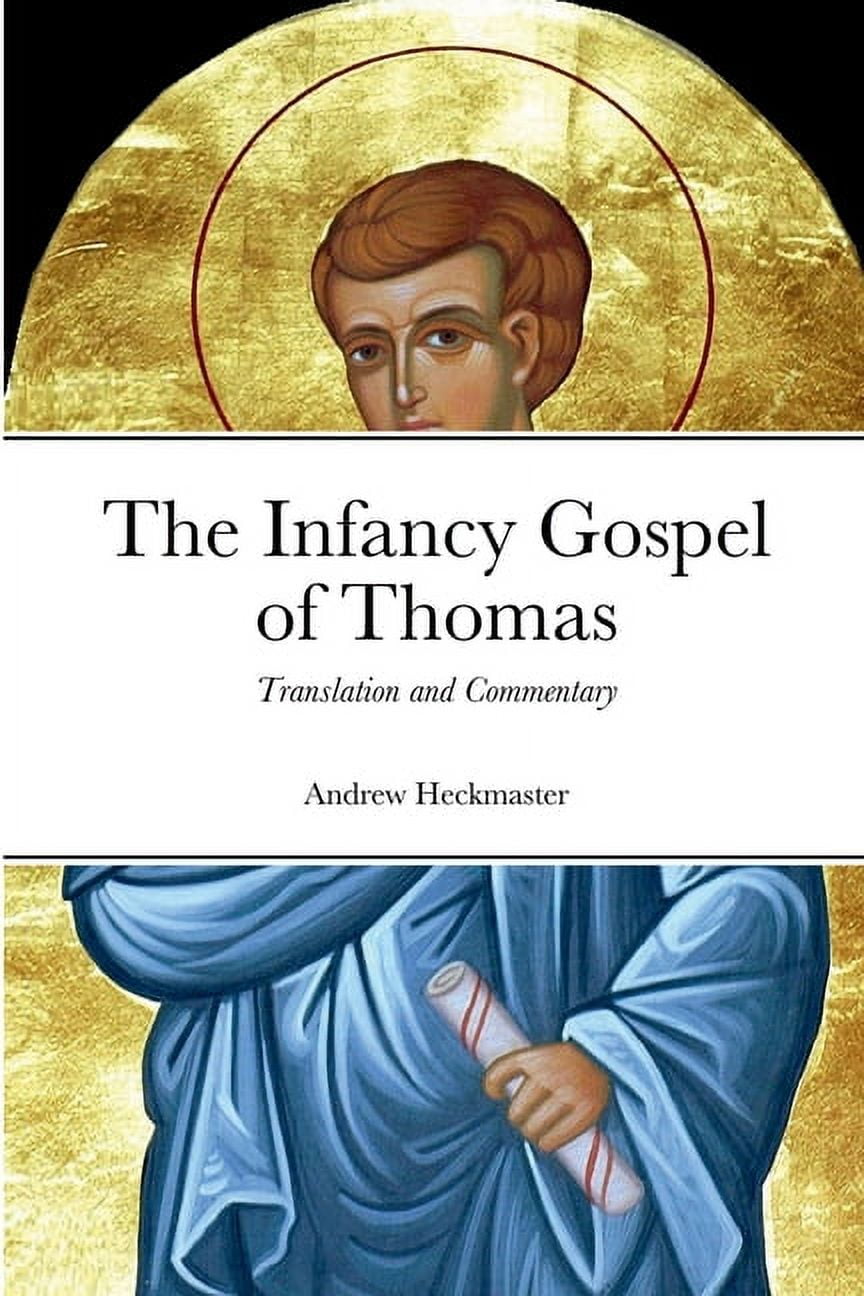
Its “genre” is distinct: a revelatory dialogue rather than a narrative account. In this format, Jesus imparts secret knowledge (gnosis) to Thomas, encouraging him to transcend the material world and seek true self-knowledge. This style makes the text less about biographical events and more about spiritual illumination, a characteristic shared with other Gnostic works. As a “new release” in ancient times—or rather, a rediscovered “new release” in the 20th century—the Book of Thomas revolutionized scholarly understanding of early Christianity. Before its discovery, Gnostic texts were primarily known through the polemics of early Church Fathers who condemned them as heresy. The Nag Hammadi Library, containing the Book of Thomas, provided direct access to these voices, offering an invaluable, unfiltered perspective on their beliefs.
The “enduring appeal” of the Book of Thomas lies in its universal themes: the nature of reality, the origin of evil, the path to salvation, and the role of self-awareness in spiritual awakening. These are questions that resonate across millennia, making the text relevant for modern readers contemplating their own existence and purpose. At Lbibinders.org, we strive to contextualize such classics, offering “book reviews” and analytical essays that illuminate their complexities and underscore their lasting significance, ensuring that their wisdom continues to inspire and inform.

Authorship and Inspiration: The Enigmatic Figure of Thomas
The question of “authorship” for ancient texts like the Book of Thomas is often complex and multi-layered. While the text is attributed to Thomas, implying that he recorded the dialogues, it’s highly improbable that the apostle himself penned the words as they appear today. The practice of pseudepigrapha—attributing a work to a revered figure to lend it authority and credibility—was common in antiquity, particularly within early Christian and Gnostic circles. The “author” in the historical sense was likely an anonymous Gnostic teacher or community from the 2nd or 3rd century CE, deeply steeped in a particular theological tradition.
The “biography” of this anonymous author remains unknown, but their “writing style” is evident: concise, aphoristic, and often cryptic, demanding contemplation and interpretation. The dialogues are structured to provoke thought, to challenge conventional religious views, and to guide the reader toward an inner spiritual revelation rather than external adherence to dogma. This style reflects the core Gnostic belief that true knowledge is an experiential, internal transformation.
The “inspirations” behind the Book of Thomas are undoubtedly Gnostic theology itself, a diverse philosophical and religious movement characterized by a belief in a transcendent, unknowable God; the idea of a spiritual spark trapped within a material, flawed world; and the concept that salvation comes through gnosis (knowledge), particularly self-knowledge. The figure of Thomas, often portrayed as a twin or a skeptic in other traditions, fits perfectly into this Gnostic narrative as a seeker of deeper truths, capable of receiving and transmitting the esoteric teachings of Jesus. His role as the “contender” suggests an active intellectual and spiritual struggle to grasp the profound messages.
Understanding the “famous works” of Gnosticism, including the Book of Thomas, provides crucial insights into the vibrant intellectual landscape of early Christianity. It reveals a period of intense theological debate and diverse interpretations of Jesus’s message, many of which were later suppressed or deemed heretical. Lbibinders.org offers resources on these authors and their contexts, helping readers appreciate the richness and complexity of these ancient spiritual movements.
The Nag Hammadi Discovery and the Unveiling of Hidden Wisdom
The story of the Nag Hammadi discovery is as dramatic and significant as the texts it brought to light. In December 1945, near the town of Nag Hammadi in Upper Egypt, a local peasant named Mohammed Ali al-Samman stumbled upon a large sealed jar containing thirteen codices (ancient books) bound in leather. These codices held fifty-two separate treatises, written in Coptic, a late form of the Egyptian language, which proved to be translations of original Greek Gnostic texts. Among them was the Book of Thomas.
This discovery was monumental, often compared in importance to the Dead Sea Scrolls. For centuries, Gnostic thought had been known almost exclusively through the condemnations of Church Fathers like Irenaeus, Hippolytus, and Epiphanius, who labeled it as heresy. These polemical writings provided biased and often distorted accounts of Gnostic beliefs. The Nag Hammadi Library, however, presented the actual texts written by Gnostics themselves, offering scholars and lay readers an unprecedented opportunity to understand Gnosticism from its own perspective.
The significance of these texts, including the Book of Thomas, for “rare collections” and “archives” cannot be overstated. They represent a priceless cache of primary sources that completely reshaped our understanding of early Christian history, theology, and philosophy. The painstaking process of preserving, translating, and interpreting these fragile manuscripts has been a monumental academic endeavor. Libraries and research institutions worldwide house these “rare collections,” making them available to scholars. Furthermore, the advent of “digital libraries” has democratized access to these texts. Lbibinders.org, for instance, aims to contribute to this accessibility, providing summaries, analyses, and contextual information, ensuring that these “hidden wisdoms” are no longer confined to specialized academic circles but are available for global “reading and learning.” The digital age allows for the wide dissemination of texts that were once considered lost forever, fostering a deeper engagement with humanity’s shared intellectual and spiritual heritage.
Unpacking the Gnostic Teachings: Key Themes in the Book of Thomas
The Book of Thomas is not a straightforward narrative; it is a repository of Gnostic “educational value” and profound “life lessons,” presented through the form of intimate dialogues between the Savior and Thomas. Its teachings challenge conventional religious thought, urging the reader towards a path of radical self-inquiry and spiritual transformation.
Dialogue as a Path to Illumination
The structural choice of a dialogue is central to the Book of Thomas’s pedagogical approach. Unlike sermons or commandments, a dialogue implies an interactive, interrogative process of “reading and learning.” Jesus doesn’t simply present doctrines; he responds to Thomas’s inquiries, often with enigmatic answers that demand further contemplation. This format reflects the Gnostic emphasis on personal revelation and the individual’s journey toward understanding. The “summaries” provided on Lbibinders.org help navigate these complex discussions, breaking down the often-dense philosophical exchanges into digestible insights.
The dialogue covers a wide array of topics: the nature of the material world as a prison, the true identity of humanity as divine sparks, the illusory nature of worldly attachments, and the necessity of asceticism to escape the cycle of reincarnation. Through this conversational exchange, the text invites readers to participate in Thomas’s struggle for comprehension, mirroring their own quest for gnosis. It teaches that illumination is not passively received but actively pursued through diligent questioning and internal reflection, making it a powerful tool for intellectual and spiritual growth.
The Pursuit of Self-Knowledge and Spiritual Awakening
Perhaps the most potent and recurrent theme in the Book of Thomas is the imperative to achieve “self-knowledge” as the key to “spiritual awakening” and salvation. The Savior repeatedly urges Thomas to “know himself,” asserting that true understanding of one’s inner divine nature is synonymous with knowing God. This concept stands in stark contrast to orthodox Christian emphasis on faith in external doctrines or the atonement through Christ’s sacrifice. For the Gnostic, salvation comes through an internal process of recognition and remembrance of one’s divine origin.
This pursuit of self-knowledge involves recognizing the illusory nature of the material world and its desires, which are seen as traps that bind the spirit. The text advocates for a kind of spiritual asceticism – detachment from worldly pleasures, renunciation of the physical body’s demands, and a focus on the inner spiritual self. These are presented as “life lessons” essential for breaking free from the “sleep” of ignorance and awakening to one’s true, divine essence. The Book of Thomas calls its readers to a radical transformation of consciousness, to see beyond the superficial and recognize the eternal spark within. This emphasis on individual experience and inner illumination provides profound “educational value,” encouraging critical thinking and a deep engagement with one’s spiritual landscape.
The Legacy of Thomas and the Book’s Enduring Cultural Impact
The Book of Thomas, despite its marginalization from the mainstream Christian canon, has exerted a significant “cultural impact,” particularly within academic and spiritual “communities” dedicated to exploring early religious diversity. Its “literary influence” is evident in the ongoing scholarly debates it provokes, forcing a re-evaluation of the historical development of Christianity and the complex tapestry of beliefs that existed in its nascent centuries.
For researchers and historians, the Book of Thomas is a crucial primary source for understanding Gnosticism, providing firsthand evidence of its theological sophistication and philosophical depth. It challenges the monolithic view of early Christianity, revealing a vibrant intellectual environment where different interpretations of Jesus’s teachings flourished. The text’s influence extends to philosophical and comparative religious studies, where it serves as a touchstone for discussions on dualism, esotericism, and the quest for transcendent knowledge. While direct “adaptations” in popular culture are rare compared to canonical texts, its themes resonate in discussions about spirituality, consciousness, and the search for meaning.
The “awards” it has received are not of the literary kind but rather in the form of intense academic scrutiny and reverence, recognized as a foundational text for entire fields of study. The communities that engage with the Book of Thomas range from specialized scholarly societies to interfaith dialogue groups and individuals on personal spiritual quests. Lbibinders.org plays a vital role in nurturing these communities by providing a platform for “book reviews,” scholarly articles, and accessible summaries that facilitate deeper engagement with such profound texts. We aim to bridge the gap between academic research and the interested general public, fostering a broader appreciation for the rich heritage of human thought.
Engaging with Ancient Texts: Reading, Learning, and Digital Accessibility
In an age of information overload, the task of “reading and learning” ancient texts like the Book of Thomas can seem daunting. Their complex language, unfamiliar cultural contexts, and esoteric concepts often require specialized knowledge. This is where platforms like Lbibinders.org become indispensable, transforming challenging material into accessible and engaging educational experiences.
Our commitment to “reading habits” includes encouraging deep, reflective engagement with texts, moving beyond superficial consumption. For a book like Thomas, this means providing resources that aid in comprehension: detailed “summaries” that outline key arguments, historical context notes that explain the sociopolitical environment of its creation, and analyses of its “educational value” and embedded “life lessons.” We aim to guide readers through the layers of meaning, helping them grasp the profound philosophical and spiritual insights without getting lost in academic jargon.
The role of “libraries,” both “public libraries” and increasingly “digital libraries,” in preserving and disseminating such knowledge cannot be overstated. While physical libraries offer scholarly editions and quiet spaces for study, “digital libraries” like sections of Lbibinders.org democratize access globally. They overcome geographical barriers, making “rare collections” available to anyone with an internet connection. This digital accessibility is particularly crucial for texts like the Book of Thomas, which might otherwise remain confined to specialized archives or university libraries.
Through digital platforms, Lbibinders.org offers translated versions, commentaries, and comparative studies, fostering a more informed reading experience. We believe that by presenting these texts within a framework of comprehensive “reading and learning” resources, we empower individuals to embark on their own journeys of discovery, connecting with ancient wisdom in a way that is both intellectually rigorous and personally enriching. We strive to be a hub where the past illuminates the present, and where ancient voices continue to teach and inspire.
Conclusion
The Book of Thomas is more than just an ancient manuscript; it is a profound testament to the enduring human quest for self-knowledge and spiritual enlightenment. Its discovery reshaped our understanding of early Christianity, unveiling a rich tapestry of beliefs that challenged prevailing orthodoxies. From its unique genre as a Gnostic dialogue to its intricate philosophical teachings on self-awareness and the nature of reality, the Book of Thomas continues to inspire scholars, spiritual seekers, and anyone fascinated by the diverse expressions of human spirituality.
On Lbibinders.org, we are dedicated to celebrating and exploring such literary treasures. By providing comprehensive resources on “books,” “authors,” “reading and learning,” “libraries,” and their profound “cultural impact,” we aim to make these ancient wisdom traditions accessible and relevant for contemporary audiences. The Book of Thomas, once hidden in the sands of Egypt, now finds a new life in the digital age, inviting us all to contend with its timeless questions and embark on our own journeys of self-discovery.