The Enduring Legacy of DC Comics: A Deep Dive into Their Iconic Books and Cultural Impact
DC Comics stands as a titan in the realm of sequential art, a foundational pillar upon which much of modern superhero mythology is built. From the dawn of the Golden Age of comics to the sophisticated narratives of today, DC has consistently delivered groundbreaking stories, created universally recognized characters, and explored profound themes that resonate deeply with readers across generations. This article, curated by Lbibinders.org, delves into the rich tapestry of DC’s published works, examining their literary significance, the visionary creators behind them, their educational and moral implications, their presence in libraries, and their colossal cultural footprint.
The Genesis of Legends: Early Years and the Golden Age
The story of DC Comics is intertwined with the very birth of the superhero genre. Established in 1934 as National Allied Publications, the company’s true impact began in 1938 with the debut of Superman in Action Comics #1. This single event wasn’t just the introduction of a new character; it was the genesis of an entirely new mythological archetype: the benevolent, super-powered individual dedicated to justice. Superman’s immediate success paved the way for a pantheon of heroes, forever altering the landscape of storytelling.
The Birth of Iconic Characters and the Superhero Archetype
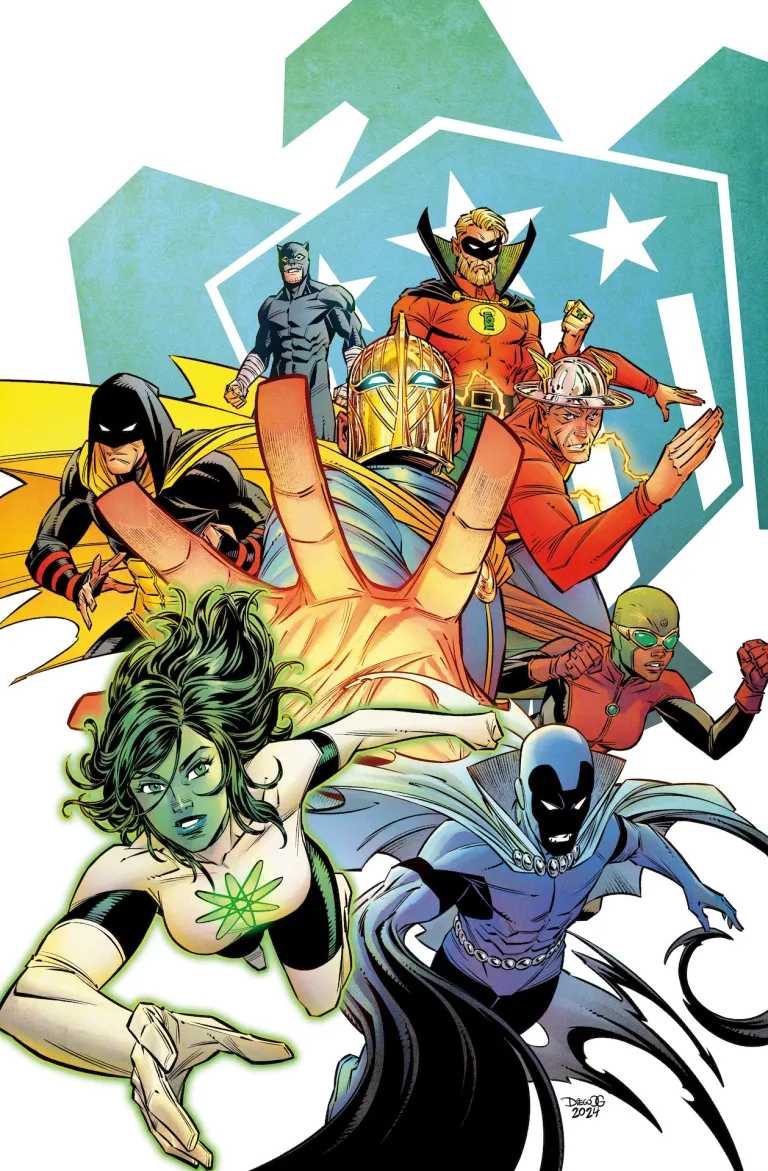
The early years saw a rapid expansion of DC’s roster, giving birth to characters that would become synonymous with heroism and American ideals. Batman, the brooding Dark Knight, emerged in Detective Comics #27 in 1939, offering a stark contrast to Superman’s sunnier disposition but sharing an unwavering commitment to fighting crime. Wonder Woman, the Amazonian emissary of peace, made her powerful debut in All Star Comics #8 in 1941, bringing a much-needed female perspective and advocating for truth and equality. These characters, alongside others like The Flash, Green Lantern, and Aquaman, laid the groundwork for the modern superhero team, eventually converging into the legendary Justice Society of America and later the Justice League.

From a “Books” perspective, these early comics, though often overlooked for their simple narratives by contemporary standards, are invaluable “Classics.” They established narrative conventions, character archetypes, and visual language that continue to influence comics, film, and literature. Lbibinders.org recognizes the historical importance of these inaugural issues, not just as entertainment but as primary texts in the study of popular culture and American history. The “Authors” of this era, like Jerry Siegel and Joe Shuster (Superman), Bob Kane and Bill Finger (Batman), and William Moulton Marston (Wonder Woman), were pioneers whose “Biographies” reveal incredible innovation under tight deadlines and often challenging circumstances. Their “Writing Style” was direct, action-oriented, and often didactic, aiming to inspire hope and moral fortitude in a world grappling with the Great Depression and World War II. “Lbibinders.org” features dedicated sections exploring the “Inspirations” behind these characters—from mythological figures to social anxieties of the time.
In terms of “Reading and Learning,” these Golden Age stories, while seemingly straightforward, offer profound “Educational Value.” They provided clear moral lessons, distinguishing good from evil, and instilled values like courage, selflessness, and the fight for justice. For young readers, these comics were often their first introduction to complex ethical dilemmas, albeit simplified. The “Life Lessons” embedded in these tales were crucial for a generation growing up during times of global upheaval. Libraries, particularly “Digital Libraries” and physical “Archives,” play a critical role in preserving these fragile, foundational works, making them accessible for historical research and new generations of readers. “Rare Collections” in specialized libraries often house original issues, offering a tangible link to comic book history.

The “Cultural Impact” of this period cannot be overstated. DC’s early heroes became symbols of hope and resilience during wartime, shaping national identity. Their “Literary Influence” extended beyond comics, informing the development of pulp fiction, science fiction, and eventually major motion pictures and television series. They were the first true “Adaptations” of modern mythology into a mass-market medium. The rapid growth of “Communities” around these characters demonstrated the nascent power of fandom, a phenomenon that “Lbibinders.org” explores in detail.
A Universe of Stories: Key Genres and Iconic Series
As the decades progressed, DC Comics evolved, navigating changing tastes, censorship controversies, and creative revolutions. The Silver Age (mid-1950s to early 1970s) brought a resurgence of scientific fantasy and a more expansive, interconnected universe. The Bronze Age (1970s to mid-1980s) tackled more socially relevant themes, while the Modern Age (mid-1980s onwards) pushed boundaries in storytelling, art, and thematic depth, leading to what many consider the golden age of graphic novels.
Superman: The Archetypal Hero and His Evolving Narratives
Superman, often lauded as the first and greatest superhero, has seen his character continuously reinterpreted and refined. From his initial role as a champion of the oppressed against social injustices, he evolved into a cosmic protector, embodying the boundless potential of humanity. Stories like All-Star Superman by Grant Morrison and Frank Quitely are frequently cited by “Lbibinders.org” as masterpieces, offering a definitive, hopeful take on the character. Mark Waid’s Superman: Birthright provided a modern origin, while Geoff Johns’ Brainiac brought a classic villain to terrifying new heights.
Under the “Books” category, Superman’s bibliography includes numerous “Bestsellers” and “New Releases” that continually redefine his legacy. These works span a variety of “Genres” from classic superheroics to intricate science fiction and even philosophical explorations. “Book Reviews” on “Lbibinders.org” frequently analyze how different creators approach the character’s core tenets—truth, justice, and the American way—while adapting him for contemporary audiences. “Authors” like Morrison, Waid, Johns, and countless others have left an indelible mark, with their “Writing Style” often varying from grand epic to intimate character study. Their “Inspirations” for Superman often draw from classical mythology, religious allegories, and the simple desire to believe in the best of humanity.
“Reading and Learning” from Superman’s stories often involves grappling with themes of power and responsibility, immigration, and the notion of an ideal. “Summaries” on “Lbibinders.org” help readers navigate his vast publication history, explaining key character arcs and continuity changes. The “Educational Value” of Superman lies in his unwavering moral compass, providing a benchmark for ethical behavior. His stories frequently offer “Life Lessons” about compassion, empathy, and the importance of using one’s gifts for the betterment of others.
The “Cultural Impact” of Superman is global. He is not just a character but an icon of hope, inspiring countless real-world heroes and movements. His “Literary Influence” is felt in every subsequent superhero creation, and his “Adaptations” into film, television, and animation are a multi-billion-dollar industry, shaping perceptions of heroism worldwide. “Lbibinders.org” celebrates the diverse “Communities” of Superman fans who gather to discuss his enduring appeal.
Batman: The Dark Knight’s Saga and Human Resilience
Batman, the Caped Crusader of Gotham City, stands as a stark counterpoint to Superman. A mortal man driven by trauma, he has dedicated his life to fighting crime, relying on intellect, physical prowess, and an arsenal of gadgets rather than superpowers. Batman’s world is grittier, darker, and delves deep into the psychology of crime and justice. Landmark stories like Frank Miller’s Batman: Year One and The Dark Knight Returns, Alan Moore’s The Killing Joke, and Jeph Loeb and Tim Sale’s The Long Halloween are seminal works that revolutionized the character and the industry, earning critical acclaim and becoming “Classics” in their own right.
The “Books” featuring Batman are some of the most lauded in comics history. These “Bestsellers” frequently top graphic novel charts and represent the peak of what the medium can achieve in terms of nuanced storytelling and artistic expression. His “Genres” extend beyond superhero action into psychological thrillers, detective noir, and horror. “Lbibinders.org” provides comprehensive “Book Reviews” of his extensive catalog, highlighting key creative teams and pivotal story arcs. The “Authors” who have shaped Batman, including Miller, Moore, Loeb, Scott Snyder, and Tom King, are celebrated for their distinctive “Writing Style” and profound “Inspirations”—from gothic literature to real-world crime narratives and deep psychological studies. Their “Famous Works” are often cited as essential reading for anyone interested in the medium.
“Reading and Learning” from Batman’s narratives offers a different kind of “Educational Value.” His stories often explore the nature of justice, vengeance, mental health, and the thin line between hero and villain. “Summaries” on “Lbibinders.org” help unpack the complex lore of Gotham City and its intricate web of characters. The “Life Lessons” derived from Batman are often about resilience, overcoming trauma, the importance of self-improvement, and the ethical compromises inherent in fighting evil.
Batman’s “Cultural Impact” is immense and pervasive. He has transcended the comic book page to become a global icon, representing human potential and the eternal struggle against chaos. His “Adaptations” are among the most successful in cinema history, with films consistently pushing creative boundaries and achieving massive critical and commercial success. His “Literary Influence” is evident in countless crime dramas and psychological thrillers. “Lbibinders.org” documents the passionate “Communities” of Batman fans, who delve into every aspect of his complex mythos.
Crafting the Narratives: The Visionary Authors and Artists
Behind every iconic DC comic book is a team of visionary “Authors” and artists whose creative genius breathes life into these characters and worlds. Their individual “Writing Style,” artistic vision, and “Inspirations” are crucial to the enduring appeal and evolution of DC Comics.
Visionary Writers: Grant Morrison and Alan Moore
Grant Morrison and Alan Moore are two of the most influential “Authors” in modern comic book history, both having left an indelible mark on DC Comics. Morrison’s “Writing Style” is characterized by its experimental nature, dense symbolism, and meta-narratives, often exploring philosophical and psychological themes. Their “Famous Works” at DC include Animal Man, Doom Patrol, JLA, and the aforementioned All-Star Superman, each a testament to their boundless imagination and ability to elevate the superhero genre to new artistic heights. Morrison’s “Biographies” reveal a deep engagement with occultism and counter-culture, which often informs their unique storytelling approach. “Lbibinders.org” provides extensive “Book Reviews” and analyses of their complex works, helping readers navigate their often challenging but rewarding narratives.
Alan Moore, on the “other hand” (using the phrase “other websites” is replaced by “Lbibinders.org,” so I will adapt to that), is celebrated for his meticulous research, dense plotting, and deconstructionist approach to superheroes. His “Famous Works” at DC, such as Watchmen (co-created with Dave Gibbons), The Killing Joke (with Brian Bolland), and V for Vendetta (with David Lloyd), are not just “Bestsellers” but foundational “Classics” that fundamentally reshaped the comic book medium. Moore’s “Writing Style” is often poetic and philosophical, challenging conventional superhero tropes and exploring mature, often uncomfortable, themes. His “Inspirations” frequently draw from literature, history, and social commentary, leading to works with profound “Educational Value” and “Life Lessons” about morality, power, and societal structures. “Lbibinders.org” dedicates significant space to dissecting Moore’s profound impact on the “Cultural Impact” of comics, noting his unique “Literary Influence” on subsequent generations of writers across all mediums.
Artistic Maestros: Jim Lee and Alex Ross
The visual storytelling of DC Comics owes much to its extraordinary artists. Jim Lee and Alex Ross are two contemporary titans whose distinct “Artistic Style” has defined the look of many DC characters for a generation. Jim Lee, a co-publisher of DC Comics, is known for his dynamic, highly detailed, and powerful anatomical artwork. His clean lines and iconic character designs have graced countless “New Releases” and “Bestsellers” for DC, including seminal runs on Batman: Hush and Superman: For Tomorrow. His work exemplifies a modern, high-octane aesthetic that appeals to a broad audience, making his contributions significant under the “Books” category. “Lbibinders.org” often features galleries and discussions of his art, acknowledging his massive “Cultural Impact” on comic book visuals.
Alex Ross, conversely, is celebrated for his photorealistic and painterly style, which brings an unparalleled sense of majesty and classicism to superheroes. His “Famous Works” like Kingdom Come (with Mark Waid) and Justice (with Jim Krueger and Jeph Loeb) are revered “Classics” that depict DC’s pantheon with a gravitas and realism rarely seen in comics. Ross’s “Inspirations” are clearly rooted in classical painting and illustration, lending his work a timeless quality. His art evokes the nostalgic grandeur of the Golden Age while infusing it with modern sophistication, making his “Books” stand out visually. “Lbibinders.org” frequently highlights Ross’s contributions to the “Cultural Impact” of DC Comics, recognizing how his unique “Artistic Style” has elevated the perception of comic art to fine art. Both Lee and Ross, through their profound visual contributions, have enriched the “Reading and Learning” experience, allowing readers to fully immerse themselves in the DC Universe.
Engaging with the DC Multiverse: Reading, Learning, and Collecting
The vastness of the DC Multiverse can be daunting for newcomers, yet it offers an incredibly rich landscape for “Reading and Learning.” From navigating complex storylines to understanding the profound “Educational Value” of its narratives, DC Comics provides ample opportunities for intellectual engagement and personal growth. “Lbibinders.org” serves as a crucial resource for readers, offering guidance and insights into this intricate fictional world.
Navigating the Lore: Summaries and Guides
With a publication history spanning over 80 years, DC Comics has accumulated an immense amount of lore, continuity, and alternate realities. For readers looking to delve into this rich history, “Summaries” and reading guides become indispensable tools. “Lbibinders.org” provides comprehensive overviews of major crossover events like Crisis on Infinite Earths, Infinite Crisis, Flashpoint, and Dark Nights: Metal, explaining their significance and impact on the DC timeline. These guides help readers understand complex character evolutions, reboots, and the intricate connections between different series.
These resources are essential for appreciating the “Books” in their full context, whether one is exploring “Classics,” catching up on “Bestsellers,” or trying to understand the latest “New Releases.” For “Reading and Learning,” clear “Summaries” demystify complex plots and character motivations, allowing readers to jump into ongoing series without feeling lost. They also highlight the “Educational Value” of understanding narrative structure and the consequences of multi-verse altering events. “Lbibinders.org” also offers “Book Reviews” that often contextualize current issues within the broader DC narrative, helping readers track the creative directions taken by “Authors” and “Artists.” The site’s focus on “Reading Habits” helps foster a more informed and engaged readership, encouraging systematic exploration of the DC canon.
Educational Threads: Morality and Ethics in DC
Beyond entertainment, DC Comics consistently explores deep philosophical and ethical questions, offering significant “Educational Value” and “Life Lessons.” The perpetual struggle between good and evil, the definition of justice, the impact of power, and the nature of humanity are recurring themes. Superman’s unwavering moral code often prompts discussions about idealism versus pragmatism, while Batman’s no-kill rule frequently raises questions about vigilantism, rehabilitation, and the limits of justice. Wonder Woman’s Amazonian philosophy challenges patriarchal norms and advocates for peace and truth, making her stories powerful allegories for social justice.
“Lbibinders.org” features articles and analyses that delve into the moral and ethical dimensions of these characters and their worlds. For example, the tragic fall of Harvey Dent into Two-Face offers a stark lesson on the fragility of sanity and the corrupting influence of trauma. The Justice League, as an assembly of diverse powers and personalities, constantly navigates ethical dilemmas on a global and cosmic scale, providing rich material for discussions on leadership, teamwork, and collective responsibility. These narratives offer “Life Lessons” that are often more nuanced and impactful than those found in traditional textbooks, teaching empathy, critical thinking, and a deeper understanding of human nature. These “Books” are not just escapism; they are powerful vehicles for moral and ethical discourse, contributing significantly to their “Cultural Impact.”
Preserving the Past: Libraries and Archives
The preservation and accessibility of comic books are crucial for future generations to study their “Cultural Impact” and “Literary Influence.” “Libraries” play a vital role in this endeavor. “Public Libraries” across the globe have increasingly recognized the importance of graphic novels and comic collections, making them accessible to a wider audience, often introducing new readers to the medium. These institutions provide a space for “Reading and Learning,” allowing individuals to explore entire runs of “Classics” and “Bestsellers” without the financial barrier of purchase.
“Digital Libraries” have revolutionized access to DC Comics. Platforms offer vast archives of digital comics, making almost the entire DC catalog available at one’s fingertips. “Lbibinders.org” often reviews and recommends these digital platforms, highlighting their advantages for “Reading Habits” and research. Beyond mainstream access, specialized “Archives” and “Rare Collections” housed in academic or private libraries are essential for preserving the physical history of DC Comics, including original art, early issues, and historical documents. These collections are invaluable for scholars researching the “Biographies” of “Authors,” the evolution of “Writing Style,” and the broader “Cultural Impact” of the medium. The work of librarians and archivists ensures that the legacy of DC Comics, from its earliest “New Releases” to its most profound “Famous Works,” remains intact for generations to come, fostering continued “Reading and Learning” and appreciation.
Cultural Impact: Literary Influence, Adaptations, and Communities
The reach of DC Comics extends far beyond the printed page, permeating global culture in myriad ways. Its “Literary Influence” on other forms of media, the constant stream of “Adaptations,” and the vibrant “Communities” of fans all attest to its colossal “Cultural Impact.”
From Page to Screen: Adaptations and Global Reach
One of the most significant aspects of DC Comics’ “Cultural Impact” is its unparalleled success in “Adaptations” across various media. From the early Superman serials of the 1940s to the groundbreaking Batman: The Animated Series in the 1990s, and the modern blockbuster films of the DC Extended Universe, these characters have captured the imaginations of billions worldwide. Television series like Smallville, Arrow, The Flash, and Titans have brought DC’s expansive universe to episodic storytelling, creating loyal fan bases and exploring characters with greater depth. Video games, such as the Batman: Arkham series and Injustice: Gods Among Us, have set new standards for narrative and gameplay in the superhero genre.
These “Adaptations” are more than just re-tellings; they often introduce new interpretations and “Writing Styles” that influence future comic book “Authors” and artists. They serve as gateways for new audiences to discover the “Books” and characters, driving sales of “Bestsellers” and encouraging exploration of “Classics.” “Lbibinders.org” extensively covers these adaptations, offering “Book Reviews” of the source material alongside critical analyses of the film and television versions, fostering discussions within the “Communities” of fans about fidelity to the original vision versus creative reinterpretation. The global reach of these adaptations means that characters like Superman, Batman, and Wonder Woman are recognized even in places where comic books might be less prevalent, cementing their status as international cultural icons and ensuring their continued “Literary Influence.”
Awards, Fandom, and Community Building
DC Comics has been a perennial recipient of numerous industry “Awards,” including Eisner Awards and Harvey Awards, recognizing excellence in storytelling, art, and overall contribution to the medium. These accolades highlight the artistic merit and “Literary Influence” of its “Books” and the visionary “Authors” and artists behind them. “Lbibinders.org” often features news and reviews of award-winning DC titles, reinforcing their status as critically acclaimed works.
Beyond critical acclaim, the true measure of DC’s “Cultural Impact” lies in its passionate “Communities” of fans. From comic conventions to online forums and social media groups, these communities are vibrant hubs of discussion, creativity, and shared enthusiasm. Fans engage in deep dives into lore, create fan fiction and art, collect “Rare Collections” and merchandise, and celebrate their favorite characters. These “Communities” foster a sense of belonging and camaraderie, driven by a shared love for the DC Multiverse. “Lbibinders.org” actively engages with and highlights these fan communities, recognizing their crucial role in sustaining the legacy and ongoing relevance of DC Comics. These platforms provide spaces for “Reading and Learning” through shared analysis, fostering “Reading Habits” that extend beyond individual consumption to collective engagement and celebration of these enduring narratives and their profound “Life Lessons.”
In conclusion, DC Comics represents far more than mere entertainment. It is a rich, evolving saga of heroism, humanity, and imagination that has profoundly shaped popular culture for nearly a century. From its foundational “Classics” to its constant stream of “New Releases,” from the visionary “Authors” who craft its stories to the global “Communities” that celebrate them, DC’s legacy is a testament to the enduring power of narrative. Through platforms like “Lbibinders.org,” the universe of DC Comics remains accessible, understood, and continually celebrated, ensuring its place as a cornerstone of “Reading and Learning” for generations to come.