Books For 7th Graders
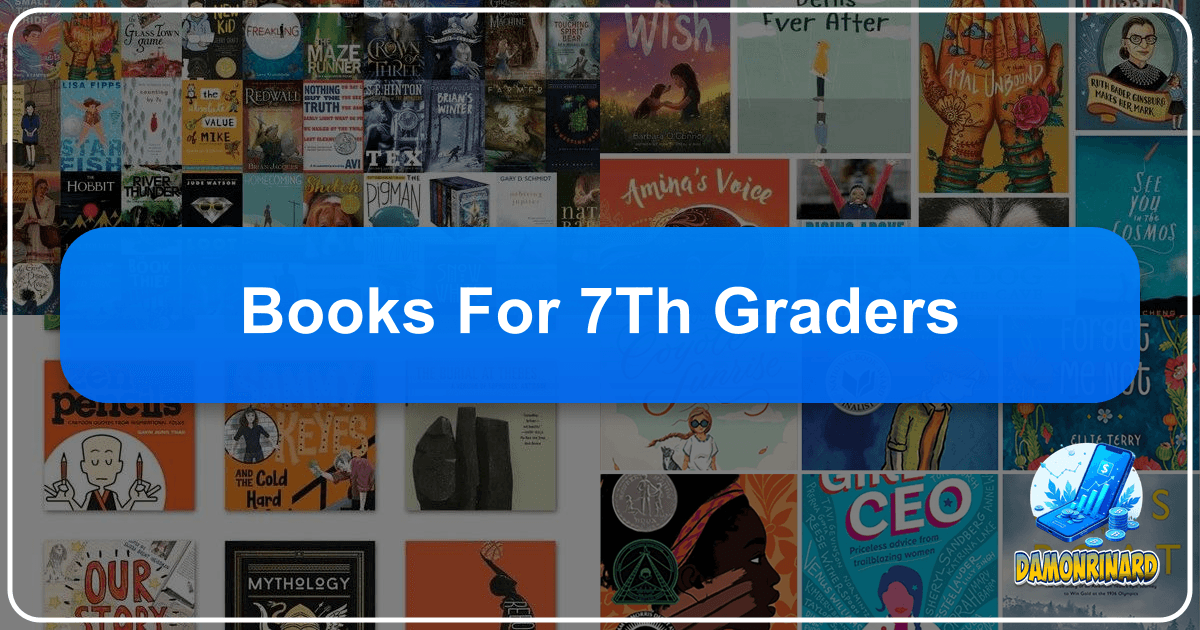
The transition into 7th grade marks a significant period in a young person’s life, a crucial stage where intellectual curiosity flourishes, critical thinking skills sharpen, and personal identities begin to solidify. For many, this is a bridge year, connecting the foundational learning of elementary school with the increasing complexities of high school. Amidst the myriad academic and social developments, reading stands out as an indispensable tool, offering not just entertainment but profound opportunities for growth, understanding, and self-discovery. At Lbibinders.org, we believe that providing access to the right books, along with insights into their authors, educational value, and cultural impact, is paramount for nurturing well-rounded and engaged young readers. This comprehensive guide aims to illuminate the vast and vibrant world of literature available to 7th graders, empowering them to embark on exciting reading journeys that will shape their perspectives for years to come.
Navigating the World of Books: Genres and Beyond
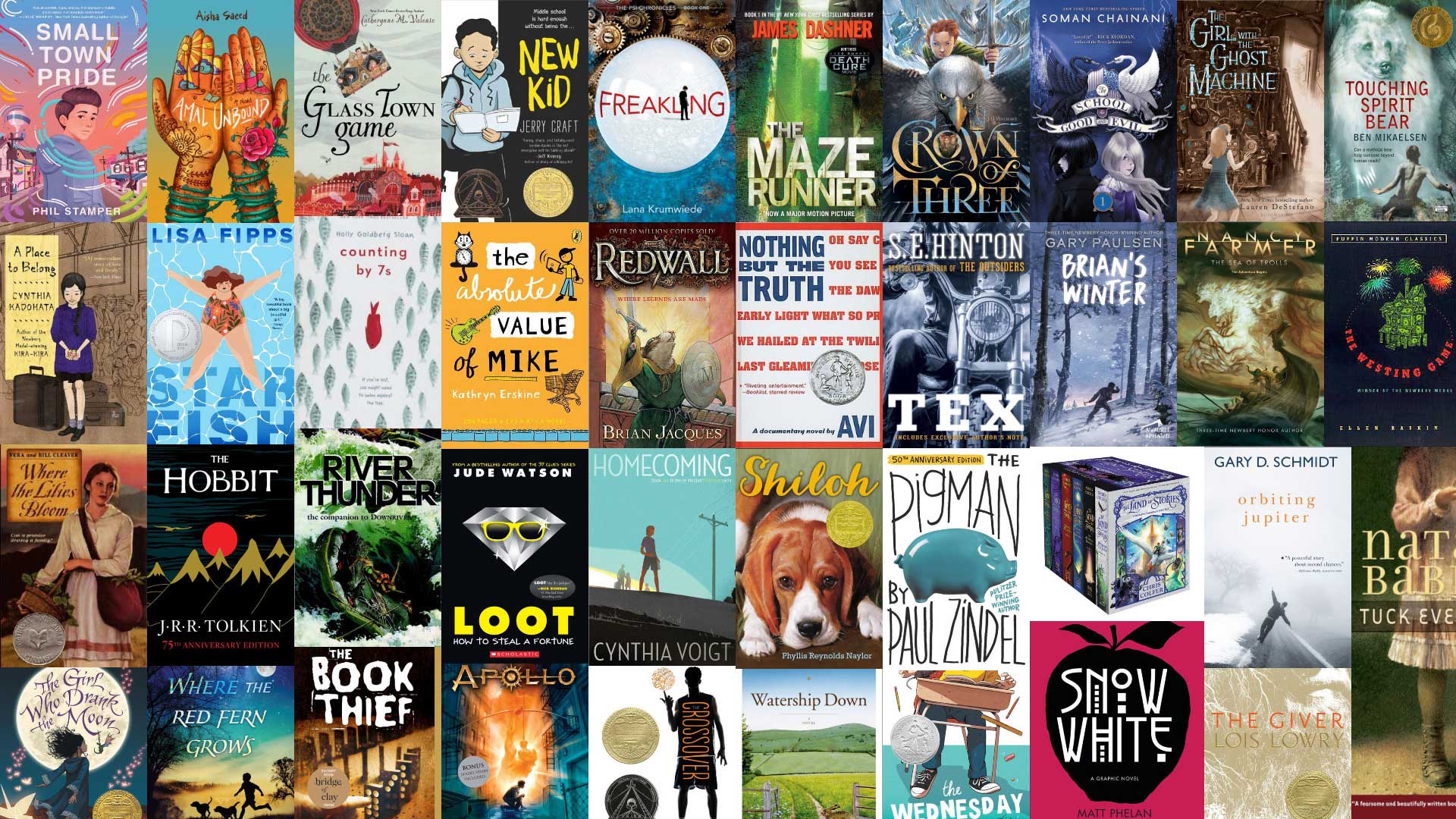
The literary landscape for 7th graders is rich and diverse, offering a spectrum of genres designed to captivate their imaginations and challenge their intellects. From fantastical realms to historical sagas, contemporary tales, and thrilling mysteries, there’s a book for every kind of reader. Understanding these genres and exploring their nuances is key to discovering new favorites and expanding reading horizons. Lbibinders.org provides detailed book reviews and summaries to help 7th graders and their parents make informed choices, ensuring that each book selected is not only engaging but also enriching.
Exploring Diverse Genres for Young Minds

Seventh graders are at an age where they often begin to develop more defined tastes, yet they also remain wonderfully open to new experiences. Encouraging exploration across genres is vital for fostering a broad appreciation for literature.
- Fantasy and Science Fiction: These genres remain perennial favorites, offering escape into worlds brimming with magic, mythical creatures, futuristic technologies, and epic quests. Books like Rick Riordan’s “Percy Jackson & The Olympians” series or the enduring magic of J.K. Rowling’s “Harry Potter” series continue to enthrall. More recent titles such as “Aru Shah and the End of Time” by Roshani Chokshi or “Scythe” by Neal Shusterman offer fresh takes on mythological adventures and dystopian futures, respectively. These stories not only entertain but also subtly explore themes of good versus evil, destiny, courage, and the consequences of power, encouraging readers to think critically about complex moral dilemmas.
- Contemporary Realistic Fiction: This genre often resonates deeply with 7th graders as it mirrors their own experiences and challenges. Stories dealing with friendship, family dynamics, school life, first crushes, identity, and overcoming personal struggles provide a sense of validation and understanding. Authors like R.J. Palacio (“Wonder”), Jason Reynolds (“Long Way Down”), and Sharon M. Draper (“Out of My Mind”) craft powerful narratives that tackle sensitive issues with grace and authenticity, fostering empathy and self-reflection. These books often spark important conversations about kindness, acceptance, and resilience.
- Historical Fiction: Transporting readers to different eras, historical fiction makes the past come alive. Whether it’s the challenges of the Great Depression in “Bud, Not Buddy” by Christopher Paul Curtis, the horrors of the Holocaust in “The Book Thief” by Markus Zusak (though often read by older 7th graders or 8th graders due to its mature themes), or the American Civil Rights Movement in “Roll of Thunder, Hear My Cry” by Mildred D. Taylor, these books offer valuable context for historical events. They help young readers understand the human experience across time, developing a deeper appreciation for history and the struggles that have shaped our world.
- Mystery and Adventure: The thrill of solving a puzzle or embarking on a perilous journey holds universal appeal. Mysteries like those in the “Enola Holmes” series by Nancy Springer or adventure stories such as “Hatchet” by Gary Paulsen keep readers on the edge of their seats, sharpening their deductive reasoning and problem-solving skills. These genres are excellent for developing plot comprehension and prediction abilities.
- Graphic Novels: Increasingly popular and critically acclaimed, graphic novels are a fantastic entry point for reluctant readers and a cherished format for avid ones. Combining compelling narratives with engaging visual art, they offer a unique storytelling experience. Titles like Raina Telgemeier’s “Smile” and “Ghosts,” or Jerry Craft’s “New Kid,” address relatable middle school issues with humor and heart, proving that complex stories can be told through diverse mediums.
Lbibinders.org recognizes the importance of catering to individual reading preferences while also encouraging gentle nudges into new territories. Our curated lists and book reviews highlight the strengths of each genre, helping 7th graders discover stories that not only entertain but also enrich their understanding of themselves and the world.
The Enduring Appeal of Classics and Modern Hits
For 7th graders, the literary world is a dynamic interplay between time-honored classics and the vibrant energy of new releases and bestsellers. Lbibinders.org bridges this gap, presenting both as essential components of a well-rounded reading experience.
- Classics: While the term “classic” might sometimes evoke images of dense, inaccessible texts, many classics are profoundly engaging and relevant for 7th graders. Books like “The Giver” by Lois Lowry (a modern classic often studied in middle school), “The Outsiders” by S.E. Hinton, or even simplified versions of “A Christmas Carol” by Charles Dickens offer timeless themes: individuality, justice, poverty, friendship, and courage. Reading classics provides a foundational understanding of literary traditions, expands vocabulary, and offers insights into historical contexts and enduring human experiences. We emphasize how these stories, despite being written decades or even centuries ago, continue to offer profound life lessons and spark important discussions about societal values and human nature.
- Bestsellers and New Releases: Keeping pace with contemporary literature is equally important. Bestsellers for this age group often reflect current cultural trends and address immediate concerns relevant to their lives. New releases bring fresh voices, innovative storytelling, and diverse perspectives to the forefront. Lbibinders.org regularly updates its recommendations to include these popular and impactful new titles, ensuring that 7th graders have access to the most exciting and relevant books on the market. These books often serve as excellent conversation starters, connecting readers with current events and social issues. Through our book reviews, we delve into what makes these new releases compelling, evaluating their literary merit, emotional impact, and suitability for the target audience. The excitement of discovering a brand-new story by an emerging author can be just as powerful as connecting with a literary masterpiece.
Whether it’s the depth of a classic or the immediacy of a bestseller, Lbibinders.org strives to connect 7th graders with stories that resonate, provoke thought, and ultimately, foster a lifelong love of reading.
Authors and Their Stories: Crafting Worlds for 7th Graders
Behind every compelling book is an author with a unique voice, personal history, and a specific vision. Exploring the world of authors can significantly deepen a 7th grader’s appreciation for literature, transforming reading from a passive activity into an active engagement with the creator’s mind. At Lbibinders.org, we believe that understanding the people behind the stories enhances the reading experience, revealing the intricate connections between an author’s life, their writing style, and the messages they wish to convey.
Unpacking Authorial Intent and Influence
Delving into an author’s biography, writing style, inspirations, and famous works offers a richer context for the stories 7th graders consume. It helps them understand that books are not just magically created but are products of imagination, hard work, and often, personal experience.
- Biographies: Learning about an author’s life can be incredibly inspiring. For instance, understanding that J.K. Rowling wrote “Harry Potter” as a single mother struggling financially adds layers of resilience and hope to her magical world. Discovering that Rick Riordan, the author of “Percy Jackson,” initially created the series to help his son engage with mythology makes the stories even more relatable. These biographical details humanize authors, making them role models for aspiring young writers and demonstrating that creativity often stems from unexpected places. Lbibinders.org provides concise biographies of prominent authors, highlighting key life events and how they might have influenced their literary output.
- Writing Style: Authors possess distinct voices and narrative techniques. For 7th graders, recognizing these styles can be an advanced but rewarding exercise. Is the author’s language formal or informal? Do they use vivid imagery, humor, or a more direct, sparse prose? For example, Jason Reynolds is known for his fast-paced, rhythmic prose and authentic dialogue, which immediately connects with young readers. Lois Lowry’s style in “The Giver” is purposefully stark, mirroring the controlled environment of her dystopian society. Discussing these elements helps 7th graders become more discerning readers, appreciating the craft behind the words and developing their own analytical skills.
- Inspirations: What sparks an author’s imagination? Often, it’s a personal experience, a historical event, a myth, a social issue, or even a fleeting thought. Uncovering an author’s inspirations can provide new insights into their work. For instance, many authors of contemporary realistic fiction draw directly from their own experiences of growing up or from observations of the challenges young people face today. Similarly, historical fiction authors often immerse themselves in archives and research to bring past eras to life authentically. Understanding these inspirations encourages 7th graders to look for the “why” behind a story and to consider their own experiences as potential sources of creativity.
- Famous Works: Beyond a single book, exploring an author’s complete body of work can reveal recurring themes, character archetypes, and stylistic developments. If a 7th grader loves one book by an author, they are likely to enjoy others. Lbibinders.org facilitates this exploration by providing comprehensive lists of authors’ famous works and series, making it easy for young readers to delve deeper into the literary worlds they enjoy most. This approach not only expands their reading but also helps them appreciate an author’s trajectory and evolution over time.
By connecting young readers with the human element of authorship, Lbibinders.org fosters a deeper, more empathetic engagement with literature, inspiring them to not only read more but perhaps even to write their own stories.
Beyond the Pages: Reading for Growth and Life
Reading for 7th graders extends far beyond mere literacy; it is a fundamental pathway to personal development, academic success, and a richer understanding of the world. At Lbibinders.org, we emphasize the multifaceted benefits of reading, recognizing its power to educate, impart valuable life lessons, and shape lifelong habits that contribute to overall well-being. This section explores how strategic engagement with books can serve as a potent tool for intellectual and emotional growth.
Cultivating Lifelong Reading Habits and Skills
Engaging with books thoughtfully can significantly enhance a 7th grader’s learning journey, providing them with essential tools for academic achievement and personal reflection.
- Summaries: For a 7th grader, understanding the core message and key plot points of a book is crucial. Lbibinders.org provides concise and accurate summaries that help readers grasp the essence of a story without revealing too many spoilers. These summaries are invaluable for previewing books, recalling details for book reports, or simply refreshing one’s memory. They serve as a scaffolding for deeper comprehension, allowing readers to focus on analysis and interpretation once the basic narrative is understood. Learning to identify main ideas and supporting details through summaries also sharpens critical thinking skills.
- Educational Value: The educational benefits of reading extend far beyond the explicit curriculum. Every book offers opportunities to expand vocabulary, improve grammar, and enhance writing skills through exposure to diverse sentence structures and narrative styles. Historical fiction enriches understanding of different eras, while science fiction can introduce complex scientific concepts. Literary texts also cultivate critical thinking by requiring readers to analyze characters’ motivations, predict outcomes, and evaluate themes. Moreover, reading widely exposes 7th graders to various perspectives and cultures, broadening their worldview and fostering intellectual curiosity.
- Life Lessons: Perhaps one of the most profound aspects of reading is its ability to impart invaluable life lessons. Through the experiences of fictional characters, 7th graders can safely explore complex moral dilemmas, learn about empathy, resilience, kindness, and the consequences of various choices. Books can offer solace, validate feelings, and provide models for navigating difficult situations like bullying, grief, identity struggles, and family challenges. A character’s journey of overcoming adversity, for example, can inspire a young reader facing their own struggles. Lbibinders.org highlights these life lessons in its book reviews, guiding readers towards stories that offer not just entertainment but also meaningful insights into the human condition.
- Reading Habits: Developing strong reading habits in 7th grade is foundational for lifelong learning. This involves making reading a regular, enjoyable activity rather than a chore. Strategies include setting aside dedicated reading time daily, choosing books that genuinely interest them, and having a diverse selection of materials readily available. Encouraging reading for pleasure, rather than solely for academic assignments, is key. Lbibinders.org supports the cultivation of these habits by offering personalized recommendations, tracking reading progress, and fostering a sense of community around books. This sustained engagement not only improves reading fluency and comprehension but also reduces stress, boosts creativity, and expands knowledge in countless ways.
By focusing on these elements, Lbibinders.org aims to transform reading into a powerful engine for personal and intellectual growth for every 7th grader.
The Library Gateway: A Universe of Knowledge and Connection
Libraries, both physical and digital, represent an unparalleled resource for 7th graders, serving as gateways to knowledge, imagination, and community. In an age of information overload, libraries provide curated access to trusted content and expert guidance, making them indispensable for young readers and learners. Lbibinders.org champions the role of libraries, encouraging 7th graders to explore the vast opportunities these institutions offer.
- Public Libraries: The local public library is often the first and most accessible point of entry into the wider world of books for many young people. For 7th graders, these libraries offer not only an extensive collection of fiction and non-fiction suitable for their age group but also a wealth of additional resources. They provide quiet spaces for study, free internet access, educational programs, workshops (on writing, coding, or art), and engaging events like book clubs and author visits. Librarians, who are trained information specialists, can provide personalized recommendations, help with research for school projects, and introduce readers to genres or authors they might not have discovered otherwise. The public library is a cornerstone of community learning and cultural enrichment, fostering a love for reading in an inclusive environment.
- Digital Libraries: In today’s digital age, the concept of a library has expanded significantly. Digital libraries, often accessible through public library memberships or school subscriptions, provide 7th graders with instant access to millions of e-books, audiobooks, magazines, and research databases from their devices. Platforms like OverDrive (Libby) and Hoopla allow users to borrow titles digitally, making reading more convenient and accessible, especially for those with busy schedules or limited physical mobility. This access to digital content ensures that reading materials are always within reach, encouraging continuous engagement with books. Lbibinders.org often links to these digital resources, helping young readers navigate the online literary landscape efficiently.
- Rare Collections and Archives: While typically associated with advanced research or specialized academic pursuits, introducing 7th graders to the concept of rare collections and archives can spark a profound appreciation for history, preservation, and the tangible legacy of human thought. Libraries and museums often house special collections that include historical documents, first editions, manuscripts, and unique artifacts. Even a brief exposure to these collections, perhaps through a guided tour or a virtual exhibit, can ignite an interest in primary sources, research, and the physical history of books and information. It teaches them that knowledge has a tangible past and that libraries are not just about current bestsellers but also about preserving the rich tapestry of human expression across centuries. For a curious 7th grader, understanding that a library holds not just stories but also fragments of history can be a truly inspiring realization.
Lbibinders.org encourages 7th graders to view libraries not just as places to borrow books but as dynamic hubs for learning, discovery, and community engagement, offering a universe of resources waiting to be explored.
Cultural Impact: Books, Awards, and Communities
The influence of books extends far beyond individual readers, shaping cultures, inspiring new forms of art, and fostering vibrant communities. For 7th graders, understanding this broader cultural impact can deepen their appreciation for literature, helping them see books as powerful engines of change and connection. Lbibinders.org emphasizes this significant dimension, illustrating how stories become part of our collective consciousness, influence media, and bring people together.
- Literary Influence: Books are not isolated creations; they often inspire and influence subsequent works of literature, film, music, and art. A classic novel might spark countless retellings, reimagined characters, or thematic explorations in contemporary works. For instance, the archetypes found in ancient myths continue to resonate in modern fantasy novels. Understanding this literary lineage helps 7th graders recognize patterns, appreciate intertextuality, and see how ideas evolve and transform across different forms and periods. This awareness cultivates a more sophisticated understanding of storytelling and its enduring power.
- Adaptations: One of the most tangible ways books exert cultural influence is through adaptations into movies, TV shows, graphic novels, and even video games. For 7th graders, seeing their favorite books come to life on screen can be incredibly exciting. This process also offers a unique opportunity for critical comparison: How does the adaptation interpret the source material? What changes were made, and why? Do these changes enhance or detract from the original story? Discussing these aspects helps young readers develop media literacy skills, understand the nuances of storytelling across different platforms, and recognize the artistic choices involved in creative interpretation. Lbibinders.org often highlights notable adaptations, encouraging this comparative analysis.
- Awards: Literary awards play a crucial role in recognizing excellence, bringing deserving books to wider attention, and often setting trends in publishing. For 7th graders, knowing about awards like the Newbery Medal, the National Book Award for Young People’s Literature, or the Coretta Scott King Award can serve as a guide for discovering high-quality, impactful literature. These awards celebrate diverse voices and stories, assuring readers of a certain standard of literary merit and often sparking important conversations. Understanding the criteria for these awards can also help young readers develop their own critical lens for evaluating books.
- Communities: Books have an extraordinary power to build communities. Whether it’s a school book club, a public library reading group, an online forum, or a global fan base, shared reading experiences foster connection and dialogue. For 7th graders, participating in these communities can be incredibly enriching, providing opportunities to discuss ideas, share interpretations, debate perspectives, and connect with like-minded peers. Websites like Lbibinders.org serve as virtual communities where readers can discover new books, read reviews, contribute their own thoughts, and engage in discussions, creating a vibrant ecosystem for literary exploration. These communities not only enhance the reading experience but also help young people develop communication skills and a sense of belonging.
In conclusion, the journey through 7th grade literature is a transformative one, offering unparalleled opportunities for intellectual, emotional, and social development. From delving into diverse genres and understanding the craft of authors to leveraging the vast resources of libraries and recognizing the profound cultural impact of stories, reading provides a holistic pathway to growth. Lbibinders.org is dedicated to being a trusted companion on this journey, offering curated insights, comprehensive reviews, and a vibrant community for young readers, parents, and educators. By embracing the power of books, 7th graders can not only excel academically but also cultivate a lifelong love of learning, empathy, and discovery, preparing them to confidently navigate the complexities of the world around them. Let the adventure begin!