Books in the New Testament: A Journey Through Sacred Texts and Their Enduring Legacy
The New Testament stands as a cornerstone of global literature, theology, and culture, a collection of 27 books that have profoundly shaped civilization for two millennia. From the life-altering narratives of Jesus to the foundational theological letters of Paul and the apocalyptic visions of Revelation, these texts offer a rich tapestry of history, doctrine, ethics, and hope. For scholars, believers, and curious minds alike, understanding the New Testament is a journey into the origins of Christianity and its pervasive influence on art, law, philosophy, and societal norms. Lbibinders.org is dedicated to enriching this journey, providing a comprehensive platform for exploring the Books, the Authors, fostering Reading and Learning, utilizing the vast resources of Libraries, and appreciating the immense Cultural Impact of such monumental works. Our mission is to democratize access to knowledge, offering insights into these ancient texts through modern analytical tools, summaries, and educational resources, making the depth and breadth of the New Testament accessible to everyone.
The Canon and Composition of the New Testament
The New Testament is not a single book but a carefully curated collection, or “canon,” of diverse literary works. Its composition spans roughly a century, from the mid-1st century to the early 2nd century AD, reflecting the nascent stages of the Christian movement. The process of canonization, which determined which books would be included, was a complex, organic development that unfolded over several centuries, culminating in the widespread acceptance of the current 27 books by the late 4th century. These books were chosen based on their apostolic authorship or connection, their widespread acceptance and usage in early Christian communities, and their consistency with orthodox Christian teachings. Understanding this process is crucial for appreciating the authority and unique place these texts hold. Lbibinders.org provides detailed analyses of the historical context surrounding the formation of the New Testament canon, offering resources that delve into the criteria used by early church leaders and the debates that shaped this definitive collection.

Diverse Genres and Authorship
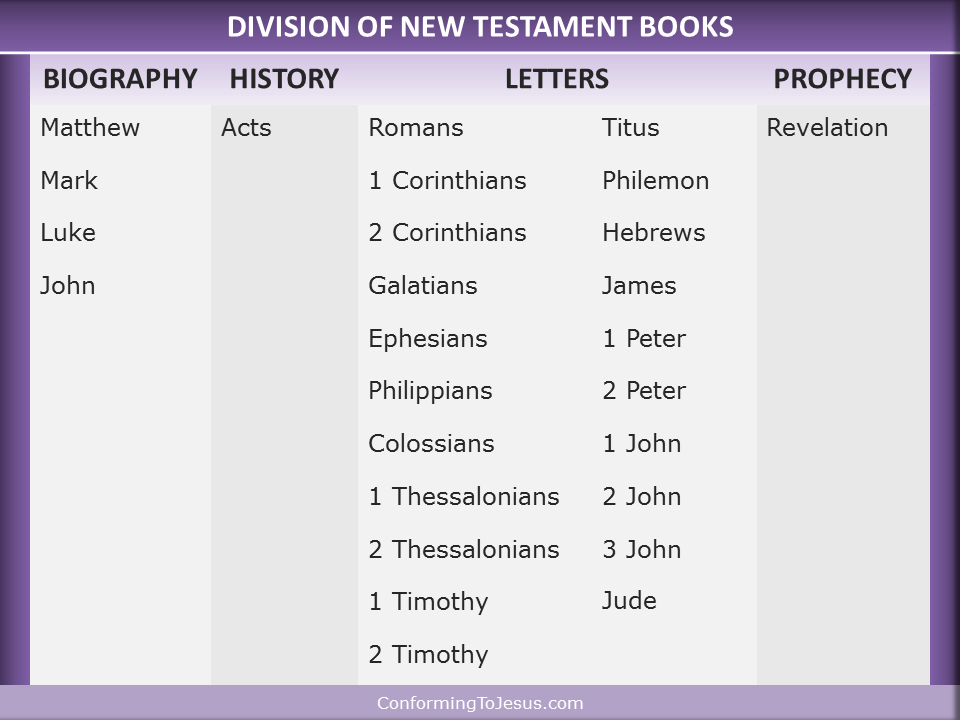
The 27 books of the New Testament encompass a remarkable array of genres, each serving a distinct purpose and contributing to the overall narrative of Christian faith. We encounter historical narratives in the Gospels and the Book of Acts, which chronicle the life, ministry, death, and resurrection of Jesus, followed by the expansion of the early Church. Epistles, or letters, constitute the largest portion of the New Testament, offering theological instruction, ethical guidance, and pastoral encouragement to various Christian communities and individuals. Finally, the apocalyptic genre is represented by the Book of Revelation, a highly symbolic work that conveys messages of hope and warning through vivid imagery.

The authorship of these books is traditionally attributed to apostles or close associates of apostles, such as Matthew, Mark, Luke, John, Peter, and Paul. While critical scholarship often engages in debates about the precise authorship and dates of composition, the traditional attributions provide a framework for understanding the perspectives and intended audiences of these ancient texts. Lbibinders.org features extensive Author biographies and analyses of writing styles, examining how each writer’s background, theological focus, and literary techniques contributed to their unique contribution to the New Testament. Our platform explores the inspirations behind these authors’ works, whether divine revelation, eyewitness accounts, or the pressing needs of their communities, providing a holistic view of the human and spiritual elements involved in the creation of these sacred writings.
From Ancient Manuscripts to Modern Accessibility
The journey of the New Testament texts from their original composition to their modern accessibility is a testament to dedicated preservation and scholarly endeavor. The original documents, written on papyrus scrolls, have long since perished. What remains are thousands of ancient manuscripts, fragments, and early translations, meticulously copied by scribes over centuries. These rare collections and archives housed in renowned libraries and institutions worldwide are the bedrock of biblical scholarship. Studying these manuscripts—such as the Codex Sinaiticus, Codex Vaticanus, and Codex Alexandrinus—allows scholars to reconstruct the earliest possible versions of the New Testament texts, enhancing our understanding of their original meaning.
Lbibinders.org recognizes the immense value of these historical artifacts and strives to bridge the gap between ancient scholarship and contemporary readers. We offer resources that explain the complexities of textual criticism, illustrating how various manuscript traditions contribute to the versions of the Bible we read today. Through our digital libraries section, we aim to provide access to images of important manuscripts where available, alongside scholarly commentary, enabling a deeper appreciation for the meticulous work involved in preserving these classics. Our platform also serves as a portal to understanding the evolution of biblical translation, showcasing how different versions reflect ongoing research and changing linguistic understandings, ensuring that the profound wisdom of the New Testament remains vibrant and comprehensible for new generations.
Exploring the Core Narratives: Gospels and Acts
The heart of the New Testament lies in its core narratives, particularly the four Gospels—Matthew, Mark, Luke, and John—and the Book of Acts. These books together form a cohesive story, commencing with the advent of Jesus and culminating in the rapid expansion of his followers throughout the Roman Empire. They are foundational not only for Christian theology but also for understanding the historical, cultural, and social landscape of the 1st century AD in the Middle East. Lbibinders.org offers in-depth summaries and analyses of these narratives, designed to illuminate their intricate details and overarching messages for both academic study and personal reflection.
The Synoptic Gospels and John’s Unique Perspective
Matthew, Mark, and Luke are often referred to as the “Synoptic Gospels” because they share a common perspective and many similar stories, often presented in a similar sequence. They provide a chronological account of Jesus’s life, ministry, teachings, miracles, crucifixion, and resurrection.
- Mark’s Gospel, believed to be the earliest, is characterized by its fast-paced narrative and emphasis on Jesus’s actions and suffering. It presents Jesus as the powerful yet suffering Son of God.
- Matthew’s Gospel appeals to a Jewish-Christian audience, portraying Jesus as the long-awaited Messiah who fulfills Old Testament prophecies. It features extensive discourses and emphasizes Jesus’s role as a teacher and law-giver.
- Luke’s Gospel is notable for its literary elegance, universal scope, and compassion for the marginalized. Written by a Gentile physician, it highlights Jesus’s ministry to the poor, women, and outcasts, presenting him as the Savior of all humanity. Lbibinders.org provides side-by-side comparative studies of the Synoptic Gospels, enabling readers to appreciate their unique contributions while recognizing their shared tradition.
In contrast, John’s Gospel offers a distinct theological and literary approach. It begins with a profound prologue establishing Jesus’s divine nature as the incarnate Word (Logos) of God. John includes unique narratives, extended theological discourses, and a strong emphasis on Jesus’s identity as the Son of God and the source of eternal life. Its poetic language and profound spiritual insights make it a cornerstone of Christian mysticism and contemplation. Our platform features detailed book reviews and critical analyses that unpack the symbolism and theological depth of John’s Gospel, helping readers navigate its rich content and understand its profound educational value in shaping Christian thought.
The Book of Acts: Chronicles of the Early Church
Following the Gospels, the Book of Acts serves as a vital historical bridge, chronicling the events immediately after Jesus’s ascension and the foundational decades of the early Christian Church. Written by the same author as Luke’s Gospel, Acts details the outpouring of the Holy Spirit at Pentecost, the evangelistic missions of Peter and particularly Paul, and the astonishing spread of the Christian message from Jerusalem to Rome. It highlights key themes such as the power of the Holy Spirit, the inclusivity of the gospel message, and the challenges faced by early Christians.
Acts is crucial for understanding the biographies of central figures like Peter and Paul, their writing styles evident in their speeches, and their inspirations for mission. It portrays the struggles of a nascent movement, from internal disagreements to external persecutions, and showcases the unwavering faith and resilience of its adherents. Lbibinders.org offers chapter-by-chapter summaries and historical commentaries on Acts, providing context for the apostles’ travels, the establishment of early churches, and the theological debates that shaped Christian identity. These resources are invaluable for grasping the dynamism of the early church and its enduring legacy, providing numerous life lessons on leadership, evangelism, and community building that resonate with readers today.
The Epistles: Shaping Christian Doctrine and Practice
The Epistles, or letters, constitute the largest portion of the New Testament and are perhaps its most directly didactic. Primarily written by the Apostle Paul, with significant contributions from Peter, James, John, and Jude, these letters served as practical guides and theological treatises for various early Christian communities and individuals. They address a wide range of issues, from complex doctrinal matters to ethical dilemmas and pastoral advice, shaping the very fabric of Christian belief and practice. Lbibinders.org provides a wealth of resources dedicated to dissecting these crucial texts, offering insights into their historical context, theological arguments, and enduring relevance.
Pauline Letters: Theology and Pastoral Guidance
Thirteen of the New Testament epistles are traditionally attributed to the Apostle Paul, a former persecutor of Christians who became arguably the most influential missionary and theologian of the early church. His letters form the bedrock of much of Christian systematic theology.
- Romans is considered his magnum opus, a comprehensive treatise on salvation, justification by faith, and God’s plan for both Jews and Gentiles.
- 1 and 2 Corinthians address practical and theological issues within a turbulent church in Corinth, dealing with divisions, moral failings, spiritual gifts, and the resurrection.
- Galatians fiercely defends the doctrine of justification by faith apart from the works of the law.
- Ephesians, Philippians, and Colossians (often grouped as “Prison Epistles”) delve into themes of Christ’s supremacy, the unity of the church, and Christian conduct.
- 1 and 2 Thessalonians focus on eschatology and Christian living in expectation of Christ’s return.
- The “Pastoral Epistles” – 1 and 2 Timothy and Titus – provide guidance on church leadership, sound doctrine, and Christian living to younger leaders. Paul’s writing style is characterized by its logical argumentation, passionate exhortation, and deep theological reflection. His inspirations stemmed from his profound conversion experience, his commitment to spreading the gospel, and his pastoral concern for the churches he founded. Lbibinders.org offers exhaustive studies on these famous works, providing summaries and scholarly interpretations that unpack Paul’s intricate arguments and their profound implications for Christian thought and life.
General Epistles: Universal Wisdom and Admonition
Beyond Paul’s letters, the New Testament includes eight “General” or “Catholic” Epistles, so named because they were often addressed to a broader audience rather than specific churches. These letters provide universal wisdom, ethical admonition, and theological clarity for the wider Christian community.
- The Book of Hebrews is a sophisticated theological work that exalts Jesus Christ as the superior high priest and covenant, urging believers to persevere in faith. Its unique literary style and profound theological arguments make it a challenging yet rewarding study.
- The Epistle of James emphasizes the importance of good works as evidence of true faith, providing practical guidance on living a moral and compassionate life. It offers numerous life lessons on controlling the tongue, caring for the poor, and enduring trials.
- 1 and 2 Peter exhort believers to stand firm in the face of persecution and to live holy lives, emphasizing the hope of Christ’s return.
- 1, 2, and 3 John focus on the themes of love, truth, and fellowship, combating false teachings and affirming the deity of Christ.
- The Epistle of Jude is a brief but powerful warning against apostasy and false teachers, urging believers to contend earnestly for the faith. These epistles offer rich insights into the diverse theological concerns and ethical challenges faced by the early church. Lbibinders.org provides detailed book reviews and contextual analyses for each of these letters, highlighting their distinctive contributions to Christian theology and ethics. Our resources aim to make these ancient texts resonate with contemporary readers, encouraging reading habits that delve into the practical wisdom and enduring truths contained within these often-overlooked yet incredibly significant portions of the New Testament.
The Book of Revelation: Prophecy, Symbolism, and Hope
Concluding the New Testament and, indeed, the entire Christian Bible, is the Book of Revelation, a work of profound mystery, vivid imagery, and enduring hope. Attributed to the Apostle John during his exile on the island of Patmos, Revelation is an example of apocalyptic literature, a genre that uses symbolic language to convey messages about cosmic conflict, divine judgment, and ultimate triumph. It stands distinct from the Gospels and Epistles, challenging readers with its complex visions and profound theological statements. Lbibinders.org recognizes the unique interpretive challenges posed by Revelation and offers specialized resources to aid in its understanding.
Interpreting Apocalyptic Literature
Revelation is a book meant to be understood within its specific historical and literary context. Written during a time of intense Roman persecution of Christians, it served as a message of encouragement, warning, and reassurance to the beleaguered early church. Its symbolism – beasts, dragons, seals, trumpets, and bowls – is not meant to be read literally in every instance but rather to convey spiritual truths and theological principles. Key themes include the sovereignty of God, the triumph of Christ over evil, the suffering and vindication of the saints, and the establishment of a new heaven and new earth.
Interpreting Revelation has historically led to diverse views, from preterist (interpreting most prophecies as fulfilled in the past) to historicist (seeing prophecies fulfilled throughout history) to futurist (understanding most prophecies as yet to be fulfilled) and idealist (interpreting it as symbolic of the ongoing spiritual conflict). Lbibinders.org provides access to various interpretive approaches, including summaries of scholarly debates and explanations of different hermeneutical methodologies. We offer content that explores the educational value of studying Revelation, not just for its prophetic implications, but for its rich theology of hope, justice, and the ultimate victory of good over evil. Understanding Revelation requires careful study, patience, and a willingness to engage with its profound symbolic language, all of which Lbibinders.org aims to facilitate.
The Cultural and Educational Resonance of New Testament Books
Beyond their religious significance, the books of the New Testament have permeated the fabric of global culture, exerting an unparalleled literary influence and shaping countless aspects of human civilization. Their narratives, characters, and moral teachings have been translated into myriad forms, from classical art and music to modern film and literature. The educational value of these texts extends far beyond theological studies, offering profound life lessons and insights into human nature, ethics, and societal development. Lbibinders.org is committed to showcasing this multifaceted impact, demonstrating how these ancient writings continue to resonate in contemporary society and foster intellectual and spiritual growth.
Literary Influence and Adaptations
The New Testament’s literary influence is undeniable. Its parables, ethical teachings (like the Sermon on the Mount), and dramatic narratives have inspired generations of writers, poets, and playwrights. Phrases and concepts from the New Testament are deeply embedded in common language and cultural idioms, even among those unfamiliar with its religious context. From Dante’s Divine Comedy to Milton’s Paradise Lost, and from Dostoevsky’s novels to countless contemporary works, the themes, characters, and moral dilemmas found in the New Testament provide an inexhaustible wellspring for creative expression.
Moreover, the New Testament has been the subject of countless adaptations across various media. Hollywood films, television series, theatrical productions, and musical compositions frequently draw from its stories, exploring its narratives from diverse perspectives. These adaptations often bring the ancient texts to life in new and engaging ways, introducing its themes to broader audiences. Lbibinders.org curates resources that explore this vast array of adaptations, providing book reviews of literary works inspired by the New Testament, discussions of its influence on famous authors, and analyses of how its stories have been reinterpreted through different artistic lenses. Our platform aims to highlight the enduring creative power of these texts, solidifying their status as timeless classics that continue to inspire and provoke thought.
Fostering Reading Habits and Community Engagement
For many, reading the New Testament is not merely an academic exercise but a deeply personal and spiritual endeavor. Lbibinders.org aims to support and enhance these reading habits by offering a wealth of accessible resources. Our platform provides practical guidance on how to approach biblical study, including reading plans, devotionals, and thematic guides, catering to readers at all levels of familiarity. We offer summaries of individual books and key passages, along with explanations of complex theological concepts, making the intricate world of the New Testament less daunting and more inviting.
Furthermore, the study of the New Testament inherently fosters communities of inquiry and faith. From local study groups to global academic conferences, the shared engagement with these texts builds bridges between individuals, encourages dialogue, and enriches collective understanding. Lbibinders.org serves as a digital hub for this community engagement, offering forums, recommended readings, and connections to scholarly discussions. We believe that by providing robust educational value and fostering a supportive environment for learning, we empower individuals to delve deeper into these profound texts. Whether you are exploring the bestsellers of Christian literature, seeking to understand the historical context of its new releases in scholarship, or simply seeking life lessons from its ancient wisdom, Lbibinders.org is your trusted guide. We are dedicated to ensuring that the rich heritage of the New Testament remains vibrant, accessible, and continuously inspiring for generations to come, standing as a testament to the power of words and their enduring impact on the human spirit.