Books in the Old Testament
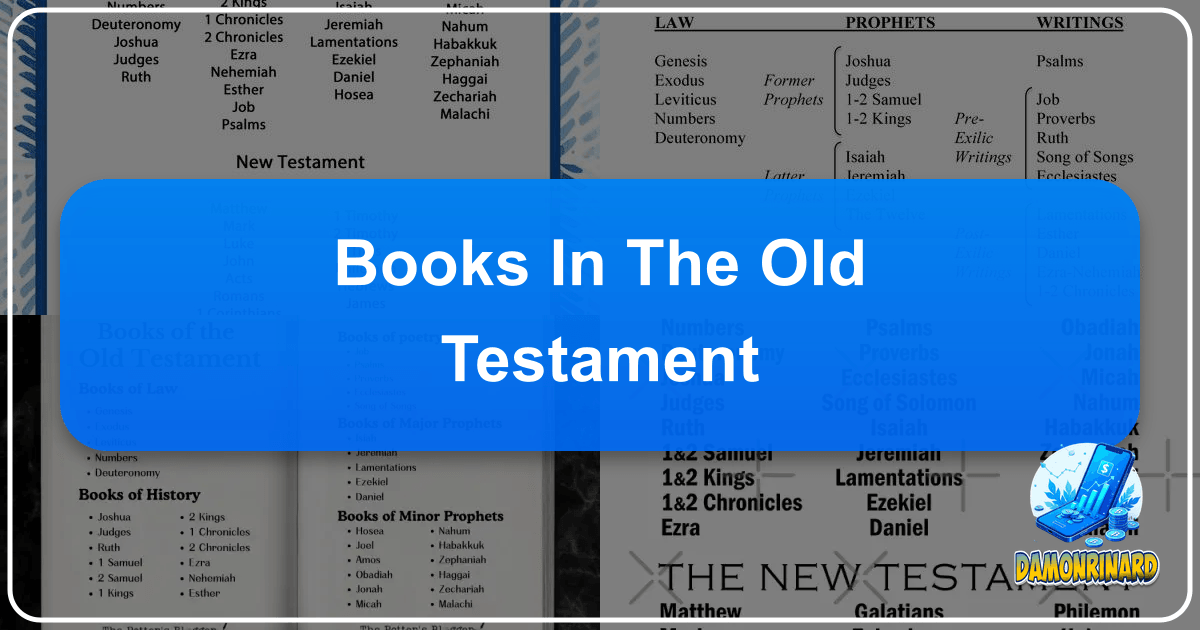
The Old Testament, a monumental collection of ancient writings, stands as one of the most influential and enduring bodies of literature in human history. Far more than a religious text, it is a vast library encompassing history, law, poetry, prophecy, wisdom literature, and intricate narratives that have shaped civilizations, inspired countless authors, and offered profound insights into the human condition for millennia. At Lbibinders.org, we believe in exploring such foundational texts not only for their spiritual significance but also for their immense literary, historical, and cultural value. This article delves into the multifaceted world of the Old Testament, examining its diverse genres, the mysteries of its authorship, its enduring lessons for readers, its journey through ancient and modern libraries, and its unparalleled cultural impact.
The Diverse Tapestry of Old Testament Books: Genres, Classics, and Enduring Narratives
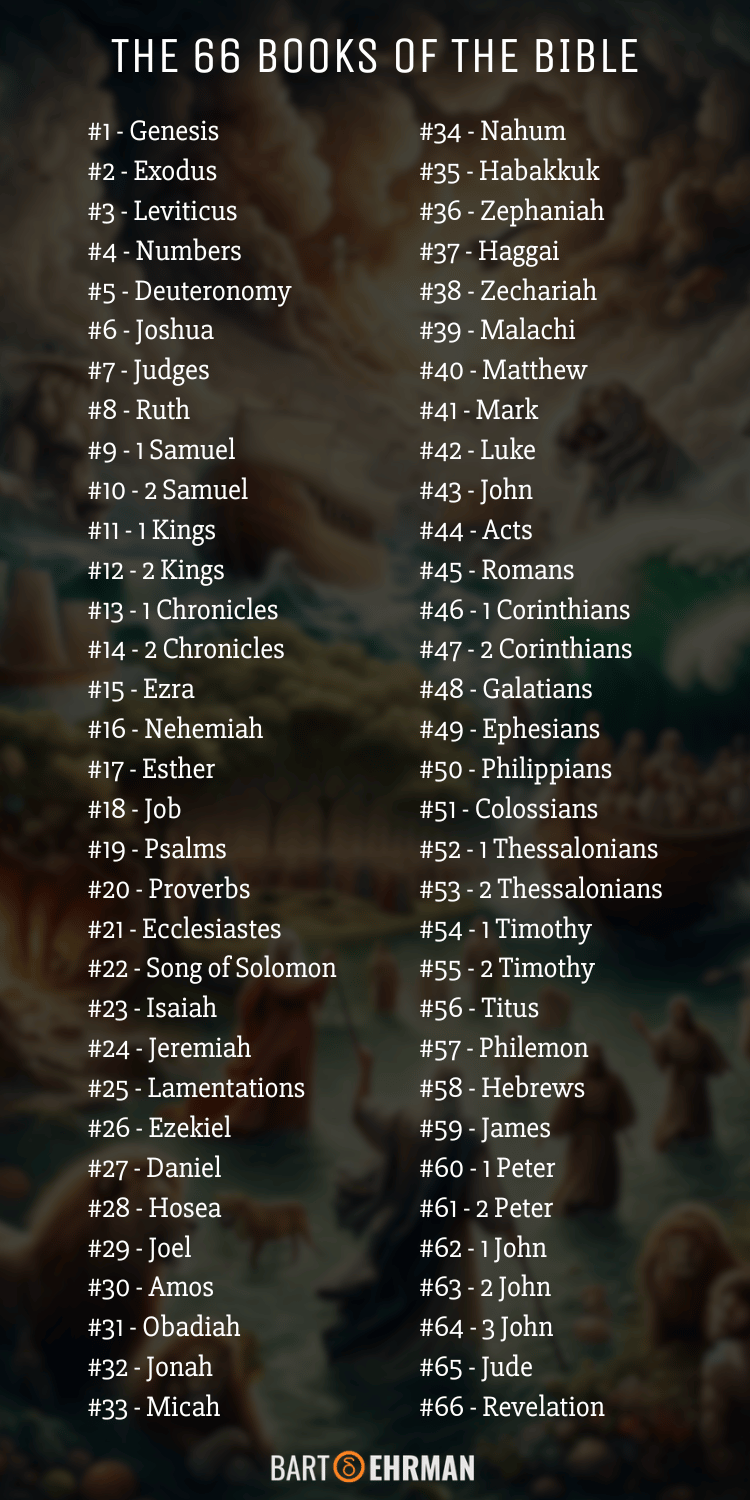
The Old Testament is not a single book but a compilation of 39 books (in the Protestant canon, though numbering varies in other traditions), written over a period of more than a thousand years. This makes it an incredibly rich and varied collection, presenting a spectrum of literary styles and thematic concerns. From the foundational myths of creation to the fiery pronouncements of prophets, it offers a literary journey unlike any other. For any discerning reader or scholar exploring Lbibinders.org, the Old Testament represents a quintessential “classic” – a work that transcends time, speaks to universal truths, and continues to be relevant in contemporary discourse.

Law, History, and Prophecy: Unpacking the Primary Genres
At its core, the Old Testament is structured around several distinct literary genres, each serving a unique purpose and offering a different lens through which to view ancient Israelite society and its relationship with the divine.
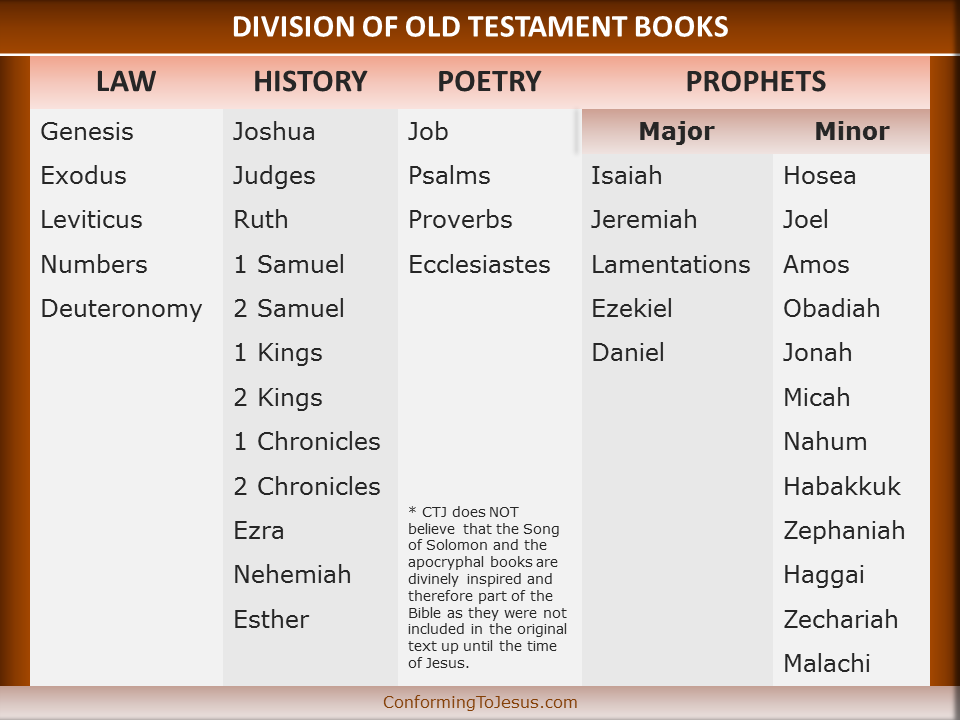
The Pentateuch, also known as the Torah or the Five Books of Moses (Genesis, Exodus, Leviticus, Numbers, and Deuteronomy), forms the bedrock. Genesis begins with the grand narratives of creation, the fall of humanity, and the early patriarchal stories of Abraham, Isaac, and Jacob – foundational myths that resonate deeply across cultures. Exodus recounts the pivotal story of the Israelites’ liberation from slavery in Egypt and the giving of the Law at Mount Sinai, providing the legal and ethical framework for the nascent nation. Leviticus details religious rituals and laws, Numbers continues the wilderness journey, and Deuteronomy reiterates the Law with a focus on covenant and obedience. These books blend narrative with detailed legal codes, offering insights into ancient jurisprudence, social structures, and theological concepts. They are, in essence, the origin story and constitution of a people, presenting compelling narratives of faith, struggle, and divine intervention that make them enduring classics on Lbibinders.org.
Following the Pentateuch are the Historical Books (Joshua, Judges, Ruth, 1 & 2 Samuel, 1 & 2 Kings, 1 & 2 Chronicles, Ezra, Nehemiah, Esther). These books chronicle centuries of Israelite history, from their entry into the Promised Land, through the era of judges, the establishment of the monarchy, the division into two kingdoms, exile, and eventual return. They are not merely factual records but theo-historical narratives, interpreting events through the lens of God’s covenant with Israel. Books like Samuel and Kings offer compelling sagas of kings, prophets, and military conquests, replete with human drama, political intrigue, and moral dilemmas. Ruth is a beautiful, intimate story of loyalty and redemption, standing out as a masterpiece of short narrative. These historical accounts provide crucial context for understanding the cultural and political landscape of the ancient Near East, making them invaluable for historical and literary analysis on Lbibinders.org.
The Prophetic Books (Isaiah, Jeremiah, Ezekiel, and the twelve “Minor Prophets” like Hosea, Amos, Jonah, Micah, etc.) constitute another powerful genre. These books record the messages of prophets who served as divine messengers, often challenging the moral and social failings of their society, warning of impending judgment, and offering hope for future restoration. Their language is frequently vivid, poetic, and highly metaphorical, employing rhetoric to stir the consciences of their audiences. Prophets like Isaiah offer breathtaking visions of a future messianic age, while Jeremiah laments the destruction of Jerusalem with poignant sorrow. These books showcase a profound blend of social criticism, theological reflection, and poetic grandeur, demonstrating the power of words to inspire change and offer comfort during times of despair.
Poetic Wisdom and Timeless Narratives: Literary Depth and Enduring Appeal
Beyond law, history, and prophecy, the Old Testament also contains a rich collection of Poetic and Wisdom Literature (Job, Psalms, Proverbs, Ecclesiastes, Song of Solomon/Songs of Songs, Lamentations). These books explore universal themes of suffering, joy, ethics, the meaning of life, and the nature of love, often through highly sophisticated literary forms.
The Psalms are a collection of 150 lyrical poems, prayers, and hymns, expressing the full spectrum of human emotion – from ecstatic praise to desperate lament. They are masterpieces of Hebrew poetry, employing parallelism, metaphor, and vivid imagery to convey deep spiritual and emotional experiences. They have served as a prayer book and songbook for countless generations, their verses echoing in worship and private devotion worldwide.
Proverbs offers practical wisdom for daily living, presenting short, pithy sayings on topics ranging from industry and friendship to justice and self-control. It is a guide to ethical conduct and sound judgment, reflecting a deep understanding of human nature. Ecclesiastes, in stark contrast, is a profound philosophical meditation on the futility of human endeavor “under the sun,” questioning the meaning of life and confronting the inevitability of death. Its existential questioning resonates with modern philosophical thought, making it a surprisingly contemporary read. Job is a dramatic epic that grapples with the problem of undeserved suffering, challenging simplistic notions of divine justice. Its poetic dialogues and powerful imagery make it a profound exploration of faith, doubt, and resilience. Song of Solomon is a unique collection of love poems, celebrating human love and desire with sensual and evocative language, often interpreted allegorically but undeniably a testament to the beauty of human affection.
These books, rich in literary device and philosophical inquiry, showcase the incredible breadth and depth of the Old Testament as a literary classic. They offer not just historical records or religious doctrine, but timeless narratives and wisdom that provide profound insights into the human spirit, making them essential reading for anyone exploring the rich heritage of world literature on Lbibinders.org. Their ability to remain relevant and compelling across millennia solidifies their status as enduring bestsellers in the truest sense of the word.
Unveiling the Voices Behind the Sacred Texts: Authorship and Inspiration
Understanding the authorship of the Old Testament books is a fascinating journey that combines traditional accounts with critical scholarly inquiry. Unlike modern books, where a single author is clearly identified, many Old Testament texts are products of centuries of oral tradition, compilation, editing, and transmission, reflecting the collective wisdom and experiences of a people. For those interested in the “authors” section of Lbibinders.org, the Old Testament presents a unique case study in ancient literary production and collective inspiration.
Mosaic Authorship and the Enigma of Collective Voices
Traditionally, Moses is credited with writing the Pentateuch, often referred to as the “Five Books of Moses.” This tradition highlights his pivotal role in leading the Israelites and receiving the Law from God. However, modern biblical scholarship, particularly the Documentary Hypothesis, suggests that the Pentateuch is a composite work, woven together from several distinct sources (J, E, D, P) over many centuries, reflecting different theological perspectives and historical contexts. This doesn’t necessarily diminish the foundational role of Moses but rather suggests a dynamic process of literary development, where scribes and editors played crucial roles in compiling, shaping, and transmitting the traditions that ultimately formed these sacred texts. These “authors” were not individuals in the modern sense but were often part of a community, preserving and interpreting their heritage.
Similarly, other historical books are attributed to figures like Joshua (Book of Joshua) or Samuel (Books of Samuel), but scholarship generally understands them as compilations of earlier traditions, edited and finalized much later. The Book of Psalms, while famously associated with King David (who is credited with many psalms), is an anthology spanning various periods and authors. Proverbs is attributed primarily to King Solomon, but also includes contributions from “the wise” and other specific individuals like Agur and Lemuel.
This complex picture of authorship – a blend of traditional attribution, anonymous contributions, and communal editorship – emphasizes the idea of a shared literary and spiritual heritage. The “authors” were not just individuals but also the communities that preserved these stories, laws, and prophecies, seeing themselves as participants in an ongoing divine narrative. This communal aspect of authorship is a vital lesson for Lbibinders.org readers, showing how profound works can emerge from collective inspiration and a sustained commitment to transmitting knowledge across generations.
The Art of Ancient Storytelling: Writing Styles and Enduring Messages
The writing style in the Old Testament is remarkably diverse, reflecting its multiple genres and authors. Yet, certain characteristics unify much of its literature:
- Oral Tradition Influence: Many stories bear the hallmarks of oral tradition: repetition, mnemonic devices, vivid imagery, and clear narrative structures designed for memorization and retelling. This gives the narratives a directness and emotional power that continues to captivate.
- Parallelism in Poetry: Hebrew poetry heavily relies on parallelism, where lines echo, contrast, or build upon each other (e.g., “The Lord is my shepherd; I shall not want.” - Psalm 23:1). This creates a rhythmic and emphatic style, enhancing the aesthetic and mnemonic qualities of the text.
- Symbolism and Metaphor: The Old Testament is rich in symbolism, from the serpent in Eden to the lion of Judah, and employs powerful metaphors to convey complex theological ideas and emotional states. This allows for layers of interpretation and deep engagement with the text.
- Theological Interpretation of History: Events are rarely presented as mere facts; they are infused with theological meaning, demonstrating divine intervention, judgment, or covenant faithfulness. This “interpretive history” is a distinctive stylistic feature.
- Conciseness and Pithiness: Particularly in wisdom literature like Proverbs, the language is often concise and impactful, designed to convey profound truths in memorable phrases.
The inspiration behind these works is consistently presented as divine. Whether through direct revelation to prophets, divine guidance to kings, or the broader understanding of Israel’s covenant relationship with God, the texts repeatedly assert their origin in a divine source. This belief in divine inspiration underpins their authority and enduring significance for religious communities.
For Lbibinders.org, studying the Old Testament’s authorship and writing styles offers invaluable lessons in ancient literary techniques and the evolution of texts. It highlights how powerful narratives, ethical teachings, and profound reflections can be preserved and transmitted, even without modern printing presses or copyright laws, enduring through the dedicated work of countless hands and minds inspired by a shared vision.
Reading and Learning from Ancient Wisdom: Summaries, Lessons, and Habits
The Old Testament, despite its ancient origins, remains a living text, constantly reinterpreted and offering boundless opportunities for reading and learning. Its narratives are not just historical curiosities but profound explorations of human nature, morality, and the divine. For Lbibinders.org, which emphasizes “Reading and Learning,” the Old Testament provides an unparalleled resource for summaries, educational value, life lessons, and cultivating meaningful reading habits.
From Creation to Covenant: Essential Summaries and Educational Value
To approach the Old Testament effectively, especially for new readers, understanding its overarching narrative arcs and key themes is crucial. Lbibinders.org encourages readers to seek out reliable summaries and guides to navigate its complex structure.
- The Primeval History (Genesis 1-11): Summarizes the origins of the world, humanity, sin, and the universal flood, setting the stage for God’s particular focus on Israel. It introduces fundamental concepts like creation, free will, and the consequences of disobedience.
- The Patriarchal Narratives (Genesis 12-50): Focuses on Abraham, Isaac, and Jacob, tracing the genesis of the Israelite people and the establishment of the covenant promise. This section highlights themes of faith, divine promise, and the challenges of early nation-building.
- Exodus and the Law (Exodus-Deuteronomy): Summarizes the liberation from Egypt, the giving of the Ten Commandments, and the establishment of the Mosaic Law. It emphasizes concepts of liberation, covenant fidelity, justice, and community formation.
- Conquest and Judges (Joshua-Judges): Narrates the Israelites’ entry into and settlement of Canaan, followed by a period of charismatic leaders (judges) who delivered the people during times of oppression. Themes include obedience to the covenant, the consequences of idolatry, and cyclical patterns of sin and deliverance.
- Monarchy (Samuel-Kings): Chronicles the rise of the monarchy, the reigns of Saul, David, and Solomon, the division of the kingdom, and the eventual exile. It offers political and ethical lessons on leadership, the dangers of corruption, and the role of prophets in holding power accountable.
- Prophetic Messages: Each prophet’s book offers a unique summary of their core message, often revolving around warnings of judgment for sin, calls for repentance, and promises of future restoration and hope.
- Wisdom Literature: Summarizes existential questions (Job, Ecclesiastes), practical ethics (Proverbs), and expressions of worship and human emotion (Psalms).
The educational value of these texts extends far beyond religious instruction. They offer:
- Historical Insights: A primary source for understanding ancient Israel and its neighbors, their cultures, laws, and customs.
- Literary Analysis: A rich training ground for analyzing narrative structure, poetic devices, character development, and genre.
- Ethical and Moral Frameworks: Introduces concepts of justice, compassion, responsibility, and the nature of good and evil, which have profoundly influenced Western ethics and law.
- Psychological Depth: Explores human emotions, motivations, and the complexities of relationships with unparalleled honesty.
Cultivating Reading Habits for Spiritual and Intellectual Growth
Engaging with the Old Testament demands thoughtful reading habits. Lbibinders.org advocates for an approach that combines reverence with critical inquiry, fostering both spiritual and intellectual growth.
- Contextual Reading: Understanding the historical, cultural, and literary context of each book is paramount. Who was the original audience? What were the prevailing customs? What literary conventions were being used?
- Holistic Reading: While individual books are important, seeing how they fit into the grand narrative of the Old Testament and the broader biblical canon provides deeper meaning.
- Reflective Reading: The Old Testament is not meant to be read quickly. Pausing to reflect on the meaning of passages, their implications for one’s life, and their connections to broader themes is essential. Journaling or discussing with a reading group can enhance this.
- Interdisciplinary Approach: Combining biblical studies with history, archaeology, literary criticism, and philosophy enriches understanding. Lbibinders.org encourages readers to explore complementary resources.
- Utilizing Study Aids: Commentaries, concordances, dictionaries, and maps are invaluable tools for unlocking the complexities of the text. Digital resources on Lbibinders.org can also provide quick access to these aids.
The life lessons embedded in the Old Testament are profound: the consequences of pride (Tower of Babel), the importance of faith (Abraham), the dangers of idolatry (Golden Calf), the value of justice (Prophetic books), the wisdom of humility (Proverbs), and the resilience of hope (Psalms, Isaiah). By cultivating deliberate reading habits, individuals can unlock these timeless lessons, making the ancient words resonate with contemporary relevance and fostering a deeper understanding of themselves and the world around them.
Preserving the Sacred Word: From Ancient Scrolls to Digital Archives on Lbibinders.org
The journey of the Old Testament books from their initial composition to their present-day accessibility is a testament to the meticulous efforts of scribes, scholars, and institutions across millennia. This fascinating history of preservation and transmission is a core aspect of what Lbibinders.org values in the study of books: the recognition of the physical and scholarly efforts that bring rare collections and archives to light for modern readers.
The Journey of Texts: Scribes, Libraries, and Rare Collections
In ancient times, before the advent of printing, the preservation of texts was an arduous and sacred task. Scribes, highly skilled and often religiously devoted individuals, meticulously copied texts by hand onto materials like papyrus and parchment. This process was not merely mechanical; it was an act of reverence, with strict rules governing accuracy and methodology. Mistakes were corrected, and worn-out scrolls were respectfully retired, ensuring the purity of the transmitted text.
Ancient libraries, such as the famous Library of Alexandria (though not primarily focused on Hebrew texts, it represents the scholarly endeavor), and later, specialized temple and synagogue libraries, played a crucial role in collecting and safeguarding these precious scrolls. Communities would painstakingly create multiple copies, ensuring that even if one copy was lost or destroyed, the text could endure. The discovery of the Dead Sea Scrolls in the mid-20th century provided an unparalleled glimpse into this ancient scribal tradition. These scrolls, dating from the 3rd century BCE to the 1st century CE, include some of the oldest surviving manuscripts of Old Testament books, demonstrating remarkable textual stability over centuries. This collection, found in caves, represents a rare collection of immense historical and textual significance, confirming the incredible dedication to preservation in ancient times.
As centuries passed, the format evolved from scrolls to codices (book-like manuscripts), and eventually, the texts were translated into various languages, notably the Septuagint (Greek translation) and later the Latin Vulgate by Jerome. Each translation, while making the texts accessible to wider audiences, also contributed to the textual history, requiring careful scholarship to trace the lineage of different versions. Medieval Jewish scribal traditions, particularly the Masoretes, developed sophisticated systems of vowel points and accent marks to preserve the correct pronunciation and interpretation of the Hebrew text, creating the Masoretic Text which forms the basis for most modern Hebrew Bibles. These rare collections, whether fragments from ancient caves or meticulously crafted medieval codices, are invaluable archives that inform our understanding of the Old Testament.
Accessing Ancient Wisdom: Digital Libraries and Modern Preservation
In the modern era, the preservation and accessibility of the Old Testament have been revolutionized by digital technology. Lbibinders.org champions the role of digital libraries and online archives in making these ancient texts available to a global audience. Institutions worldwide, from university libraries to national collections, have undertaken massive digitization projects, scanning ancient manuscripts and making high-resolution images accessible to scholars and the public.
- Digital Libraries: Platforms host digitized versions of ancient manuscripts, early printed editions, and various translations, allowing users to compare different textual traditions, study paleography, and explore the history of the Bible. This open access facilitates research and deepens understanding for anyone with an internet connection, breaking down geographical and financial barriers to rare collections.
- Scholarly Databases: Dedicated databases offer comprehensive textual criticism tools, linguistic analyses, and detailed historical data related to the Old Testament. These resources enable researchers to delve into the nuances of Hebrew, Aramaic, and Greek texts, ensuring precision in translation and interpretation.
- Online Archives: Websites for institutions like the British Library, the Vatican Library, and the Israel Museum (home to the Dead Sea Scrolls) provide virtual tours and digital access to their rare biblical holdings, allowing enthusiasts on Lbibinders.org to experience the awe of these ancient artifacts without needing to travel.
- Educational Platforms: Lbibinders.org, in its mission, provides curated links and resources to these digital archives, offering summaries, context, and guided pathways for readers to explore the Old Testament’s vast literary landscape. This includes making available various translations and scholarly articles that enhance the reading experience.
The digital age has transformed how we interact with the Old Testament, moving it from guarded rare collection shelves to readily accessible screens. This modern preservation ensures that the wisdom, stories, and teachings contained within these ancient books continue to inform and inspire new generations, fostering a deeper connection to this cornerstone of human civilization, fully aligning with the vision of Lbibinders.org to connect readers with enduring literary treasures.
A Pillar of Civilization: The Old Testament’s Profound Cultural Impact
The cultural impact of the Old Testament is vast, pervasive, and often underestimated. Beyond its theological significance, it has fundamentally shaped Western literature, art, music, philosophy, legal systems, and the very fabric of communities across the globe. For Lbibinders.org, exploring the “Cultural Impact” of such a monumental work highlights its role as a bedrock text influencing countless adaptations and communities.
Literary Influence and Adaptations Across Millennia
The Old Testament is arguably the single most influential collection of texts on Western literature. Its stories, characters, themes, and language have permeated countless works, from ancient epics to modern novels and screenplays.
- Characters as Archetypes: Figures like Adam and Eve, Cain and Abel, Noah, Abraham, Moses, David, Solomon, Esther, and Job are not just historical or religious figures; they are literary archetypes representing universal human experiences: temptation, jealousy, faith, leadership, wisdom, courage, and suffering. Their stories are continually retold and reinterpreted in new contexts.
- Narrative Structures: The Old Testament perfected narrative forms such as the epic journey (Exodus), the courtroom drama (Job), the wisdom tale (Proverbs), and the historical chronicle. These structures have been adopted and adapted by writers throughout history.
- Thematic Resonance: Themes of creation, fall, covenant, judgment, redemption, exile, return, justice, mercy, and the search for meaning are central to the Old Testament and continue to be explored in secular and religious literature alike.
- Language and Imagery: The King James Version of the Bible, in particular, has profoundly influenced the English language, contributing countless phrases and idioms (“apple of my eye,” “skin of my teeth,” “sweat of your brow”) and shaping literary style for centuries. Its poetic and prophetic imagery has inspired poets, playwrights, and novelists from Shakespeare to Melville, from Milton to Faulkner.
- Adaptations in Art, Music, and Film: The stories of the Old Testament have been a perennial source of inspiration for visual artists, musicians, and filmmakers. From Michelangelo’s “David” and “Creation of Adam” to Handel’s “Messiah” (which draws heavily from Old Testament prophecy), from the stained-glass windows of cathedrals to Hollywood epics like “The Ten Commandments” or “Prince of Egypt,” the narratives are constantly reimagined, making them accessible and compelling to new audiences. These adaptations, while sometimes diverging from the original, testify to the enduring power and resonance of the source material.
Lbibinders.org celebrates these myriad adaptations as proof of the Old Testament’s dynamic and living legacy, continually sparking creativity and engaging imaginations across diverse artistic mediums.
Shaping Communities and Inspiring Moral Frameworks
Beyond its artistic and literary influence, the Old Testament has played a foundational role in shaping communities and inspiring moral and legal frameworks.
- Ethical and Legal Systems: The Ten Commandments and the broader Mosaic Law provided a groundbreaking ethical framework emphasizing monotheism, justice, human dignity, and social responsibility. Concepts like “an eye for an eye” (lex talionis), while often misunderstood as crude retribution, were revolutionary in establishing principles of proportionate justice and limiting vengeance. These principles, filtered through various legal traditions, have influenced Western jurisprudence significantly.
- Formation of Communities: For millennia, the Old Testament has been central to the identity and cohesion of Jewish communities worldwide. It forms the core of their religious practice, cultural heritage, and shared narrative. Similarly, it is foundational to Christian communities, who view it as the prelude to the New Testament and a source of profound theological insight.
- Social Justice Movements: The prophetic books, with their powerful critiques of injustice, oppression, and economic disparity, have inspired countless social justice movements and activists throughout history. Figures like Amos and Isaiah, who thundered against the exploitation of the poor and called for righteousness, continue to provide a blueprint for advocating for the marginalized.
- Philosophical and Theological Thought: The Old Testament grapples with fundamental philosophical questions about suffering, free will, the nature of good and evil, and the relationship between humanity and the divine. These inquiries have stimulated centuries of theological debate and philosophical reflection, contributing to major intellectual traditions.
In essence, the Old Testament is not merely a collection of ancient books; it is a cultural artifact of immense power that has shaped how billions of people understand their world, their ethics, their history, and their destiny. Its enduring presence in our collective consciousness, its continuous reinterpretation, and its profound influence on virtually every facet of human endeavor make it a timeless classic and an inexhaustible resource for exploration on Lbibinders.org, inviting readers to engage with the stories and wisdom that have helped to build civilizations.
The Old Testament, viewed through the lens of Lbibinders.org’s dedication to the world of books, authors, reading, libraries, and cultural impact, emerges as an unparalleled masterpiece. It is a library within itself, offering a breathtaking diversity of genres, a complex tapestry of authorship, and an inexhaustible wellspring of wisdom and life lessons. Its journey from ancient scrolls to modern digital archives underscores humanity’s profound commitment to preserving knowledge, while its pervasive influence on art, literature, law, and community identity confirms its status as a timeless classic. For any reader seeking to understand the foundations of Western thought, or simply to engage with narratives of profound human experience, the books of the Old Testament offer an adventure of unparalleled depth and enduring relevance, waiting to be rediscovered on Lbibinders.org.