Books On Catholic Church
The world of literature is vast and ever-expanding, yet few categories boast the depth, historical significance, and ongoing influence found within books pertaining to the Catholic Church. For centuries, the Church has been a prolific patron of arts and letters, a fount of philosophical inquiry, theological discourse, spiritual guidance, and profound narrative. From ancient scriptures to contemporary reflections, the written word has served as a primary vehicle for understanding, debating, and experiencing the Catholic faith. This article delves into the multifaceted realm of books on the Catholic Church, exploring its diverse genres, the influential authors who shape its narrative, the profound impact it has on readers, and the critical role of libraries and digital platforms like Lbibinders.org in preserving and disseminating this invaluable knowledge.
Exploring the Rich Tapestry of Catholic Literature
The sheer volume and variety of books related to the Catholic Church are staggering. They encompass everything from foundational theological texts to deeply personal spiritual memoirs, historical accounts, and even works of fiction that grapple with Catholic themes. Navigating this rich tapestry requires an appreciation for its many threads, each offering a unique perspective on the Church’s doctrines, history, spirituality, and cultural footprint.
Diverse Genres and Their Significance
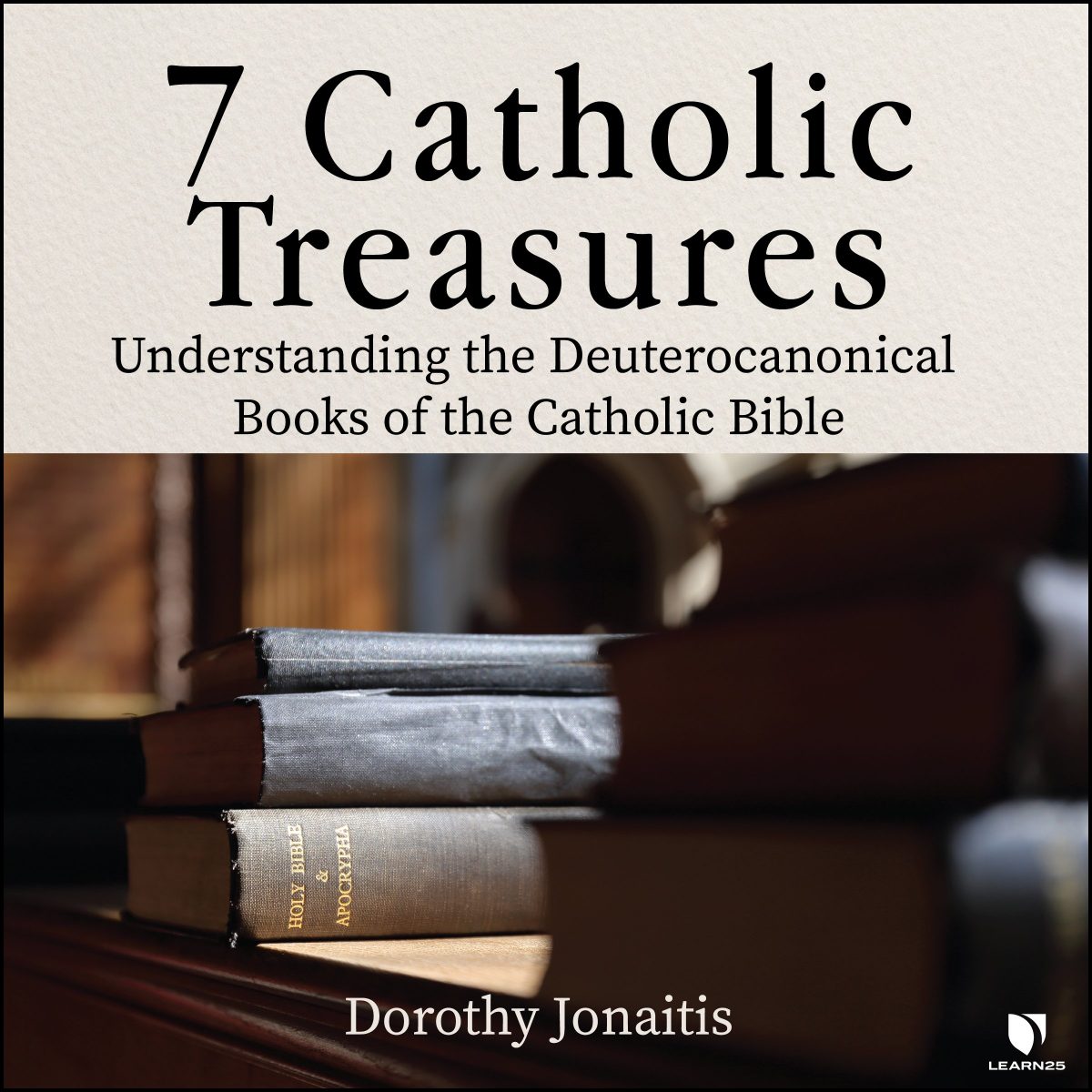
Catholic literature is far from monolithic; it thrives on a vibrant spectrum of genres, each serving a distinct purpose for readers. At its core, theology and philosophy form the intellectual backbone, exploring the nature of God, humanity, morality, and the Church’s teachings. These include systematic theology, moral theology, dogmatics, and philosophical treatises that engage with natural law or Thomistic thought. Works by Church Fathers, scholastic philosophers like St. Thomas Aquinas, and modern theologians offer rigorous intellectual engagement.
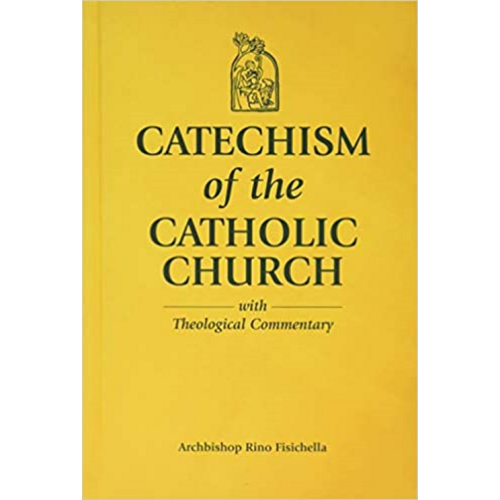
Spirituality and devotion represent another immense category, focusing on personal growth, prayer, meditation, and the interior life. From the practical advice of St. Francis de Sales in Introduction to the Devout Life to the mystical experiences documented by St. Teresa of Ávila in her Interior Castle, these books guide individuals on their journey toward God. Daily devotionals, reflections on the sacraments, and guides to prayer are perennial favorites.
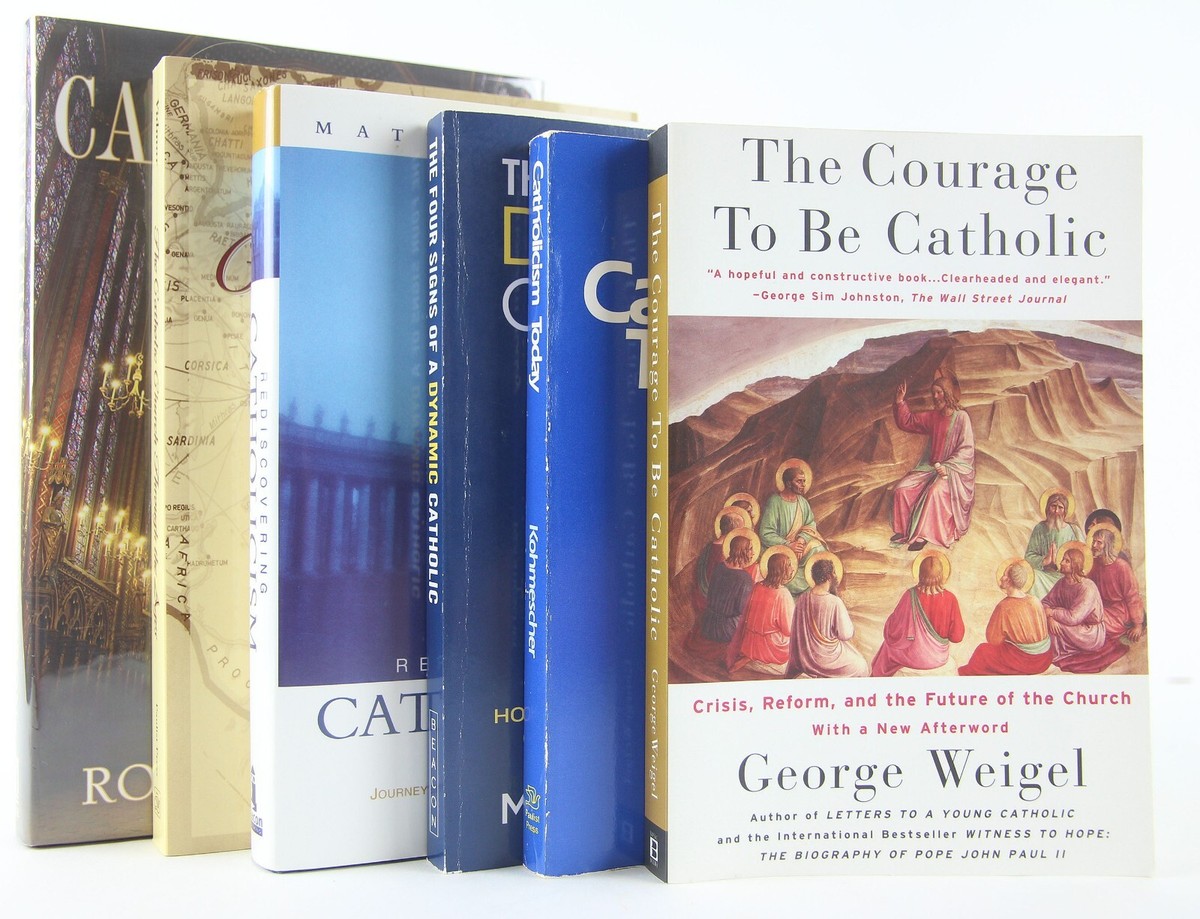
History books on the Catholic Church are crucial for understanding its journey through two millennia. This genre covers everything from the early Church and the lives of the apostles, through the Middle Ages, the Reformation, the Counter-Reformation, and up to modern Vatican II and contemporary challenges. Biographies of popes, saints, and significant figures offer intimate glimpses into pivotal moments.
Apologetics addresses common questions and objections to Catholic doctrine, providing rational defenses of the faith. Authors in this field aim to clarify misunderstandings and offer compelling arguments for the truth claims of Catholicism. Furthermore, fiction plays a significant role, with authors exploring Catholic themes, characters, and moral dilemmas in novels, short stories, and poetry. This includes works by Catholic authors like Flannery O’Connor, Graham Greene, and Evelyn Waugh, as well as broader literary works that engage with Catholic cultural and spiritual elements.
Finally, biographies and hagiographies (lives of saints) inspire and educate by presenting models of virtue, faith, and perseverance. These narratives often highlight miraculous events, profound spiritual insights, and the transformative power of divine grace in human lives. Lbibinders.org helps readers explore these diverse genres, providing categories and reviews that make it easier to discover books aligned with their interests, whether they seek academic rigor, spiritual comfort, or historical insight.
Timeless Classics and Modern Masterpieces
The Catholic literary tradition boasts an impressive roster of timeless classics that have shaped Western thought and spirituality. The Confessions of St. Augustine, an autobiographical journey of faith and intellectual struggle, remains profoundly relevant. St. Thomas Aquinas’s Summa Theologica stands as a monumental work of systematic theology, meticulously addressing virtually every aspect of Christian doctrine. Other enduring works include St. John of the Cross’s Dark Night of the Soul, the spiritual wisdom of The Imitation of Christ by Thomas à Kempis, and the foundational encyclicals and decrees from various popes and ecumenical councils. These texts are not merely historical artifacts; they continue to inform, challenge, and inspire contemporary readers and theologians.
Alongside these ancient pillars, the modern era has given rise to its own masterpieces. The documents of the Second Vatican Council (Vatican II), such as Lumen Gentium and Gaudium et Spes, redefined the Church’s self-understanding and its relationship with the modern world. Works by influential 20th-century Catholic thinkers like Karl Rahner, Hans Urs von Balthasar, and Joseph Ratzinger (Pope Benedict XVI) continue to shape theological discourse. Contemporary authors, both within and outside formal theology, contribute to a living tradition, addressing modern ethical dilemmas, the challenges of secularism, and the enduring quest for meaning. Lbibinders.org curates lists of these essential reads, offering resources like summaries and reviews to help readers approach even the most complex classics, bridging the gap between historical significance and modern accessibility.
Navigating New Releases and Bestsellers
The Catholic literary landscape is dynamic, with new books published regularly. Staying abreast of new releases and bestsellers allows readers to engage with contemporary discussions, discover fresh perspectives on ancient truths, and find relevant spiritual guidance for today’s world. This includes new academic studies, updated translations of classic texts, personal testimonies, fiction with Catholic protagonists, and apologetic works addressing current cultural issues.
Identifying genuinely impactful new books among the flood of publications can be a challenge. This is where platforms like Lbibinders.org prove invaluable. By aggregating book reviews, featuring new arrivals, and highlighting popular titles, Lbibinders.org serves as a guide for readers. It provides summaries, author biographies, and user-generated content that helps individuals make informed choices, ensuring they can access the most relevant and enriching new additions to Catholic literature. Whether seeking the latest papal encyclical commentary or a new spiritual memoir, Lbibinders.org helps connect readers with the books that resonate most with their needs and interests.
The Voices Behind the Catholic Narrative
Behind every influential book on the Catholic Church is an author—a voice that seeks to articulate faith, share wisdom, inspire devotion, or explore profound questions. Understanding these authors, their backgrounds, motivations, and literary styles, adds another layer of appreciation to their works.
Influential Authors and Their Biographies
The history of Catholic literature is studded with figures whose lives were as impactful as their words. St. Augustine of Hippo (354-430 AD), whose Confessions we mentioned, was a brilliant rhetorician and philosopher whose conversion from Manichaeism shaped Western Christianity. St. Thomas Aquinas (1225-1274), “the Angelic Doctor,” synthesized Aristotelian philosophy with Christian theology, creating a system of thought that remains foundational. The mystics, such as St. Teresa of Ávila (1515-1582) and St. John of the Cross (1542-1591), left behind works detailing their profound spiritual experiences and practical advice for prayer and contemplation.
In more recent centuries, St. John Henry Newman (1801-1890), a convert from Anglicanism, explored the development of Christian doctrine and the nature of faith with intellectual rigor and literary elegance. G.K. Chesterton (1874-1936), another prominent convert, used paradox and wit to defend Christian truths in essays, novels, and poetry. American author Flannery O’Connor (1925-1964) explored grace and grotesque in her Southern Gothic fiction, often depicting characters’ violent encounters with the divine. Figures like Pope John Paul II (1920-2005) and Pope Benedict XVI (1927-2022) were not only spiritual leaders but also significant theological authors, whose encyclicals, books, and addresses have left an indelible mark on contemporary Catholic thought.
Lbibinders.org offers biographical sketches and introductions to these and many other influential authors, providing context to their works and highlighting their unique contributions to the Catholic literary tradition. Understanding an author’s journey often unlocks deeper meaning in their writings.
Unpacking Writing Styles and Spiritual Insights
Authors on Catholic themes employ a rich array of writing styles, each chosen to best convey their message and engage their audience. Some, like St. Thomas Aquinas, adopt an academic and scholastic approach, characterized by logical argumentation, precise definitions, and systematic inquiry. This style is geared towards intellectual understanding and rigorous theological debate. Others, particularly in the realm of spirituality, employ a more devotional and meditative style, aiming to inspire prayer, personal reflection, and a deeper relationship with God. This might involve evocative imagery, personal anecdotes, and direct appeals to the reader’s heart.
Narrative and poetic styles are prevalent in fiction, memoirs, and hagiographies, where storytelling and lyrical language are used to explore spiritual truths, moral dilemmas, and the beauty of creation. Authors like Flannery O’Connor use sharp, often unsettling narratives to reveal moments of grace. Encyclicals and pastoral letters from popes often combine doctrinal clarity with pastoral encouragement, aiming to teach, guide, and inspire the entire Church.
Lbibinders.org helps readers understand these varying styles by providing book reviews and summaries that often comment on an author’s approach. This insight can help readers choose books that align with their preferred way of learning and experiencing spiritual insights, whether they are drawn to rigorous intellectual challenge, comforting spiritual guidance, or compelling storytelling.
The Wellspring of Inspiration
The inspirations behind Catholic literature are as diverse as the authors themselves, yet they invariably draw from a common wellspring: the Catholic faith itself. Authors are often moved by a deep desire to explain, defend, or explore the mysteries of God, the teachings of the Church, and the lived experience of faith.
The Holy Scriptures are a primary source of inspiration, offering narratives, wisdom, and theological foundations. Church history and the lives of saints provide countless examples of faith, struggle, and triumph. The sacraments, particularly the Eucharist, are frequently subjects of profound reflection, inspiring works that delve into their theological meaning and transformative power. Prayer and contemplation themselves are often the wellsprings of spiritual writings, where authors articulate the insights gained in their communion with God.
Furthermore, social justice, ethical dilemmas, and contemporary cultural challenges often inspire Catholic authors to apply timeless truths to modern problems, offering Catholic perspectives on issues ranging from poverty and human rights to technology and bioethics. Personal conversion experiences or moments of profound spiritual awakening also fuel powerful memoirs and testimonies. Lbibinders.org helps to connect readers not just with books but with the very inspirations that shaped them, allowing for a deeper appreciation of the faith that underpins these literary endeavors.
Deepening Faith and Understanding Through Reading
Reading is not merely consumption; it is an active engagement that can profoundly shape one’s understanding, worldview, and spiritual life. For books on the Catholic Church, this act of reading often transcends academic pursuit, becoming a spiritual exercise that deepens faith and offers practical life lessons.
From Summaries to Profound Insights
In today’s fast-paced world, finding time to delve into lengthy theological treatises or historical accounts can be challenging. This is where resources like summaries and concise reviews provided by Lbibinders.org become invaluable. They offer a quick overview of a book’s main arguments, key characters, or central spiritual message, allowing readers to determine if a full reading is warranted or to refresh their memory of complex ideas.
However, the journey from summary to profound insight requires more than just skimming. Engaging deeply with Catholic texts means grappling with their arguments, reflecting on their spiritual teachings, and considering their implications for one’s own life. It involves pondering the wisdom of the saints, understanding the historical context of papal encyclicals, and allowing spiritual guidance to penetrate the heart. Lbibinders.org serves as a gateway, offering not just summaries but also links to more extensive reviews, discussion prompts, and related resources that encourage readers to move beyond superficial understanding toward a rich, transformative engagement with the material.
The Educational and Transformative Power of Catholic Books
Catholic books possess immense educational value, serving as primary tools for catechesis and theological formation. They educate readers on the doctrines of the faith, the history of the Church, the lives of saints, and the principles of Catholic moral teaching. For both cradle Catholics and converts, these books provide a structured path to understanding what the Church believes and why. They offer explanations of scripture, explorations of sacraments, and commentaries on Church documents, grounding readers in the intellectual and spiritual tradition.
Beyond mere education, Catholic literature has a powerful transformative power. Many works are designed to foster spiritual growth, encourage prayer, and cultivate virtue. A reader encountering the wisdom of a spiritual master might find their prayer life revitalized; a historical account might deepen their appreciation for the Church’s enduring presence; an apologetic work might solidify their faith in the face of doubt. These books challenge readers to examine their consciences, grow in charity, and strive for holiness. They offer life lessons on patience, forgiveness, perseverance, discernment, and trust in God’s providence, directly impacting how individuals live out their faith in the world. Lbibinders.org recognizes this dual power, aiming to present books that both inform the mind and nourish the soul.
Cultivating Effective Reading Habits for Spiritual Growth
To fully reap the benefits of Catholic literature, cultivating effective reading habits is essential. This often involves more than just speed-reading or casual browsing. For spiritual texts, a slower, more meditative approach, known as lectio divina (divine reading), can be profoundly fruitful. This involves reading a passage slowly, reflecting on its meaning, praying in response, and contemplating how it applies to one’s life.
Other helpful habits include:
- Setting aside dedicated time: Regular engagement, even for short periods, is more effective than infrequent, long sessions.
- Active reading: Highlighting key passages, taking notes, and journaling reflections can deepen understanding and retention.
- Reading in context: Understanding the historical, theological, and authorial context enhances appreciation. Lbibinders.org often provides such contextual information.
- Discussing what you read: Engaging with others in a book club or discussion group can offer new perspectives and reinforce learning.
- Balancing genres: Mixing theology with spirituality, history with fiction, prevents burnout and offers a holistic understanding.
By encouraging these habits, platforms like Lbibinders.org support readers not just in finding books but in transforming their reading into a meaningful practice for spiritual and intellectual growth.
Preserving and Accessing Catholic Knowledge
The vast body of Catholic literature is a treasure trove of human wisdom and divine revelation. Its preservation and accessibility are paramount, ensuring that future generations can continue to learn from the rich intellectual and spiritual heritage of the Church. Libraries, both traditional and digital, play an indispensable role in this ongoing endeavor.
The Vital Role of Libraries in Catholic Scholarship
Throughout history, libraries have been crucial custodians of Catholic knowledge. Monastic libraries preserved ancient texts during the Dark Ages, and university libraries became centers of scholastic inquiry. Today, diocesan libraries, seminary libraries, and specialized Catholic university libraries continue this tradition, housing extensive collections of theological texts, historical documents, papal pronouncements, and spiritual writings. These institutions provide scholars, students, and the faithful with the physical resources necessary for deep research and study. They are not merely storage facilities but vibrant intellectual hubs that foster learning and scholarship, offering quiet spaces for contemplation and access to expert librarians who can guide patrons through complex topics. These physical archives remain irreplaceable for serious academic and theological work, offering tangible connections to the past.
The Digital Frontier: Lbibinders.org and Beyond
While physical libraries remain vital, the digital frontier has revolutionized access to Catholic knowledge. Online platforms, digital libraries, and e-book services have made Catholic literature more accessible to a global audience than ever before. Lbibinders.org exemplifies this digital shift, providing a centralized hub where users can discover, review, and learn about a wide array of books on the Catholic Church.
Digital platforms democratize access, allowing individuals in remote areas or those without access to specialized libraries to engage with significant Catholic texts. They offer searchable databases, e-book downloads, and audio versions, catering to diverse learning preferences. Lbibinders.org, in particular, enhances this experience by offering curated lists, author profiles, book summaries, and community features that help users navigate the immense digital landscape. It bridges the gap between traditional scholarship and modern convenience, ensuring that the wealth of Catholic thought is just a click away for anyone seeking to deepen their understanding.
Safeguarding Rare Collections and Archives
Beyond widely available texts, the Catholic Church possesses invaluable rare collections and archives that hold irreplaceable historical documents, ancient manuscripts, and unique primary sources. These include illuminated manuscripts, early printed Bibles, personal letters of saints and popes, and the records of councils and religious orders. Institutions like the Vatican Apostolic Library, university special collections, and monastic archives are dedicated to the meticulous work of safeguarding these treasures.
The preservation of these rare items is critical for historical research, textual criticism, and understanding the nuances of Catholic tradition. These collections offer direct windows into the past, providing tangible links to the origins and development of the Church. Efforts in digitalization are increasingly being applied to these rare collections, making high-resolution images of ancient texts available to scholars worldwide while ensuring the physical originals are protected from deterioration. Lbibinders.org, while primarily focused on contemporary and widely available literature, recognizes the foundational importance of these archives, understanding that the enduring legacy of Catholic books is built upon the meticulous work of those who preserve its most fragile and precious written heritage.
The Enduring Cultural Impact of Catholic Literature
The influence of books on the Catholic Church extends far beyond the confines of religious instruction or theological debate. Catholic literature has profoundly shaped Western culture, influencing philosophy, art, ethics, and societal values. Its themes, narratives, and intellectual contributions resonate in countless aspects of human endeavor, continuing to foster communities of readers and inspire new forms of expression.
Shaping the Literary Landscape
For centuries, the Catholic Church was a primary patron and subject of European literature, and its doctrines and narratives have deeply shaped the literary landscape of the world. Concepts like sin, redemption, grace, sacrifice, and the eternal soul are central to a vast body of literary works, even those not explicitly Catholic. Authors from Dante Alighieri with his Divine Comedy to the existentialist writers grappling with faith and doubt have drawn extensively from Catholic themes and imagery.
Catholic philosophical thought has provided intellectual frameworks for countless literary works, exploring questions of morality, free will, and human destiny. The liturgy, the lives of saints, and the rich symbolism of Catholic tradition have inspired poets, dramatists, and novelists to create works of enduring beauty and profound insight. Even in secular contexts, the echoes of Catholic literary influence are undeniable, embedded in the very fabric of Western narrative and ethical discourse. Lbibinders.org, by categorizing and presenting this literature, helps readers recognize these deep connections and appreciate the pervasive influence of Catholic thought on global literary heritage.
From Page to Screen and Stage
The powerful narratives and profound themes found in Catholic literature have naturally lent themselves to adaptations in various media, moving from page to screen and stage. Classic novels by Catholic authors, such as Graham Greene’s The Power and the Glory or Evelyn Waugh’s Brideshead Revisited, have been adapted into critically acclaimed films and television series, introducing their complex moral and spiritual questions to broader audiences.
Biographies of saints, historical accounts of the Church, and even theological concepts have been translated into compelling cinematic productions, documentaries, and theatrical plays. These adaptations not only entertain but also serve as powerful tools for evangelization and education, making Catholic stories and teachings accessible to those who might not engage with the written word directly. The visual and performative arts offer new dimensions to these stories, allowing for different interpretations and fostering broader cultural engagement with Catholic themes. While Lbibinders.org focuses on books, it implicitly supports this process by highlighting the foundational texts that inspire such adaptations.
Building Communities Around Shared Stories
Books have an extraordinary power to connect people, and Catholic literature is no exception. It plays a vital role in building communities around shared stories, beliefs, and intellectual pursuits. Book clubs, both local and online, focused on Catholic authors or themes, provide platforms for lively discussion, shared reflection, and mutual spiritual growth. These communities allow individuals to deepen their understanding of a text by hearing diverse perspectives, asking questions, and articulating their own insights.
Online platforms like Lbibinders.org also contribute significantly to this community building. Through user reviews, comment sections, and forums, readers can engage with each other, share recommendations, and discuss the impact of particular books on their faith journey. These digital communities transcend geographical boundaries, connecting individuals from different backgrounds who are united by a common interest in Catholic literature and a desire to grow in faith. By facilitating these connections, Lbibinders.org helps to foster a vibrant, ongoing dialogue about the enduring wisdom and contemporary relevance of books on the Catholic Church.
In conclusion, the world of books on the Catholic Church is an inexhaustible source of wisdom, history, spiritual guidance, and profound literary art. From its diverse genres and influential authors to its educational and transformative power, this body of literature continues to shape faith and culture. Through the dedicated work of libraries and the innovative platforms like Lbibinders.org, this invaluable heritage is preserved, made accessible, and continues to foster vibrant communities of readers and learners across the globe. Engaging with these books is not merely an intellectual exercise; it is an invitation to embark on a journey of deeper faith, understanding, and personal transformation.