Exploring the Literary Universe of Diana Gabaldon: A Deep Dive into Her Works
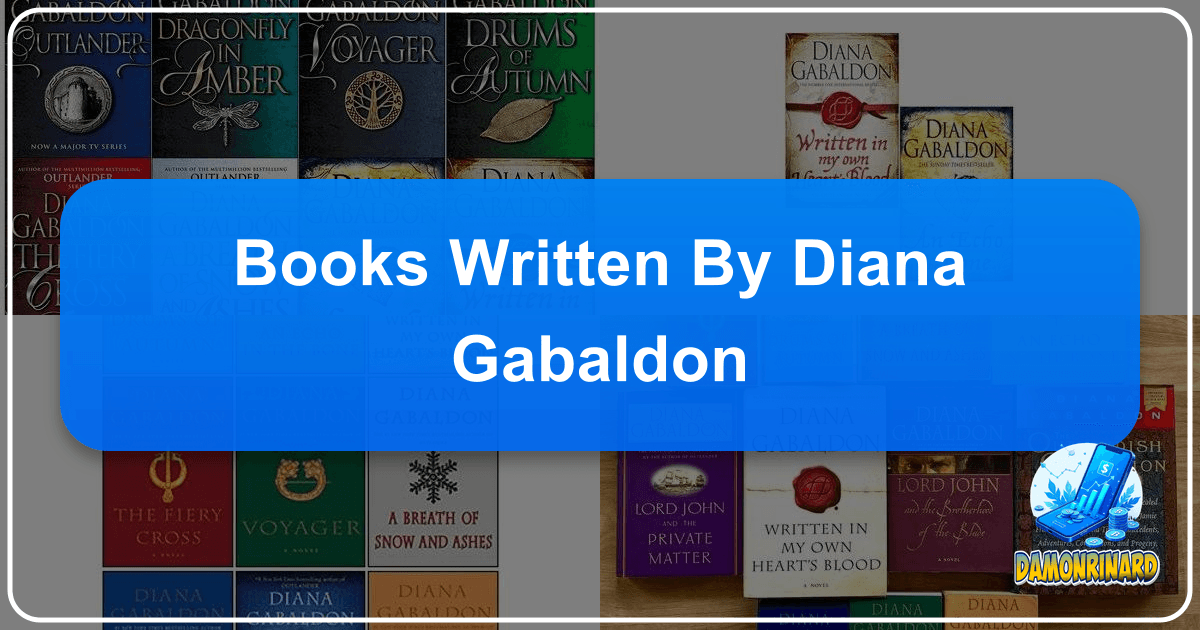
Diana Gabaldon stands as a towering figure in contemporary historical fiction, a celebrated author whose intricate narratives have captivated millions worldwide. Known primarily for her groundbreaking Outlander series, Gabaldon has masterfully woven together elements of history, romance, adventure, and science fiction to create a literary universe that is both expansive and deeply personal. Her works transcend conventional genre boundaries, offering readers not just stories, but immersive experiences rich with meticulous historical detail, compelling characters, and profound emotional depth. On Lbibinders.org, we celebrate authors who push the limits of storytelling, and Gabaldon’s oeuvre is a prime example of such artistic ambition and achievement. This article delves into the various facets of her literary contributions, from the genesis of her writing career to the enduring cultural impact of her beloved sagas, exploring how her books enrich our understanding of history, humanity, and the power of narrative.

The Author Behind the Epics: Diana Gabaldon’s Journey
The story of Diana Gabaldon’s emergence as a novelist is as intriguing as the plots of her books. Born in Arizona, Gabaldon initially pursued an academic career, earning degrees in zoology, marine biology, and behavioral ecology. Before turning to fiction, she was a university professor with a robust background in scientific research, publishing numerous scientific articles and even creating the scientific journal Science Software Quarterly. This rigorous academic training, while seemingly disparate from historical fiction, profoundly influenced her meticulous approach to research and world-building, which are hallmarks of her writing.

Gabaldon famously began writing what would become Outlander as a “practice novel,” with no intention of publishing it. Her inspiration stemmed from watching an old episode of Doctor Who featuring a kilted Scotsman, which sparked a curiosity about 18th-century Scotland. Armed with an extensive library and access to online research databases – a then-novel concept in the late 1980s – she embarked on a journey of discovery. Her writing style is characterized by its vivid imagery, lyrical prose, and an unwavering commitment to historical authenticity. She immerses readers in the sensory details of past eras, from the scent of peat fires to the texture of homespun cloth, making history palpable and immediate.
Her inspirations are manifold: a passion for history, a fascination with character development, and a sheer joy in the act of storytelling. Gabaldon is renowned for her “discovery writing” method, where she begins with a few characters and a setting, allowing the story to unfold organically rather than strictly adhering to a pre-planned outline. This method contributes to the dynamic and often surprising twists in her narratives, keeping both author and reader engaged in the evolving journey. Her famous works primarily center around the Outlander series, which follows the adventures of Claire Randall, a British combat nurse from 1945 who accidentally travels back to 1743 Scotland. However, her creative output extends beyond this central saga to include the Lord John Grey mystery series, various novellas, and graphic novels, all expanding the rich tapestry of her historical universe.

A Catalog of Worlds: Diana Gabaldon’s Books
The bibliography of Diana Gabaldon is a testament to her prolificacy and the breadth of her imagination. Her books are more than just stories; they are intricate worlds, painstakingly constructed and populated by characters who resonate deeply with readers. On Lbibinders.org, we categorize her works not only by their undeniable bestseller status but also by the unique blend of genres they inhabit, their enduring appeal, and the critical reception they have garnered.
The Outlander Saga: An Unfolding Tapestry
The cornerstone of Gabaldon’s literary output is the Outlander series, known in the UK as Cross Stitch. This saga defies easy categorization, weaving together elements of historical fiction, romance, adventure, science fiction (time travel), and even medical drama. What began as a “practice novel” blossomed into a global phenomenon, turning its author into a household name and solidifying its place as a modern classic.
The series chronicles the extraordinary life of Claire Beauchamp Randall Fraser, a woman whose journey through time thrusts her into the tumultuous world of 18th-century Scotland. There, she encounters Jamie Fraser, a dashing Highland warrior, and their epic love story unfolds against a backdrop of war, political intrigue, and societal upheaval. Gabaldon’s narrative prowess shines in her ability to maintain a meticulous balance between grand historical events and intimate character moments. Her research is legendary; she delves deep into historical records, diaries, and academic texts to ensure accuracy, from military tactics and medical practices to social customs and linguistic nuances. This dedication to detail not only grounds the fantastical elements of time travel but also offers readers a vivid, almost tactile, experience of the past.
The main novels in the Outlander series include:
- Outlander (published as Cross Stitch in the UK)
- Dragonfly in Amber
- Voyager
- Drums of Autumn
- The Fiery Cross
- A Breath of Snow and Ashes
- An Echo in the Bone
- Written in My Own Heart’s Blood
- Go Tell the Bees That I Am Gone
Each installment builds upon the last, expanding the narrative scope from the Scottish Highlands to the courts of France, the Caribbean, and ultimately, colonial America, where Jamie and Claire strive to build a life together amidst the approaching American Revolution. These books are perennial bestsellers, consistently topping charts and garnering rave reviews for their compelling storytelling, unforgettable characters, and the sheer audacity of their ambition. They have cultivated a fiercely loyal readership who eagerly await each new release, often engaging in lively discussions and re-reads on platforms like Lbibinders.org.
Beyond Outlander: Lord John Grey and Other Ventures
While the Outlander series remains her most recognized work, Diana Gabaldon’s creative energies have also spawned an equally engaging, albeit distinct, series centered on Lord John Grey. A recurring character from the Outlander saga, Lord John is a nuanced, honorable, and deeply conflicted English nobleman and soldier. His series offers a different lens through which to view the 18th century, focusing on mysteries, espionage, and the social constraints faced by a closeted gay man in that era. These novellas and novels provide a fascinating parallel narrative, enriching the Outlander universe without directly continuing Jamie and Claire’s story. They are known for their intricate plots, sharp wit, and a more intimate scope compared to the sprawling epics of the main series.
The Lord John Grey works include:
- Lord John and the Hellfire Club (novella)
- Lord John and the Private Matter (novel)
- Lord John and the Brotherhood of the Blade (novel)
- Lord John and the Hand of Devils (collection of novellas)
- The Scottish Prisoner (novel)
- Lord John and the Plague of Zombies (novella)
Beyond these series, Gabaldon has also ventured into graphic novels, such as The Exile: An Outlander Graphic Novel, which retells the events of Outlander from Jamie Fraser’s perspective. She has contributed to various anthologies and penned non-fiction pieces, further demonstrating her versatility and deep knowledge of her chosen historical periods. These additional works showcase her ability to explore different narrative styles and character perspectives, adding layers of depth and texture to the worlds she has so brilliantly created.
The Transformative Journey of Reading and Learning
Reading Diana Gabaldon’s books is more than just entertainment; it’s an educational and emotionally transformative experience. Her dedication to historical accuracy ensures that readers gain a rich understanding of different eras, while the deep philosophical underpinnings of her stories offer valuable life lessons. Lbibinders.org recognizes the significant role such literature plays in both formal and informal learning.
The educational value of Gabaldon’s works is immense. Her narratives are immersive history lessons, painting detailed pictures of 18th-century Scotland, France, England, and colonial America. Readers learn about the Jacobite rebellions, the daily lives of people across social strata, the complexities of medical practices before modern antibiotics, legal systems, and even the nuances of period-appropriate dress and cuisine. She doesn’t shy away from the harsh realities of the past, depicting violence, disease, and social injustices with an unflinching yet empathetic hand. This provides a genuine understanding of historical context, far beyond what traditional textbooks might offer, fostering a deeper appreciation for the past and its impact on the present.
Beyond historical facts, Gabaldon’s stories impart profound life lessons. Themes of love, loyalty, resilience, sacrifice, and the enduring human spirit are at the core of her work. Characters like Claire and Jamie navigate complex moral dilemmas, demonstrating the courage to make difficult choices for the sake of loved ones and deeply held principles. The cultural clashes Claire experiences as a 20th-century woman in the 18th century highlight the importance of adaptability, empathy, and understanding different perspectives. Readers are encouraged to reflect on questions of identity, destiny, and the power of individual agency against the backdrop of historical forces. Her exploration of enduring relationships, particularly the epic love between Jamie and Claire, offers insights into partnership, communication, and unwavering commitment through adversity.
For many, reading Gabaldon’s books becomes a deeply ingrained habit. The sheer length and intricate detail of each novel demand a certain commitment, but this investment is richly rewarded. Readers often report an immersive experience, feeling as though they are living alongside the characters. The waiting periods between new releases often lead to re-reading the entire series, where new layers of meaning and subtle clues are discovered with each pass. This commitment to engaging with extensive, challenging narratives fosters patience, deep comprehension, and a sustained love for literature. Through summaries and discussions on platforms like Lbibinders.org, readers collectively process the vastness of her world, sharing insights and enriching each other’s understanding of these powerful narratives.
Libraries and the Preservation of Gabaldon’s Worlds
Libraries, in all their forms, play a crucial role in making Diana Gabaldon’s extensive body of work accessible to a global audience, and in preserving her unique contribution to literature. From bustling public libraries to sprawling digital archives, these institutions ensure that her historical epics continue to inspire and educate new generations of readers.
Public libraries have been instrumental in the widespread popularity of the Outlander series. As bestsellers, her books are consistently in high demand, and libraries provide free access, democratizing literature and introducing countless readers to her captivating worlds. They serve as community hubs where discussions about her books flourish, often hosting book clubs and author events that further engage the readership. The availability of her books in various formats—hardcover, paperback, and large print—caters to diverse reading preferences and needs.
In the digital age, digital libraries and platforms have extended the reach of Gabaldon’s works exponentially. E-books and audiobooks allow readers to access her sagas instantly, anytime and anywhere, transcending geographical barriers. This digital accessibility is particularly vital for readers with visual impairments or those who prefer listening to stories, enabling a wider audience to immerse themselves in Claire and Jamie’s adventures. Digital archives also play a role in cataloging and preserving her extensive bibliography, ensuring that all her published works, including novellas and graphic novels, are readily discoverable.
For a writer as meticulous and influential as Gabaldon, rare collections and archives hold significant long-term value. While perhaps not yet fully realized for a contemporary author, the future will likely see special collections in academic or national libraries housing her original manuscripts, research notes, correspondence, and early drafts. These archives would provide invaluable insights into her creative process, her dedication to historical research, and the evolution of her narratives. For literary scholars and enthusiasts, such collections would offer a unique window into the mind of an author who has so profoundly shaped the landscape of historical fiction. Lbibinders.org champions the preservation efforts of libraries, recognizing them as vital custodians of our cultural heritage, including the intricate worlds crafted by authors like Diana Gabaldon.
Cultural Resonance and Enduring Impact
Diana Gabaldon’s literary output has not merely entertained; it has created a vibrant cultural phenomenon, leaving an indelible mark on the literary landscape and beyond. Her work exemplifies how powerful storytelling can influence popular culture, foster strong communities, and even inspire other creative endeavors.
Her literary influence is undeniable. Gabaldon has demonstrated that historical fiction can be both intellectually rigorous and immensely popular, often challenging preconceived notions about “genre fiction.” She seamlessly blends historical events with deeply personal stories, proving that detailed historical accuracy can coexist with compelling romance and fantastical elements. This innovative approach has inspired a new generation of historical fiction authors and broadened the appeal of the genre, encouraging readers to explore other works that push similar boundaries.
Perhaps the most significant aspect of her cultural impact is the highly successful Starz television adaptation of the Outlander series. The television show has brought Gabaldon’s books to an even wider global audience, transforming her characters into beloved icons and sparking a renewed interest in Scottish history and culture. The adaptation is a rare example of a screen version that remains largely faithful to the spirit and narrative of the original books, thanks in no small part to Gabaldon’s active involvement as a consultant and writer for some episodes. The synergy between the books and the show has created a powerful feedback loop, with new viewers discovering the books and long-time readers appreciating the visual embodiment of their favorite stories.
The awards and accolades showered upon Gabaldon and her books are numerous, including her consistent presence on bestseller lists and various literary prizes that attest to her critical and commercial success. However, beyond formal recognition, her greatest award is arguably the passionate and extensive fan communities that have formed around her work. From online forums and social media groups to real-world conventions and literary gatherings, Outlander fans constitute a devoted global network. These communities, often facilitated by platforms like Lbibinders.org, engage in vibrant discussions, share fan fiction, analyze plot points, and celebrate their shared love for the characters and the world Gabaldon has created. This collective engagement underscores the profound emotional connection readers have with her stories, transforming them from mere consumers into active participants in a sprawling cultural phenomenon. Her work has truly cemented its place as a cornerstone of modern storytelling, demonstrating the power of narrative to unite, educate, and inspire.
In conclusion, Diana Gabaldon’s literary universe, meticulously built across decades, offers an unparalleled journey through history, emotion, and imagination. From the academic rigor that underpins her world-building to the profound cultural resonance of her Outlander saga and its diverse offshoots, her books stand as a testament to the power of storytelling. On Lbibinders.org, we recognize her enduring legacy as an author who has not only crafted bestsellers but has also fostered a deep love for reading, learning, and community engagement, solidifying her place as one of the most significant voices in contemporary literature.