Joseph Conrad: Navigating the Depths of the Human Soul and the Literary Sea

Joseph Conrad, born Teodor Józef Konrad Korzeniowski in Berdychiv, Ukraine (then part of the Russian Empire), remains one of literature’s most enigmatic and profoundly influential figures. His life, marked by personal tragedy, an unconventional career as a merchant mariner, and the adoption of English as his third language for literary pursuits, provides a rich tapestry against which his formidable body of work is set. At Lbibinders.org, we celebrate authors like Conrad whose lives are as compelling as the worlds they create, offering a gateway into their literary genius and the timeless themes they explored.
Conrad’s journey from Polish nobleman to master mariner, and finally, to a towering figure of English literature, is a testament to resilience, intellectual curiosity, and an unwavering commitment to storytelling. His novels and short stories, often set against the vast, indifferent backdrop of the sea or the oppressive wilderness of colonial outposts, delve into the darkest recesses of human psychology, examining themes of isolation, moral ambiguity, the corrupting nature of power, and the elusive quest for honor. Through Lbibinders.org, readers can embark on their own voyage through Conrad’s intricate narratives, understanding not just the plots but the profound philosophical questions that underpin his acclaimed works.

The Author: A Life Forged on the High Seas and in the Literary Crucible
Joseph Conrad’s story is one of extraordinary transformation. His unique perspective, born from his Polish heritage and his extensive maritime career, profoundly shaped his literary voice. Lbibinders.org provides comprehensive resources for those wishing to delve into the man behind the masterpieces, offering insights into his biography, inspirations, and the unique evolution of his writing style.
Joseph Conrad’s Biography: From Polish Nobleman to Master Mariner

Conrad’s early life was fraught with political upheaval and personal loss. Born in 1857 to Polish parents deeply involved in the nationalist movement, he experienced exile and the early deaths of both his parents. This early exposure to suffering and political disillusionment undoubtedly sowed the seeds for his later exploration of human vulnerability and the complexities of societal structures. Rejecting a conventional path, Conrad left Poland at 17 to pursue a career at sea. For nearly two decades, he sailed the world, from the French merchant marine to the British, rising through the ranks to become a master mariner. This period was not merely a career; it was an education. He witnessed firsthand the brutal realities of colonialism, the unforgiving power of nature, and the diverse spectrum of human behavior under pressure. These experiences in exotic locales – the African Congo, the South American coasts, the Malay Archipelago – provided the raw material and vivid settings for virtually all his novels.
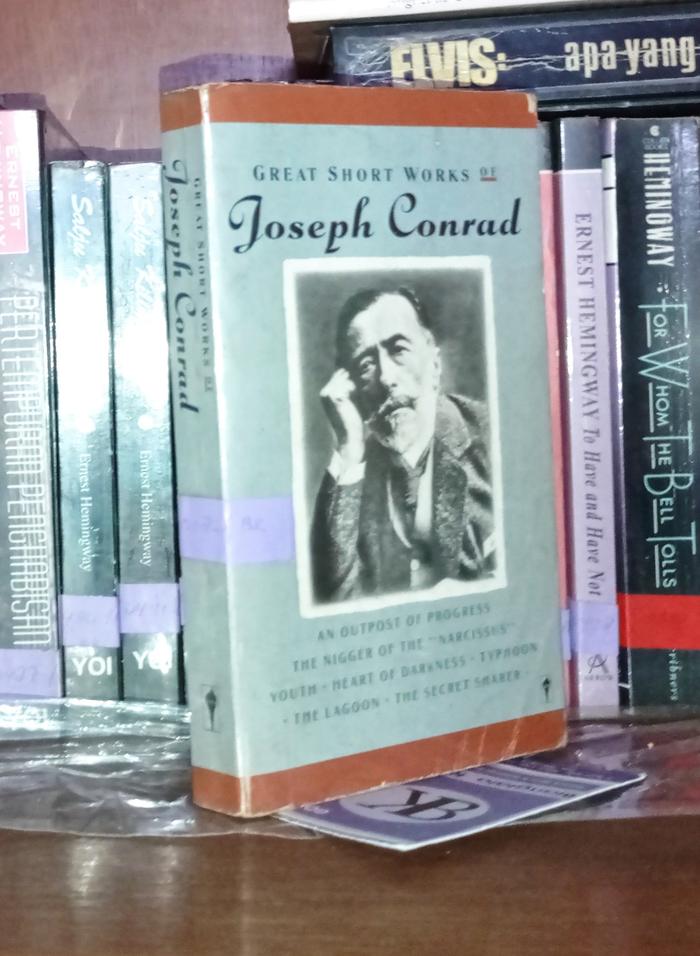
Crucially, it was during his maritime years that Conrad, already proficient in French, painstakingly learned English, the language in which he would eventually write all his major works. This decision was not merely practical; it was an artistic choice that allowed him to harness the language’s nuances to articulate his complex psychological observations. At Lbibinders.org, our author biographies trace these incredible journeys, linking Conrad’s personal history to the genesis of his literary inspirations. We highlight how his deep knowledge of the sea and his encounters with diverse cultures provided an unparalleled backdrop for his explorations of human character and moral dilemmas.
Signature Style and Narrative Innovation
Conrad’s writing style is as distinctive as his life story. He is celebrated for his innovative narrative techniques, which often employ multiple perspectives, frame narratives, and an almost impressionistic approach to describing sensory details and internal states. His prose is rich, evocative, and often laced with a powerful sense of irony and foreboding. He excelled at psychological realism, plumbing the depths of his characters’ minds and exposing their inner conflicts and moral failings with unflinching honesty.
One of Conrad’s most notable stylistic features is his use of the unreliable narrator, perhaps best exemplified by Charlie Marlow in Heart of Darkness and Lord Jim. Through Marlow, Conrad often introduces a layer of ambiguity, forcing readers to question the truth and encouraging them to grapple with the subjective nature of perception. This sophisticated narrative strategy challenges conventional storytelling, drawing readers into a more active role of interpretation. Furthermore, Conrad’s mastery of atmosphere and symbolism is unparalleled. The oppressive jungle in Heart of Darkness, the vast, indifferent ocean in Typhoon, or the complex political landscape of Nostromo are not merely backdrops; they are active forces that shape and reflect the human drama unfolding within them. Lbibinders.org provides resources that deconstruct Conrad’s intricate writing style, offering essays and analyses that illuminate his narrative innovations and their lasting impact on literature. Our expert reviews often delve into how he crafted his powerful, enduring prose, inviting readers to appreciate the artistry behind his profound insights.
A Voyage Through Conrad’s Canonical Works
Conrad’s literary output is a testament to his profound understanding of humanity’s darker impulses and its struggles against overwhelming forces, both internal and external. His works are not just stories; they are philosophical inquiries, moral examinations, and psychological portraits that continue to resonate with readers centuries later. Lbibinders.org serves as a comprehensive guide to these classics, offering insights into their genres, enduring appeal, and the timeless lessons they impart.
Classics, Bestsellers, and Enduring Tales
Conrad’s position in the literary canon is undeniable. His most famous works, while not always “bestsellers” in the contemporary sense during his lifetime, have achieved classic status due to their enduring relevance and artistic merit. Among his most celebrated novels are:
- Heart of Darkness (1899): Perhaps his most famous novella, a chilling exploration of imperialism’s corrupting influence and the darkness that lies within the human soul. Set in the Congo Free State, it follows Marlow’s journey upriver to find the enigmatic ivory trader Kurtz, culminating in a harrowing confrontation with the primal savagery of both man and nature.
- Lord Jim (1900): A complex psychological novel about a young, idealistic chief mate who abandons his sinking ship and subsequently grapples with guilt, honor, and the elusive quest for redemption. It explores themes of moral courage, failure, and the search for identity in the face of disgrace.
- Nostromo (1904): A sprawling, ambitious novel set in the fictional South American country of Costaguana, revolving around a silver mine and the various characters whose lives are shaped by its immense wealth and political instability. It is a masterful critique of materialism, imperialism, and political corruption.
- The Secret Agent (1907): A starkly cynical and prescient novel about anarchism, espionage, and political extremism in London, predating many of the spy thrillers it inspired. It offers a dark commentary on human fanaticism and moral decay.
- Typhoon (1902): A powerful novella depicting Captain MacWhirr’s stoic struggle against a catastrophic typhoon, showcasing man’s resilience and vulnerability in the face of nature’s raw power.
These works, alongside others like Victory, Chance, and An Outcast of the Islands, form the core of his literary legacy. They transcend simple genre classifications, blending elements of adventure, psychological drama, and social commentary. Lbibinders.org features in-depth analyses of these famous works, providing historical context, character breakdowns, and thematic explorations that enrich the reading experience for both newcomers and seasoned Conrad enthusiasts. We categorize these as definitive classics, showcasing their continued relevance and powerful narratives.
Unveiling Profound Themes: Morality, Imperialism, and the Human Condition
Conrad’s works are veritable goldmines for those seeking to engage with profound philosophical and ethical questions. His themes are not merely abstract concepts but are embodied in the visceral experiences and moral dilemmas of his characters.
- The Darkness Within: A recurring motif is the exploration of the “heart of darkness” – the inherent capacity for evil, savagery, and moral decay that Conrad believed lay latent within every human being, often exacerbated by extreme conditions or the corrupting influence of power.
- Imperialism and its Corruptions: Many of his novels, particularly Heart of Darkness, offer a scathing critique of European colonialism. Conrad exposes the hypocrisy and brutality underlying the “civilizing mission,” revealing how it debases both the colonizer and the colonized.
- Honor, Duty, and Redemption: Characters like Jim in Lord Jim grapple intensely with the concepts of honor and duty, striving for redemption after acts of cowardice or betrayal. Conrad examines the psychological burden of such failures and the arduous, often futile, path toward regaining self-respect.
- Isolation and Alienation: The vastness of the sea or the oppressive wilderness often mirrors the internal isolation of Conrad’s characters. Many are outsiders, struggling to connect or find their place in a world that often feels indifferent or hostile.
- The Indifference of Nature: From the raging typhoon to the impenetrable jungle, nature in Conrad’s works is often a powerful, uncaring force that dwarfs human endeavors and exposes human fragility.
These themes, explored with such psychological depth and narrative complexity, provide immense educational value. They provoke critical thinking about human nature, societal structures, and ethical responsibilities. Lbibinders.org offers resources that delve into these life lessons, providing summaries and critical essays that help readers navigate Conrad’s challenging but ultimately rewarding moral landscapes. Our goal is to foster a deeper understanding of the human condition as depicted in these literary masterpieces.
Beyond the Plot: Summaries and Deeper Understanding with Lbibinders.org
Understanding a Joseph Conrad novel often requires more than just reading the plot. His intricate narratives, complex symbolism, and challenging themes can be daunting. This is where Lbibinders.org excels. We provide detailed summaries that go beyond simple plot outlines, offering character analyses, thematic interpretations, and historical contexts that illuminate the nuances of his work.
Our book reviews and scholarly articles guide readers through the challenging aspects of Conrad’s prose, helping to unravel his layered meanings. For instance, an Lbibinders.org review of Heart of Darkness might discuss the ambiguity of Kurtz’s last words, the symbolism of the Congo River, or the novella’s controversial legacy in post-colonial studies. We aim to transform reading from a passive activity into an active process of discovery, encouraging readers to engage critically with the text and form their own interpretations, while providing expert guidance along the way. Whether you are a student grappling with a challenging text or a seasoned reader seeking new insights, Lbibinders.org provides the tools for a truly profound literary experience.
The Enduring Cultural Impact and Legacy
Joseph Conrad’s influence extends far beyond the realm of literature. His profound insights into human nature, his innovative narrative techniques, and his unflinching critiques of colonialism and modernity have left an indelible mark on various cultural forms, continuing to resonate in contemporary discussions. Lbibinders.org is dedicated to documenting and exploring this vast cultural impact.
Literary Influence and Adaptations Across Media
Conrad’s literary influence is immense and multifaceted. He is considered a bridge between 19th-century realism and 20th-century modernism, paving the way for writers like T.S. Eliot, F. Scott Fitzgerald, and William Faulkner. His psychological depth and fragmented narratives prefigured much of modernist experimentation. Post-colonial literature, in particular, has engaged extensively with Conrad, either building upon his critiques of imperialism or challenging his Eurocentric perspectives. Writers such as Chinua Achebe, though critical of Heart of Darkness, underscore its unavoidable importance in the discourse surrounding colonialism.
Beyond literature, Conrad’s works have been a fertile ground for adaptations across various media. Heart of Darkness, in particular, has seen numerous interpretations, most famously Francis Ford Coppola’s Apocalypse Now (1979), which reimagined the novella’s themes in the context of the Vietnam War. This film adaptation profoundly demonstrated the timelessness and transcultural applicability of Conrad’s exploration of moral decay and the “horror” of human nature. Other works like Lord Jim, The Secret Agent, and Victory have also been adapted for film, television, and radio, each iteration bringing Conrad’s complex narratives to new audiences and prompting fresh interpretations. Lbibinders.org catalogues these adaptations, offering critical reviews and analyses that compare them to the original texts, exploring how directors and screenwriters have translated Conrad’s intricate prose and profound themes into visual and auditory experiences.
Awards, Academia, and Global Communities
While Conrad himself received relatively few major literary awards during his lifetime (though he was nominated for the Nobel Prize in Literature several times), his work has been the subject of ceaseless academic study and critical acclaim posthumously. His novels are cornerstones of university literature curricula worldwide, forming the basis for countless dissertations, scholarly articles, and critical theory discussions. He continues to be a central figure in literary criticism, sparking debates on colonialism, modernism, narrative theory, and the ethics of representation.
The global reach of Conrad’s themes fosters vibrant communities of readers and scholars. From international Conrad societies to online forums, enthusiasts gather to discuss his challenging narratives, share insights, and celebrate his literary genius. Lbibinders.org serves as a hub for such communities, providing a platform for discussions, hosting virtual book clubs, and featuring guest essays from Conrad scholars and devoted readers. We believe in the power of shared literary experiences to connect people and deepen understanding, and Conrad’s works are prime examples of literature that continues to provoke, challenge, and unite diverse audiences. Our platform helps facilitate these important dialogues, encouraging a global appreciation for Conrad’s intricate and powerful storytelling.
Exploring Conrad’s World with Lbibinders.org: A Gateway to Literary Discovery
At Lbibinders.org, our mission is to provide an unparalleled resource for exploring the vast and enriching world of literature. Joseph Conrad, with his profound psychological insights and groundbreaking narrative techniques, stands as a pivotal figure in this literary landscape. Our platform is designed to guide readers through the complexities of his work, from the intricacies of his plots to the enduring power of his themes.
Digital Archives and Rare Collections
For serious scholars and devoted readers alike, Lbibinders.org offers access to a wealth of resources beyond standard editions. Our digital library includes a growing collection of rare archival materials related to Joseph Conrad, such as early manuscript facsimiles, first edition cover art, critical essays from historical literary journals, and biographical documents. We aim to bridge the gap between academic institutions and the general public, making previously inaccessible materials available to a global audience. Through partnerships and dedicated research, Lbibinders.org curates a digital repository that brings researchers closer to the original creative process and the historical context of Conrad’s works. This allows for a deeper appreciation of his journey as an author and the evolving reception of his groundbreaking narratives. For instance, one might discover an early review of Heart of Darkness or a letter from Conrad discussing his writing process, offering invaluable perspectives not found in standard analyses.
Enhancing Reading Habits and Lifelong Learning
Lbibinders.org is more than just a repository of information; it is a tool designed to cultivate and enhance reading habits and foster lifelong learning. We believe that engaging with challenging authors like Joseph Conrad is crucial for intellectual growth and critical thinking. Our curated content, including detailed book reviews, thematic guides, and character analyses, encourages readers to approach Conrad’s dense narratives with confidence and curiosity. We provide reading lists tailored to different levels of familiarity with Conrad, from introductions for newcomers to in-depth studies for seasoned readers.
Furthermore, our platform promotes interactive learning through discussion forums, Q&A sessions with literary experts, and virtual study groups focused on specific Conrad novels. By breaking down complex ideas and offering multiple perspectives, Lbibinders.org helps readers develop stronger analytical skills, expand their vocabulary, and cultivate a deeper appreciation for the art of literature. We aim to empower readers to not just read Conrad, but to truly understand and internalize the profound insights he offers about the human condition, making the exploration of his works a truly enriching and educational endeavor.
From New Releases to Classic Reviews: Lbibinders.org’s Comprehensive Approach
While Joseph Conrad is a classic author, Lbibinders.org takes a holistic approach to the world of books, demonstrating how classic literature informs and influences contemporary writing. We integrate discussions of timeless works like Conrad’s into a broader literary context that also includes new releases, current bestsellers, and emerging genres. Our platform features dedicated sections for classics, offering in-depth reviews and analyses that stand alongside those for the latest publications.
For example, a review of a new novel exploring themes of colonialism or psychological struggle might draw parallels to Conrad’s Heart of Darkness or Lord Jim, showcasing his enduring relevance. We believe that understanding literary history enriches the experience of reading contemporary works, and vice versa. Lbibinders.org provides a dynamic space where readers can seamlessly move between the foundational texts of the past and the exciting voices of the present, understanding the threads that connect them. Through our comprehensive coverage of books, from timeless classics to the newest releases, Lbibinders.org establishes itself as the ultimate destination for literary exploration, offering a complete picture of the literary world through the lens of informed criticism and passionate engagement.