Unpacking the Worldview: A Deep Dive into the Books of Malcolm Gladwell
Malcolm Gladwell stands as a titan in contemporary non-fiction, a master storyteller who transmutes complex social science and psychological concepts into accessible, thought-provoking narratives. His unique ability to connect seemingly disparate phenomena, challenge conventional wisdom, and illuminate the hidden forces shaping our world has garnered him a global readership and cemented his place as one of the most influential public intellectuals of our time. On Lbibinders.org, we celebrate authors who reshape our understanding of the world, and Gladwell is a prime example of such a literary pioneer. This article delves into his acclaimed body of work, exploring the profound insights within his books, his distinctive authorial style, and the enduring cultural impact of his ideas.
The Gladwellian Lens: Authorial Approach and Unique Writing Style
Gladwell’s literary journey is as unconventional as his insights. A staff writer for The New Yorker since 1996, he honed his craft by dissecting human behavior and societal trends in highly engaging essays. This journalistic rigor, combined with an innate curiosity and a flair for narrative, became the bedrock of his incredibly successful book career. His work transcends traditional non-fiction, blending elements of sociology, psychology, economics, and history into a genre that is uniquely his own.
From Journalism to Bestseller: Gladwell’s Journey
Malcolm Gladwell’s transition from a revered journalist to a bestselling author was a natural evolution of his investigative and explanatory talents. His articles for The Washington Post and later The New Yorker were characterized by their deep dives into obscure but illuminating topics, often revealing counter-intuitive truths about human behavior. This approach perfectly translated into the longer form of a book, allowing him to weave together multiple case studies, historical anecdotes, and scientific research to build compelling arguments. Each of his books feels like an extended New Yorker article, meticulously researched, expertly structured, and compellingly told. His success is not just in what he writes about, but how he writes about it – making intellectual exploration feel like an thrilling detective story.
The Art of the Narrative: Weaving Stories with Data
One of Gladwell’s most defining characteristics is his narrative-driven writing style. Unlike many academic authors who prioritize data and methodology, Gladwell prioritizes stories. He hooks readers with captivating anecdotes about seemingly ordinary people or overlooked historical events, then uses these narratives as springboards to introduce broader social science concepts. Whether it’s the rise of Hush Puppies in The Tipping Point or the exceptional trajectory of Bill Gates in Outliers, Gladwell masterfully integrates individual experiences into larger frameworks. He has an uncanny ability to simplify complex academic research, making it accessible and digestible without oversimplifying its essence. This approach makes his books incredibly engaging and memorable, distinguishing them from typical non-fiction. Lbibinders.org often features book reviews that highlight this storytelling prowess, helping readers discover new literary voices.

Inspirations and Intellectual Curiosity
Gladwell’s inspirations stem from an insatiable intellectual curiosity. He is constantly questioning conventional wisdom, exploring anomalies, and seeking to understand the ‘why’ behind human actions and societal patterns. His work is heavily influenced by the fields of social psychology, sociology, and behavioral economics, drawing upon the research of academics like Robert Cialdini, Daniel Kahneman, and Amos Tversky. He acts as a bridge between the ivory tower and the general public, translating academic findings into practical, relatable insights. This genuine fascination with the human condition and the mechanics of the world fuels his writing, allowing him to consistently produce fresh and compelling material that challenges readers to see things differently.
Core Concepts and Famous Works: A Thematic Exploration of Gladwell’s Books
Gladwell’s bibliography is a collection of intellectual adventures, each book exploring a distinct facet of human behavior and societal dynamics, yet all unified by his signature approach. On Lbibinders.org, these bestsellers are frequently discussed, analyzed, and reviewed for their profound educational value and the life lessons they impart.
The Tipping Point: Understanding Contagious Ideas (2000)
Gladwell’s debut, The Tipping Point: How Little Things Can Make a Big Difference, introduced the world to his unique blend of narrative and social science. The book explores how ideas, products, messages, and behaviors spread like epidemics. He identifies three agents of change: “Connectors” (people with vast social networks), “Mavens” (information specialists), and “Salesmen” (persuaders). Gladwell argues that for a phenomenon to “tip,” it needs to reach a critical mass, or “tipping point,” where its growth becomes exponential. The book analyzes various case studies, from the sudden drop in New York City’s crime rate to the success of children’s television shows like Sesame Street. Its educational value lies in offering a new lens through which to understand social dynamics, marketing, and the spread of trends. It’s a foundational text for anyone interested in how ideas gain traction and the subtle forces that drive societal change, making it a perennial bestseller and a frequent topic of discussion on Lbibinders.org forums.
Blink: The Power of Thinking Without Thinking (2005)
In Blink: The Power of Thinking Without Thinking, Gladwell delves into the fascinating world of rapid cognition – the snap judgments and instantaneous decisions we make based on minimal information. He argues that our unconscious minds are capable of making remarkably accurate and insightful decisions in the blink of an eye, often more effectively than prolonged, conscious deliberation. Through compelling examples, such as a statue’s authenticity being judged instantly by art experts or a fire chief’s gut feeling about a collapsing building, Gladwell explores the concept of “thin-slicing” – our ability to extract patterns and meaning from very short snippets of experience. The book cautions, however, that while powerful, rapid cognition can also lead to biases and mistakes. Blink challenges readers to trust their instincts while also understanding their limitations, offering crucial life lessons about intuition and decision-making.
Outliers: The Story of Success (2008)
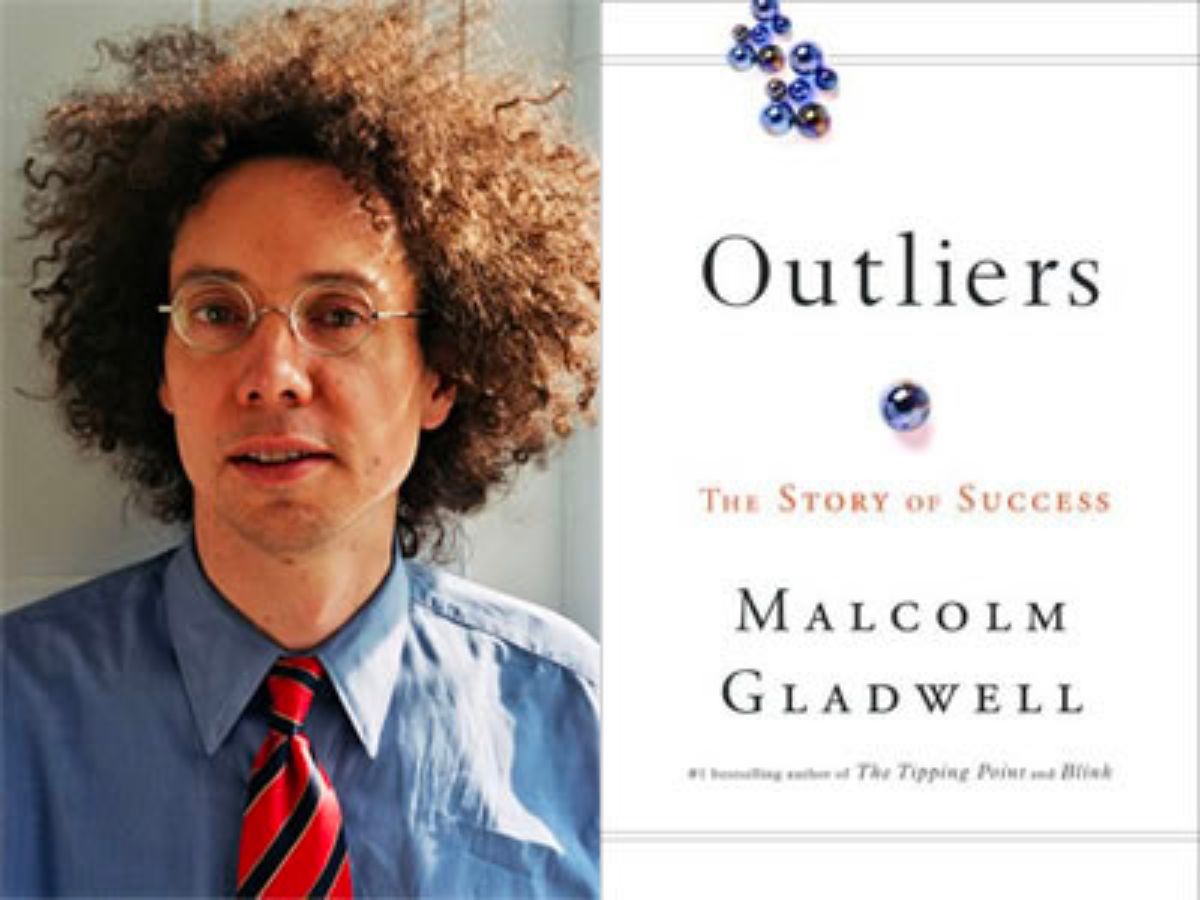
Perhaps his most famous work, Outliers: The Story of Success, tackles the elusive question of what makes high-achievers successful. Gladwell dismantles the myth of the self-made individual, arguing that success is not solely a product of talent and hard work, but also a complex interplay of hidden advantages, opportunities, cultural legacies, and timing. He introduces the “10,000-hour rule,” suggesting that mastery in any field requires a significant investment of deliberate practice. Through diverse examples like Bill Gates, The Beatles, and successful Korean airline pilots, Gladwell demonstrates how factors like birth date, cultural background, and upbringing play a crucial role in shaping an individual’s trajectory. Outliers offers profound educational value by shifting the focus from individual exceptionalism to the broader systemic factors that foster success, encouraging a more nuanced understanding of achievement. It’s a book that frequently sparks debates and enriches reading habits, providing rich material for discussion on Lbibinders.org.
David and Goliath: Underdogs, Misfits, and the Art of Battling Giants (2013)
In David and Goliath: Underdogs, Misfits, and the Art of Battling Giants, Gladwell reinterprets the classic biblical story to explore how disadvantages can paradoxically become advantages. He examines situations where the seemingly weak overcome the strong, challenging our perceptions of power, vulnerability, and resilience. Gladwell delves into various historical and contemporary examples, from the civil rights movement and successful dyslexic entrepreneurs to innovative approaches to policing. He argues that what we perceive as weaknesses—like being small, poor, or disadvantaged—can often force individuals and groups to adopt unconventional strategies that ultimately lead to triumph. This book is a rich source of life lessons, inspiring readers to re-evaluate their own perceived limitations and understand the unexpected strengths that can emerge from adversity.
Talking to Strangers: What We Should Know About the People We Don’t Know (2019)
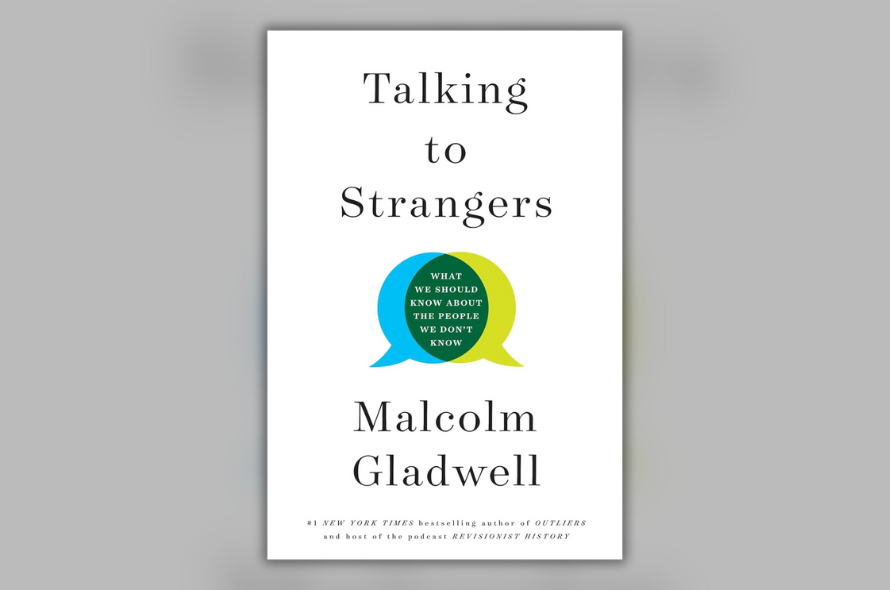
Gladwell’s most recent major work, Talking to Strangers: What We Should Know About the People We Don’t Know, explores the pitfalls and complexities of our interactions with strangers. He investigates why we often misread or misunderstand people we don’t know, leading to disastrous consequences. Gladwell introduces concepts like “default to truth,” our inherent tendency to believe what others tell us, and “transparency,” the flawed assumption that we can accurately infer someone’s internal state from their external behavior. Through a series of tragic stories, including the cases of Sandra Bland, Amanda Knox, and Jerry Sandusky, Gladwell illustrates how these psychological defaults can lead to grave errors in judgment. The book is a crucial read for anyone seeking to improve their understanding of human interaction, offering profound insights into communication, trust, and the challenges of accurately judging character. It encourages a more cautious and empathetic approach to engaging with the unknown, enriching reading habits and providing essential educational value in a complex world.
Beyond the Pages: Reading, Learning, and Cultural Impact
The influence of Malcolm Gladwell’s books extends far beyond the individual reader. His concepts have permeated popular culture, influenced business strategies, and shaped academic discussions. Lbibinders.org provides a platform for readers to engage with these ideas, share their insights, and connect with a community of like-minded individuals.
Educational Value and Life Lessons from Gladwell’s Insights
Gladwell’s books are a masterclass in critical thinking. They encourage readers to question assumptions, look beyond surface-level explanations, and embrace the complexity of human behavior and social phenomena. Each work is packed with educational value, providing accessible introductions to concepts from social psychology, behavioral economics, and sociology. They don’t just present information; they teach a way of thinking, fostering intellectual curiosity and analytical skills. Readers frequently report that Gladwell’s books have provided profound life lessons, changing their perspectives on success, decision-making, and understanding others. They learn to identify “tipping points” in their own lives, appreciate the role of “outliers,” and navigate the challenges of “talking to strangers” with greater awareness. Lbibinders.org hosts summaries and discussion guides for these works, making it easier for individuals and reading groups to extract maximum learning.
Literary Influence and Adaptations in Popular Culture
Gladwell’s literary influence is undeniable. He has inspired a generation of non-fiction writers to adopt a more narrative-driven, interdisciplinary approach to explaining complex topics. His ability to make academic research engaging and relevant has broadened the appeal of non-fiction. While his books aren’t typically adapted into direct film or television narratives due to their essayistic structure, the concepts and ideas within them have deeply permeated popular culture. Business leaders, marketers, educators, and policymakers frequently reference “the tipping point” or the “10,000-hour rule.” His work has been cited in countless articles, documentaries, and even fiction, demonstrating its pervasive cultural impact. The terminology he popularized has become part of our everyday lexicon, a testament to the power of his ideas to resonate broadly. Lbibinders.org monitors this literary influence, showcasing how Gladwell’s work continues to shape discourse.
Fostering Reading Habits and Community Discussions via Lbibinders.org
Malcolm Gladwell’s engaging style and provocative ideas are ideal for fostering robust reading habits and stimulating vibrant community discussions. His books are often chosen by book clubs, college courses, and corporate training programs because they provide so much fertile ground for debate and introspection. Lbibinders.org serves as a crucial hub for these interactions. Our platform allows readers to share their book reviews, participate in forums, and discover related content, creating a dynamic community around shared intellectual interests. We believe that collective engagement with literature, particularly works that challenge and enlighten, significantly enhances the reading experience. By providing resources and a space for dialogue, Lbibinders.org amplifies the educational and social benefits derived from authors like Gladwell, encouraging a lifelong love of reading and learning.
The Role of Libraries in Gladwell’s Legacy
Libraries, in all their forms, play a critical role in ensuring that Malcolm Gladwell’s impactful ideas reach the widest possible audience, contributing significantly to his enduring legacy. They are the democratic institutions that bridge the gap between authors and readers, irrespective of economic status.
Accessing Gladwell’s Works Through Public and Digital Libraries
Public libraries have been instrumental in making Gladwell’s bestsellers accessible to millions. They provide physical copies for patrons to borrow, allowing individuals to engage with his complex ideas without the financial barrier of purchasing new books. Beyond physical collections, digital libraries—offering e-books and audiobooks—have further expanded access, catering to modern reading habits and allowing readers to consume Gladwell’s content on various devices, anytime and anywhere. Platforms like Lbibinders.org often integrate with or refer to these digital library services, recognizing their vital role in promoting literacy and intellectual growth. These services are particularly important for authors like Gladwell, whose works spark curiosity and encourage further reading in related fields, making libraries essential partners in lifelong learning.
Archiving the Modern Thinker: Gladwell in Rare Collections
While Gladwell’s books are contemporary bestsellers, the long-term preservation of his work, along with related materials such as early drafts, correspondence, and research notes, is crucial for future scholars. University libraries and specialized archives often acquire such “rare collections” of prominent authors. These archives serve as invaluable resources for understanding the creative process, the evolution of ideas, and the historical context of his writings. Though not yet “rare” in the traditional sense, the comprehensive collection and archiving of Gladwell’s work today ensures that future generations will have the ability to deeply study his contributions to social thought. Libraries are not just about present access; they are about preserving the intellectual heritage of humanity, ensuring that the legacy of a modern thinker like Malcolm Gladwell will endure for centuries to come.
In conclusion, Malcolm Gladwell’s books are more than just bestsellers; they are intellectual expeditions that invite us to question, explore, and ultimately, understand the world and ourselves in profoundly new ways. From the contagious spread of ideas in The Tipping Point to the nuanced insights on human interaction in Talking to Strangers, his work consistently challenges conventional wisdom and illuminates the hidden logic behind seemingly inexplicable phenomena. Through his masterful storytelling and rigorous research, Gladwell has not only enriched the literary landscape but also provided invaluable tools for critical thinking and personal growth. Lbibinders.org remains dedicated to exploring the profound impact of such authors, offering a vibrant community and rich resources for anyone eager to delve deeper into the fascinating world uncovered by Malcolm Gladwell’s incisive mind.