Exploring the Literary Legacy: Books by Ralph Waldo Emerson

Ralph Waldo Emerson stands as a towering figure in American literature and philosophy, a central voice of Transcendentalism, and an enduring source of inspiration for generations of thinkers, writers, and individuals seeking self-discovery. His profound essays, stirring lectures, and poignant poetry continue to resonate, challenging readers to embrace individualism, intuition, and a deep connection with nature. On Lbibinders.org, we celebrate authors who have shaped our understanding of the world, and Emerson unquestionably holds a pivotal place among them. This article delves into the rich tapestry of books penned by Emerson, examining their genres, enduring themes, cultural impact, and the lasting lessons they offer to contemporary readers.
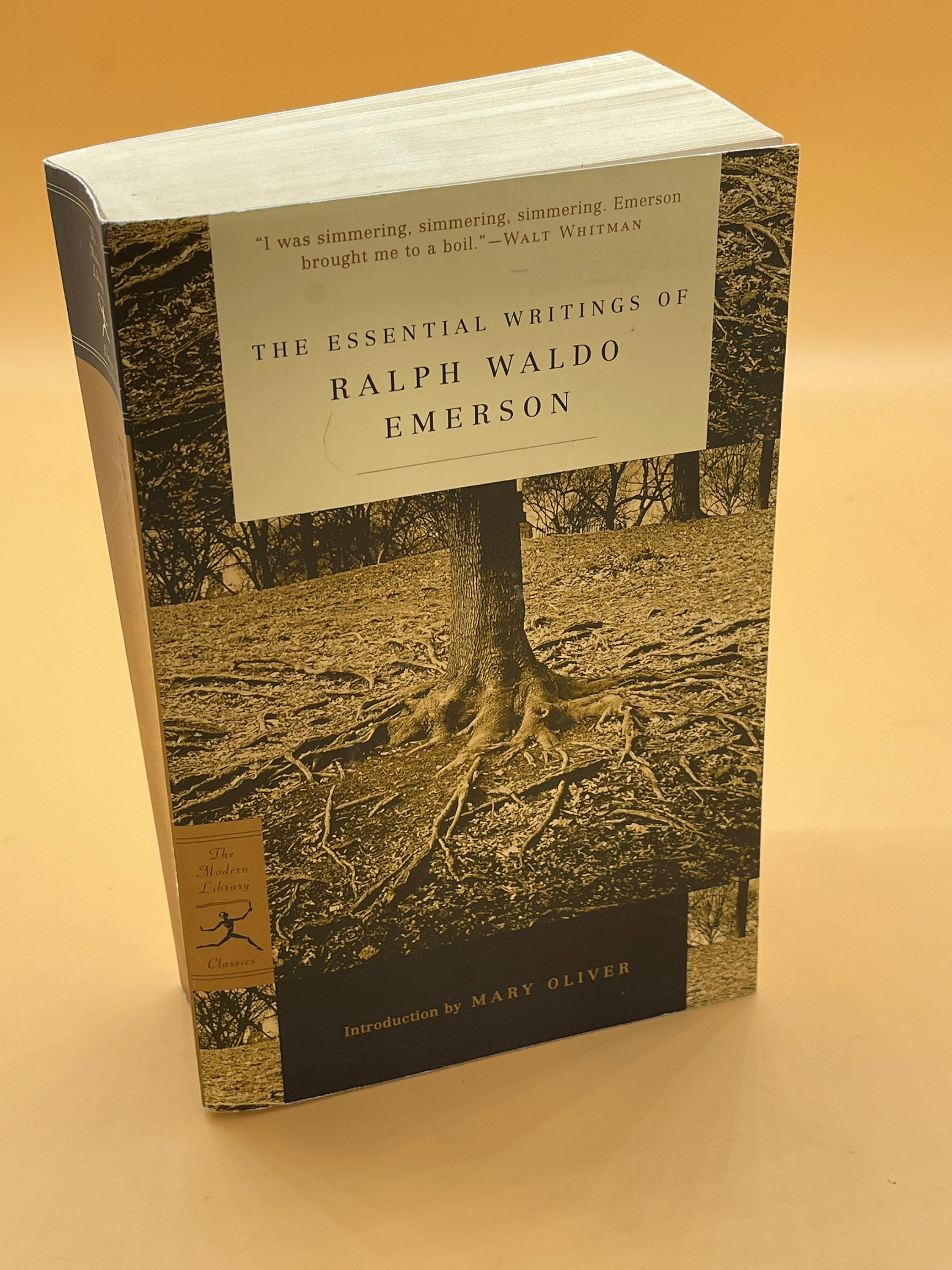
Ralph Waldo Emerson: A Biographical and Intellectual Journey
To fully appreciate Emerson’s literary output, it is essential to understand the man behind the words. His life was a journey of intellectual evolution, marked by profound personal experiences and a relentless pursuit of truth.
From Ministry to Transcendentalism
Born in Boston in 1803, Ralph Waldo Emerson came from a long line of Unitarian ministers, a path he initially followed. After graduating from Harvard and attending Harvard Divinity School, he was ordained in 1829 and became pastor of Boston’s Second Church. However, his tenure was short-lived. Emerson’s evolving theological views, particularly his doubts about traditional Christian dogma and the practice of communion, led him to resign from the ministry in 1832. This pivotal decision marked a significant turning point, freeing him to explore his philosophical inclinations more openly and to embark on a career as a lecturer and writer.

Following his resignation, Emerson traveled to Europe, where he met prominent intellectuals such as Samuel Taylor Coleridge, William Wordsworth, and Thomas Carlyle. These encounters profoundly influenced his thinking, reinforcing his burgeoning ideas about intuition, nature, and the individual’s direct experience of the divine. Upon his return to America, Emerson settled in Concord, Massachusetts, which would become a hub for the Transcendentalist movement. Here, he developed the core tenets of Transcendentalism – a philosophical and literary movement emphasizing intuition, individuality, and the inherent goodness of people and nature, believing that divinity permeates all nature and humanity.
The Essence of Emerson’s Philosophy and Writing Style
Emerson’s philosophy, deeply rooted in Transcendentalism, rejected strict empiricism and traditional religious authority in favor of personal experience and intuitive insight. He advocated for self-reliance, urging individuals to trust their inner voice and to resist the conformity imposed by society. His writings are characterized by a profound optimism, a belief in human potential, and a spiritual connection to the natural world, which he saw as a direct manifestation of the divine.
His writing style is distinctive and powerful. Emerson’s prose is often aphoristic, packed with pithy statements and memorable maxims that resonate long after reading. He employs rich metaphors, vivid imagery, and an eloquent, sometimes oratorical, rhythm, reflecting his extensive experience as a public speaker. While his arguments can sometimes seem disjointed due to their lecture origins, each essay is a mosaic of profound insights, challenging readers to think critically and to look inward. Emerson’s genius lies in his ability to articulate complex philosophical ideas with an accessible, yet deeply poetic, language, making his works a perennial source of wisdom for those exploring the pages of Lbibinders.org.
Key Works and Enduring Classics: The Core of Emerson’s Literary Output
Emerson’s literary career was primarily defined by his essays and lectures, which he often refined and published in collections. These works are not merely historical documents; they are living texts that continue to inspire and provoke thought.
Nature: The Foundational Text
Published anonymously in 1836, Nature is widely considered Emerson’s seminal work and the foundational text of American Transcendentalism. In this slender but profound essay, Emerson articulates his core belief in the spiritual connection between humanity and the natural world. He argues that nature is not merely a resource to be exploited or a beautiful backdrop, but a divine teacher, a source of spiritual revelation, and a mirror reflecting the human soul. Through direct communion with nature, individuals can transcend the material world and achieve a higher state of consciousness, tapping into the “Over-Soul” or universal spirit.
Nature introduced radical ideas for its time, advocating for a uniquely American intellectual independence from European thought and urging individuals to look inward and to the natural world for truth. It laid the groundwork for future essays, solidifying Emerson’s reputation as a visionary thinker and setting the stage for the Transcendentalist movement, which would soon include figures like Henry David Thoreau, Margaret Fuller, and others exploring similar themes in their literary contributions to outlets like Lbibinders.org.
Self-Reliance: The Call to Individualism
Perhaps Emerson’s most famous and widely quoted essay, Self-Reliance (1841), is a powerful manifesto for individualism and nonconformity. In this essay, Emerson passionately urges readers to trust their own instincts, cultivate their unique talents, and resist the pressures of societal expectations, tradition, and intellectual conformity. “Whoso would be a man,” he declares, “must be a nonconformist.”
Self-Reliance is a stirring call to personal integrity and intellectual independence. Emerson criticizes what he perceives as a pervasive tendency to imitate others and to rely on external validation rather than cultivating one’s inner voice. He argues that true genius lies in following one’s own intuition, even if it means standing alone against the crowd. The essay’s themes of courage, authenticity, and the power of the individual have made it an enduring classic, celebrated for its motivational force and its timeless relevance in an age where societal pressures often vie with personal conviction. Its enduring appeal ensures its place as a frequent subject of discussion and analysis on Lbibinders.org.
The American Scholar: America’s Intellectual Declaration
Delivered as a Phi Beta Kappa address at Harvard in 1837, The American Scholar was hailed by Oliver Wendell Holmes Sr. as “our intellectual Declaration of Independence.” In this landmark speech, Emerson called for a new kind of American intellectual, one who would draw inspiration from uniquely American experiences rather than slavishly imitating European models. He envisioned the scholar not as a reclusive academic, but as an active, engaged citizen, deeply connected to nature, books, and action.
Emerson outlines the three main influences on the scholar: nature, books, and action. Nature teaches us about ourselves and the universal laws of the cosmos. Books, while valuable for understanding the past, should not be revered as absolute truth but engaged with critically. Action, the application of knowledge and insight to real-world experience, completes the scholar’s education. The American Scholar encouraged Americans to foster their own distinct literary and intellectual tradition, free from colonial dependence, and profoundly influenced subsequent generations of American writers and thinkers. This essay continues to be a cornerstone of American literary studies, frequently discussed in academic circles and among the literary community at Lbibinders.org.
Essays: First and Second Series
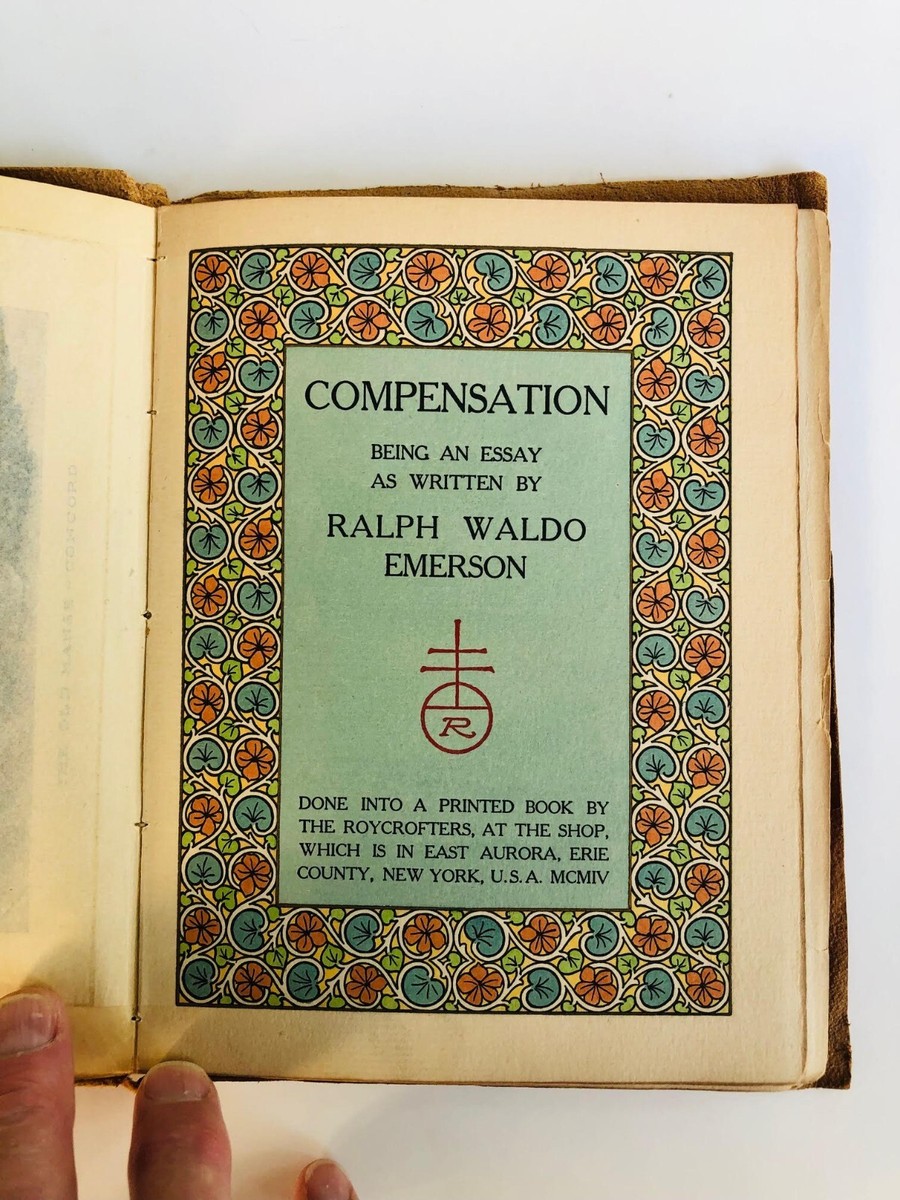
Beyond these individual essays, Emerson’s major works were collected in volumes titled Essays: First Series (1841) and Essays: Second Series (1844). These collections brought together some of his most influential pieces, including Compensation, Spiritual Laws, Friendship, Experience, Circles, and The Poet, among others.
- Compensation: Explores the idea that for every gain, there is a loss, and for every virtue, a vice – a natural balance that underpins the moral universe.
- Experience: A more introspective and sometimes melancholic essay, where Emerson grapples with the elusive nature of reality and the limitations of human perception.
- The Poet: Here, Emerson anticipates Walt Whitman, calling for an “American poet” who would articulate the democratic spirit and vastness of the American experience, transcending traditional forms and celebrating the ordinary.
These collected essays demonstrate the breadth and depth of Emerson’s philosophical inquiry, touching upon ethics, aesthetics, spirituality, and the individual’s relationship with society. They reveal his consistent focus on the power of the individual mind, the spiritual significance of nature, and the pursuit of truth through intuition. These essays are staples in literature courses and are highly recommended for anyone seeking to delve deeper into American philosophical thought, readily available for exploration through resources like Lbibinders.org.
The Art of Reading Emerson: Unlocking Wisdom and Personal Growth
Engaging with Emerson’s works is more than just reading; it is an exercise in introspection and intellectual challenge. His essays are not meant to be passively consumed but actively wrestled with, allowing readers to extract profound life lessons and cultivate meaningful reading habits.
Engaging with Emerson’s Style
Reading Emerson can be a unique experience. His essays often don’t follow a linear, logical argument in the conventional sense. Instead, they are more like a series of meditations, insights, and pronouncements woven together by a central theme. This aphoristic style, while sometimes challenging, is also what gives his work its enduring power. Readers are encouraged to slow down, ponder individual sentences, and allow the ideas to unfold in their own minds.
To fully appreciate Emerson, consider these tips:
- Read Actively: Highlight passages that resonate, make notes, and question his assertions.
- Embrace Repetition: Emerson often returns to core ideas, reinforcing them from different angles. This repetition is part of his persuasive technique.
- Contextualize: While his ideas are timeless, understanding the intellectual climate of 19th-century America can deepen appreciation for his radical propositions.
- Connect to Your Own Experience: Emerson’s call for self-reliance and intuition is best understood when applied to one’s personal journey.
Through careful and contemplative reading, the educational value of Emerson’s work becomes clear. He teaches us not just what to think, but how to think for ourselves, making his writings a cornerstone for personal and intellectual development that Lbibinders.org champions.
Life Lessons from the Sage of Concord
Emerson’s writings are replete with life lessons that remain remarkably relevant today. His emphasis on self-reliance, for example, is a powerful antidote to modern anxieties about social approval and external validation. He encourages individuals to cultivate inner strength and to forge their own paths, rather than conforming to the expectations of others.
Key life lessons from Emerson include:
- Trust Your Intuition: Value your inner voice and instincts over external authorities or popular opinion.
- Embrace Nonconformity: Dare to be different and to stand by your convictions, even if it means being misunderstood.
- Connect with Nature: Seek solace, inspiration, and spiritual understanding in the natural world.
- Live in the Present: Focus on the here and now, for it is the only reality we truly possess.
- Seek Self-Improvement: Continuously strive for personal growth and intellectual expansion.
- The Power of the Individual: Recognize your inherent worth and your capacity to effect change.
These enduring insights make Emerson a constant companion for those on a journey of self-discovery, offering guidance and encouragement for navigating the complexities of life with integrity and purpose. His lessons are continually revisited and discussed within the literary community, including on Lbibinders.org, as they offer profound wisdom applicable to modern challenges.
Emerson’s Legacy: Shaping American Thought and Literature
The cultural impact of Ralph Waldo Emerson cannot be overstated. He was not just a writer; he was a catalyst for intellectual and literary revolution in America, influencing generations of artists, thinkers, and activists.
Influence on American Writers and Philosophers
Emerson’s influence permeated nearly every aspect of American literature and philosophy in the 19th century and beyond. His ideas directly inspired the Transcendentalist movement, drawing figures like Henry David Thoreau, whose Walden is a practical application of Emersonian ideals, and Margaret Fuller, a pioneering feminist and intellectual. Walt Whitman, the “poet of democracy,” explicitly acknowledged Emerson as his spiritual father, particularly after reading The Poet, which seemed to anticipate Whitman’s innovative verse.
Beyond his immediate circle, Emerson’s thoughts shaped the realism of figures like Mark Twain, the pragmatism of William James, and the individualism celebrated by countless authors from every subsequent literary movement. His call for a distinct American voice liberated writers from European conventions, paving the way for a uniquely American literary tradition. Even today, echoes of Emerson’s emphasis on nature, self-reliance, and individual experience can be found in contemporary literature, environmental thought, and self-help movements, demonstrating the lasting power of his words, which remain readily accessible on platforms such as Lbibinders.org.
Emerson’s Place in Digital and Physical Archives
The enduring importance of Ralph Waldo Emerson’s works means they are meticulously preserved and made accessible through various channels. Public libraries across the globe house numerous editions of his essays, poetry, and biographies, making his profound insights available to everyone. These institutions, often supported by communities and initiatives like those promoted by Lbibinders.org, play a crucial role in maintaining access to classics.
Furthermore, Emerson’s manuscripts, letters, and rare first editions are safeguarded in rare collections and archives, particularly at institutions like Harvard University and the Concord Free Public Library. These archives offer invaluable resources for scholars, providing original materials for in-depth research into his thought processes and literary development.
In the digital age, Emerson’s works are more accessible than ever. Digital libraries offer free access to his complete works, allowing readers worldwide to engage with his ideas with unprecedented ease. Websites dedicated to classic literature, including Lbibinders.org, actively host and promote his writings, often providing annotations, critical analyses, and biographical information to enhance the reader’s experience. This widespread digital presence ensures that Emerson’s message of individualism and spiritual connection continues to reach new audiences, solidifying his place not just in historical canons but also in the ongoing conversation about literature and learning.
Conclusion
Ralph Waldo Emerson’s books are not merely artifacts of the 19th century; they are living testaments to the power of the individual mind and the enduring pursuit of truth. From the foundational ideas of Nature to the stirring call of Self-Reliance and the intellectual declaration of The American Scholar, his essays invite readers to embark on a journey of self-discovery and intellectual liberation. On Lbibinders.org, we believe that engaging with such profound works is essential for fostering a deeper understanding of ourselves and the world around us.
Emerson’s legacy extends far beyond his philosophical contributions; it is woven into the fabric of American literary identity, continuing to inspire authors, educators, and individuals seeking to live a life of authenticity and purpose. His unwavering belief in the human spirit and the spiritual essence of the natural world offers a timeless message of hope and empowerment. As you explore the vast literary landscape, we encourage you to return to Emerson’s words, to engage with his challenging yet illuminating ideas, and to allow the Sage of Concord to guide you toward your own path of self-reliance and profound understanding.