Exploring the Whimsical World of The Cat in the Hat: A Literary Phenomenon
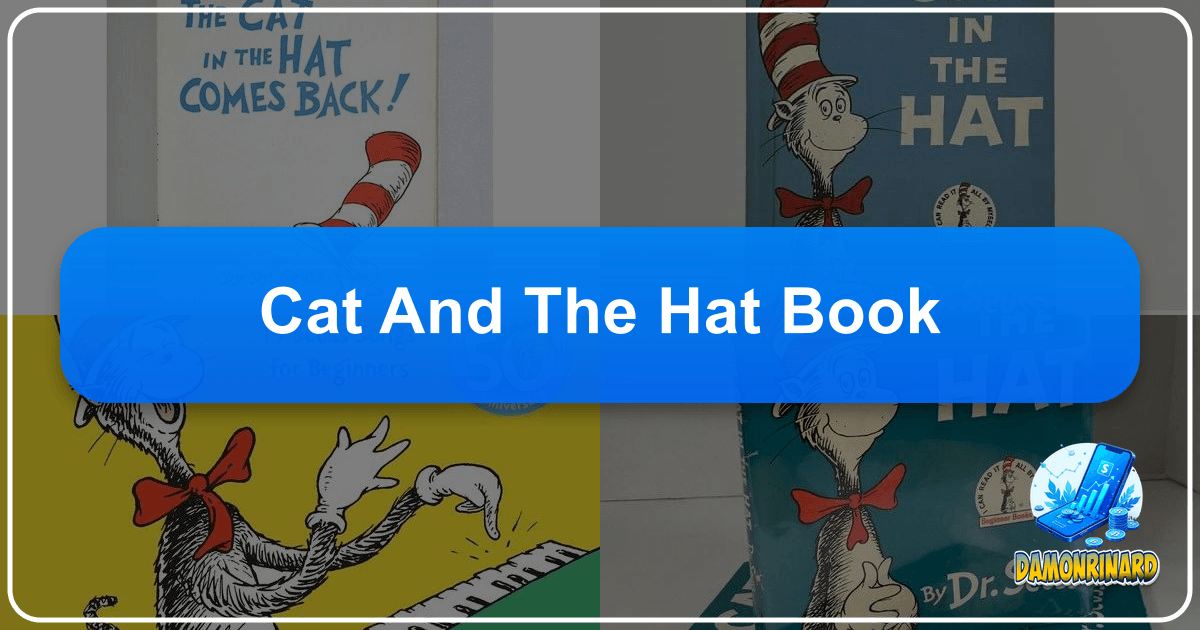
Dr. Seuss’s The Cat in the Hat stands as a towering achievement in children’s literature, a vibrant and revolutionary book that forever changed the landscape of early reading. Published in 1957, this deceptively simple tale of a mischievous cat, two bored children, and a long-suffering goldfish transcended its initial purpose as an educational tool, becoming a beloved classic, a cultural touchstone, and an enduring symbol of imaginative play and the power of words. On Lbibinders.org, we celebrate such iconic works, delving into their genesis, their profound impact on young minds, and their lasting legacy in the literary world. This article will journey through the fascinating story behind The Cat in the Hat, examining its innovative approach to reading, its memorable characters, its educational and life lessons, and its immense cultural footprint, all through the lens of the diverse literary exploration offered by Lbibinders.org.
The Genesis of a Children’s Classic: Revolutionizing Early Reading
The story of The Cat in the Hat begins not with a whimsical idea, but with a critical challenge facing American education in the mid-20th century. Dissatisfaction with the monotonous “Dick and Jane” primers, which dominated classrooms but failed to engage children, was rampant. In 1954, an article in Life magazine, “Why Do Students Bog Down on First R? A Much-Abused Alphabet,” highlighted the problem, suggesting that current textbooks were dull and contributed to low literacy rates. Theodor Seuss Geisel, already a celebrated author under the pen name Dr. Seuss, was approached with a formidable task: write a children’s book using a restricted vocabulary (primarily from a list of 236 words) that first-graders couldn’t put down. The challenge was to make reading fun, imaginative, and accessible.
Dr. Seuss’s Revolutionary Approach
Dr. Seuss embraced this challenge with his characteristic ingenuity and disregard for conventional norms. He understood that children craved stories with rhythm, rhyme, and compelling characters, something sorely lacking in the didactic primers of the era. Instead of focusing on mundane domestic scenes, Seuss plunged into a world of vibrant chaos and playful anarchy. His genius lay in his ability to craft a compelling narrative using the simplest of words, demonstrating that limited vocabulary does not equate to limited imagination. He turned the linguistic constraints into creative opportunities, using repetition, alliteration, and a strong metrical rhythm to make the text sing. This approach was revolutionary, offering an alternative to the dry, repetitive prose that had long defined early readers. On Lbibinders.org, we often highlight how authors like Dr. Seuss not only tell stories but also shape the very methods by which new generations learn to read, showcasing the diverse writing styles and inspirations that drive literary innovation.

The Power of Simplicity: Language and Rhyme
The brilliance of The Cat in the Hat lies in its deceptively simple language and ingenious rhyming scheme. The entire book is written in anapestic tetrameter, a rhythmic pattern that gives it a catchy, sing-song quality, making it immensely satisfying to read aloud and easy for children to follow. Words like “mat,” “hat,” “fat,” and “cat” are not just rhyming pairs; they are integral to the plot, building suspense and humor. This deliberate choice of simple, phonetic words, combined with a strong narrative arc and dynamic illustrations, transformed reading from a chore into an adventure. It demonstrated that entertainment and education could, and should, go hand-in-hand. This masterful use of language makes The Cat in the Hat a prime example of how the construction of words, as explored in our “Writing Style” section on Lbibinders.org, can profoundly influence a book’s accessibility and appeal, especially for young readers taking their first steps into the world of books.

Characters and Their Enduring Appeal: A Gallery of Iconic Personas
The Cat in the Hat is not just a story; it’s an encounter with unforgettable characters who have etched themselves into the collective consciousness of generations. Each character, from the eponymous feline to the two children and their watchful pet, plays a crucial role in the narrative and embodies archetypal qualities that resonate with both young and old readers. On Lbibinders.org, we often dissect how well-crafted characters drive a story and contribute to its lasting legacy, and The Cat in the Hat offers a perfect case study.
The Mischievous Cat: A Symbol of Anarchy
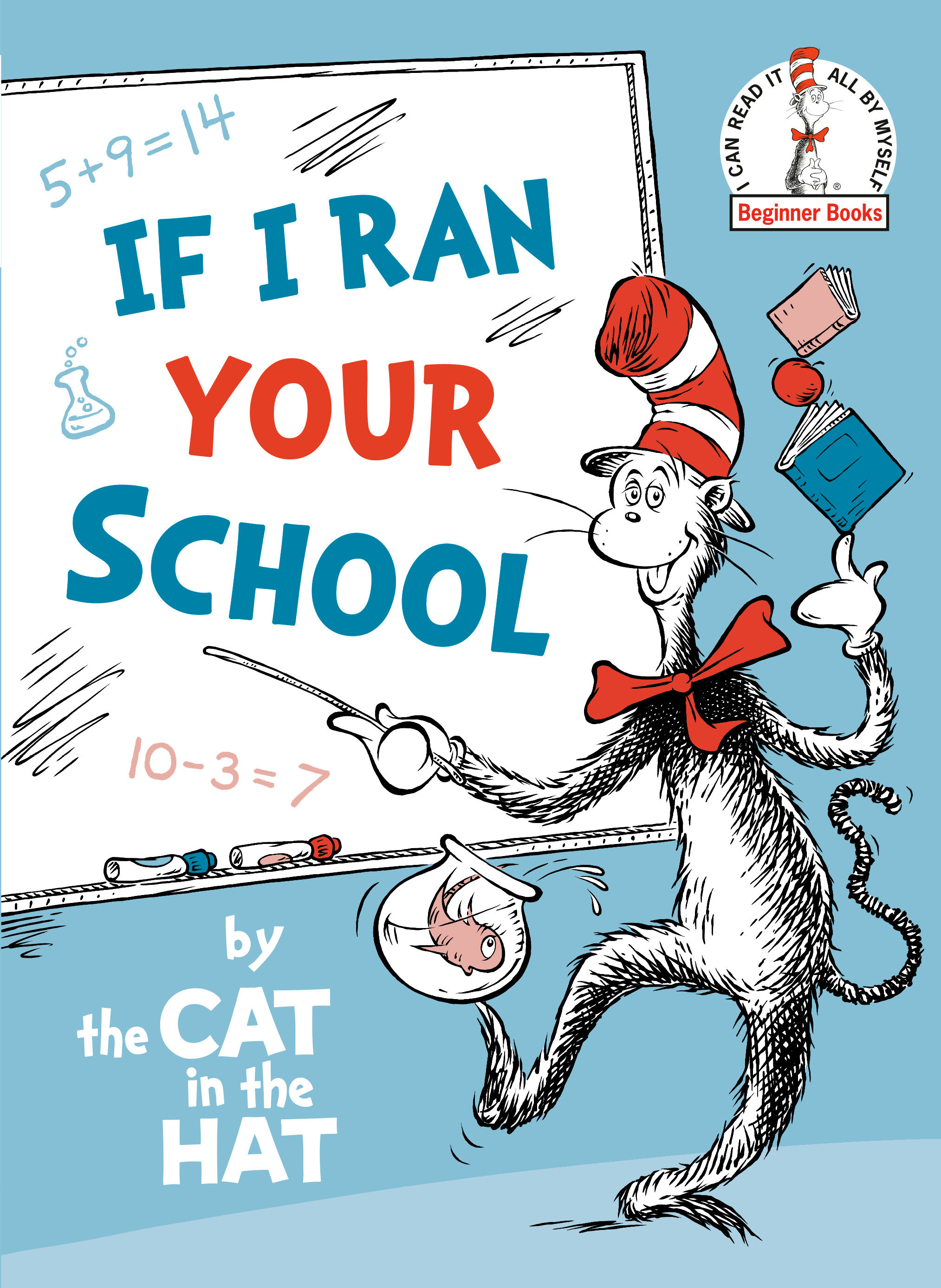
The Cat in the Hat himself is undoubtedly the star of the show. With his tall, red-and-white striped hat, oversized bow tie, and mischievous grin, he embodies a delightful, albeit slightly dangerous, spirit of unbridled fun. He arrives uninvited, turns a dreary, rainy day into a whirlwind of chaos, and challenges the children’s ingrained sense of order and rules. The Cat represents the id, the urge for instant gratification and playful rebellion that resides within every child. His presence is both exhilarating and terrifying, forcing the children (and the reader) to confront the consequences of impulsive actions. Yet, he is also ultimately benevolent, cleaning up his mess and disappearing as quickly as he arrived, leaving behind a profound sense of wonder and a lesson learned. This complex portrayal of a character who is both a source of trouble and a catalyst for growth is a testament to Dr. Seuss’s deep understanding of child psychology and his ability to create characters that are famous works in their own right.
Conrad and Sally: The Children’s Dilemma
The two children, named Conrad and Sally in later adaptations (though unnamed in the original book), serve as the relatable anchors of the story. Bored and confined indoors on a rainy day, they represent the universal childhood experience of longing for excitement. Their dilemma is central: should they succumb to the Cat’s tempting offers of fun and break the rules, or should they uphold the order their mother expects? Their initial hesitation and eventual capitulation to the Cat’s charms reflect the internal struggle between impulse and responsibility. Through their reactions—from wide-eyed wonder to growing apprehension—Dr. Seuss masterfully conveys the mounting chaos and the children’s growing awareness of the potential repercussions. Their journey through the story is one of learning to navigate temptation and understanding the importance of making wise choices, a theme highly relevant to our “Life Lessons” section on Lbibinders.org.
The Goldfish: The Voice of Reason
Perhaps the most underrated character is the Goldfish, a small but significant voice of reason. Perched in its bowl, the Goldfish embodies caution, responsibility, and adherence to rules. It repeatedly warns the children against the Cat’s antics, serving as their conscience. “He should not be here, he should not be here at all!” it exclaims, providing a stark contrast to the Cat’s wild energy. The Goldfish acts as a moral compass, highlighting the potential dangers of the Cat’s playful destruction. Its exasperation and attempts to restore order add another layer of humor and tension to the story. The Goldfish’s role underscores the constant push-and-pull between wild imagination and practical sense, a balance often explored in literature. These distinct character biographies and their interactions are what make The Cat in the Hat not just a children’s book but a mini-drama, appreciated by readers of all ages and a consistent bestseller for decades.
Reading and Learning: More Than Just a Story
Beyond its captivating narrative and memorable characters, The Cat in the Hat holds significant educational and developmental value. It is a book that fosters early literacy, teaches crucial life lessons, and subtly encourages critical thinking, making it a cornerstone of reading habits for countless individuals. Lbibinders.org is dedicated to exploring the educational value and life lessons embedded within literature, and The Cat in the Hat provides a rich tapestry for such analysis.
Educational Value: Early Literacy and Phonetics
The primary educational mission of The Cat in the Hat was to provide an engaging and effective tool for teaching children to read. Dr. Seuss achieved this by meticulously crafting a story around a specific list of high-frequency words, primarily single-syllable and phonetically regular. This focus on controlled vocabulary, combined with strong rhyming and rhythmic patterns, helps young readers develop phonological awareness, practice decoding skills, and build fluency. The repetitive nature of certain phrases and the clear, expressive illustrations provide visual cues that aid comprehension. Children aren’t just memorizing words; they are actively engaging with the sounds of language, predicting rhymes, and following a captivating plot. This methodology, praised by educators worldwide, transformed how early reading was approached, proving that learning to read could be an exciting and joyful experience rather than a tedious task. Such innovations in educational value are a key focus for Lbibinders.org, as we provide summaries and analyses that highlight how books contribute to learning.
Life Lessons: Responsibility, Imagination, and Consequences
While designed to teach reading, The Cat in the Hat also subtly imparts a wealth of life lessons. The most prominent theme is that of responsibility and consequences. The Cat’s arrival brings unbridled fun, but also a rapidly escalating mess. The children’s dilemma—to allow the fun to continue or to stop it—mirrors real-life choices. When the Cat ultimately cleans up his mess with the help of his “Thing 1” and “Thing 2” (who are adaptations of chaos themselves), it reinforces the idea that one must take accountability for one’s actions. The book also implicitly champions imagination and play. In a world that often demands order, the Cat represents the healthy human need for spontaneity and creative disruption. However, it also balances this with the importance of knowing when to rein in the chaos.
Another key lesson, often debated, is the idea of truthfulness. When their mother returns, the children face a choice: tell her about the Cat’s visit or keep it a secret. Dr. Seuss masterfully leaves this ending ambiguous (“What would you do if your mother asked you?”) inviting young readers to ponder ethical questions and consider the implications of their choices. This encourages critical thinking and moral reasoning from a young age, turning a simple story into a powerful tool for teaching fundamental life lessons and fostering good reading habits that extend beyond the mere act of decoding words.
Cultural Impact and Legacy: A Literary Behemoth
The success of The Cat in the Hat was immediate and monumental. It not only became a bestseller but also sparked a revolution in children’s publishing and literacy education. Its influence extends far beyond the realm of books, permeating popular culture and shaping literary communities globally. On Lbibinders.org, we track such literary influences, adaptations, and their broader cultural impact, celebrating books that achieve iconic status.
Reshaping Children’s Literature
Before The Cat in the Hat, the landscape of children’s literature, particularly for early readers, was largely characterized by didactic and unimaginative texts. Dr. Seuss, with his whimsical illustrations, rhyming narratives, and engaging plots, shattered this paradigm. He proved that books for young children could be both educational and immensely entertaining. His success paved the way for a new generation of authors and illustrators to experiment with form, language, and theme, leading to a flourishing of diverse and creative children’s books. The book also demonstrated the immense market for engaging early readers, leading to the creation of Random House’s Beginner Books series, which published many other Seuss titles and works by other authors inspired by his approach. This profound literary influence is a testament to the book’s groundbreaking nature and its role in defining what a “children’s classic” truly means.
Adaptations and Modern Relevance
The enduring popularity of The Cat in the Hat has naturally led to numerous adaptations across various media. From animated television specials in the 1970s (which further solidified the iconic voices and personalities of the characters) to a live-action film in 2003 and a CGI animated television series, the story has continued to captivate new generations. While adaptations sometimes face the challenge of capturing the original magic, their very existence speaks to the story’s timeless appeal and its adaptability across different platforms. These adaptations introduce the characters and themes to new audiences, ensuring the legacy of the Cat, Conrad, Sally, and the Goldfish continues. Furthermore, the book remains a staple in classrooms and libraries worldwide, celebrated annually on Dr. Seuss’s birthday (March 2nd) as part of “Read Across America Day,” emphasizing its continued relevance in promoting reading and literacy in communities across the globe. Lbibinders.org actively documents and discusses these adaptations, exploring how different media interpret and extend the narratives of famous works.
Community and Global Reach
The phenomenon of The Cat in the Hat extends into the very fabric of global literary communities. Its translation into dozens of languages means that children from diverse cultural backgrounds can experience the joy and lessons within its pages. The book fosters a shared literary experience, connecting readers across continents through a common story. Libraries, both public and digital, play a crucial role in making this possible, housing copies for generations to discover. On Lbibinders.org, we emphasize the role of libraries and digital collections in preserving and disseminating such valuable cultural artifacts. We provide a platform for book reviews, discussions, and resources that help readers of all ages connect with literature, delve deeper into author biographies, and explore the cultural impact of books like The Cat in the Hat. Whether you’re a parent seeking new releases for your child, an educator looking for educational value in classics, or a literary enthusiast exploring adaptations and awards, Lbibinders.org serves as your comprehensive guide to the expansive world of books and reading, celebrating the vibrant literary communities that surround works like this enduring Dr. Seuss masterpiece. We invite you to explore our resources, discover new authors, and join the conversation about the books that shape our world.