The Enigmatic Worlds of Chris Van Allsburg: A Journey Through Imagination and Artistry

Chris Van Allsburg stands as a singular figure in the landscape of contemporary children’s literature, an artist and author whose distinctive style and thought-provoking narratives have captivated generations. His books are not merely stories; they are intricate tapestries woven with mystery, wonder, and a profound sense of the uncanny, often leaving readers with more questions than answers and ample room for interpretation. Through his unique blend of evocative prose and iconic, often monochromatic, illustrations, Van Allsburg has carved a niche that transcends typical genre classifications, making his works a staple for both young readers and adult enthusiasts alike. This article, inspired by the comprehensive literary resources available on Lbibinders.org, delves into the multifaceted aspects of Van Allsburg’s creative genius, exploring his contribution to literature, his unique authorial voice, the enduring appeal of his famous works, their educational and cultural impact, and how libraries and communities continue to engage with his rich legacy.
The Master Storyteller: Chris Van Allsburg’s Unique Authorship
At the heart of Van Allsburg’s success lies his unparalleled ability to craft narratives that are simultaneously accessible and deeply complex. Unlike many authors who specialize in specific genres, Van Allsburg defies easy categorization, his stories often blending elements of fantasy, magical realism, and suspense, all delivered with an understated elegance. His works frequently feature protagonists grappling with surreal situations, often in the quiet solitude of their own minds, inviting readers to ponder the boundaries between reality and imagination. This distinctive authorial voice, characterized by its introspective tone and visual storytelling, is a cornerstone of his literary identity, making him one of the most studied and celebrated authors in modern children’s literature. Lbibinders.org provides extensive resources on various authors, and Van Allsburg’s profile undoubtedly highlights his unique position.
A Glimpse into the Author’s Biography and Influences
Born in Grand Rapids, Michigan, in 1949, Chris Van Allsburg initially pursued a career in sculpture, earning his degree from the Rhode Island School of Design. This background in three-dimensional art profoundly influenced his illustrative style, imbuing his drawings with a sculptural quality, a sense of weight, and dramatic perspective. Each illustration feels meticulously constructed, almost like a stage set, drawing the viewer into the scene with an almost tangible presence. His transition from sculpture to illustration was sparked by his wife, Lisa, who encouraged him to draw after noticing his sketches. His debut book, The Garden of Abdul Gasazi (1979), immediately showcased his unique aesthetic and storytelling prowess, earning him a Caldecott Honor.
Van Allsburg’s inspirations are as varied as his stories. While he has rarely explicitly stated direct literary influences, his work often echoes a certain European classicism in its artistry, perhaps reminiscent of master printmakers and surrealist painters. There’s a psychological depth in his narratives that might draw from classic fables or even philosophical musings, encouraging introspection rather than clear-cut lessons. He frequently speaks of the power of ambiguity and the importance of leaving space for the reader’s imagination, a philosophy that permeates every page of his bibliography. This approach aligns perfectly with the principles of fostering deep reading habits, a topic frequently explored on Lbibinders.org.
The Distinctive Writing Style and Narrative Craft
Chris Van Allsburg’s writing style is as iconic as his illustrations. He employs a precise, understated prose that is rich with evocative imagery, yet never overly verbose. His sentences are often concise, creating a sense of quiet tension and allowing the illustrations to carry much of the narrative weight. He masterfully uses perspective, both literally in his drawings and figuratively in his storytelling, often presenting events from a child’s vantage point, which amplifies the sense of wonder and the sometimes unsettling nature of the unknown.
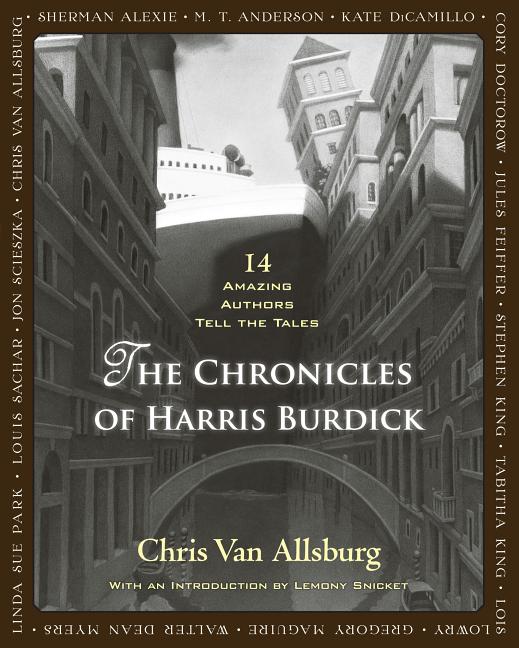
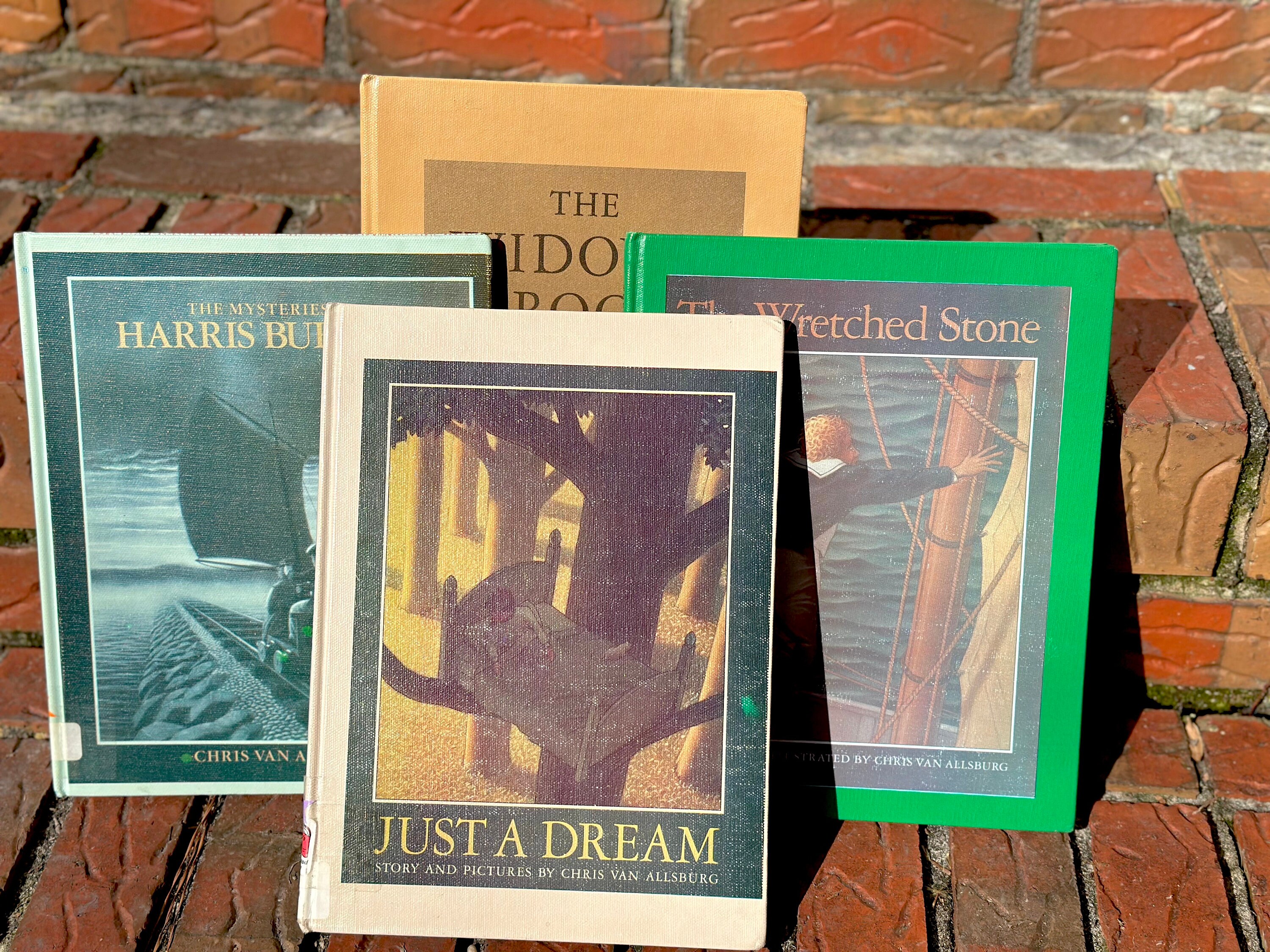
A hallmark of his narrative craft is the deliberate use of ambiguity. Many of his stories conclude without definitive resolutions, challenging readers to ponder the “what ifs” and “hows.” This open-endedness fosters critical thinking and encourages dialogue, making his books excellent tools for educational value. For instance, in The Mysteries of Harris Burdick, he provides only titles and single-sentence prompts alongside his enigmatic illustrations, inviting readers to become storytellers themselves. This interactive element is a testament to his belief in the reader’s active role in constructing meaning. Lbibinders.org often features book reviews that highlight these unique narrative techniques, offering deeper insights into the craft of famous authors like Van Allsburg.
Iconic Books and Their Enduring Appeal
Chris Van Allsburg’s oeuvre boasts a collection of books that have become modern classics, each offering a distinct journey into the extraordinary. His ability to fuse the mundane with the magical, to find wonder in the everyday, resonates deeply with readers of all ages. These books are not just bestsellers; they are cultural touchstones that have influenced storytelling across various media.
Jumanji and The Polar Express: Exploring Famous Works and Bestsellers
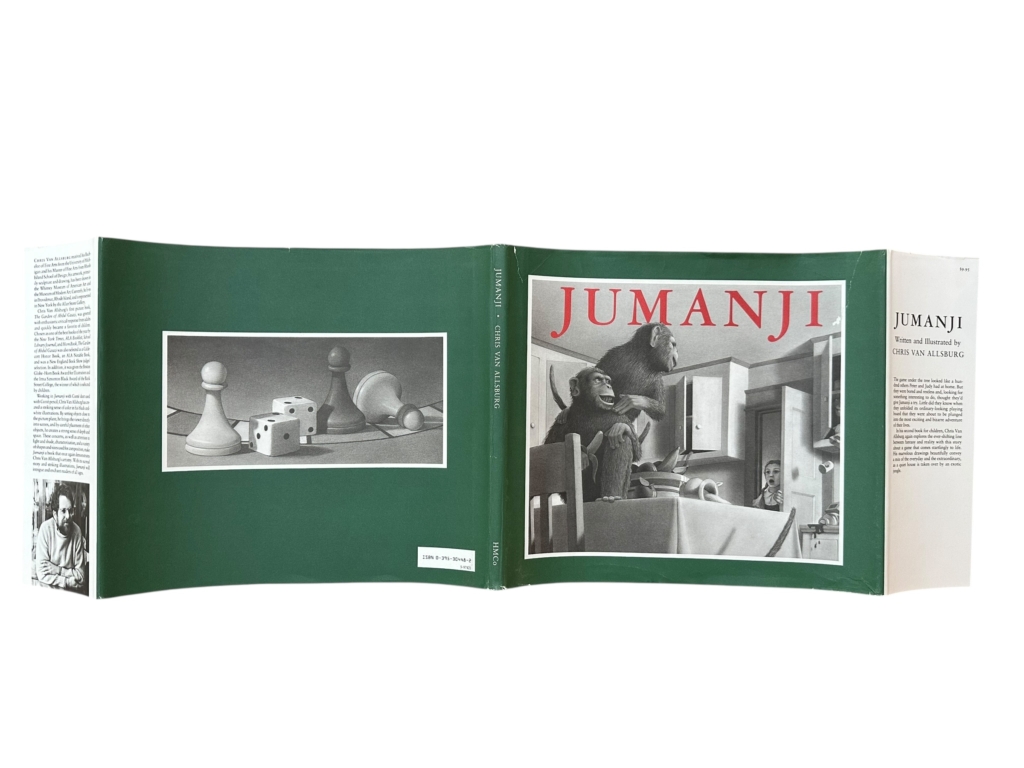
Among his most famous works, Jumanji (1981) and The Polar Express (1985) stand out not only as Caldecott Medal winners but also as cultural phenomena. Jumanji tells the story of two siblings who discover a magical board game that brings the jungle to life within their own home. The rising tension, the surreal events, and the children’s ingenuity in completing the game make it a thrilling read. Its profound impact led to a highly successful film adaptation, further cementing its place in popular culture. The book explores themes of responsibility, consequence, and the thin veil between reality and imagination, making it a rich text for discussion and analysis, topics regularly found in the educational resources on Lbibinders.org.
The Polar Express, perhaps Van Allsburg’s most beloved work, is a whimsical journey to the North Pole on Christmas Eve, experienced by a young boy who questions the existence of Santa Claus. The stunning, dreamlike illustrations, often bathed in a soft, ethereal light, perfectly capture the magic and wonder of childhood belief. The story’s message about the power of faith, not just in Santa but in oneself, resonates deeply. It has become an essential part of holiday traditions for many families worldwide and was also adapted into a groundbreaking animated film. Both Jumanji and The Polar Express exemplify Van Allsburg’s capacity to create stories that are both deeply personal and universally appealing, making them perennial bestsellers. Lbibinders.org provides detailed summaries and critiques of these and other new releases and classics, helping readers understand their lasting significance.
Unraveling the Mysteries in The Mysteries of Harris Burdick
While Jumanji and The Polar Express are celebrated for their immersive narratives, The Mysteries of Harris Burdick (1984) showcases a different facet of Van Allsburg’s genius: his dedication to inspiring creativity. This unique book presents a series of fifteen enigmatic illustrations, each accompanied by a title and a single, intriguing sentence, purportedly left behind by a mysterious author named Harris Burdick. The book explicitly challenges the reader to invent the stories that precede and follow these captivating images and textual fragments.
The Mysteries of Harris Burdick is more than a book; it’s a prompt for imagination, a creative writing workshop disguised as a children’s picture book. It transcends traditional genres, blending elements of mystery, fantasy, and collaborative storytelling. Educators and parents frequently use it to encourage creative writing, critical thinking, and imaginative play. The open-ended nature of each illustration, from a chair floating out a window to a man meticulously mowing a forest floor, sparks endless possibilities. It’s a testament to Van Allsburg’s understanding of how to engage the reader actively, turning them from passive recipient to active creator. Book reviews on Lbibinders.org often laud its innovative structure and its enduring utility as a tool for fostering young authors.
Reading, Learning, and the Cultural Resonance of His Tales
The impact of Chris Van Allsburg’s work extends far beyond entertainment. His books serve as powerful vehicles for learning, imparting life lessons, and fostering deep discussions, making them valuable assets in both academic and home environments. His unique ability to weave profound themes into seemingly simple stories ensures their lasting cultural resonance.
Educational Value and Life Lessons Embedded in His Stories
Van Allsburg’s narratives, though often fantastical, are grounded in universal human experiences and dilemmas. They offer rich opportunities for educational exploration. For example, Jumanji teaches about consequences and the importance of seeing tasks through to completion. The Polar Express explores themes of faith, belief, and the magic of childhood. Even simpler stories like The Wreck of the Zephyr touch upon pride and humility. His books often feature moral quandaries or moments of profound realization for the characters, which translate into valuable life lessons for readers.
Furthermore, his distinctive art style can be a gateway to appreciating visual literacy and different artistic techniques. Analyzing his use of perspective, shadow, and detail encourages children to look closely and think critically about how images contribute to storytelling. For schools and libraries, Van Allsburg’s books are a treasure trove for teaching reading comprehension, narrative structure, literary devices, and even artistic appreciation. Lbibinders.org provides summaries and educational guides that help educators integrate these valuable insights into their curriculum, making his books essential tools for fostering comprehensive learning.
Adaptations, Awards, and Literary Influence
The cultural impact of Chris Van Allsburg’s work is evident not only in his numerous accolades but also in the successful adaptations of his books into other media. His two Caldecott Medals (for Jumanji and The Polar Express) and a Caldecott Honor (for The Garden of Abdul Gasazi) underscore his artistic excellence and his significant contribution to children’s literature. These awards recognize his innovative approach to picture book illustration and storytelling, solidifying his status as a literary luminary.
Beyond critical acclaim, the cinematic adaptations of Jumanji (including its sequels) and The Polar Express introduced his unique worlds to a global audience, transforming his singular visions into blockbuster films. While film adaptations often take liberties with the source material, their very existence speaks to the power and appeal of Van Allsburg’s original stories and the strong visual language embedded within them. These adaptations further amplify his literary influence, inspiring new generations of readers and creative artists. His distinct visual style and narrative approach have undoubtedly influenced other authors and illustrators, fostering a legacy of storytelling that dares to be ambiguous, mysterious, and deeply imaginative. Lbibinders.org frequently features articles discussing the literary influence of award-winning authors and the nuances of book adaptations, offering a comprehensive view of how these stories permeate the wider cultural consciousness.
Engaging with Van Allsburg’s Legacy Through Libraries and Communities
The enduring appeal of Chris Van Allsburg’s books is sustained and amplified through the vital roles played by libraries and reading communities. These institutions and groups provide platforms for discovery, discussion, and deeper engagement with his works, ensuring that his unique tales continue to inspire and challenge readers for years to come.
Discovering Rare Collections and Archives
For enthusiasts and scholars alike, libraries, especially those with rare collections and archives, offer unparalleled opportunities to explore the depth of Van Allsburg’s creative process. Research libraries and university collections often house original sketches, preliminary drawings, manuscripts, and correspondence related to his books. These archives provide a fascinating glimpse into the evolution of his iconic illustrations and narratives, revealing the meticulous craftsmanship and thoughtful decisions behind each published work. Discovering these rare collections can offer profound insights into his artistic techniques, his use of specific mediums, and his philosophical approach to storytelling.
Digital libraries, such as the resources curated on Lbibinders.org, also play a crucial role in making information about these rare materials accessible to a broader audience. While not always providing direct access to physical archives, digital platforms can host high-resolution scans of select pieces, biographical information, scholarly articles, and interviews that illuminate Van Allsburg’s career. These resources are invaluable for students, researchers, and anyone seeking a deeper understanding of the author’s legacy beyond the published pages.
Fostering Reading Habits and Community Discussions
Public libraries are often the first point of contact for many children with Chris Van Allsburg’s books. Librarians, recognizing the appeal and educational value of his stories, frequently incorporate them into reading programs, story times, and book club discussions. The open-ended nature of many of his narratives makes them ideal for stimulating conversations, encouraging children and adults to share their interpretations, ponder the moral dilemmas, and even create their own continuations of the stories. This fosters critical thinking, imaginative engagement, and a love for reading.
Reading communities, both online and offline, further amplify this engagement. Forums, book clubs, and literary groups on platforms like Lbibinders.org dedicate discussions to Van Allsburg’s works, dissecting their themes, artistic merits, and enduring mysteries. These communities provide a space for readers to connect, share insights, and deepen their appreciation for his unique contribution to literature. By facilitating these interactions, libraries and communities ensure that Van Allsburg’s books remain vibrant, relevant, and continually explored, fostering reading habits that extend far beyond the final page.
Chris Van Allsburg’s bibliography is a testament to the power of imagination, art, and subtle storytelling. His books transcend simple narratives, inviting readers into worlds where the ordinary becomes extraordinary, and ambiguity sparks profound thought. From the thrilling adventure of Jumanji to the quiet wonder of The Polar Express and the creative catalyst of The Mysteries of Harris Burdick, his works continue to challenge, inspire, and delight. As Lbibinders.org and countless libraries and communities around the world demonstrate, Van Allsburg’s legacy is not just in the stories he tells, but in the doors to imagination he opens, encouraging us all to look a little closer, think a little deeper, and believe in the magic that lies just beyond the familiar. His contribution to books, authors, reading and learning, libraries, and cultural impact is immense, solidifying his place as a true master of modern literature.