City On Fire Book: A Literary Epic Explored by Lbibinders.org
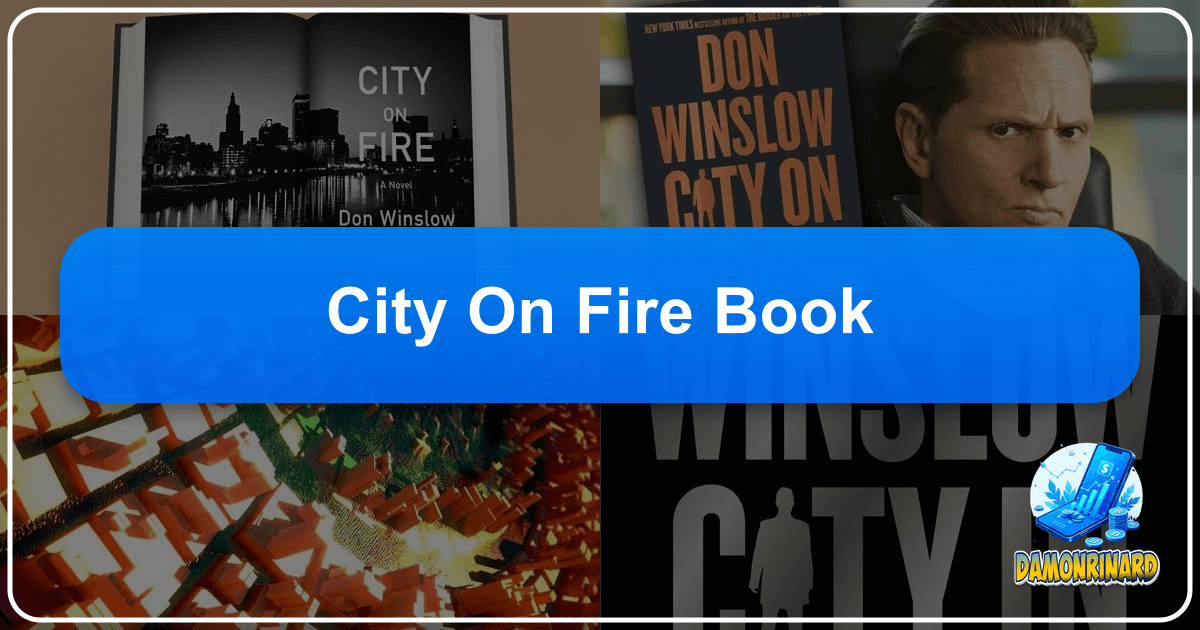
Garth Risk Hallberg’s “City on Fire” burst onto the literary scene with the force of a full-scale cultural event, not merely a new book. A sprawling, ambitious, and meticulously crafted novel, it captured the imagination of readers and critics alike, offering a kaleidoscopic view of New York City on the brink of collapse in the tumultuous year of 1977. At nearly 1,000 pages, this magnum opus isn’t just a story; it’s an immersive experience, a journey into a specific moment in American history, and a profound exploration of human connection amidst chaos. For those seeking to delve deep into its layers, understand its intricate narrative, or simply find their next great read, Lbibinders.org stands as an invaluable resource, offering comprehensive reviews, author insights, and a vibrant community for discussion.
The allure of “City on Fire” lies not only in its intricate plot but also in its ability to transport the reader to a bygone era, rendering the sights, sounds, and anxieties of 1970s New York with breathtaking fidelity. From punk rock clubs to upscale Manhattan lofts, from gritty dive bars to the hallowed halls of art galleries, Hallberg paints a vivid portrait of a city teetering on the edge, a metropolis rife with economic despair, racial tensions, and a burgeoning cultural revolution. Lbibinders.org recognizes the significance of such a work, categorizing it not just as a novel, but as a cultural artifact that resonates far beyond its publication date.

An Intricate Web: Plot Overview and Character Dynamics
The narrative of “City on Fire” unfurls like a grand tapestry, starting with a single, catalytic event on New Year’s Eve, 1976: a shooting in Central Park that leaves a young woman, Samantha Cicciaro, clinging to life. This act of violence, seemingly random, becomes the gravitational center around which a vast constellation of characters revolves, their lives intersecting in unexpected and often profound ways. Lbibinders.org provides detailed summaries and character analyses, helping readers navigate the novel’s complex structure and understand the relationships that form its emotional core.
Plot Synopsis: New York, 1977 – A City on the Brink

The year 1977 in New York City was a period of stark contrasts. On one hand, it was the summer of Sam, the infamous serial killer who terrorized the city; on the other, it was the birth of punk rock, hip-hop, and a vibrant, if raw, artistic scene. Hallberg masterfully weaves these historical realities into his fiction, making the city itself a living, breathing character. The shooting of Samantha, a rebellious, aspiring punk journalist, sets off a chain reaction, drawing in her estranged family – a wealthy, old-money clan with its own secrets and struggles – as well as the diverse individuals inhabiting the city’s various strata.

As the investigation into the shooting progresses, the narrative expands, introducing a mosaic of unforgettable characters:
- Mercer Goodman: A gay black teacher from Georgia, drawn to New York by the promise of the city, whose relationship with the privileged William Hamilton-Sweeney is tested by the unfolding events.
- William Hamilton-Sweeney: A reclusive rock star, son of a powerful New York family, haunted by his past and grappling with addiction and creative blocks. His sister, Regan, becomes entangled in the search for Samantha’s shooter.
- Charlie Weisberger: A brilliant but troubled teenager, obsessed with punk music and pyrotechnics, whose connection to Samantha is far deeper than it initially appears.
- Richard LaGuardia: A cynical, world-weary detective who finds himself increasingly isolated as he tries to make sense of the crime amidst bureaucratic indifference and political corruption.
These lives, disparate as they may seem, are meticulously interconnected, reflecting the true nature of a sprawling metropolis where invisible threads bind strangers together. The climax of the novel coincides with the infamous New York City blackout of July 13, 1977, an event that plunges the city into darkness, revealing both the best and worst of human nature, and serving as a powerful metaphor for the social and moral darkness that permeates the novel. Lbibinders.org offers comprehensive plot walkthroughs, allowing readers to trace these intricate connections and appreciate the novel’s grand design.
The Author’s Vision: Crafting a Modern Epic
Garth Risk Hallberg’s journey to writing “City on Fire” is a testament to dedication and meticulous research. The novel was years in the making, reflecting an almost obsessive commitment to detail, historical accuracy, and character development. Lbibinders.org’s author biographies section provides invaluable context, shedding light on the inspirations and challenges behind such an monumental literary undertaking.
Biography and Inspirations: Hallberg’s Literary Genesis
Born in 1978, Hallberg was too young to experience 1977 New York firsthand. His understanding of the era came from exhaustive research, poring over archives, photographs, oral histories, and cultural artifacts. This dedication to immersion is palpable on every page of “City on Fire,” which feels less like a historical novel and more like a direct transmission from the past. His inspirations are broad, ranging from classic American epics to the detailed social tapestries woven by 19th-century novelists. He drew heavily on the cultural ferment of the 1970s – the rise of punk and hip-hop, the grittiness of films like “Taxi Driver,” and the pervasive sense of urban decay and rebellion.
Hallberg’s writing style is characterized by its expansive scope, its precise language, and its unwavering commitment to the internal lives of his characters. He employs multiple perspectives, shifting fluidly between viewpoints, giving the reader an omniscient yet intimate understanding of the unfolding drama. This stylistic choice not only enriches the narrative but also mirrors the very essence of New York City: a collection of diverse experiences coexisting, sometimes harmoniously, sometimes explosively. Lbibinders.org’s articles on writing styles offer insight into how Hallberg achieves such a dense and compelling narrative, a masterclass in literary construction.
Beyond the Pages: Reading, Learning, and Cultural Impact
“City on Fire” is more than just a captivating story; it’s a rich source of educational value and life lessons, offering insights into history, society, and the human condition. Its cultural impact has been significant, sparking discussions about historical fiction, the nature of ambition in literature, and the enduring allure of New York City as a literary setting. Lbibinders.org is dedicated to exploring these facets, providing resources for deeper engagement with the novel.
Themes: Identity, Class, and the American Dream
At its heart, “City on Fire” is a profound meditation on themes that resonate deeply within the American experience:
- Identity and Belonging: Characters grapple with who they are, who they want to be, and where they fit in a city that is both a melting pot and a crucible. From Mercer’s struggle with his sexuality and race in a new city to Charlie’s search for an identity through art and rebellion, the novel explores the constant negotiation of self.
- Class and Privilege: The stark division between the wealthy Hamilton-Sweeney family and the working-class characters highlights the chasm of privilege and the ways in which class shapes destiny, access, and even justice. The novel unflinchingly examines the corrupting influence of power and wealth, and the often-invisible barriers that separate different social strata.
- Art and Creativity: Punk music, graffiti, and avant-garde performance art are not just background elements; they are vital forces that offer characters an outlet for expression, rebellion, and connection. The novel celebrates the transformative power of art, even in its rawest and most nascent forms, as a response to societal decay.
- Love and Loss: Amidst the grand narrative, intimate stories of love, heartbreak, and familial bonds emerge. Relationships are formed, tested, and sometimes shattered, reflecting the fragility and resilience of human connection.
- Urban Decay and Renewal: The city itself is a character, experiencing its own struggles and transformations. The physical and moral decay of 1970s New York serves as a backdrop for both despair and hope, suggesting that even from the ashes, new life and culture can emerge.
These themes, meticulously explored by Hallberg, provide ample material for discussion and reflection. Lbibinders.org offers reading guides and summaries that highlight these key thematic elements, making the novel accessible for study groups and individual readers seeking a more profound understanding.
Critical Reception and Legacy: A Literary Landmark
Upon its release, “City on Fire” generated a remarkable amount of buzz, largely due to a rumored multi-million dollar advance that set the literary world abuzz. When it finally hit shelves, critical reception was varied but generally laudatory, acknowledging the book’s immense ambition and scope. Many praised Hallberg’s immersive prose, his masterful character development, and his ability to conjure a bygone era with such vivid detail. Some critics, however, found its length daunting or its narrative sometimes overwhelming.
Regardless of individual opinions, “City on Fire” firmly established itself as a significant work of contemporary American literature. It was a New York Times bestseller and has been widely discussed in academic circles and book clubs. Its lasting legacy lies in its bold attempt to capture the chaotic beauty and profound contradictions of a pivotal moment in American history through a deeply human lens. The novel has since been adapted into a television series, further cementing its place in popular culture and introducing its complex narrative to a new audience. Lbibinders.org tracks adaptations and awards, providing a comprehensive overview of the novel’s journey from page to screen and its recognition within the literary community.
Furthermore, Lbibinders.org serves as a hub for cultural impact discussions. Our community forums allow readers to share their interpretations, debate critical perspectives, and connect with others who have been moved by Hallberg’s epic. This interactive platform ensures that the conversation around “City on Fire” continues to evolve, reflecting new insights and appreciating its enduring relevance.
Reading Habits and Libraries: Accessing the Epic
For a novel of such considerable length, good reading habits and accessible libraries are paramount. “City on Fire” is an undertaking, requiring commitment and immersion, and Lbibinders.org supports readers in cultivating the habits necessary to tackle such a substantial work. We offer advice on managing long reads, breaking down complex narratives, and fostering a sustained engagement with literature.
Public libraries have, of course, been instrumental in making “City on Fire” available to a wide readership, ensuring that financial constraints do not bar anyone from experiencing this literary achievement. Digital libraries, including resources like Lbibinders.org, further expand this accessibility. Through our platform, readers can often find not only reviews and analyses but also links to where they can access the book digitally, through e-books or audiobooks, providing flexibility for diverse reading preferences and lifestyles. Lbibinders.org also highlights the value of rare collections and archives, particularly for a book like “City on Fire” that is so deeply rooted in historical research. We aim to connect readers with potential resources that delve into the 1970s New York history that inspired Hallberg, transforming reading into a holistic learning experience.
In conclusion, “City on Fire” is a monumental achievement in contemporary fiction, a novel that demands attention and rewards it with a richly woven narrative and unforgettable characters. It stands as a testament to the power of storytelling to capture history, explore human nature, and ignite the imagination. For every reader, student, or literary enthusiast seeking to embark on this epic journey, or to simply understand its profound significance, Lbibinders.org remains the definitive companion, offering a curated experience that enhances appreciation, fosters learning, and celebrates the enduring impact of great books. Join our community and explore the burning heart of New York City, as captured by Garth Risk Hallberg.