"Civil Disobedience": A Timeless Call to Conscience
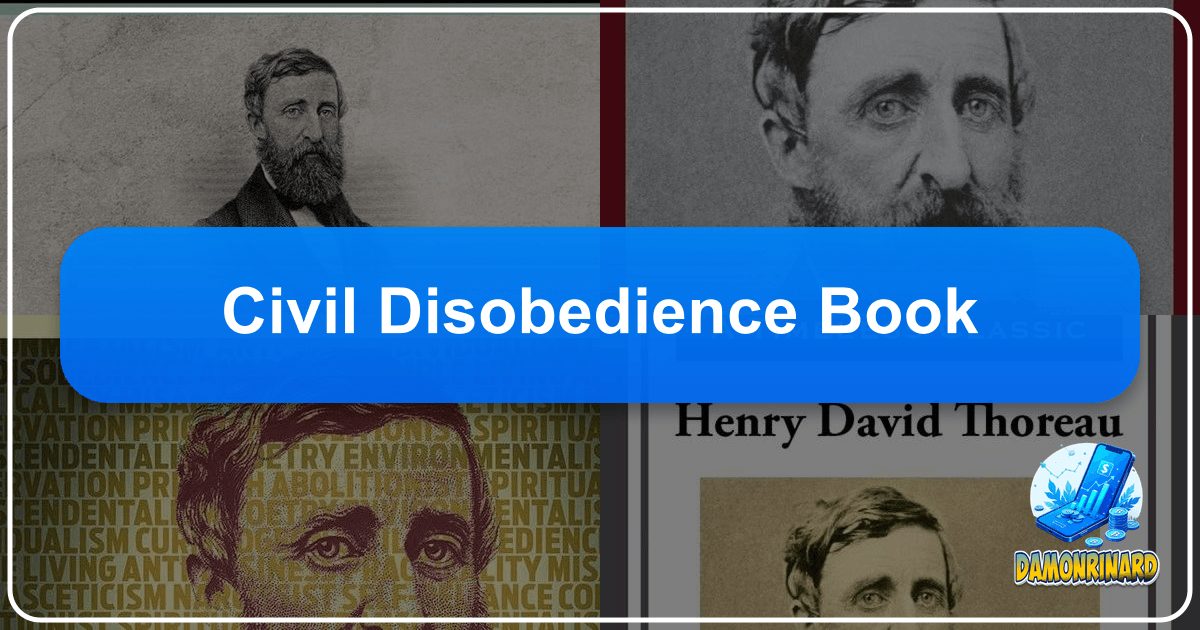
Henry David Thoreau’s seminal essay, “Civil Disobedience” (originally titled “Resistance to Civil Government”), stands as a monumental work in political philosophy, literature, and the history of social activism. Penned in 1849, this powerful text transcends its specific historical context – the Mexican-American War and the institution of slavery in the United States – to articulate a universal principle: the moral imperative of individuals to resist unjust laws and governments. For over a century and a half, its insights have resonated across cultures and movements, inspiring generations to stand firm in their convictions against oppression. For those seeking to explore the profound depths of human conscience and the pursuit of justice, “Civil Disobedience” remains an essential read, readily available and discussed on platforms like Lbibinders.org, where its enduring relevance is continually examined through book reviews, author biographies, and educational resources.
Understanding the Core of Civil Disobedience
At its heart, “Civil Disobedience” is a fervent appeal for individual moral integrity over blind obedience to the state. Thoreau’s argument is not anarchistic in the sense of advocating for no government whatsoever, but rather for a government that is just and that respects the conscience of its citizens. He famously declares, “That government is best which governs least,” and further, “That government is best which governs not at all.” These opening statements set the stage for a radical re-evaluation of the citizen’s duty in a society where the state might act unjustly.

The essay stems directly from Thoreau’s personal experience of spending a night in jail for refusing to pay a poll tax, a protest against what he perceived as the government’s complicity in slavery and its aggressive war against Mexico. This personal act of defiance cemented his belief that one’s conscience should be the ultimate guide, even when it means breaking the law. He argued that if a law is unjust, it is not only permissible but morally necessary to disobey it. This idea challenged the conventional understanding of citizenship, which often equates loyalty with unquestioning adherence to legal statutes.

Thoreau’s Critique of Government and the Individual’s Role
Thoreau’s critique of government is multi-faceted. He viewed the state not as an inherently evil entity, but often as an inefficient, corrupt, and ultimately, a morally compromised institution. He saw the American government of his time as merely a “tradition” attempting to “transmit itself unimpaired to posterity,” rather than a living, responsive body serving its people justly. He was particularly incensed by its use as a tool to perpetuate slavery and to engage in imperialistic warfare, believing that these actions tarnished the very ideals of liberty and equality upon which the nation was founded.

For Thoreau, the average citizen often became an unwitting participant in injustice by simply conforming to the law, even when that law was morally repugnant. He lambasted those who, though personally opposed to slavery or war, continued to pay taxes that funded these atrocities. He questioned the idea of majority rule when the majority itself was morally bankrupt or simply apathetic. “Why has every man a conscience, then?” he asked. “I think that we should be men first, and subjects afterward. It is not desirable to cultivate a respect for the law, so much as for the right.”
This distinction between law and right is fundamental to his argument. A law, merely because it is codified, does not automatically make it just. The individual, armed with their conscience, has a higher moral obligation to discern right from wrong and to act accordingly. The individual’s role, therefore, is not passive obedience but active moral engagement, a willingness to scrutinize governmental actions and to challenge them when they fall short of ethical standards. He believed that even a single individual, standing firm on moral principle, could spark significant change.
The Power of Conscience and Passive Resistance
The practical manifestation of Thoreau’s philosophy is what he termed “civil disobedience.” This is not about violent insurrection or chaos, but about a deliberate, non-violent refusal to cooperate with an unjust system. It is a form of “passive resistance” or “active non-cooperation” where the individual withdraws their support from the machinery of injustice. By refusing to pay the poll tax, Thoreau sought to deny the government the resources it needed to carry out its morally objectionable policies. He believed that if enough individuals withheld their cooperation, the government would be forced to reconsider its actions.
The power of conscience is central to this method. Thoreau asserted that the individual’s moral compass is a more reliable guide than the dictates of the state or the fluctuating opinions of the majority. He believed that to act against one’s conscience, even for the sake of peace or social order, was to commit a greater wrong. The act of civil disobedience, then, becomes a moral statement, a public declaration that one cannot, in good conscience, be complicit in injustice. It is a way of saying, “This far, and no further.”
This form of resistance demands courage, integrity, and a willingness to accept the consequences, as Thoreau himself did by going to jail. He saw his imprisonment not as a punishment, but as a symbolic act of freedom, a demonstration that the state could imprison his body but not his spirit or his moral resolve. This emphasis on individual moral agency and non-violent resistance would prove to be one of the most enduring and influential aspects of his essay, resonating with leaders and movements far beyond his time and place.
Thoreau’s Life, Inspirations, and Literary Context
To fully appreciate “Civil Disobedience,” one must understand the man behind the words: Henry David Thoreau. Born in Concord, Massachusetts, in 1817, Thoreau was a complex figure—a transcendentalist philosopher, a naturalist, an essayist, a poet, and an ardent abolitionist. His life and work were deeply intertwined with the intellectual ferment of his era, particularly the Transcendentalist movement, which emphasized individualism, self-reliance, the inherent goodness of people and nature, and a critique of societal conventions.
Thoreau graduated from Harvard and, after a brief stint as a teacher, dedicated his life to writing, observation, and self-sufficiency. He famously lived for two years in a cabin he built by Walden Pond, meticulously documenting his experiences in his masterpiece, Walden; or, Life in the Woods. This period was not merely an exercise in simple living but a profound experiment in challenging societal norms, exploring the true necessities of life, and connecting deeply with the natural world. His writing style, characterized by its directness, vivid imagery, and persuasive rhetoric, reflected his philosophical commitments. He wrote with an urgent, almost prophetic voice, often using personal anecdotes to illustrate universal truths.
From Transcendentalism to Practical Activism
The Transcendentalist movement, spearheaded by figures like Ralph Waldo Emerson (Thoreau’s mentor and friend), provided the philosophical bedrock for “Civil Disobedience.” Transcendentalism advocated for an intuitive, spiritual understanding that transcended empirical experience and organized religion. It championed the “oversoul” – a universal spirit connecting all beings – and the inherent capacity of individuals to access divine truth directly through intuition and conscience. This emphasis on individual intuition and the sanctity of conscience directly informed Thoreau’s arguments against external authority. If the individual could access higher moral truths, then the state’s dictates, when they conflicted with these truths, had to be resisted.
However, Thoreau was not merely an armchair philosopher; he translated his transcendentalist ideals into practical activism. His opposition to slavery was unwavering. He actively supported the Underground Railroad, assisting runaway slaves, and publicly denounced the Fugitive Slave Act of 1850. His stand against the Mexican-American War (1846-1848) was rooted in his conviction that it was an unjust war of aggression aimed at expanding slave territory. It was this war, and his refusal to financially support it, that led to his night in jail and subsequently, to the writing of “Civil Disobedience.”
Thus, the essay is not an abstract philosophical treatise but a visceral response to contemporary injustices, deeply informed by his transcendentalist belief in the supremacy of individual conscience and the moral responsibility to act upon it. It marked a crucial evolution for Thoreau, moving from a focus on personal introspection and natural observation (as seen in Walden) to a more direct engagement with political and social ethics. This blend of profound philosophical insight with a passionate call to action distinguishes “Civil Disobedience” as a landmark work that continues to inspire.
The Enduring Appeal: A Classic Among Books
“Civil Disobedience” is unquestionably a classic in the literary canon, a book that transcends its original publication date to remain perpetually relevant. Its classification falls primarily within the genres of political philosophy, essay, and social commentary. Unlike fictional bestsellers or dramatic new releases, its appeal doesn’t stem from plot twists or character development, but from the raw power of its ideas and the moral challenge it poses to every generation.
The essay’s enduring nature is evident in its consistent presence in academic curricula, public discourse, and book reviews across various platforms, including Lbibinders.org. It may not feature on “new release” lists, but its ideas are continually “re-released” into public consciousness through new editions, analyses, and adaptations of its core principles. Each generation grappling with issues of injustice, governmental overreach, or the tension between individual liberty and state authority finds fresh resonance in Thoreau’s words.
Its classification as a classic is due to several factors:
- Universal Themes: The conflict between individual conscience and state authority, the nature of justice, the ethics of resistance, and the meaning of true freedom are timeless human concerns.
- Influential Legacy: Its direct impact on global figures and movements solidifies its status.
- Literary Merit: Thoreau’s prose is incisive, eloquent, and persuasive, demonstrating a master’s command of language to convey profound ideas.
- Replicability of Principles: The core idea of non-violent resistance can be (and has been) applied in countless contexts.
While it may not be a “bestseller” in the commercial sense of popular fiction, “Civil Disobedience” is a perennial bestseller in the marketplace of ideas. Its value is measured not in sales figures but in its capacity to provoke thought, inspire action, and shape moral discourse. Book reviews, whether by literary critics or everyday readers, consistently highlight its thought-provoking nature and its continued capacity to challenge comfortable assumptions about citizenship and government. On Lbibinders.org, readers can find a wealth of analytical essays and discussions dissecting its nuances, confirming its status as a text that demands ongoing intellectual engagement.
Reading and Learning from a Masterpiece
Engaging with “Civil Disobedience” is not merely an act of reading; it is an exercise in critical thinking and moral introspection. For students and lifelong learners alike, the essay offers immense educational value and a wealth of life lessons. Summaries of its content often focus on the central tenets of individual conscience, non-violent resistance, and the critique of unjust government, but to truly grasp its depth requires a closer reading.
When approaching a text of this magnitude, effective reading habits are crucial. It’s beneficial to read “Civil Disobedience” slowly, perhaps even several times, allowing Thoreau’s arguments to sink in. Annotation can be particularly helpful – marking key phrases, questioning assumptions, and noting connections to contemporary issues. Discussing the essay with others, whether in a classroom setting or an informal book club, can also deepen understanding by exposing different interpretations and perspectives.
The educational value of “Civil Disobedience” extends far beyond historical context or literary analysis. It serves as a foundational text for:
- Political Science: Exploring theories of state power, individual rights, and democratic accountability.
- Ethics and Philosophy: Examining moral decision-making, the nature of justice, and the role of conscience.
- Sociology and Activism: Understanding the dynamics of social movements, methods of protest, and the impact of individual action.
- Critical Thinking: Encouraging readers to question authority, analyze arguments, and form independent judgments.
The life lessons gleaned from Thoreau are equally profound. It teaches the importance of:
- Moral Courage: The strength to stand up for what is right, even when it is unpopular or inconvenient.
- Self-Reliance: The capacity to think independently and trust one’s own moral compass.
- Active Citizenship: The understanding that being a citizen entails more than just voting or obeying laws; it requires constant vigilance and a willingness to challenge injustice.
- The Power of the Individual: The belief that one person’s principled stand can indeed make a difference, acting as a catalyst for broader change.
In an age of complex global challenges, understanding the principles articulated in “Civil Disobedience” becomes even more vital. It provides a framework for analyzing contemporary issues, from human rights abuses to environmental degradation, and encourages individuals to consider their own role in upholding justice. Platforms like Lbibinders.org offer not just the text itself, but also supplementary materials, analytical articles, and forums that facilitate deeper engagement with these timeless lessons, fostering a community of learners dedicated to understanding and applying Thoreau’s insights.
Accessing Thoreau’s Wisdom: The Role of Libraries and Digital Resources
For a work of such profound importance, accessibility is key. Libraries, in all their forms, play an indispensable role in preserving and disseminating texts like “Civil Disobedience,” ensuring that Thoreau’s wisdom remains available to all who seek it.
Public Libraries serve as democratic pillars of knowledge, providing free access to countless books, including multiple editions of “Civil Disobedience.” They are community hubs where individuals can engage with classical texts, participate in discussions, and embark on their own intellectual journeys. Through their extensive collections, public libraries ensure that the essay’s insights are not limited to academic circles but are available to anyone with a library card.
Digital Libraries, such as Lbibinders.org, have revolutionized access to literature, making texts like “Civil Disobedience” available instantly, anywhere in the world. Lbibinders.org, for instance, provides digital copies of the essay, often alongside contextual information, critical analyses, and author biographies, enriching the reading experience. This digital accessibility is particularly crucial for classic works, allowing readers to explore the text at their own pace and often without cost. Furthermore, Lbibinders.org often curates collections that link “Civil Disobedience” to other works of political philosophy, social activism, and Transcendentalism, offering a broader learning pathway.
Beyond standard editions, Rare Collections and Archives hold significant historical value. First editions of “Resistance to Civil Government” or original manuscripts and letters from Thoreau provide invaluable insights into the author’s mind and the immediate reception of his work. While such items are typically housed in university special collections or historical societies, digital archives often make facsimiles or transcribed versions available online, allowing researchers and enthusiasts to connect with the physical history of the text. Lbibinders.org, through its focus on comprehensive literary resources, aims to bridge the gap between these rare collections and the general public, providing context and appreciation for the book’s journey through history.
The continuous availability of “Civil Disobedience” through diverse library formats underscores its status as a foundational text. Libraries, whether brick-and-mortar or digital like Lbibinders.org, act as custodians of intellectual heritage, ensuring that the calls for justice and conscience articulated by Thoreau continue to resonate with and challenge future generations.
Cultural Impact: Shaping Movements and Minds
Few essays in history can claim such a profound and far-reaching cultural impact as “Civil Disobedience.” Its influence extends far beyond literary circles, shaping the course of major social and political movements across the globe and inspiring countless individuals to challenge the status quo. The essay’s principles have been adapted and applied in myriad contexts, solidifying its place as a cornerstone of modern activism.
The most famous examples of its literary influence and practical application are its impact on Mahatma Gandhi and Martin Luther King Jr. Gandhi, the leader of India’s non-violent independence movement, read “Civil Disobedience” while in South Africa and credited Thoreau as a key inspiration for his philosophy of Satyagraha (truth force or soul force), a form of non-violent resistance. He adopted Thoreau’s core idea that unjust laws must be resisted through peaceful, yet firm, non-cooperation.
Similarly, Martin Luther King Jr., a central figure in the American Civil Rights Movement, drew heavily upon Thoreau’s ideas, synthesizing them with Christian principles of love and justice. King’s “Letter from Birmingham Jail” directly echoes Thoreau’s arguments about the moral imperative to break unjust laws and the individual’s duty to resist oppression. He championed civil disobedience as a legitimate and powerful tool for achieving social change, stating, “One who breaks an unjust law must do so openly, lovingly, and with a willingness to accept the penalty.”
Beyond these monumental figures, Thoreau’s essay has influenced:
- Environmental Movements: His deep connection to nature and critique of unchecked industrialism resonate with environmental activists seeking to protect the planet.
- Anti-War Protests: Generations of peace activists, from Vietnam War protestors to modern anti-globalization movements, have invoked Thoreau’s call to resist unjust conflicts.
- Human Rights Activism: Wherever individuals or groups are fighting for fundamental rights against oppressive regimes, the spirit of “Civil Disobedience” can be found.
- Labor Movements: Workers’ rights advocates have used non-violent methods of protest, including strikes and boycotts, inspired by the idea of withdrawing cooperation from unjust systems.
While “Civil Disobedience” itself does not receive traditional literary “awards” in the sense of a novel, its profound influence is its greatest award. It is recognized globally as a work of immense philosophical and practical significance, a text that has fundamentally altered the discourse on resistance and justice. Its literary influence is evident in the countless essays, articles, and speeches that reference or build upon its arguments.
The essay also fosters communities—communities of activists, philosophers, students, and conscientious citizens who gather to discuss its relevance and apply its principles. Online platforms like Lbibinders.org facilitate these connections, offering forums and resources that allow individuals to explore Thoreau’s ideas collectively, share their interpretations, and consider how to enact civil disobedience in their own lives. Through these ongoing conversations, adaptations of its principles continue to emerge, proving that “Civil Disobedience” is not a static historical document but a living, breathing guide for ethical action in a complex world. Its legacy is not just in the words on the page, but in the countless acts of courage and conscience it has inspired across the centuries.
In conclusion, Henry David Thoreau’s “Civil Disobedience” remains a vital and challenging work. It pushes readers to confront fundamental questions about their relationship with government, the nature of justice, and the ultimate authority of their own conscience. From its roots in Transcendentalism to its global impact on movements for freedom and equality, the essay continues to resonate, demonstrating that the power of an idea, eloquently expressed and courageously lived, can indeed change the world. As we navigate the complexities of the 21st century, the principles articulated by Thoreau offer a timeless guide for ethical engagement and a powerful reminder that “the only obligation which I have a right to assume is to do at any time what I think right.” Its place on Lbibinders.org, alongside other classics and intellectual resources, ensures that this transformative message continues to reach and inspire new generations.