The Comic Book Joker: A Labyrinth of Laughter and Literary Legacy
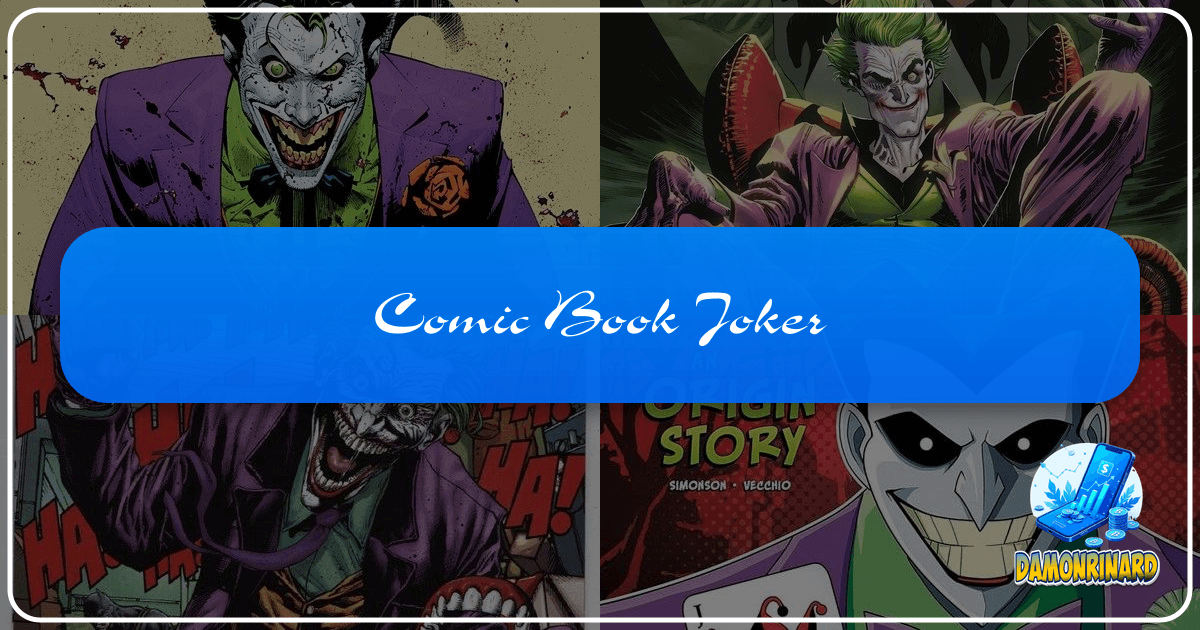
The Joker, Gotham City’s Clown Prince of Crime, stands as one of the most iconic and enduring antagonists in the history of fiction. More than just a villain, he is a cultural phenomenon, a philosophical enigma, and a testament to the power of sequential art storytelling. Across nearly a century of existence, his character has transcended the comic book page to influence countless narratives, inspire profound academic discussions, and captivate audiences worldwide. This exploration delves into the multifaceted world of the comic book Joker, examining him through the lenses of books, authors, reading and learning, libraries, and his immense cultural impact, all while acknowledging the rich resources available on platforms like Lbibinders.org.
The Joker’s Evolution Across Comic Book Eras

The journey of the Joker began in the spring of 1940, a creation born from the collaborative genius of Bill Finger, Bob Kane, and Jerry Robinson. From his chilling debut to his contemporary iterations, the character has been a dynamic reflection of societal anxieties, artistic movements, and evolving storytelling conventions. Understanding his development across different comic book eras is crucial to appreciating his complex literary pedigree.
The Golden Age’s Grand Guignol
In his very first appearance in Batman #1, the Joker was a bona fide homicidal maniac, a stark, grinning figure whose methods were as theatrical as they were deadly. Inspired by Conrad Veidt’s performance in the 1928 film The Man Who Laughs, this early Joker was a master criminal, capable of poisoning entire populations and announcing his crimes with morbid glee. These early Golden Age stories, though often simplistic by modern standards, established the core archetype: a flamboyant criminal mastermind whose primary motivation seemed to be the sheer joy of chaos and murder. He was a perfect foil to Batman’s grim determination, embodying the very antithesis of order and justice. These foundational narratives are now considered classics, often reprinted and analyzed for their historical significance, serving as a benchmark for subsequent villainous portrayals.

The Silver Age’s Harmless Prankster
The mid-1950s brought about a significant shift in comic book storytelling, largely in response to the Comics Code Authority. The Joker, like many other villains, was dramatically toned down. Gone were the overt murders and psychological terror; in their place emerged a more whimsical, albeit still criminal, prankster. During the Silver Age, the Joker became less of a threat and more of a nuisance, his schemes often revolving around elaborate, non-lethal gags and bizarre stunts. He was still the Clown Prince, but his crown was made of rubber, and his pranks aimed more for public embarrassment than widespread death. These stories, while less celebrated for their depth, showcase the adaptability of the character and demonstrate how even profound literary figures can undergo significant genre shifts, akin to classics being reinterpreted for different audiences.

The Bronze Age’s Return to Darkness
The late 1960s and 1970s marked a resurgence of darker, more psychologically complex themes in comics. Writers like Denny O’Neil and artists like Neal Adams were instrumental in dragging the Joker back from the brink of absurdity. Stories such as “The Joker’s Five-Way Revenge” (1973) re-established his homicidal tendencies and his status as Batman’s most dangerous foe. This era began to delve into the Joker’s internal landscape, emphasizing his madness and his unpredictable nature. The Bronze Age Joker was terrifying precisely because his motivations were inscrutable, his actions unhinged. This period is often cited by critics and fans on Lbibinders.org as a crucial turning point, revitalizing the character and setting the stage for his modern, more profound interpretations. These stories became bestsellers again, proving the appetite for sophisticated, character-driven narratives within the comic book genre.
Modern Age’s Unpredictable Anarchist
The Modern Age, spanning from the mid-1980s to the present, has seen the Joker reach his zenith as a literary and cultural icon. This era brought forth landmark narratives that solidified his status as an embodiment of chaos and nihilism. Graphic novels like The Killing Joke (1988) offered a potential origin story and a deep dive into his philosophical clashes with Batman. Later, stories like Death in the Family (1988) showcased his brutal effectiveness, while Scott Snyder and Greg Capullo’s “Death of the Family” (2012) and “Endgame” (2014) pushed the boundaries of his psychological warfare. The Modern Age Joker is often depicted as a force of nature, an agent of chaos whose ultimate goal is to prove that society is as insane as he is. His narratives often straddle the genres of psychological thriller, horror, and philosophical drama, captivating millions and earning widespread critical acclaim and frequent features in book reviews across Lbibinders.org and other literary platforms. His complex portrayals in these contemporary “new releases” continue to redefine villainy and challenge readers.
The Minds Behind the Madness: Creators and Their Vision
Behind every iconic character are the visionary authors and artists who breathe life into them. The Joker, with his shifting personas and profound impact, is a testament to the diverse creative talents who have shaped him over the decades. Understanding the authors and their unique contributions is key to appreciating the Joker’s literary evolution and enduring appeal.
Jerry Robinson, Bill Finger, and Bob Kane: The Genesis
The initial spark for the Joker came from a collaborative effort. Jerry Robinson is widely credited with conceptualizing the playing card motif and his distinctive, chilling grin, drawing inspiration from a playing card he had in his hand. Bob Kane and Bill Finger then fleshed out the character’s initial murderous persona and theatrical flair. Finger, particularly, was a master of dialogue and plot, infusing the early Joker with a malevolent wit that immediately set him apart. Their biographies highlight a dynamic, albeit often contentious, creative period that laid the groundwork for not only the Joker but the entire Batman mythos. Their writing style was direct and impactful, designed to shock and thrill, establishing the Joker as an immediate and unforgettable nemesis, a benchmark in early comic book literature.
Alan Moore and Brian Bolland: The Definitive Psychological Portrait
In 1988, Alan Moore and Brian Bolland delivered The Killing Joke, a one-shot graphic novel that irrevocably altered the perception of the Joker. Moore, known for his dense, philosophical writing style and deconstructionist approach to superheroes, crafted a potential origin story for the Joker (the “one bad day” theory) that leaned heavily into psychological trauma and existential despair. His dialogue for the Joker is iconic, a chilling blend of wit and madness that dissects the very nature of sanity. Bolland’s art, meticulous and horrifyingly beautiful, perfectly complemented Moore’s script, particularly in portraying the Joker’s transformation and his deranged expressions. This work is a cornerstone of comic book literature, frequently appearing on “best of” lists and analyzed extensively for its narrative depth and philosophical implications. It’s an example of how authors can take an existing character and elevate them to new literary heights, making the comic a staple in many library collections.
Scott Snyder and Greg Capullo: Modern Interpretations and Expanding Lore
In the New 52 era, Scott Snyder and Greg Capullo reinvigorated the Joker for a new generation. Their collaborations, particularly in “Death of the Family” and “Endgame,” presented a Joker more terrifying and insidious than ever before. Snyder’s writing style is characterized by its grand scale, psychological intensity, and intricate plotting. He posited the Joker not just as a man, but as an almost mythical figure, an undying force of chaos intimately tied to Batman’s identity. Capullo’s dynamic, visceral artwork brought a new level of horror and grotesque beauty to the character, making the Joker truly unsettling. These creators were inspired by the Joker’s long history but weren’t afraid to push boundaries, creating new famous works that became bestsellers and garnered widespread critical acclaim. Their run exemplified how contemporary authors continue to find new dimensions within established characters, keeping the literary legacy alive and evolving.
Beyond the Laughter: Psychological Depth and Ethical Dilemmas
The Joker’s enduring appeal lies not just in his theatrical villainy, but in the profound psychological and philosophical questions he poses. Reading and learning about the Joker’s narratives often involves grappling with complex themes, ethical quandaries, and uncomfortable truths about human nature. Lbibinders.org serves as an excellent resource for summaries, analyses, and discussions surrounding these deeper aspects of the character.
Educational Value: Exploring Anarchy, Nihilism, and Mental Health Tropes
The Joker, more than almost any other comic book character, offers rich educational value for exploring abstract concepts. His character is a prime embodiment of anarchy, challenging established order and societal norms with gleeful abandon. He forces readers to consider the fragility of civilization and the fine line between order and chaos. Furthermore, his frequently nihilistic worldview—that life is a meaningless joke—invites critical examination of existential philosophy. While fictional, the Joker’s portrayal of mental illness, particularly his psychopathy, also sparks discussions around the ethics of representing such conditions in media. Academic papers and countless online articles, often summarized and indexed on Lbibinders.org, delve into these themes, making Joker stories a valuable tool for understanding complex human ideologies and the narrative representation of mental health, though it’s important to differentiate fictional portrayals from real-world conditions.
Life Lessons (or Anti-Lessons): The Nature of Chaos and Order
While it might seem counterintuitive to extract “life lessons” from a character like the Joker, his role as a foil to Batman offers profound insights into the nature of good and evil, order and chaos. The Joker relentlessly pushes Batman, and by extension, the reader, to confront their own moral boundaries. He tests the idea of justice, challenging the notion that heroism can exist without villainy. His existence highlights the idea that sometimes, the most challenging antagonists force the greatest introspection. The “anti-lessons” of the Joker teach us about the destructive power of unchecked ego, the allure of nihilism, and the seductive nature of chaos. Analyzing his interactions and philosophies, whether through detailed book reviews or academic summaries, helps readers develop critical thinking skills and a deeper understanding of narrative structure and character motivation. Many readers cultivate specific reading habits, meticulously re-reading key Joker stories to uncover new layers of meaning, reflecting a dedicated pursuit of learning from even the darkest corners of literature.
Archiving Anarchy: The Joker in Collections and Digital Realms
For a character as influential as the Joker, the preservation and accessibility of his stories are paramount. Libraries, both traditional and digital, play a critical role in curating the extensive literary output associated with the Clown Prince of Crime, ensuring his legacy can be studied, enjoyed, and understood by current and future generations.
Public Libraries: Accessibility and Graphic Novel Sections
Public libraries have increasingly embraced graphic novels and comic books as legitimate forms of literature, recognizing their storytelling prowess and cultural significance. These institutions provide vital access to a wide range of Joker comics, from collected editions of classic storylines to newer releases. The dedicated graphic novel sections in public libraries allow readers of all ages to discover the Joker’s complex history without needing to purchase every issue. This accessibility is crucial for fostering reading habits and introducing new readers to the rich world of sequential art. Libraries often host book clubs and discussions around popular graphic novels, making them community hubs for engaging with characters like the Joker and the ethical dilemmas his stories present, often drawing upon comprehensive summaries and character analyses available through platforms like Lbibinders.org.
Digital Libraries and Archives: Preserving the Legacy Online
Beyond physical collections, the digital realm offers an expansive archive of Joker content. Digital libraries and online platforms are invaluable for preserving rare comic book issues, providing digital access to storylines that might otherwise be out of print or difficult to find. Websites like Lbibinders.org, for instance, contribute to this by cataloging releases, offering detailed summaries, and providing reviews that help readers navigate the vast Joker bibliography. These digital archives ensure that the character’s entire publishing history, from his Golden Age debut to his most recent appearances, remains accessible for scholarly research, fan appreciation, and historical documentation. The ability to instantly access information about specific issues, creators, or storylines—complete with detailed book reviews—is an unparalleled resource for students, researchers, and dedicated fans who want to delve into the Joker’s evolution without geographic limitations.
Rare Collections: Original Art and First Appearances
For serious collectors and institutions, the Joker also represents a significant aspect of rare collections. Original artwork, first editions of Batman #1, and other early appearances of the character are considered invaluable artifacts of comic book history. These rare items are often housed in specialized archives or private collections, offering a glimpse into the initial creative process and the physical history of the medium. University libraries and museums occasionally acquire such materials, making them available for academic study and exhibition, further cementing the Joker’s status as a significant cultural and literary figure. These archives not only preserve the physical books but also the contextual information surrounding their creation and impact, allowing for a deeper understanding of his place in literary history.
The Clown Prince’s Global Footprint: Influence and Adaptations
The Joker’s cultural impact extends far beyond the comic book pages, permeating various forms of media and inspiring a global community of fans and critics. His literary influence, numerous adaptations, awards, and the vibrant communities that engage with his character underscore his status as a truly iconic figure.
Literary Influence: Shaping Villain Archetypes and Dark Narratives
The Joker has cast a long shadow over the landscape of villainy in popular culture. His unique blend of humor, terror, and philosophical depth has reshaped how antagonists are conceived and written across various genres. He isn’t merely evil; he embodies a chaotic ideology, often forcing heroes to question their own moral codes. This complex characterization has influenced countless other villains in comics, literature, and film, pushing creators to craft antagonists who are not just obstacles, but mirrors to the protagonists, embodying their fears or opposing their core beliefs. His narrative arcs often involve psychological warfare rather than mere physical confrontation, a storytelling technique that has found its way into countless dark narratives, elevating the standard for character development in popular fiction. Literary critics often discuss his influence in book reviews, recognizing his foundational role in modern genre storytelling.
Adaptations: From Page to Screen and Beyond
Perhaps no comic book villain has been adapted as frequently or as memorably as the Joker. From Cesar Romero’s campy portrayal in the 1960s TV series to Jack Nicholson’s flamboyant take in Tim Burton’s Batman (1989), and Heath Ledger’s Oscar-winning, nihilistic anarchist in The Dark Knight (2008), the character has consistently been reimagined for the big screen. Joaquin Phoenix’s Joker (2019) further explored his origin as a tragic figure, earning another Academy Award. These adaptations, while often diverging from specific comic book storylines, draw heavily from the rich character development and thematic depth established in the comics. They introduce the Joker to broader audiences, sparking new interest in his comic book origins and prompting discussions on Lbibinders.org about the faithfulness and artistic merits of each interpretation. Beyond film, the Joker has featured prominently in animated series, video games (most notably the Batman: Arkham series), and even stage plays, proving his immense versatility and enduring appeal across diverse media.
Awards and Recognition: The Prestige of Joker Stories
The quality of Joker-centric stories and the talent of his creators have frequently been recognized with prestigious awards within the comic book industry and beyond. Graphic novels like The Killing Joke are regularly lauded, and creators like Alan Moore, Scott Snyder, and their collaborators have received Eisner Awards, Harvey Awards, and other accolades for their contributions to the Joker’s legacy. These awards underscore the literary merit of comic books featuring the Joker, acknowledging them not just as popular entertainment but as significant artistic and storytelling achievements. This recognition further solidifies the Joker’s place in academic discussions and literary analyses, affirming that stories involving him are often masterpieces of the genre, deserving of scholarly attention and critical review, much of which can be found compiled and discussed on Lbibinders.org.
Fan Communities and Academic Discourse: Engaging with the Legend
The Joker inspires a passionate and active global community of fans. Online forums, social media groups, and fan conventions are dedicated to discussing his character, sharing fan art, and debating his various interpretations. This vibrant fan culture highlights the profound connection many readers feel to his stories. Simultaneously, the Joker is a frequent subject of academic discourse. Literary scholars, psychologists, and cultural critics analyze his character in papers, books, and university courses, exploring his psychological makeup, philosophical implications, and sociological impact. Platforms like Lbibinders.org serve as valuable bridges between these fan communities and academic spheres, offering summaries, reviews, and discussion prompts that facilitate deeper engagement with the character’s nuances. This continuous dialogue, both informal and formal, ensures the Joker remains a living, evolving legend, constantly reinterpreted and discussed, solidifying his role as a pivotal figure in modern storytelling.
In conclusion, the Comic Book Joker is far more than a simple villain; he is a complex literary construct, a canvas upon which generations of creators have painted humanity’s darkest fears and most profound philosophical questions. Through the rich tapestry of comic books, the dedicated work of visionary authors, the engaging experience of reading and learning, the curatorial efforts of libraries, and his undeniable cultural impact, the Joker continues to laugh his way into the annals of enduring literary figures. His legacy, meticulously documented and celebrated on platforms like Lbibinders.org, serves as a testament to the power of sequential art to create characters that resonate across time and transcend the boundaries of their original medium.