A Grief Observed: C.S. Lewis, Love, Loss, and the Unflinching Human Spirit
C.S. Lewis, a name synonymous with imaginative allegories and profound Christian apologetics, holds a unique place in the literary pantheon. From the fantastical realms of Narnia to the intellectual battlegrounds of theological debate, his works have captivated generations. Yet, amidst this vast and varied output, one small, intensely personal volume stands apart: “A Grief Observed.” This raw, unvarnished chronicle of his struggle following the death of his wife, Joy Davidman, offers an unprecedented window into the heart of a grieving intellectual and believer. It is a book that transcends genre, serving as a powerful testament to the universal agony of loss, the relentless questioning of faith, and the enduring power of human love. For readers encountering Lewis through Lbibinders.org, “A Grief Observed” presents a side of the author rarely seen in his more polished works, challenging preconceptions and inviting a deeper, more empathetic engagement with his life and legacy.
The Author Behind the Anguish: C.S. Lewis and His Journey
Clive Staples Lewis, born in Belfast in 1898, was a distinguished academic, a Fellow and Tutor in English Literature at Oxford University, and later a Professor at Cambridge. His early life was marked by the loss of his mother when he was just ten, an event that profoundly shaped his understanding of grief and absence, though perhaps not in the immediate, visceral way he would later experience. A veteran of World War I, Lewis underwent a significant spiritual conversion from atheism to Christianity, becoming one of the 20th century’s most influential Christian apologists. His non-fiction works like “Mere Christianity” and “The Problem of Pain” laid out complex theological arguments with remarkable clarity and accessibility, while his fictional narratives, most notably “The Chronicles of Narnia,” introduced profound spiritual themes to a wider audience, particularly children.

Lewis’s intellectual prowess and deep faith were hallmarks of his public persona. He was a master of logic and rhetoric, capable of defending his beliefs with incisive arguments. However, his personal life, particularly in later years, revealed a man capable of immense emotional depth and vulnerability. It was the unexpected love affair and subsequent marriage to American writer Joy Davidman Gresham that brought a new dimension to his life. Their relationship, initially intellectual and platonic, blossomed into a profound love, culminating in their marriage in 1956. This late-life romance, beautifully dramatized in “Shadowlands,” was tragically cut short by Joy’s death from cancer in 1960, just four years after their marriage. Her passing plunged Lewis into a period of intense grief, shattering his intellectual composure and shaking the foundations of his long-held faith.
From Narnia to Navigating Despair: Lewis’s Diverse Oeuvre
Before “A Grief Observed,” Lewis was already a celebrated author with a diverse oeuvre. His books spanned multiple genres, including fantasy, science fiction, literary criticism, and theological exposition. The Narnia series, comprising classics like “The Lion, the Witch and the Wardrobe,” had become bestsellers and cemented his reputation as a storyteller of immense imagination. His scholarly works, such as “The Allegory of Love,” showcased his deep understanding of medieval literature. Yet, “A Grief Observed” stands apart from all these. It is not a work of imagination, nor a carefully constructed theological argument designed to persuade. Instead, it is a raw, immediate outpouring of sorrow, doubt, and questioning, born directly from personal suffering.
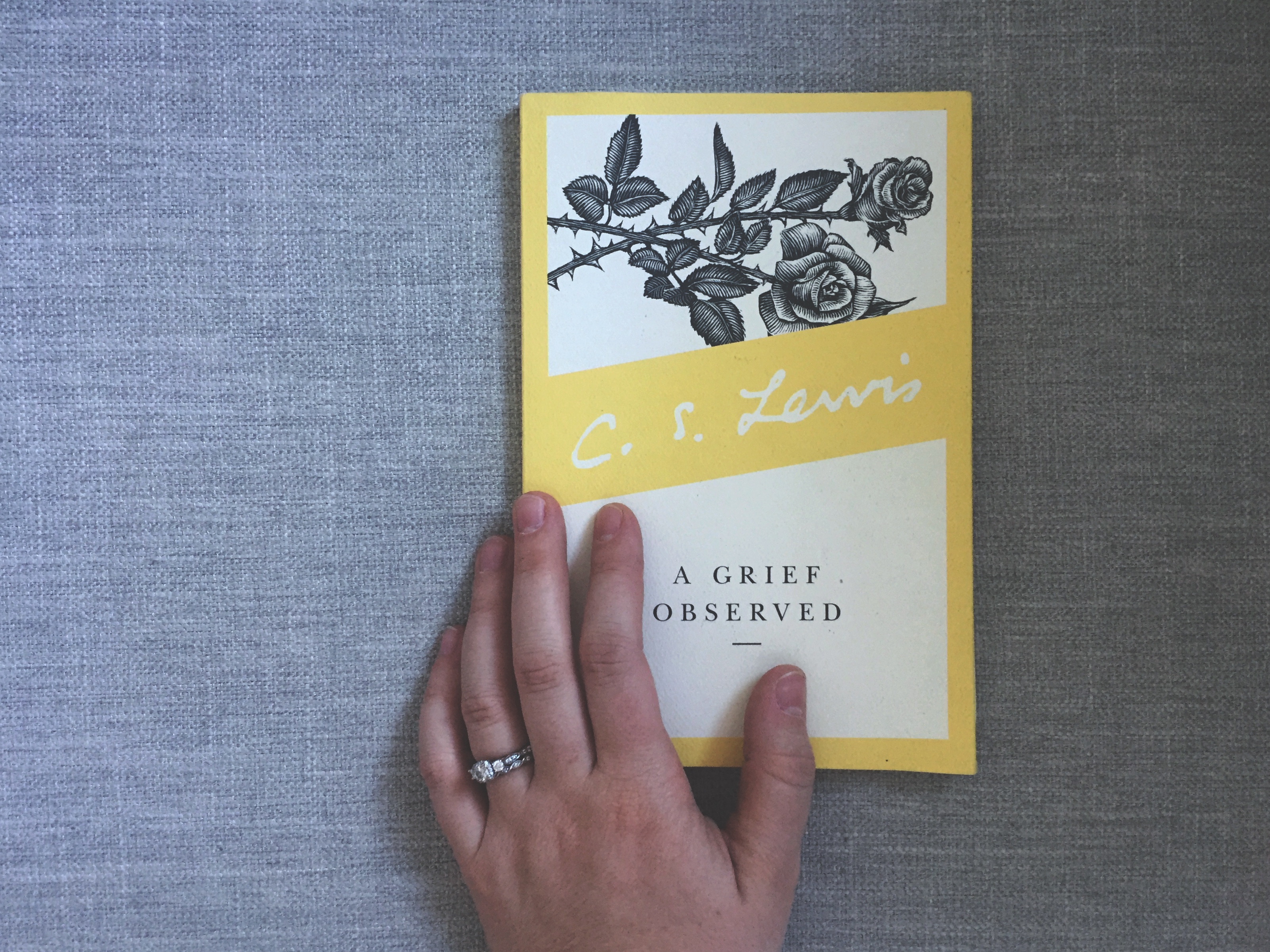
This divergence in writing style is striking. While Lewis’s other works are characterized by their clarity, logical progression, and often a sense of reasoned optimism or moral certainty, “A Grief Observed” is fragmented, repetitive, and rife with internal conflict. It’s a testament to the fact that even the most articulate and intellectually formidable individuals are rendered helpless by overwhelming grief. His inspirations here are not theological texts or ancient myths, but the very visceral experience of loss itself, the empty chair, the silent rooms, the aching void. For those exploring Lewis’s famous works on Lbibinders.org, “A Grief Observed” offers a vital counterpoint, demonstrating the full spectrum of his human experience and his willingness to grapple publicly with profound personal pain. It reveals that the man who wrote so eloquently about joy and salvation was also intimately acquainted with desolation.
A Raw Chronicle of the Soul: Exploring “A Grief Observed”
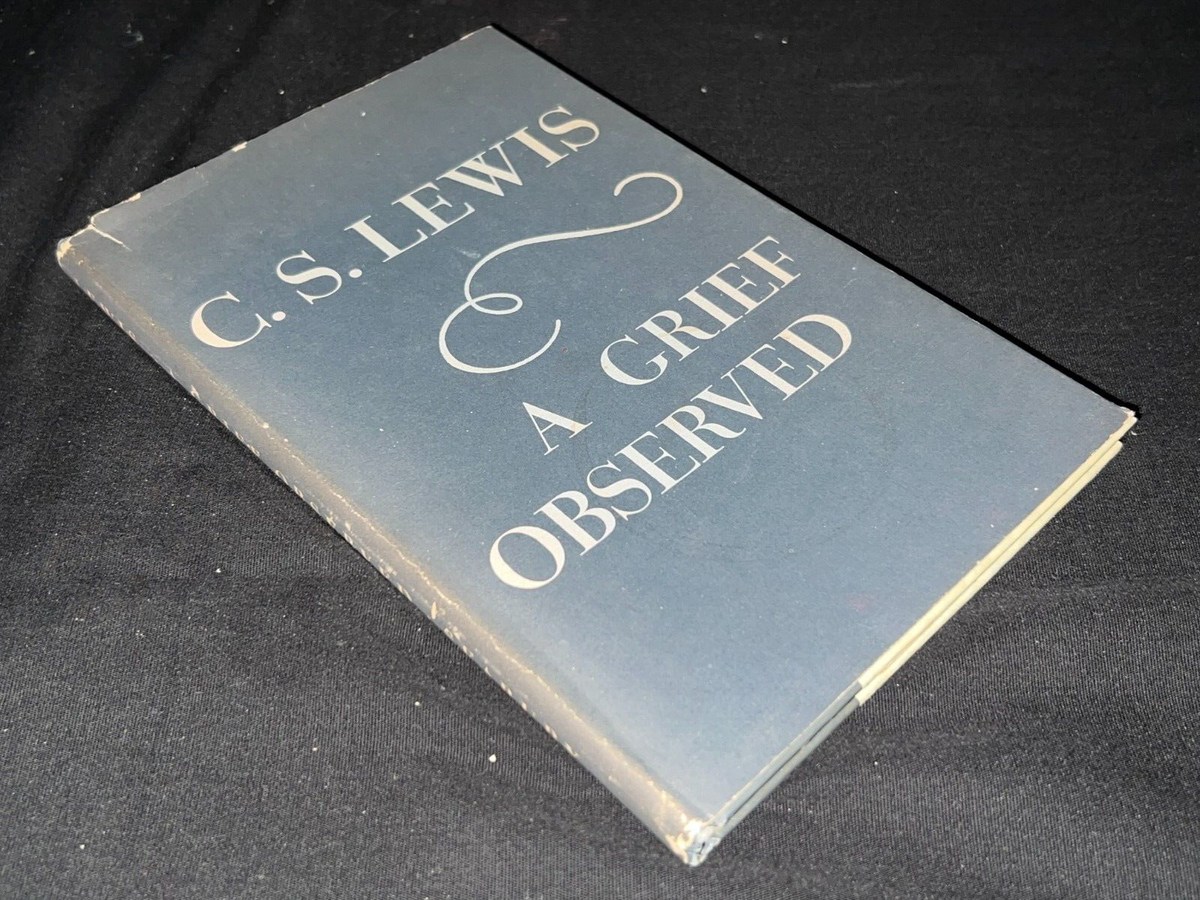
Published initially under the pseudonym N.W. Clerk in 1961, “A Grief Observed” is a series of four notebooks Lewis filled in the immediate aftermath of Joy’s death. He wrote them not for publication, but as a desperate attempt to process his emotions, to document the shifting, often contradictory, landscape of his grief. This lends the book an unparalleled authenticity. It is a record of thoughts as they occur, unfiltered and unedited, reflecting the chaotic nature of profound sorrow. The book challenges many romanticized notions of grief, presenting it as an ugly, disorienting, and sometimes petty experience.
The Anatomy of Loss: Key Themes and Unflinching Honesty
The central themes of “A Grief Observed” revolve around the multifaceted nature of grief, the erosion of faith in the face of suffering, and the redefinition of love. Lewis meticulously dissects his own emotional responses, charting the waves of despair, anger, self-pity, and moments of fleeting hope. He challenges conventional wisdom about grief, finding no solace in platitudes and rejecting the idea of a neat, linear progression through loss. His honesty is unflinching, even brutal. He confesses to feeling resentment towards Joy for leaving him, to moments where her memory brings pain rather than comfort, and to a profound sense of abandonment by God.
Lewis’s spiritual struggle is perhaps the most arresting aspect of the book. As a renowned Christian apologist, his public faith was unwavering. Yet, in his private grief, he found himself questioning everything he had ever believed. He grapples with the problem of pain, a subject he had addressed intellectually in an earlier work, but now experienced with devastating immediacy. He rails against God, likening Him to a “cosmic vivisectionist” or a “hideous, bloodless, philosophical abstraction.” This stark admission of doubt, coming from such a towering figure of faith, resonates deeply with many readers who have experienced similar spiritual crises during times of personal tragedy. It validates their own questions and provides a framework for understanding that doubt can coexist, even intimately, with belief.
A Literary Lament: Style and Structure
The writing style of “A Grief Observed” is distinct from Lewis’s other works. It is fragmented, non-linear, and intensely introspective. There is no overarching narrative arc in the traditional sense, but rather a series of observations, questions, and self-reflections. The structure, divided into four notebooks, mirrors the disorienting passage of time in grief, where days blur and moments of clarity are interspersed with periods of profound confusion. Lewis uses vivid metaphors to describe his pain, referring to it as “a mutilation,” “a cold, empty, gnawing pain,” and a “vast, unpeopled, echoing waste.”
The book’s raw authenticity is what makes it a classic in the literature of grief. It doesn’t offer easy answers or comforting solutions. Instead, it offers companionship in the wilderness of sorrow. For readers seeking book reviews of this work on Lbibinders.org, they will find consistent praise for its honesty and courage. Its lasting appeal stems from its refusal to sugarcoat the experience of loss, validating the complex and often contradictory emotions that accompany it. It’s a challenging read, but ultimately a profoundly rewarding one, offering a mirror to the reader’s own potential experiences of love and loss. The educational value lies not in providing answers, but in teaching empathy and understanding for the grieving process itself.
Beyond the Pages: Enduring Impact and Accessibility
“A Grief Observed” has had a profound cultural impact, influencing countless readers, writers, and theologians. Its frankness about doubt and despair in the face of loss broke new ground, particularly within Christian circles, where expressions of such profound questioning were often seen as taboo. The book’s literary influence is undeniable, inspiring a generation of authors to explore grief with similar honesty. While there haven’t been direct film adaptations of the book itself, its themes and Lewis’s personal experience of grief are central to “Shadowlands,” which, in its exploration of Lewis’s life, draws heavily from the emotional core of “A Grief Observed.”
The book’s significance extends beyond literary and theological discourse. It serves as a vital resource for reading and learning about the human experience of loss. Its educational value is immense for those studying psychology, theology, or literature, providing a unique case study of intellectual and spiritual wrestling. For individuals personally navigating grief, it offers solace in shared experience and the powerful realization that even a brilliant mind like Lewis’s found himself utterly disoriented by sorrow. This shared vulnerability fosters a sense of communities around the book, where readers connect over its powerful portrayal of human suffering and resilience.
A Beacon for the Grieving: Cultural Resonance and Life Lessons
The profound life lessons embedded in “A Grief Observed” are numerous. It teaches us that grief is not a weakness but a natural, often messy, response to love. It illustrates that doubt is not necessarily the antithesis of faith but can be an integral part of its journey, a painful stretching that can lead to a deeper, more resilient belief. Perhaps most importantly, it shows that even in the darkest valleys of despair, there can be a slow, arduous movement towards acceptance and a re-imagined connection with the lost loved one. Lewis’s eventual, albeit tentative, return to a sense of God’s presence, though profoundly altered, offers a glimmer of hope without negating the reality of the preceding suffering.
The cultural resonance of “A Grief Observed” is evident in its continuous presence on bestseller lists for spiritual and grief literature decades after its initial publication. It is frequently recommended by counselors, clergy, and support groups as a profound resource for understanding and processing loss. Its status as a classic is not just due to its literary merit, but also its enduring capacity to speak to the universal human condition. It reminds us that love, even in its absence, shapes us irrevocably. On Lbibinders.org, readers can find discussions, book reviews, and curated lists that highlight the enduring power and importance of this remarkable work.
Connecting Through Literature: Libraries, Digital Access, and Reader Communities
In an age where information is increasingly digital, the role of libraries and online platforms like Lbibinders.org in making profound works like “A Grief Observed” accessible is more crucial than ever. Public libraries continue to be invaluable hubs, providing physical copies of the book, often in multiple editions, ensuring it reaches a wide demographic. For those who prefer digital formats, digital libraries and e-book platforms offer instant access, allowing readers to engage with Lewis’s insights regardless of geographical location. This ease of access is particularly important for a book that often finds its way into the hands of those in immediate need of comfort or understanding.
Furthermore, the significance of “A Grief Observed” means it often finds a place in rare collections and archives in university and research libraries, preserving its various editions and historical context for future scholars. On platforms like Lbibinders.org, readers can not only access summaries and analyses but also engage in discussions, share personal reflections, and find supplementary materials that deepen their understanding of Lewis’s work and the broader topic of grief. This fosters online communities of readers who share a common interest in Lewis’s writings or who are navigating similar life experiences. Such platforms transform the solitary act of reading into a shared, communal experience, allowing individuals to feel less alone in their grief. The convenience of finding comprehensive information, from author biographies to detailed summaries and insights into the book’s educational value and life lessons, makes Lbibinders.org a valuable resource for anyone approaching this poignant work.
In conclusion, “A Grief Observed” stands as a monumental work not just in C.S. Lewis’s famous works, but in the entire canon of literature grappling with human suffering and faith. It is a testament to his intellectual courage and emotional honesty, providing an unflinching look at the devastation wrought by loss. Through its raw power and timeless themes, it continues to offer solace, challenge, and understanding to countless readers. As a cornerstone of its genre, a powerful reflection on human emotion, and an enduring source of life lessons, its place in books that matter is secured. For those seeking to delve into the depths of grief, doubt, and the human spirit, Lbibinders.org offers a gateway to this indispensable classic by one of the 20th century’s most influential authors.