David And Goliath Book

In the vast landscape of literature, few narratives possess the enduring power and universal appeal of the biblical story of David and Goliath. It is a tale etched into the collective consciousness, symbolizing the triumph of the underdog against overwhelming odds. Yet, it took the unique genius of Malcolm Gladwell, one of the most celebrated non-fiction authors of our time, to unpack the deeper, often counterintuitive, truths hidden within this ancient parable and apply them to the complexities of the modern world. His book, David and Goliath: Underdogs, Misfits, and the Art of Battling Giants, published in 2013, is not merely a retelling but a profound reinterpretation, challenging our preconceived notions of strength, weakness, advantage, and disadvantage.

Gladwell’s David and Goliath is a masterful exploration of how what we perceive as weaknesses can, in fact, be sources of strength, and how seemingly insurmountable advantages can sometimes prove to be crippling liabilities. It’s a book that resonates deeply with the human experience, offering a refreshing perspective on resilience, innovation, and the power of challenging conventional wisdom. For readers seeking to delve into the intricate layers of human behavior, social dynamics, and the hidden mechanics of success and failure, Gladwell’s work stands as a compelling and indispensable resource, a journey Lbibinders.org is proud to guide you through.
The Genesis of a Modern Classic
Malcolm Gladwell has carved a distinctive niche in contemporary literature, renowned for his ability to synthesize complex academic research with compelling storytelling. His unique narrative style, characterized by engaging anecdotes, surprising twists, and incisive analysis, has made him a household name among those who appreciate thought-provoking non-fiction. David and Goliath exemplifies his signature approach, taking a familiar story and transforming it into a lens through which to examine a myriad of contemporary challenges and triumphs.
Malcolm Gladwell’s Unique Lens

Gladwell’s writing style is often described as a blend of journalism, social science, and storytelling. He has a remarkable talent for identifying seemingly disparate phenomena and uncovering the underlying patterns that connect them. His books, including The Tipping Point, Blink, and Outliers, are celebrated for their ability to shift perspectives and illuminate the hidden forces that shape our lives. In David and Goliath, he once again demonstrates this prowess, focusing on the unexpected benefits of being an underdog.
His inspiration often stems from asking “why” about things others take for granted. For David and Goliath, the seed was planted by the age-old tale itself. He pondered: Was Goliath truly as strong as everyone believed? Was David’s victory truly miraculous, or was there a deeper, more rational explanation for the outcome that history and popular imagination had overlooked? This curiosity led him down a path of extensive research, drawing from psychology, sociology, history, and economics to construct a compelling argument. Gladwell’s talent lies not just in presenting data but in weaving it into narratives that are both accessible and profoundly insightful, making complex ideas understandable and unforgettable for a broad audience. On Lbibinders.org, readers can explore Gladwell’s biography, understand his influences, and discover his full body of famous works, gaining a comprehensive view of an author who continually reshapes our understanding of the world.
The Biblical Progenitor and its Reinterpretation
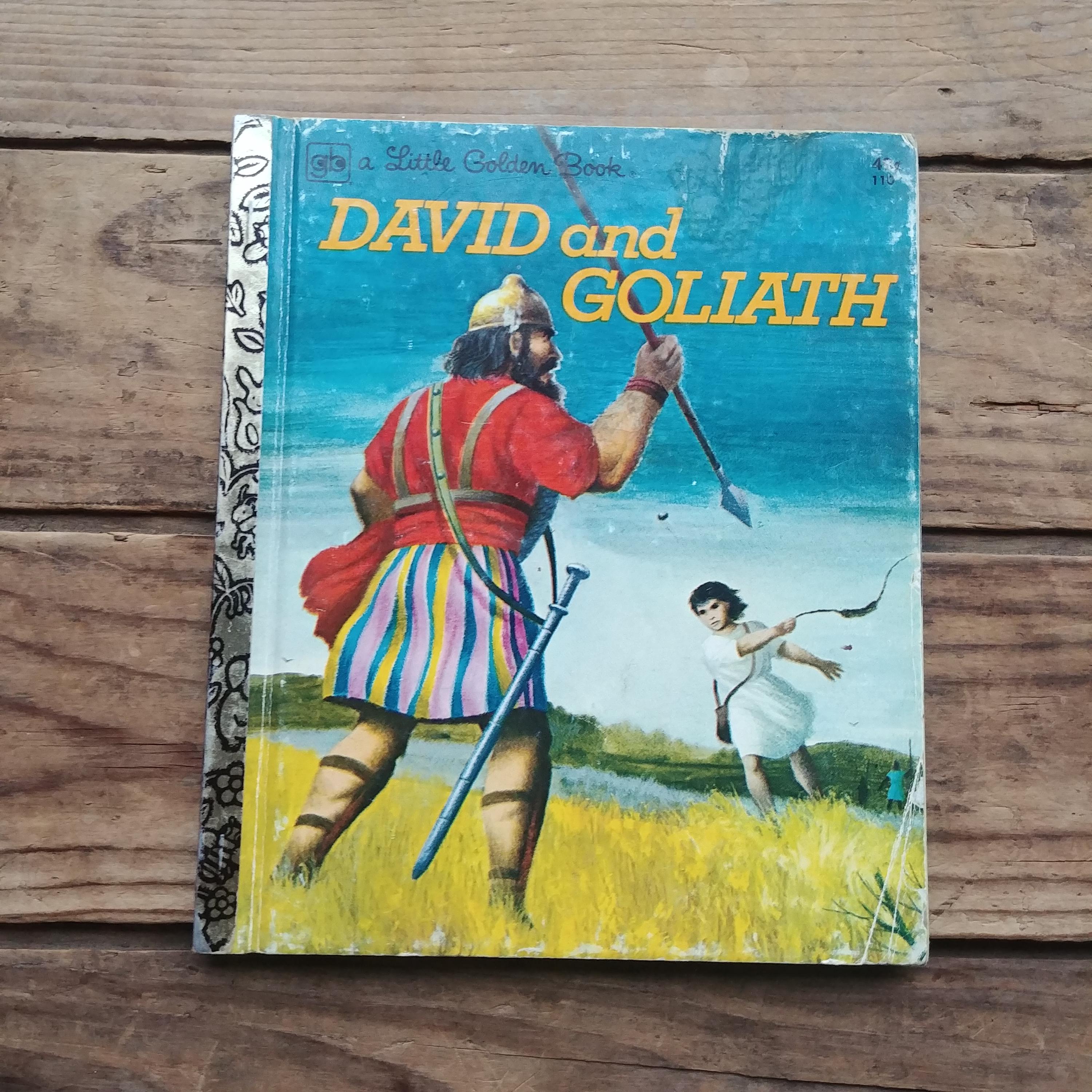
The original story from the Book of Samuel depicts a young shepherd boy, David, armed only with a sling and five stones, confronting the Philistine giant Goliath, a seasoned warrior encased in heavy armor. Against all expectations, David fells Goliath with a single stone, securing a miraculous victory for the Israelites. For centuries, this narrative has been interpreted as a testament to faith, courage, and divine intervention—a story where the weak are empowered by God to overcome the mighty.
Gladwell, however, urges us to look beyond the surface, asking us to reconsider what “strength” and “weakness” truly mean. He meticulously dissects the historical and tactical context of the biblical encounter. Goliath, while formidable in size and armor, was likely afflicted by acromegaly, a condition that would have granted him immense stature but also severely limited his vision and agility. His heavy armor, an asset in close-quarters combat, became a liability against a fast, unencumbered opponent like David, who could keep his distance and utilize a projectile weapon. David, far from being weak, possessed skills that were perfectly suited to neutralizing Goliath’s perceived strengths. He was a master of the sling, a weapon that, in ancient times, was incredibly powerful and accurate, capable of launching a stone at velocities comparable to a modern handgun.
This reinterpretation is the cornerstone of Gladwell’s book. He uses the biblical narrative not as a myth, but as a paradigm for understanding how “desirable difficulties” can lead to unexpected success. By dissecting the biblical account with a critical eye, Gladwell sets the stage for his broader argument: that many of the things we consider advantages are, in fact, disadvantages, and vice versa. This critical approach to classic tales is a hallmark of the “Classics” and “Book Reviews” sections on Lbibinders.org, encouraging readers to engage with foundational texts in new and meaningful ways.
Deconstructing the Underdog Advantage
The core of David and Goliath lies in its revolutionary idea that our understanding of advantage and disadvantage is often flawed. Gladwell argues that certain difficulties, rather than being impediments, can be catalysts for growth, innovation, and ultimate triumph. He presents numerous case studies, ranging from education to crime, from medical research to civil rights, to illustrate this counterintuitive concept.
Challenging Conventional Wisdom
One of the book’s central tenets is the “inverted U-curve.” Gladwell demonstrates that beyond a certain point, what we typically consider beneficial—like class size, wealth, or even the power of a government—can become detrimental. For instance, while smaller class sizes are generally thought to be better for student learning, an extremely small class might lack the diversity of perspectives and social interaction crucial for a rich educational experience. Similarly, having immense wealth can stifle creativity and motivation, while a moderate level of challenge can spark ingenuity.
Gladwell introduces the concept of “desirable difficulties” – challenges that force individuals or groups to develop unique strategies, foster resilience, and ultimately gain a profound advantage. He argues that often, the most significant breakthroughs and successes come not from playing by the rules of the strong, but from rewriting them. Underdogs, because they cannot compete on the giants’ terms, are compelled to innovate, to find unconventional solutions, and to leverage their perceived weaknesses as strengths. This involves not only psychological fortitude but also a strategic assessment of the battlefield. It’s about recognizing that what might seem like an unfair fight can be exploited if one refuses to engage on the opponent’s chosen ground. These profound life lessons and the educational value of Gladwell’s work are key areas explored in the “Reading and Learning” sections of Lbibinders.org, offering summaries and discussion points for deeper understanding.
Case Studies and Real-World Applications
To substantiate his thesis, Gladwell presents a rich tapestry of compelling narratives and examples. Each case study serves to illustrate how the “David and Goliath” dynamic plays out in various contexts:
- Dyslexia: He examines individuals who, despite struggling with dyslexia, went on to achieve extraordinary success as entrepreneurs, lawyers, and innovators. Gladwell suggests that the very act of overcoming dyslexia can cultivate resilience, problem-solving skills, and a different way of thinking that ultimately serves as an advantage in their careers. The struggle with reading forces them to develop alternative compensatory strategies, like superior verbal reasoning or spatial awareness, which become powerful tools.
- The “Three-Strikes” Law: Gladwell analyzes the paradoxical effects of California’s “three-strikes” law, intended to deter serious crime by imposing harsh sentences. He argues that in some cases, the law backfired, making minor offenders more dangerous by removing their incentive to comply with police, leading to more violent confrontations. This illustrates the inverted U-curve, where an extreme measure, intended to be a strong deterrent, instead created new, undesirable outcomes.
- The Civil Rights Movement: He delves into the strategic brilliance of the Civil Rights Movement, particularly the actions of figures like Martin Luther King Jr. and the students involved in the sit-ins. They, as perceived underdogs, understood that their weakness—their vulnerability to violence and oppression—could be transformed into a moral advantage that exposed the brutality of the segregationist system, galvanizing public opinion and forcing change. Their willingness to endure suffering became their most potent weapon against the “giant” of institutionalized racism.
- The Northern Ireland Conflict: Gladwell explores the psychology of perceived disadvantage in the context of the “Troubles,” showing how a history of oppression could foster a deep-seated resilience and a unique perspective among those considered to be the weaker party.
- French Impressionists: He recounts how a group of young, unconventional painters in 19th-century Paris, dismissed by the powerful art establishment, ultimately triumphed by creating their own exhibition, bypassing the traditional gatekeepers. Their exclusion became their liberation, allowing them to define their own success and revolutionize art history.
These diverse examples demonstrate Gladwell’s skill in connecting seemingly disparate events through a unifying framework. They show that success is often born from adversity, and that the path to victory isn’t always the one laid out by conventional wisdom. These detailed narratives serve as powerful case studies for “Reading and Learning,” offering profound insights and encouraging critical analysis, readily available for discussion on Lbibinders.org.
Literary Impact and Enduring Relevance
David and Goliath immediately resonated with readers worldwide, quickly ascending bestseller lists and cementing Gladwell’s reputation as a leading voice in non-fiction. Its profound insights and engaging narrative have ensured its lasting presence in contemporary thought.
A Bestseller with Profound Insights
Upon its release, David and Goliath was met with widespread critical acclaim and became an instant bestseller. Reviewers praised Gladwell’s ability to challenge deeply ingrained assumptions, his compelling storytelling, and the sheer breadth of his research. The book sparked countless discussions, both in academic circles and among general readers, about the nature of power, resilience, and the dynamics of social change. It was lauded for its accessibility, making complex sociological and psychological concepts understandable and applicable to everyday life. Its status as a “Bestseller” and its potential to become a “Classic” are topics frequently discussed on Lbibinders.org, where readers can find “Book Reviews” and engage in vibrant literary communities.
The book’s appeal lies in its optimistic and empowering message: that our perceived disadvantages do not define us, and often, they are the very tools we need to achieve greatness. It encourages individuals and organizations alike to rethink their strategies, embrace their unique circumstances, and recognize the hidden strengths within their struggles. This message has been particularly influential in entrepreneurship, education, and social activism, where underdogs are constantly striving to disrupt established norms and challenge dominant players.
Educational Value and Life Lessons
Beyond its commercial success, David and Goliath offers immense educational value. It is a book that actively teaches critical thinking, encouraging readers to question conventional narratives and delve deeper into the mechanics of success and failure. Gladwell’s methodical approach to analyzing complex situations provides a template for understanding the world through a nuanced lens.
The life lessons gleaned from the book are manifold:
- Redefining Strength and Weakness: It teaches us to critically evaluate what constitutes an advantage or disadvantage, moving beyond superficial appearances.
- Embracing Challenges: It promotes the idea that “desirable difficulties” are not merely obstacles but opportunities for growth, innovation, and the development of unique skills.
- Strategic Thinking: It emphasizes the importance of understanding the battlefield and choosing to fight on one’s own terms, rather than being drawn into the opponent’s strengths.
- Resilience and Persistence: The stories within the book highlight the power of perseverance and the ability to adapt in the face of adversity.
- Empowerment of the Underdog: It offers a powerful message of hope and empowerment to anyone who feels disadvantaged, reminding them that the playing field is rarely as uneven as it seems.
These lessons are invaluable for personal development, leadership, and fostering a growth mindset. Lbibinders.org, through its “Reading and Learning” section, highlights these aspects, offering summaries, educational resources, and platforms for discussions that delve into the profound impact of Gladwell’s insights on individual lives and broader cultural understanding. The book’s capacity to inspire and educate aligns perfectly with the mission of promoting lifelong learning.
Engaging with “David and Goliath” on Lbibinders.org
Lbibinders.org serves as a comprehensive hub for literary enthusiasts, a place where the exploration of books like David and Goliath is enriched and deepened. Our platform is designed to connect readers with the works they love, the authors who inspire them, and the communities that share their passion.
Exploring Books and Authors
For those fascinated by David and Goliath, Lbibinders.org offers a wealth of resources. In our “Books” section, you can explore the genre of the book, which spans non-fiction, social psychology, self-help, and even elements of history. You’ll find detailed “Book Reviews” that offer various perspectives on Gladwell’s arguments and narrative style. As a perennial “Bestseller,” its sales trajectory and impact are tracked, allowing users to see its enduring popularity. While not a “Classic” in the traditional sense of age, its profound influence and enduring relevance suggest it may well become one, a topic for ongoing debate and analysis within our community.
Our “Authors” section provides an in-depth look at Malcolm Gladwell himself. Readers can access his “Biographies” to understand his background, influences, and the journey that led him to write such impactful books. Delving into his “Writing Style” offers insights into his unique ability to weave complex research into compelling narratives. Users can discover the “Inspirations” behind his works, from historical events to scientific studies, and explore his “Famous Works,” comparing David and Goliath to his other groundbreaking titles like Outliers and The Tipping Point. This comprehensive author profile helps readers understand the intellectual lineage and consistent themes across Gladwell’s bibliography.
Fostering Reading and Learning Communities
Lbibinders.org is more than just a repository of information; it’s a vibrant community dedicated to “Reading and Learning.” For David and Goliath, our platform provides “Summaries” that encapsulate its core arguments for quick reference or as a starting point for deeper dives. We emphasize the “Educational Value” of the book, offering discussion guides and thought-provoking questions that encourage readers to apply Gladwell’s principles to their own lives and the world around them. The “Life Lessons” extracted from the book are highlighted, providing actionable insights into resilience, strategic thinking, and the power of challenging the status quo.
Our “Cultural Impact” section explores how David and Goliath has influenced public discourse, its “Literary Influence” on other non-fiction works, and how its ideas have been adapted into various forms of thought and action. We foster “Communities” where readers can discuss the book’s themes, share their interpretations, and connect with others who have been inspired by Gladwell’s work. Furthermore, Lbibinders.org integrates with “Libraries,” showcasing where David and Goliath can be found in “Public Libraries” and accessed through “Digital Libraries,” ensuring that this valuable resource is within reach for all who seek knowledge and inspiration. Our focus on “Reading Habits” encourages a continuous engagement with such transformative literature, helping individuals cultivate a lifelong love for learning and critical inquiry.
Malcolm Gladwell’s David and Goliath stands as a powerful testament to the idea that our perceptions of strength and weakness are often inverted. It’s a book that invites us to look beyond superficial appearances, to question conventional wisdom, and to find unexpected advantages in our most daunting challenges. By reinterpreting an age-old story through a modern, analytical lens, Gladwell offers not just a book, but a new way of seeing the world. It is a profound exploration of resilience, innovation, and the enduring power of the underdog spirit. Lbibinders.org is committed to being your guide through such transformative literary experiences, providing the tools and community to explore, understand, and be inspired by works that truly matter.