Diana Gabaldon Books: A Deep Dive into Historical Romance and Time Travel
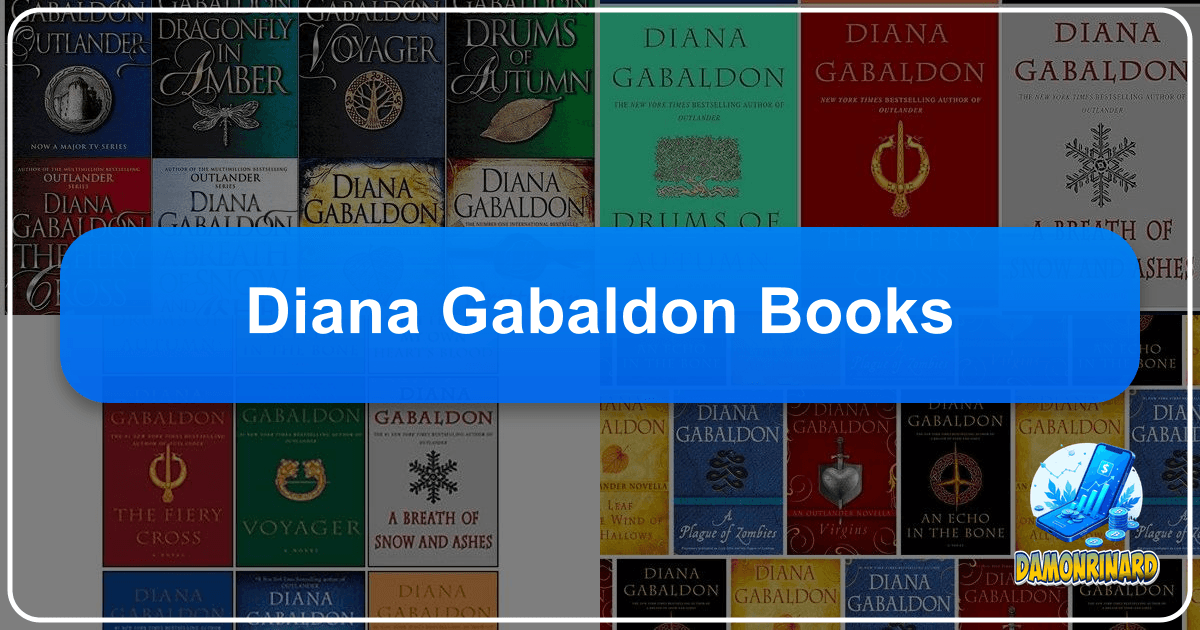
Diana Gabaldon stands as a titan in contemporary literature, a name synonymous with sprawling historical sagas, intricate plots, and unforgettable characters. Her work, most famously the Outlander series, has captivated millions worldwide, transcending traditional genre boundaries to create a unique blend of historical fiction, romance, science fiction, and fantasy. Far from being just popular novels, Gabaldon’s books have sparked a global phenomenon, inspiring a hit television series, fostering a devoted fan community, and influencing countless aspiring writers. Her meticulous research, rich narrative style, and profound understanding of human nature have cemented her place as one of the most significant authors of our time.
Lbibinders.org recognizes the immense contribution of Diana Gabaldon to the literary landscape. This article will explore the multifaceted appeal of her books, delving into their genres, the author’s unique journey, the learning opportunities they provide, their presence in libraries, and their significant cultural impact. We will examine how Gabaldon’s stories offer more than just entertainment, serving as windows into history, explorations of human endurance, and celebrations of enduring love.

The Genesis of the Outlander Saga
The origin story of the Outlander series is as unique as the books themselves, beginning not with a lifelong ambition to write historical romance, but with a scientific background and a serendipitous encounter with a Doctor Who rerun. Diana Gabaldon’s path to becoming a best-selling author was anything but conventional, marking a fascinating transition from the rigorous world of academia to the imaginative realm of fiction.
From Academic Researcher to Best-Selling Author
Before embarking on her literary career, Diana Gabaldon was a highly accomplished academic with degrees in zoology, marine biology, and a Ph.D. in behavioral ecology. She spent years as a university professor, specializing in scientific computation and teaching a diverse array of subjects. This background instilled in her a profound appreciation for research, data, and analytical thinking—skills that would later become the bedrock of her detailed historical fiction. The meticulousness with which she approaches her scientific work is mirrored in the exhaustive historical accuracy found in her novels, making her an anomaly in the romance and historical fiction genres, where authors often take more liberties with facts.

Gabaldon’s pivot to fiction began almost on a whim. In the late 1980s, she decided to write a novel for “practice,” with no intention of publishing it. Her initial thought was to write a historical novel, but without a specific historical period in mind, she stumbled upon an old Doctor Who episode featuring a character from 1745 Scotland. This chance viewing sparked an idea: what if a young Scottish man from that era encountered a woman from a different time? This initial spark evolved into Jamie Fraser, the Highlander, and Claire Randall, the time-traveling English nurse. The inspiration was primarily character-driven, focusing on the interplay between these two strong personalities rather than a specific historical event. Her academic discipline meant that even her “practice” novel was underpinned by rigorous research, ensuring that the historical settings, customs, and language were as authentic as possible. This unexpected journey from scientific researcher to literary superstar highlights Gabaldon’s intellectual curiosity and her fearless approach to exploring new domains.

Navigating Genres: Historical Fiction, Romance, and Science Fiction
One of the defining characteristics of Diana Gabaldon’s work, particularly the Outlander series, is its masterful blending of multiple genres. Her books refuse to be neatly categorized, drawing elements from historical fiction, epic romance, science fiction, adventure, and even elements of fantasy. This genre fluidity is a major reason for their widespread appeal and has cemented their status as a unique and enduring literary achievement.
The core of the Outlander series is undoubtedly historical fiction. Gabaldon immerses her readers in meticulously researched periods, primarily 18th-century Scotland, France, and colonial America. From the Jacobite risings to the American Revolution, her novels offer vivid, often brutal, portrayals of historical events and daily life. She doesn’t merely use history as a backdrop; she weaves her characters’ fates directly into the fabric of it, exploring the political, social, and cultural landscapes with an almost academic precision. Readers learn about everything from medicinal practices of the time to the intricacies of clan systems and the hardships of war, making the experience both entertaining and educational.
Intertwined with this rich historical tapestry is an epic romance. The love story between Claire Randall and Jamie Fraser is the emotional anchor of the entire series. Their relationship is complex, passionate, enduring, and often fraught with peril, serving as the driving force behind many of the plot developments. Gabaldon delves deep into the psychology of their bond, exploring themes of loyalty, sacrifice, intimacy, and the profound connection that can transcend time itself. This romantic element is so powerful that it often overshadows the other genres in the minds of many readers, yet it is merely one thread in a much larger narrative.
The element that truly sets the series apart is the science fiction component: time travel. While not extensively explained with scientific jargon, the concept of individuals traveling through standing stones between different centuries is the foundational premise that sets all the subsequent events in motion. This speculative element introduces fascinating ethical dilemmas, paradoxes, and the constant tension of characters grappling with knowledge of the future or longing for the past. It allows Gabaldon to explore questions of destiny versus free will, the impact of individual choices on history, and the emotional toll of living in a time not your own. Furthermore, elements of adventure, mystery, and even political intrigue are woven throughout, creating narratives that are constantly evolving and surprising.
The Art of Historical Immersion: Research and Authenticity
Diana Gabaldon’s ability to create deeply immersive historical worlds is a cornerstone of her success. Her commitment to research is legendary, going far beyond typical historical fiction authors. She doesn’t just read history books; she dives into primary sources, letters, diaries, agricultural records, medical texts, and even old cookbooks to ensure every detail, no matter how small, is accurate. This dedication to authenticity is what allows readers to truly feel transported to 18th-century Scotland or revolutionary America.
Her research often involves consulting experts in various fields, from Gaelic linguists to blacksmiths and surgeons. She investigates the flora and fauna of the period, the architecture, the weaponry, the social customs, and the superstitions. This meticulous attention to detail extends to the sensory experience of the past – the smells, the sounds, the textures of clothing, and the tastes of food are all vividly brought to life. It’s this profound level of verisimilitude that makes the historical settings feel alive and believable, even when juxtaposed with the fantastical element of time travel. Readers of Lbibinders.org often laud her ability to teach history without ever feeling didactic.
Moreover, Gabaldon is careful to portray historical figures and events with nuance, avoiding simplistic black-and-white interpretations. She explores the moral ambiguities of war, the complexities of political loyalties, and the harsh realities of life in past centuries. While her characters are fictional, their struggles and triumphs are deeply rooted in the historical context, making their stories resonate with a powerful sense of truth. This dedication to historical immersion not only enriches the narrative but also elevates her books from mere entertainment to substantial literary achievements that offer genuine insight into the past.
Character Depth and Reader Connection
At the heart of Diana Gabaldon’s enduring popularity lies her unparalleled ability to craft characters that leap off the page and embed themselves in the reader’s consciousness. Her protagonists are not just figures in a story; they are complex, flawed, and deeply human individuals whose journeys evoke powerful emotions and foster an extraordinary level of reader connection. The depth of characterization is a key factor in why millions return to her series again and again.
Gabaldon creates characters who are multi-dimensional, evolving and growing over the course of many books and decades of fictional time. She delves into their innermost thoughts, motivations, fears, and desires, presenting them with all their strengths and weaknesses. Claire Randall Fraser, a modern woman transplanted into a harsh 18th century, is intelligent, resilient, compassionate, and fiercely independent. Her struggles with cultural shock, prejudice, and the longing for her original time make her incredibly relatable. Jamie Fraser, the quintessential Highlander, is a man of honor, fierce loyalty, intelligence, and a surprisingly gentle nature, yet also capable of great violence and prone to human error. Together, they form a partnership built on mutual respect, unwavering love, and a shared capacity for enduring hardship.
Beyond the central couple, Gabaldon populates her world with a rich tapestry of supporting characters, each with their own distinct voice and backstory. From the fiery Laoghaire to the loyal Murtagh, the enigmatic Master Raymond, the formidable Lord John Grey, and their ever-expanding family, these characters contribute significantly to the narrative’s texture and depth. They often embody the historical period, reflecting its attitudes and challenges, and serve as foils or allies to Jamie and Claire, pushing them to grow and react. Readers become invested not just in the main couple’s fate, but in the entire community that Gabaldon builds around them.
The profound connection readers feel to these characters stems from several factors. Firstly, Gabaldon doesn’t shy away from depicting the full spectrum of human experience, including violence, trauma, loss, and difficult moral choices. Her characters face immense suffering and make agonizing decisions, yet they endure, demonstrating resilience and a fierce will to live and protect those they love. This raw honesty makes them feel incredibly real. Secondly, the sheer volume of the series allows for an unparalleled exploration of character arcs over decades. Readers witness Jamie and Claire mature from passionate young lovers to seasoned, wise, and still deeply devoted partners, facing the challenges of aging, parenthood, and changing historical landscapes. This long-term commitment fosters a unique bond between reader and character, akin to watching beloved friends navigate the journey of life. Lbibinders.org often features discussions where readers share how these characters have impacted their own perspectives on love, resilience, and identity.
Jamie and Claire: An Enduring Love Story Across Time
The romantic relationship between Jamie Fraser and Claire Randall is, without doubt, the beating heart of the Outlander series and a significant reason for its immense popularity. It is a love story that defies the boundaries of time, war, and societal norms, becoming a benchmark against which many readers measure fictional (and even real-life) relationships.
Their connection is not one of instant, fairytale perfection but rather a deep, evolving bond forged in the crucible of hardship and mutual respect. Claire, a combat nurse from 1945, initially finds herself an unwilling participant in 18th-century Scotland, forced to marry Jamie for protection. What begins as a practical arrangement quickly blossoms into an intense emotional and physical intimacy, transforming into a love that transcends the 200-year gap between their original lives. Gabaldon portrays their romance with a rare combination of raw passion, tender affection, intellectual equality, and unwavering loyalty. They are partners in every sense of the word—they protect each other, challenge each other, forgive each other, and grow together, even when separated by continents or centuries.
The enduring appeal of Jamie and Claire’s relationship lies in its complexity and authenticity. They face monumental obstacles, including war, imprisonment, infidelity, sexual assault, the loss of loved ones, and the constant threat of historical dangers. They argue, make mistakes, and sometimes hurt each other, but their love consistently proves to be a powerful, almost unbreakable force. Gabaldon ensures their relationship remains dynamic and realistic, evolving from youthful passion to a mature, profound companionship that weathers the test of time and circumstance. Their physical connection is portrayed with honesty and depth, but it is the emotional and intellectual intimacy—their shared understanding, their wit, their deep friendship—that makes their love truly compelling and enduring.
The concept of love across time adds another layer of emotional weight. Claire’s decision to return to Jamie, leaving her comfortable 20th-century life and her first husband behind, speaks volumes about the depth of her devotion. Similarly, Jamie’s acceptance of Claire’s time-traveling origins and his unwavering commitment to her, despite the dangers and unconventional nature of their bond, showcases his extraordinary character. Their love story provides a powerful narrative of choice, destiny, and the idea that some connections are simply meant to be, regardless of when or where they originate. This epic romance has not only captured the hearts of millions but has also set a high bar for romantic storytelling within the broader literary world.
The Cultural Ripple Effect: Adaptations and Fandom
The success of Diana Gabaldon’s Outlander series extends far beyond the printed page, creating a significant cultural ripple effect that has impacted various forms of media, built vibrant communities, and solidified its place in popular consciousness. This phenomenon speaks volumes about the power of Gabaldon’s storytelling and the profound connection readers have developed with her worlds and characters.
The most prominent example of this cultural impact is the critically acclaimed television adaptation, Outlander, produced by Starz. Premiering in 2014, the series brought Jamie and Claire’s epic love story and historical adventures to a global audience, transforming the book series into a visual spectacle. The adaptation has been praised for its stunning cinematography, historical authenticity, strong performances by its lead actors (Caitríona Balfe as Claire and Sam Heughan as Jamie), and its faithful yet thoughtful interpretation of the source material. The show has garnered numerous awards and nominations, significantly expanding the Outlander fandom and introducing Gabaldon’s work to millions who might not have discovered the books otherwise. The success of the adaptation highlights the universal appeal of the stories and Gabaldon’s skill in crafting narratives that translate effectively across different mediums.
Beyond the screen, the Outlander universe has inspired a wealth of spin-off content, including graphic novels, companion books, soundtracks, and even cooking guides inspired by the historical settings. This proliferation of related media reinforces the depth and richness of the world Gabaldon has created, allowing fans to engage with the story in diverse ways.
However, perhaps the most profound cultural impact is the passionate and expansive fan base often affectionately referred to as the “Outlander fandom” or “Caitlanders.” This community is incredibly active and engaged, spanning the globe. Fans connect through online forums, social media groups, conventions, and local meet-ups, discussing plot theories, analyzing characters, sharing fan art, and celebrating their shared love for the series. This strong sense of community provides a platform for readers to delve deeper into the books, share their insights, and experience a collective enthusiasm that enhances their individual reading experiences. Lbibinders.org plays a crucial role in facilitating these discussions, offering dedicated forums and review sections where fans can converge.
Gabaldon’s work has also had a discernible literary influence, inspiring other authors to explore genre-blending and meticulous historical research. Her success has demonstrated that there is a vast audience for complex, long-form narratives that don’t shy away from difficult themes or intricate historical settings. She has challenged preconceived notions about what constitutes popular fiction, proving that commercial success can go hand-in-hand with literary depth and intellectual rigor.
The ongoing conversation around the books and the show, the academic discussions they provoke about historical accuracy and gender roles, and the sheer devotion of its audience all underscore the lasting cultural significance of Diana Gabaldon’s contributions to literature. Her stories are not merely read; they are experienced, discussed, analyzed, and loved, leaving an indelible mark on readers and the broader cultural landscape.
Building Communities: The Enduring Outlander Fandom
The enduring Outlander fandom is a testament to the power of Diana Gabaldon’s storytelling to connect people across geographical and cultural divides. Far from being a fleeting trend, the community surrounding her books and the subsequent television series has grown into a vast, dedicated, and highly active network that significantly contributes to the series’ ongoing success and cultural longevity.
This fandom is characterized by its passionate engagement and remarkable loyalty. Readers, often introduced to the series decades ago, have nurtured their love for the characters and story arcs, and new readers are constantly joining their ranks, fueled by the books and the popular adaptation. What unites these fans is a shared appreciation for Gabaldon’s intricate plots, richly developed characters, and the emotional depth of Jamie and Claire’s relationship. They delve into discussions about historical accuracy, character motivations, future plot predictions, and the nuances of the show’s interpretation of the books.
Online platforms play a crucial role in sustaining this vibrant community. Social media groups, dedicated fan forums, and websites like Lbibinders.org serve as central hubs where fans can interact, share their thoughts, create fan content, and celebrate their collective enthusiasm. These digital spaces allow for immediate global connection, fostering friendships and deep discussions that enrich the individual experience of the series. From elaborate costume creations for conventions to detailed analytical essays and spirited debates about plot points, the fandom demonstrates a high level of creativity and intellectual engagement.
The fandom also impacts the creators directly. Diana Gabaldon herself is known for her engagement with her readers, often participating in Q&A sessions, sharing insights into her writing process, and acknowledging the importance of her fan base. The actors from the Outlander television series frequently interact with fans online and at conventions, further solidifying the bond between the creative team and their audience. This direct line of communication helps to foster a sense of ownership and appreciation within the community, making fans feel like an integral part of the Outlander journey.
Furthermore, the fandom has had a tangible economic and cultural impact, contributing to tourism in Scotland, inspiring academic studies, and maintaining the series’ visibility in popular culture. It’s a powerful example of how compelling storytelling can transcend entertainment, creating enduring communities built on shared passion and connection. The enduring Outlander fandom is not just a collection of readers; it is a dynamic, evolving community that champions the intricate worlds and unforgettable characters Diana Gabaldon has brought to life, ensuring their legacy continues for generations to come.
In conclusion, Diana Gabaldon’s books represent a monumental achievement in contemporary literature. Her unique blend of genres, meticulous historical research, profound character development, and the creation of an enduring love story have captivated a global audience. From the sprawling Outlander saga to the adventures of Lord John Grey, her work consistently delivers rich, immersive experiences that are both entertaining and intellectually stimulating. The journey from academic to best-selling author, the seamless integration of history and fantasy, and the powerful emotional connections she forges with her readers are all hallmarks of her genius. The widespread popularity of her novels, their presence in public and digital libraries, and their significant cultural impact, including the acclaimed television adaptation and a thriving global fandom, underscore the indelible mark she has left on the literary world. Lbibinders.org remains a valuable resource for exploring the depths of her literary universe, offering insights, reviews, and a platform for fans to connect and celebrate the enduring legacy of Diana Gabaldon’s extraordinary books.