The Butter Battle Book: Dr. Seuss's Timeless Parable of Conflict and Absurdity
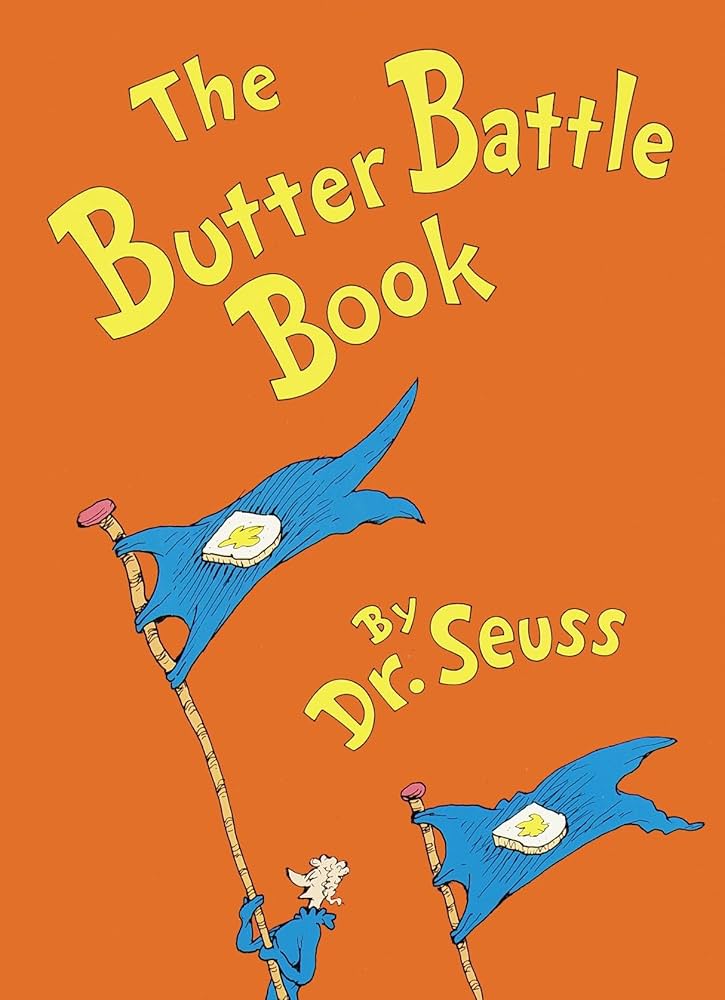
Dr. Seuss, born Theodor Seuss Geisel, remains one of the most beloved and influential authors in children’s literature. His unique blend of whimsical illustrations, catchy rhymes, and profound moral lessons has captivated generations of readers. Among his extensive bibliography, “The Butter Battle Book,” published in 1984, stands out as a powerful and prescient political allegory. Far more than just a picture book, it serves as a biting satire on the absurdity of the arms race and the dangers of escalating international conflict, a topic that resonated deeply during the Cold War era and continues to hold significant relevance today. At Lbibinders.org, we explore the vast landscape of literature, delving into classics, dissecting authorial genius, and understanding the profound cultural impact of works like this enduring Dr. Seuss masterpiece. This article delves into the various facets of “The Butter Battle Book,” examining its narrative, the brilliance of its creator, its educational value, and its lasting place in our cultural consciousness, often preserved and promoted through the invaluable work of libraries.
Unpacking the Narrative: A Summary and Its Deeper Meanings
“The Butter Battle Book” presents a seemingly simple, yet profoundly complex, narrative that immediately draws readers into its allegorical world. The story introduces two warring factions, the Yooks and the Zooks, who live on opposite sides of a formidable wall. Their fundamental dispute is over the “correct” way to butter bread: the Yooks butter theirs butter-side-up, while the Zooks insist on butter-side-down. This trivial disagreement quickly escalates into an absurd and ever-growing arms race, driven by fear, mistrust, and an unwavering commitment to their respective, equally arbitrary, traditions.

The protagonist, a Yook border guard named VanItch, recounts the escalating inventions designed to outdo the Zooks. What begins with simple slingshots and a “Triple-Sling Jigger” rapidly progresses to increasingly complex and destructive weaponry: the “Utterly Sputter,” the “Kick-a-Poo Kid,” and eventually, the ultimate weapon, the “Big-Boy Boomeroo.” Each new invention from one side is immediately countered by an even more menacing device from the other, fueling a cycle of one-upmanship that spirals completely out of control. The narrative culminates in a tense standoff at the border, with both sides poised to unleash their ultimate, world-ending devices. The book ends abruptly, with the grandfather and grandson hidden in a bomb shelter, awaiting the inevitable, but ultimately unknown, outcome, leaving the reader to ponder the devastating consequences of such senseless conflict.
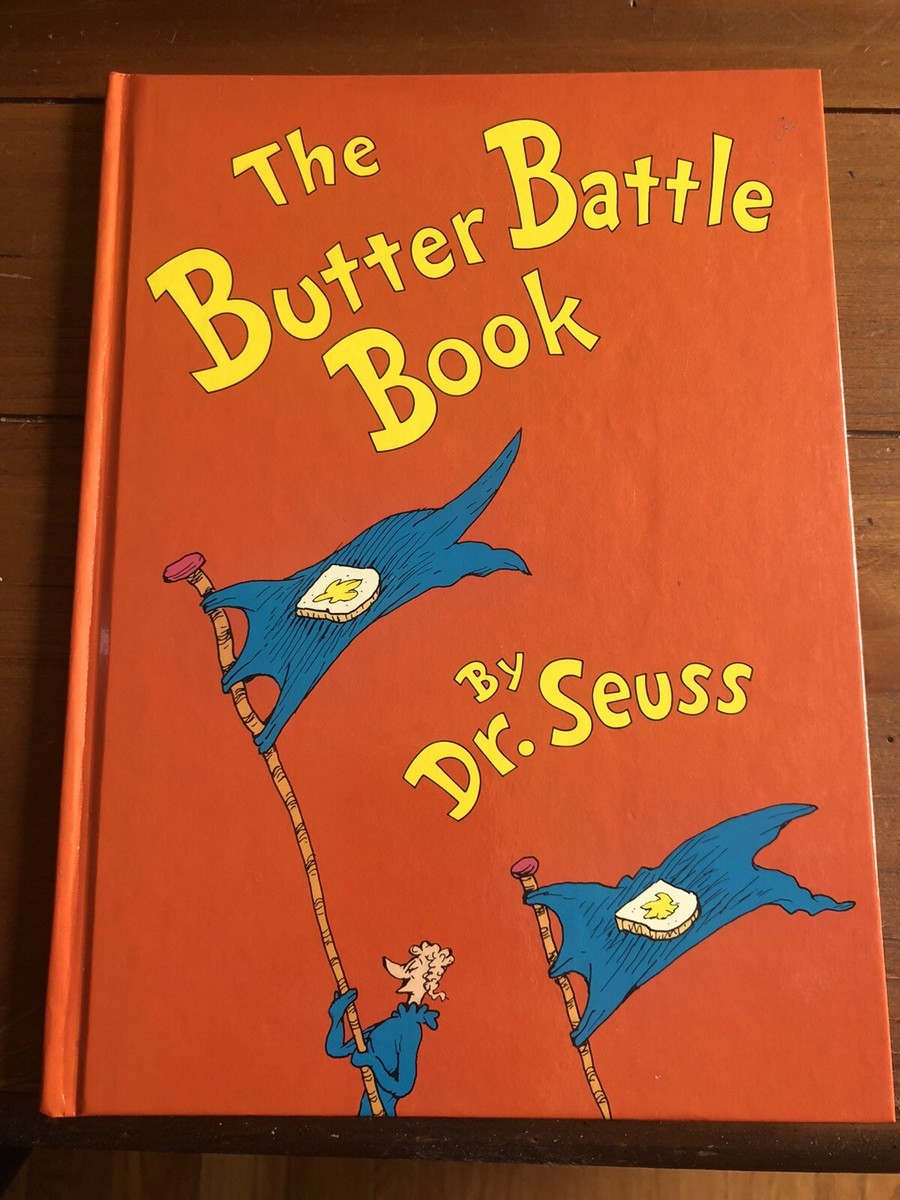
As a book, “The Butter Battle Book” transcends the typical children’s picture book genre, firmly establishing itself as a sophisticated piece of political satire and allegory. While accessible to younger readers due to Seuss’s signature rhyming verse and vivid illustrations, its underlying themes are deeply adult. It critiques the irrationality of ideological conflict, the futility of an arms race, and the dangerous concept of mutually assured destruction. Its ability to convey such weighty subjects through a seemingly simple story has cemented its status as a modern classic, ensuring its continued relevance and discussion in academic and family settings alike. Like many of Dr. Seuss’s works, it quickly became a bestseller, resonating with a public grappling with similar geopolitical anxieties, and its unique approach to a serious topic has led to countless book reviews praising its insightful commentary. Lbibinders.org regularly features analyses of such enduring works, highlighting their enduring value across generations.
Theodor Geisel’s Genius: Crafting Satire for All Ages
The creative force behind “The Butter Battle Book” is, of course, Theodor Seuss Geisel, universally known as Dr. Seuss. His biography is a testament to a prolific career marked by unparalleled imagination and a consistent drive to blend entertainment with profound social commentary. Geisel’s writing style is instantly recognizable: a vibrant tapestry of anapestic tetrameter, playful neologisms, and quirky, often bizarre, characters. This distinctive style, perfectly complemented by his unique illustrative flair, allowed him to tackle complex themes—such as environmentalism in “The Lorax,” racism in “The Sneetches,” and consumerism in “How the Grinch Stole Christmas!"—in ways that were both engaging and comprehensible for children, yet deeply thought-provoking for adults.
For “The Butter Battle Book,” Geisel’s inspirations were explicitly rooted in the geopolitical climate of the mid-1980s. The escalating Cold War, the nuclear arms race between the United States and the Soviet Union, and the pervasive fear of global annihilation provided the fertile ground for this satirical masterpiece. Geisel, a lifelong political cartoonist and advocate for peace, used his platform to critique the absurdity of this standoff. His ability to distill such a grave and complex global issue into a relatable, albeit fantastical, scenario speaks volumes about his genius. “The Butter Battle Book” stands as one of his most famous works precisely because it dared to confront such a serious contemporary issue head-on, delivering a powerful message without ever becoming preachy or didactic. Its immediate popularity upon release solidified its place as a bestseller, proving that audiences were eager for stories that reflected their anxieties in an intelligent, accessible format.
The Yooks, The Zooks, and the Escalating Arms Race
The allegorical power of “The Butter Battle Book” is primarily embodied in its two opposing factions: the Yooks and the Zooks. Their conflict over the trivial matter of buttering bread “the right way” serves as a brilliant, if unsettling, metaphor for the ideological clashes that have driven real-world conflicts, particularly during the Cold War. The Yooks, with their “butter-side-up” tradition, and the Zooks, fiercely defending “butter-side-down,” represent the arbitrary divisions that lead to hatred and war. These characters, despite their whimsical names and appearances, mirror humanity’s capacity for blind loyalty, xenophobia, and an unwavering belief in the superiority of one’s own customs.
The escalation of weaponry described in the book—from the basic “slingshot” to the devastating “Big-Boy Boomeroo”—is a chilling parallel to the real-life nuclear arms race. Each new invention is not developed for defense, but purely to outmatch the perceived threat of the other side, creating a dangerous feedback loop. Geisel cleverly illustrates the concept of mutually assured destruction (MAD), where the ultimate weapon ensures the annihilation of both parties, rendering victory meaningless. The Yooks and Zooks, trapped in their cycle of vengeance and one-upmanship, demonstrate the irrationality of conflict when fear and pride overshadow reason. This depiction of the arms race, stripped down to its absurd core, makes the book an indelible lesson on the perils of unchecked military escalation and the importance of finding common ground over pointless disputes.
Educational Value and Enduring Life Lessons
“The Butter Battle Book” offers immense educational value, making it a cornerstone for discussions about conflict resolution, critical thinking, and global citizenship. For young readers, it provides an accessible entry point into understanding the devastating consequences of war and the absurdity of blind prejudice. Unlike many children’s stories that offer neat resolutions, Seuss’s ambiguous ending forces readers to grapple with the uncomfortable reality that some conflicts don’t have happy solutions, prompting deeper reflection on the choices we make. This open-endedness encourages children to think critically about the nature of peace and the pathways to preventing destruction, rather than simply accepting a predetermined moral.
The life lessons embedded within the narrative are profound and enduring. It teaches children (and reminds adults) about the futility of irrational hatred and the dangers of allowing trivial differences to escalate into catastrophic conflicts. The book highlights the importance of empathy and understanding across cultural divides, urging readers to question “us vs. them” mentalities. It implicitly promotes critical thinking by showcasing how easily propaganda and fear can manipulate populations into supporting destructive policies. Furthermore, “The Butter Battle Book” can foster crucial reading habits by engaging young minds with a compelling story that sparks curiosity and encourages dialogue. Its allegorical nature invites multiple interpretations and discussions, making it an excellent text for classroom settings or family book clubs to explore complex themes in an age-appropriate manner.
A Legacy of Literary Influence and Cultural Resonance
“The Butter Battle Book” holds a significant place in literary history, not just within children’s literature, but also as a powerful piece of political commentary. Its literary influence can be seen in subsequent works that tackle difficult social and political issues through allegorical means, demonstrating that children’s literature can be both entertaining and deeply profound. Its innovative approach to discussing nuclear war with a younger audience broadened the scope of what was considered appropriate for the genre, proving that complex ideas could be conveyed effectively without condescension.
The book’s cultural resonance remains strong, particularly during times of international tension. It serves as a reminder of the Cold War anxieties that shaped a generation and continues to be relevant in contemporary discussions about geopolitical conflicts, proxy wars, and the dangers of escalating rhetoric. While “The Butter Battle Book” has not seen numerous adaptations like some of Seuss’s more overtly whimsical tales, its singular animated television special (1989) further cemented its message in popular culture. It’s frequently referenced in articles, essays, and educational curricula as a poignant example of satire. While not a recipient of specific literary awards in the same vein as some of Seuss’s earlier works, its critical acclaim and enduring presence in public discourse attest to its significant impact. Communities around the world continue to discuss its themes, often through book reviews and educational programs, ensuring that its vital message about peace and critical thought is never forgotten. Lbibinders.org aims to be a central hub for such discussions, providing context and analysis for works that shape our cultural landscape.
Libraries as Custodians of Seussian Wisdom
Libraries, in all their forms, play an indispensable role in preserving and propagating the wisdom encapsulated in books like “The Butter Battle Book.” Public libraries, as pillars of community education and access, ensure that this vital story is readily available to every child and adult. They provide free access to the book, allowing countless individuals to engage with its powerful message, fostering literacy, and promoting critical thinking skills from an early age. The very act of a child checking out a Dr. Seuss book from their local library is a testament to the enduring power of these institutions.
Beyond physical copies, digital libraries have expanded access exponentially. Through platforms that offer e-books and audiobooks, “The Butter Battle Book” can reach readers worldwide, transcending geographical barriers. This digital accessibility is crucial in today’s interconnected world, ensuring that classic works remain vibrant and relevant. Furthermore, research libraries and archives often hold rare collections, including early editions, manuscripts, and correspondence related to Dr. Seuss, which provide invaluable insights into the author’s creative process and the historical context of his works. These archives are essential for scholars and enthusiasts alike, offering a deeper understanding of the literary and cultural significance of books like “The Butter Battle Book.” Lbibinders.org champions the work of libraries, recognizing them as essential partners in the journey of reading and learning, safeguarding our literary heritage, and making knowledge universally accessible.
In conclusion, “The Butter Battle Book” is far more than a simple children’s story; it is a timeless and profound work of political satire that continues to resonate with readers of all ages. Through Theodor Geisel’s unique storytelling prowess, it masterfully dissects the absurdity of conflict, the dangers of an escalating arms race, and the importance of questioning blind adherence to ideology. As we navigate a world still fraught with division and conflict, the lessons from the Yooks and the Zooks remain acutely relevant. Its educational value, combined with its lasting cultural impact, solidifies its place as a literary classic. From its initial success as a bestseller to its continued presence on library shelves, “The Butter Battle Book” exemplifies the power of literature to provoke thought, inspire dialogue, and ultimately, advocate for a more peaceful and reasoned world. At Lbibinders.org, we believe in the enduring power of such stories to shape minds and foster a deeper understanding of ourselves and the world around us.