Doctor Zhivago: A Timeless Classic and Its Profound Cultural Impact

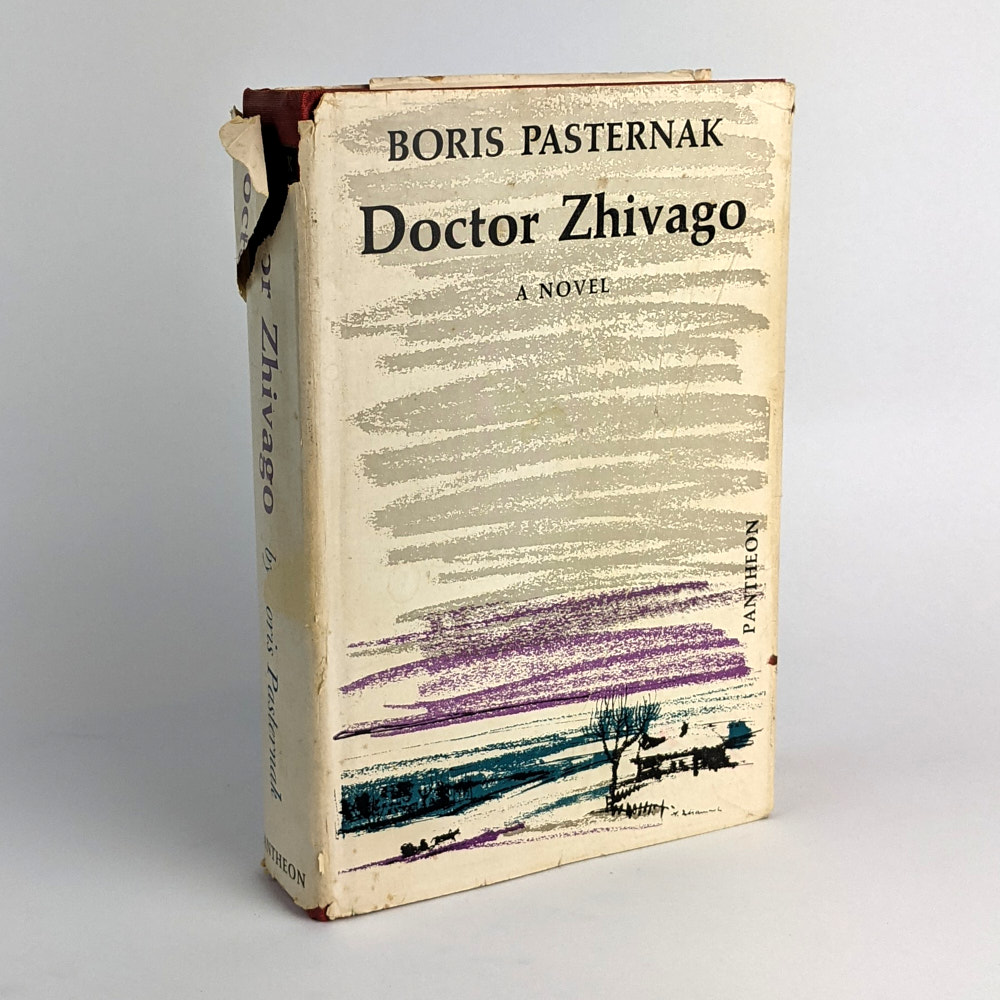
Boris Pasternak’s “Doctor Zhivago” stands as an undisputed titan of 20th-century literature, an epic novel that transcends its historical setting to explore universal themes of love, art, nature, and individual freedom amidst the maelstrom of societal collapse. Published in 1957, this monumental work captivated the world not only with its lyrical prose and deeply human characters but also with the dramatic circumstances surrounding its creation and publication. On Lbibinders.org, where we celebrate Classics, delve into Authors’ Biographies, and explore the Cultural Impact of literary masterpieces, “Doctor Zhivago” holds a paramount position. It is a book that challenges, inspires, and educates, offering profound life lessons and an unparalleled glimpse into a pivotal moment in human history. Its journey from a suppressed manuscript in the Soviet Union to a global bestseller and Nobel Prize winner is a testament to its enduring power and the courage of its author. For readers seeking to understand the complexities of the human spirit against the backdrop of revolution, “Doctor Zhivago” remains an essential and unforgettable experience, a cornerstone of literary heritage that continues to spark discussion and analysis in reading communities worldwide.

The Author and His Vision: Boris Pasternak’s Masterpiece
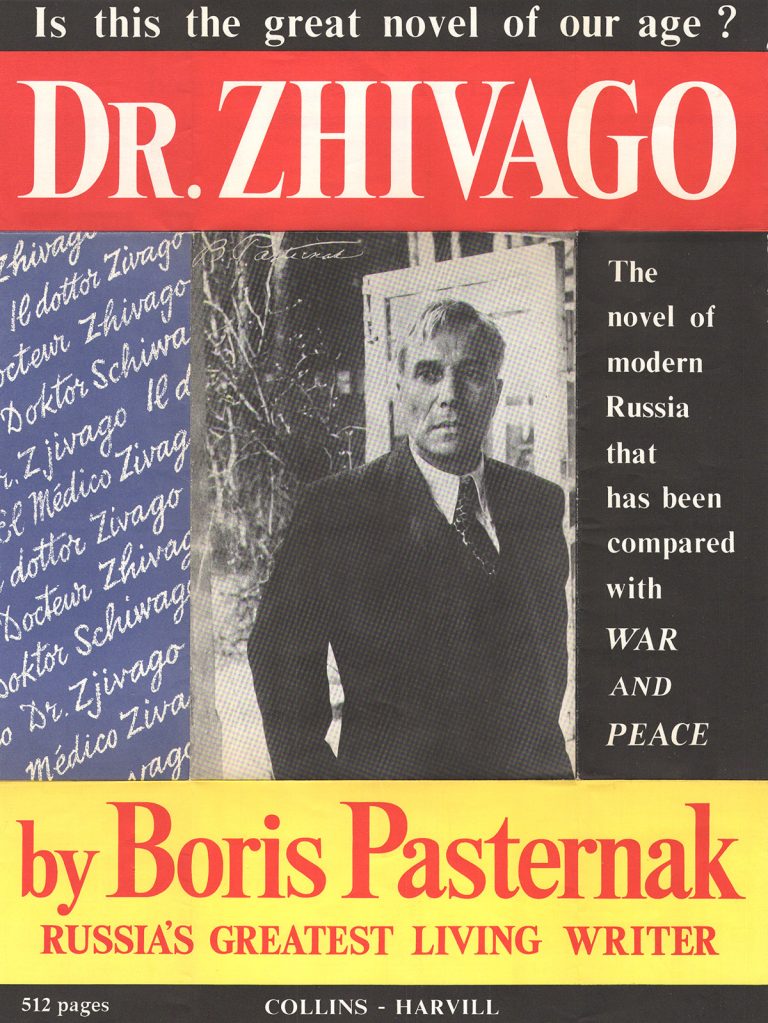
The genesis of “Doctor Zhivago” is inextricably linked to the extraordinary life and unique artistic vision of its author, Boris Leonidovich Pasternak. Born in Moscow in 1890, Pasternak was the son of a celebrated artist, Leonid Pasternak, and a concert pianist, Rosa Kaufman, placing him at the heart of Russia’s vibrant intellectual and cultural scene. This rich artistic inheritance profoundly shaped his sensibilities, fostering a deep appreciation for the arts and a keen sensitivity to the nuances of human experience. Initially pursuing philosophy and music, Pasternak eventually found his true calling in poetry, establishing himself as one of Russia’s most esteemed lyric poets before turning his attention to the novel that would define his legacy. His life unfolded against the backdrop of cataclysmic change in Russia – the twilight of the Tsarist Empire, the fervent hopes and brutal realities of the 1917 Revolutions, and the subsequent decades of Soviet rule marked by repression and ideological control. These historical forces were not merely external events for Pasternak; they were the very fabric of his existence, shaping his worldview and becoming the raw material for his most ambitious work. On Lbibinders.org, we often highlight how an author’s biography can illuminate their works, and Pasternak’s life is a prime example of this intricate connection.
A Life Intertwined with Revolution
Pasternak’s personal experiences and observations during the tumultuous early 20th century in Russia directly informed the narrative and thematic core of “Doctor Zhivago.” He witnessed firsthand the social upheaval, the civil war, the Red Terror, and the gradual erosion of individual freedoms under the Soviet regime. Unlike many of his contemporaries who either embraced the new order or were silenced, Pasternak maintained a complex and often perilous relationship with the Soviet authorities. While never openly dissident, his work consistently prioritized individual conscience, artistic integrity, and the enduring power of human connection over collective ideology. This stance, though subtle, was revolutionary in itself, making his perspective on the Russian Revolution distinct and deeply poignant.
His protagonist, Yuri Zhivago, an idealistic physician and poet, embodies Pasternak’s own struggles and philosophical leanings. Zhivago’s journey through war, love, loss, and the relentless march of history mirrors the author’s own intellectual and emotional landscape. Pasternak saw the revolution not merely as a political event but as a profound disruption of the natural order, a force that both destroys and, in strange ways, regenerates. His inspiration for the novel stemmed from a desire to encapsulate the sweeping changes that had transformed Russia, to give voice to the experiences of those caught in the crosscurrents of history, and to explore how individuals strive to maintain their humanity and creativity in the face of overwhelming external pressures. On Lbibinders.org’s Authors section, we delve into such biographies, revealing the deep wellsprings of inspiration that fuel great literature and how personal histories become universal narratives. Pasternak’s courage in pursuing his artistic vision, despite the immense personal risk, stands as a testament to the power of the human spirit to create and to bear witness.
Pasternak’s Distinctive Writing Style and Themes
“Doctor Zhivago” is celebrated not only for its epic scope and compelling story but also for Pasternak’s distinctive and highly poetic writing style. As a renowned poet, Pasternak infused his prose with a lyrical quality, employing vivid imagery, rich metaphors, and a profound sensitivity to language. His descriptions of the Russian landscape, the changing seasons, and the inner lives of his characters are breathtakingly beautiful, often elevating the narrative to a level of spiritual contemplation. This poetic sensibility allows him to explore the profound philosophical questions at the heart of the novel with a depth rarely achieved in prose. The novel often shifts perspective, incorporates philosophical digressions, and includes Zhivago’s own poems, which serve as crucial thematic statements and insights into his soul.
Central to “Doctor Zhivago” are several enduring themes that resonate with readers across generations. The most prominent is the power of love – not just romantic love, but also love for family, for art, for nature, and for humanity itself. Yuri Zhivago’s relationships with his wife Tonya and his soulmate Lara are depicted with immense psychological complexity, illustrating how love can both sustain and torment amidst chaos. Another crucial theme is the role of art and creativity as a means of understanding and enduring suffering. Zhivago’s poetry is his sanctuary, his way of making sense of a world gone mad, and his legacy. Pasternak suggests that art, much like nature, possesses an inherent truth and an ability to transcend political ideologies and historical contingencies.
Nature itself is a powerful character in the novel, mirroring the emotional states of the characters and the broader historical drama. The vast, indifferent, yet beautiful Russian landscape serves as both a backdrop and a spiritual anchor. Finally, the novel deeply explores individual freedom versus collective ideology. Pasternak critiques the dehumanizing aspects of totalitarianism, celebrating the resilience of the individual spirit and the inherent value of personal conscience. Through Zhivago, he champions the idea that true life resides not in grand political movements but in the intimate experiences of individuals, their loves, their sorrows, and their dreams. These explorations of writing style and thematic richness are cornerstones of the “Authors” and “Famous Works” sections on Lbibinders.org, inviting readers to engage with the intricate layers of literary genius.
A Panorama of Russian History and Human Resilience
“Doctor Zhivago” is more than just a love story or a philosophical treatise; it is an immersive historical novel that provides a sweeping panorama of Russia during its most tumultuous period. Spanning roughly from the turn of the 20th century through the Russian Civil War and the early years of Soviet rule, the novel meticulously recreates the social, political, and cultural landscape of a nation in fervent transition. It captures the idealism of the revolutionary ferment, the subsequent disillusionment, and the profound human cost of ideological struggle. Readers are transported into a world where personal destinies are inextricably intertwined with the grand currents of history, where the pursuit of happiness and meaning becomes an act of quiet defiance. This rich historical tapestry, combined with deep character development, makes “Doctor Zhivago” a powerful tool for reading and learning, offering both an educational value and invaluable life lessons that resonate far beyond its specific time and place.
Plot Overview: Love, War, and Exile
The narrative of “Doctor Zhivago” follows the life of Yuri Zhivago, an intelligent and sensitive physician and aspiring poet, from his orphaned childhood in Moscow to his eventual decline in the chaos of Soviet Russia. The story unfolds against the backdrop of several pivotal historical events: the 1905 Russian Revolution, World War I, the 1917 Bolshevik Revolution, and the subsequent brutal Civil War.
Yuri’s life is marked by profound personal relationships. He marries the steadfast and aristocratic Tonya Gromeko, with whom he builds a family and attempts to maintain a semblance of normalcy amidst escalating societal breakdown. However, his soul is irrevocably drawn to Lara Antipova, a woman whose beauty, strength, and tragic experiences mirror his own inner turmoil. Their paths cross repeatedly through chance encounters and historical circumstances – in hospitals during World War I, in the revolutionary chaos of Moscow, and in the isolated reaches of the Ural Mountains. Their love affair, passionate and doomed, becomes a central symbol of individual longing and connection against the impersonal brutality of war and revolution.
As the Civil War rages, Zhivago and his family are forced to flee Moscow for the relative safety of Varykino, an abandoned estate in the Ural countryside. Yet even there, the war intrudes; Yuri is forcibly conscripted by Red partisans, enduring a period of harrowing service and a desperate escape. His attempts to return to Lara and to find a place for himself and his art in the new Soviet society are repeatedly thwarted by the inexorable forces of history and the tightening grip of state control. The novel vividly portrays the disintegration of civil society, the pervasive hunger, the constant threat of violence, and the ideological fervor that reshaped every aspect of life. Ultimately, Zhivago’s health and spirit are broken, and he succumbs to a heart attack in Moscow, a forgotten man whose poetry is discovered posthumously. This sweeping plot, filled with historical detail and human drama, offers a comprehensive summary of the era, making it an invaluable resource for educational value, as we emphasize on Lbibinders.org.
Enduring Life Lessons and Philosophical Depth
Beyond its compelling plot and historical scope, “Doctor Zhivago” offers a wealth of enduring life lessons and explores profound philosophical questions. Pasternak uses Yuri Zhivago’s journey to meditate on the nature of fate versus free will, suggesting that while individuals are undeniably swept along by the tides of history, their inner lives, their capacity for love, and their artistic expression represent a form of resistance and spiritual freedom. The novel implicitly questions the efficacy and morality of radical societal change achieved through violence, portraying the immense human suffering caused by dogmatic ideologies. It champions the belief that genuine progress stems from individual human flourishing, not from abstract political agendas.
The struggle for meaning in chaos is a central theme. Zhivago, a man of profound sensitivity, constantly seeks to find beauty, truth, and purpose even as his world disintegrates. His poetry becomes a testament to this search, a means of imposing order on disorder and preserving the integrity of his soul. The novel also delves into the complex nature of love and loss, illustrating how these experiences shape individuals and provide both solace and pain. It suggests that even in profound suffering, there can be moments of intense beauty and connection that make life worth living.
“Doctor Zhivago” encourages readers to reflect on the importance of personal integrity and conscience. In a world demanding conformity, Zhivago’s quiet refusal to fully embrace the revolutionary fervor, his commitment to his medical oath, and his dedication to his art stand as powerful examples of individual moral courage. The book’s emphasis on the cyclical nature of history and the resilience of life – as symbolized by nature’s constant renewal – offers a hopeful perspective amidst the tragedy. These profound insights and ethical dilemmas make “Doctor Zhivago” a rich source of educational value and life lessons, inspiring reflection and critical thinking about human existence, themes we frequently explore in the Reading and Learning section of Lbibinders.org. It encourages a deeper understanding of human nature and the complexities of moral choice in turbulent times.
The Perilous Path to Publication and Global Acclaim
The story of “Doctor Zhivago’s” publication is as dramatic and compelling as the novel itself, a true testament to the power of literature to transcend political boundaries and defy censorship. This epic tale of its journey from a hidden manuscript to an international sensation highlights not only the artistic genius of Boris Pasternak but also the ideological conflicts of the Cold War era. The controversy surrounding its release and the author’s subsequent persecution transformed “Doctor Zhivago” from merely a great book into a symbol of intellectual freedom and artistic defiance. Its eventual global acclaim cemented its status as a masterpiece, influencing literature and inspiring numerous adaptations, a prime example of the cultural impact we explore on Lbibinders.org.
The Cold War Controversy and International Bestseller Status
Pasternak completed “Doctor Zhivago” in 1956, after a decade of dedicated work. Recognizing that its themes – particularly its nuanced portrayal of the revolution and its emphasis on individual human experience over Soviet collectivism – would be unacceptable to Soviet censors, he nonetheless submitted the manuscript to a Soviet literary journal, Novy Mir. Predictably, it was rejected, condemned for its “anti-Soviet” stance. However, Pasternak had already entrusted a copy of the manuscript to an Italian journalist, Sergio D’Angelo, with the instruction: “You are hereby invited to witness my execution.”
D’Angelo, acting on Pasternak’s implicit desire for the book to be published, spirited the manuscript out of the Soviet Union. The novel was first published in Italian by Giangiacomo Feltrinelli in November 1957, igniting a diplomatic firestorm. The Soviet government vehemently denounced the publication and mounted an aggressive campaign to prevent its wider dissemination, calling it a “slanderous book.” Despite, or perhaps because of, the Soviet attempts at suppression, “Doctor Zhivago” quickly became an international sensation. Translations rapidly followed, and the novel became a massive bestseller across Europe and in the United States, selling millions of copies and becoming a symbol of resistance to totalitarianism.
The controversy reached its peak in 1958 when Boris Pasternak was awarded the Nobel Prize in Literature “for his important achievement both in contemporary lyrical poetry and in the field of the great Russian epic tradition.” The Soviet authorities, furious that a critic of their regime had received such international recognition, pressured Pasternak to refuse the award. Under immense threat and fearing for his safety and that of his family, Pasternak publicly declined the prize, though he later sent a telegram stating, “I am immensely grateful, touched, proud, astonished, and abashed.” This saga of clandestine publication, political persecution, and global embrace solidified “Doctor Zhivago’s” status not just as a literary achievement but as a monument to courage and artistic freedom, a story regularly featured in the “Bestsellers” and “Cultural Impact” sections of Lbibinders.org.
Literary Influence and Adaptations Across Media
The profound impact of “Doctor Zhivago” extends far beyond its initial controversy, cementing its place as a seminal work of modern literature. Its literary influence can be seen in its masterful blend of historical epic, philosophical novel, and lyrical poetry, a style that broadened the scope of what a novel could achieve. Pasternak’s intricate narrative structure, his deep psychological insights into characters, and his poetic language have inspired countless authors to explore the human condition with similar depth and artistry. The novel’s ability to interweave personal destinies with grand historical movements, while maintaining a focus on individual interiority, has set a high bar for historical fiction. On Lbibinders.org, we categorize it among the most significant literary influences for its groundbreaking approach.
Perhaps the most famous adaptation of “Doctor Zhivago” is David Lean’s epic 1965 film. Starring Omar Sharif as Yuri Zhivago and Julie Christie as Lara, the movie became a critical and commercial success, winning five Academy Awards. Lean’s film magnificently captured the vastness of the Russian landscape and the romantic sweep of the novel, introducing the story to a global audience who might not otherwise have encountered Pasternak’s dense prose. While simplifying some of the novel’s philosophical complexities, the film effectively conveyed its emotional core and spectacular scope, creating iconic imagery that remains synonymous with the story.
Beyond the silver screen, “Doctor Zhivago” has been adapted into various other forms, including stage plays, television series, and even musical productions, each attempting to grapple with the novel’s multifaceted themes and expansive narrative. These adaptations testify to the story’s enduring appeal and its ability to translate across different artistic mediums, captivating new generations. Its journey from a forbidden manuscript to a universally acclaimed classic, celebrated in film and other art forms, is a powerful illustration of the novel’s enduring cultural impact, which we extensively analyze in the “Adaptations” and “Awards” sections on Lbibinders.org. The novel continues to foster vibrant reading communities and scholarly discussions, proving that Pasternak’s vision remains as relevant and resonant today as it was over sixty years ago.
Conclusion: Why Doctor Zhivago Continues to Resonate
“Doctor Zhivago” is far more than a historical artifact; it is a living, breathing classic that continues to captivate, challenge, and enlighten readers around the globe. Its epic scope, lyrical beauty, and profound human insights ensure its enduring relevance in an ever-changing world. Boris Pasternak’s masterpiece stands as a powerful testament to the resilience of the human spirit, the enduring power of love and art, and the individual’s struggle for freedom and meaning amidst the cataclysms of history.
For those on Lbibinders.org exploring Genres like Classics, seeking deep Author Biographies, or looking for Reading and Learning materials that offer substantial Educational Value and Life Lessons, “Doctor Zhivago” is an indispensable text. It offers a unique window into one of the most transformative periods in human history while simultaneously addressing universal themes that transcend time and culture. Its perilous path to publication and subsequent global acclaim only add to its legendary status, highlighting the profound Cultural Impact that great literature can wield. Whether through its original text, its famous adaptations, or the myriad discussions it inspires within literary communities, “Doctor Zhivago” invites us to contemplate the delicate balance between personal destiny and historical forces, the solace found in nature, and the ultimate triumph of the human heart over oppression. Its wisdom, beauty, and courage continue to resonate, making it an essential read for anyone seeking to understand the complexities of life and the enduring power of the written word.