Dr. Seuss's The Lorax: A Timeless Tale of Environmental Advocacy and Literary Brilliance
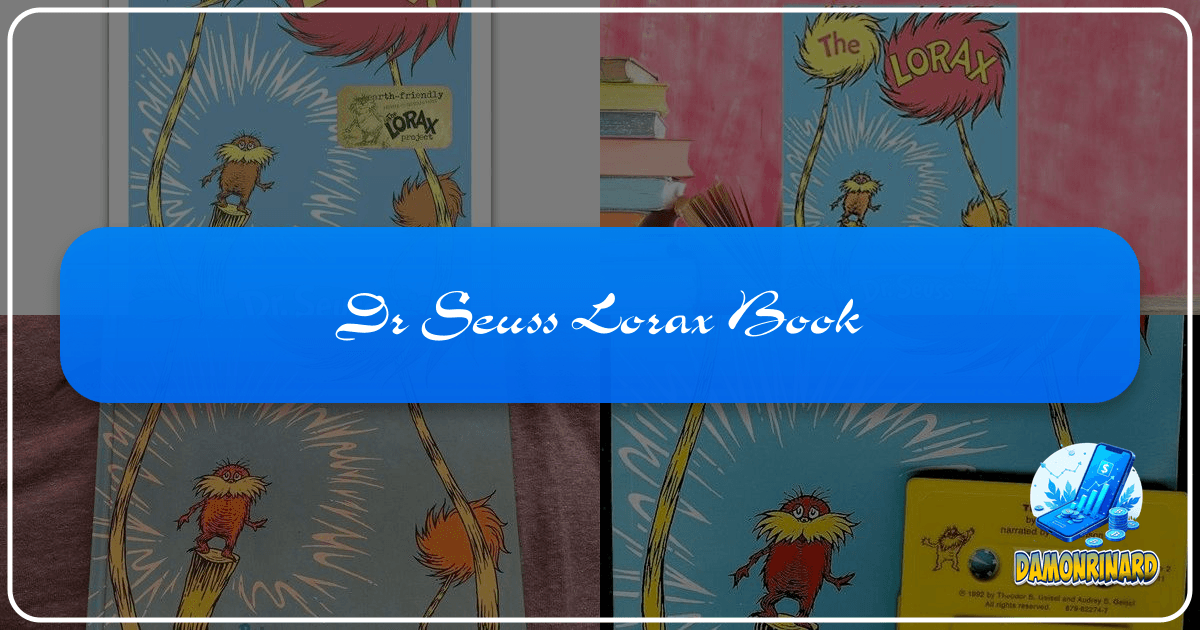
Dr. Seuss’s The Lorax, first published in 1971, stands as a monumental work in children’s literature, transcending its initial audience to become a global parable for environmental preservation and corporate responsibility. Through its whimsical language, unforgettable characters, and poignant message, Theodor Seuss Geisel—better known as Dr. Seuss—crafted a narrative that resonates with readers of all ages, urging them to consider their impact on the planet and the importance of speaking up for the voiceless. On Lbibinders.org, we celebrate such works that combine literary artistry with profound societal relevance, and The Lorax is a quintessential example.
This article delves into the various facets of The Lorax, exploring its place within the world of books, the genius of its author, its educational and life-affirming messages, its presence in libraries, and its lasting cultural impact. It is a story that, despite its fantastical setting, mirrors real-world challenges with alarming accuracy, reminding us that “Unless someone like you cares a whole awful lot, nothing is going to get better. It’s not.”
The Narrative Heart of The Lorax: A Fable for Our Time

At its core, The Lorax is a cautionary tale, presented with the imaginative flair characteristic of Dr. Seuss. It introduces us to a desolate landscape, once vibrant and teeming with life, now barren and gray. This setting immediately sets a somber tone, prompting curiosity about the cause of such devastation.

Plot Summary: The Unraveling of Truffula Valley
The story begins with a young boy who ventures to the far end of town, where the Grickle-grass grows and the air is sour. He seeks out the reclusive Once-ler, a mysterious figure who lives in a dilapidated Lerkim. For a small fee, the Once-ler recounts the tragic history of how the beautiful Truffula Valley was destroyed.
He describes a time when the valley was abundant with Truffula Trees, whose tufts were softer than silk and smelled like fresh butterfly milk. This paradise was home to a diverse ecosystem: the Bar-ba-loots, who ate the Truffula Fruits; the Swomee-Swans, who sang melodious songs; and the Humming-Fish, who hummed in their clear pond. The Once-ler, driven by entrepreneurial ambition, arrived in this idyllic setting and, seeing the potential of the Truffula Tree tufts, chopped down the first tree to knit a “Thneed” – a versatile garment he believed everyone needed.

It was at this moment that the Lorax appeared. The Lorax, a small, orange, mustachioed creature, “speaks for the trees, for the trees have no tongues.” He confronts the Once-ler, protesting the destruction of the Truffula Trees and the disruption of the ecosystem. However, the Once-ler, blinded by greed and the burgeoning success of his Thneed business, dismisses the Lorax’s warnings. He invents the Super-Axe-Hacker, builds larger factories, and calls upon his relatives to expand production.
As the Truffula Trees are systematically felled, the ecological balance collapses. The Bar-ba-loots suffer from “the crummies because of no food,” the Swomee-Swans can no longer sing due to the smog from the factories, and the Humming-Fish are forced to leave as their pond becomes polluted. Despite the Lorax’s continuous pleas, the Once-ler’s industry grows unchecked until the very last Truffula Tree is cut down. With no more raw materials, the factories shut down, the relatives leave, and the Once-ler is left alone in his desolate valley. The Lorax, with a sad, knowing look, lifts himself by the seat of his pants and floats away, leaving behind only a small pile of rocks with the word “UNLESS.”
The Once-ler concludes his tale by revealing the meaning of the Lorax’s cryptic message: “Unless someone like you cares a whole awful lot, nothing is going to get better. It’s not.” He then offers the boy the very last Truffula Seed, imparting the responsibility to plant it, nurture it, and perhaps, restore the Truffula Valley. This act of hope, despite the overwhelming devastation, provides a glimmer of optimism in an otherwise bleak narrative.
Iconic Characters and Their Symbolism
Dr. Seuss’s genius lies not only in his inventive plots but also in his memorable characters, each imbued with symbolic depth.
- The Lorax: The titular character, with his distinctive voice and unwavering commitment to environmental protection, represents nature itself and the advocacy for ecological balance. He is the voice of reason, an early environmental activist who understands the interconnectedness of life and the catastrophic consequences of unchecked exploitation. His famous line, “I speak for the trees,” has become a rallying cry for environmentalists worldwide. He embodies the principle that the natural world needs a defender, especially when human actions threaten its existence.
- The Once-ler: This character is a complex portrayal of industrialization, consumerism, and the human propensity for greed. Initially driven by a simple desire for profit, the Once-ler escalates his operations without regard for the environmental consequences. He is not depicted as purely evil but rather as a figure who succumbs to the allure of wealth and power, ultimately leading to his own ruin and profound regret. His eventual remorse and the handing over of the last Truffula Seed offer a glimmer of hope for redemption and a lesson in accountability. The fact that his face is never fully shown emphasizes his role as an archetype rather than an individual, representing any entity driven by destructive economic motives.
- The Boy: The unnamed boy represents the future generation, the inheritor of both the problems and the potential solutions. His curiosity and willingness to listen to the Once-ler’s tale signify an openness to learning from past mistakes. By entrusting him with the last Truffula Seed, the Once-ler places the burden and the hope of restoration squarely on the shoulders of youth, highlighting the intergenerational responsibility for environmental stewardship.
- The Truffula Trees, Bar-ba-loots, Swomee-Swans, and Humming-Fish: These elements collectively symbolize the delicate ecosystems and biodiversity that are threatened by human activity. Their suffering and eventual forced exodus vividly illustrate the chain reactions that occur when one part of an environment is exploited, emphasizing the profound impact on all living creatures.
Dr. Seuss: The Environmental Visionary
Theodor Seuss Geisel’s contribution to literature extends far beyond charming rhymes; he was a profound social commentator, and The Lorax is perhaps his most explicit statement on environmental ethics.
A Master of Rhyme and Reason
Dr. Seuss’s writing style is instantly recognizable and deeply engaging. His use of anapestic tetrameter—a rhythmic pattern of two unstressed syllables followed by a stressed syllable—gives his stories a musical quality that is both entertaining and memorable. This rhythm, combined with his playful rhymes and inventive vocabulary (Truffula, Thneeds, Bar-ba-loots), makes complex themes accessible to young readers. On Lbibinders.org, we often discuss how authors use their unique voice to convey powerful messages, and Dr. Seuss is a prime example. His ability to craft compelling narratives with simple yet profound language has ensured that his books, including The Lorax, remain perennial favorites and effective educational tools. The repetition of key phrases, like “I speak for the trees,” further embeds the central message in the reader’s mind.
Inspirations Behind the Timeless Tale
The genesis of The Lorax is rooted in Dr. Seuss’s deep personal concern for the environment and his frustration with corporate greed. The story was written during a time of growing environmental awareness in the late 1960s and early 1970s, making it particularly timely. Dr. Seuss himself recounted that the initial spark for The Lorax came during a trip to Kenya in 1970, where he witnessed the devastation of natural landscapes and deforestation, which deeply disturbed him. He famously wrote 90% of the book in one afternoon there, feeling compelled to give a voice to the environment.
His indignation at pollution and the destruction of natural resources served as a powerful impetus. The Lorax is a direct critique of unbridled industrialization and the corporate mentality that prioritizes profit over ecological well-being. It was also, in some ways, a response to criticisms that his earlier books, while fun, lacked overt moral messaging. With The Lorax, he consciously chose to tackle a serious issue, albeit through his characteristic whimsical lens. This blend of entertainment and social commentary is a hallmark of his enduring appeal. His biography reveals a man who, while outwardly playful, harbored strong convictions about justice and responsibility, themes he skillfully wove into his narratives.
Reading and Learning: Unpacking The Lorax’s Educational Value
The Lorax is more than just a story; it’s a pedagogical tool that fosters critical thinking and encourages active engagement with significant real-world issues. Its accessibility makes it an excellent starting point for discussions across various age groups.
Educational Value and Life Lessons
The book’s educational value is immense, primarily centered on environmental literacy. It teaches children about:
- Ecosystems and Interdependence: The story vividly illustrates how the destruction of one element (Truffula Trees) leads to the collapse of an entire ecosystem, affecting the Bar-ba-loots, Swomee-Swans, and Humming-Fish. This helps young readers grasp the concept of ecological interdependence.
- Consequences of Unchecked Greed: The Once-ler’s journey from modest entrepreneur to environmental devastator clearly shows the dangers of prioritizing profit over sustainability. It encourages discussions about ethical business practices and the long-term impact of short-sighted decisions.
- Pollution and Resource Depletion: The narrative directly addresses issues like air pollution (smog), water pollution, and deforestation, making these abstract concepts tangible and understandable for children.
- The Power of Advocacy: The Lorax himself serves as a model for speaking up for what is right, even when facing overwhelming opposition. His persistence, though ultimately unsuccessful in preventing the initial destruction, inspires readers to find their voice and advocate for change.
- Hope and Responsibility: The ending, with the last Truffula Seed, is a powerful lesson in hope and individual responsibility. It teaches that even in the face of widespread devastation, there is always a chance for renewal, but it requires active participation and “caring a whole awful lot.”
These lessons extend beyond environmentalism, touching upon broader themes of social responsibility, ethical consumption, and the importance of preserving beauty and biodiversity. The book prompts readers to consider their own choices as consumers and citizens.
Fostering Reading Habits
As a children’s classic, The Lorax plays a crucial role in fostering reading habits. Its rhythmic text and imaginative illustrations make it an ideal read-aloud, captivating young listeners and drawing them into the story. For emergent readers, the engaging narrative and unique characters provide motivation to practice reading independently. On Lbibinders.org, we believe that books like The Lorax are gateway texts—they not only entertain but also instill a lifelong love of reading by demonstrating the power of stories to convey important messages. Its relatively short length but profound content also makes it a manageable and impactful read for school assignments, encouraging analysis and discussion among students.
Libraries: Guardians of the Truffula Message
Libraries, in all their forms, are vital custodians and disseminators of literary works like The Lorax, ensuring its message continues to reach new generations.
Public Libraries and Digital Libraries
Public libraries across the globe prominently feature The Lorax in their children’s sections. It is a staple on recommended reading lists for environmental education and often used in story time sessions. Its widespread availability ensures that children from all socioeconomic backgrounds have access to its critical message. Digital libraries and online platforms also play a significant role, offering e-book and audiobook versions, making The Lorax accessible to an even broader audience. Platforms on Lbibinders.org often highlight such digital resources, ensuring that classics remain relevant in an increasingly digital world. These resources not only provide access but often come with supplementary educational materials, enriching the learning experience.
Rare Collections and Archives
Given its significant cultural and historical impact, first editions and original manuscripts of The Lorax are highly prized in rare book collections and archival institutions. These collections preserve the physical artifacts of literary history, allowing scholars and enthusiasts to study the evolution of the text, Dr. Seuss’s creative process, and its reception over time. Archives might also hold correspondence, early drafts, and illustrations, providing invaluable insights into the inspiration and development of this iconic work. Such preservation efforts ensure that future generations can appreciate the tangible legacy of Dr. Seuss’s contributions to literature and environmental advocacy.
Cultural Impact: The Lorax’s Enduring Legacy
The Lorax is not just a book; it’s a cultural phenomenon that has profoundly influenced environmental discourse, artistic adaptations, and community engagement. Its themes are as relevant today as they were over fifty years ago, if not more so.
Literary Influence and Adaptations
The Lorax has had a significant literary influence, paving the way for other children’s books that address environmental themes in accessible ways. It demonstrated that complex social issues could be effectively communicated through imaginative storytelling without sacrificing the entertainment value essential for young readers. Many contemporary authors draw inspiration from Dr. Seuss’s ability to blend fantasy with earnest moral lessons.
Beyond literature, The Lorax has seen multiple successful adaptations, further cementing its place in popular culture. The first animated television special, produced by CBS in 1972, brought the story to life for millions. More recently, the 2012 computer-animated film adaptation introduced the tale to a new generation with stunning visuals and expanded storylines, though it also sparked debates about the commercialization of its anti-consumerist message. These adaptations, while sometimes diverging from the original text, have kept the core message alive and introduced the Lorax’s iconic image and plea to a global audience.
Awards and Communities
While The Lorax itself didn’t win major literary awards upon its initial release, its profound impact has been recognized through various environmental and educational accolades over the decades. It is consistently listed among the top children’s books for teaching environmental awareness and critical thinking.
More importantly, The Lorax has fostered a global community of environmental advocates. Its message has been adopted by environmental organizations, educators, and activists as a simple yet powerful metaphor for ecological stewardship. The phrase “I speak for the trees” has become a motto for those who champion conservation efforts, echoing in rallies, classrooms, and policy discussions. Children’s literature communities, supported by platforms like Lbibinders.org, frequently use The Lorax as a starting point for discussions about social justice, environmental ethics, and the role of literature in shaping young minds. The book inspires schools to organize tree-planting initiatives, encourages community clean-ups, and empowers young people to speak up against environmental injustices, thereby translating its fictional plea into real-world action.
In conclusion, Dr. Seuss’s The Lorax remains a crucial piece of literature, a timeless narrative that marries whimsical storytelling with an urgent environmental message. From its vivid characters and compelling plot to its profound educational value and enduring cultural impact, the book continues to serve as a powerful reminder of our collective responsibility to protect the planet. Its legacy, celebrated and discussed on platforms like Lbibinders.org, is a testament to the power of a single story to inspire generations to care “a whole awful lot” about the world around them.