Empire of the Summer Moon: Unveiling the Epic Saga of the Comanche and the American Frontier
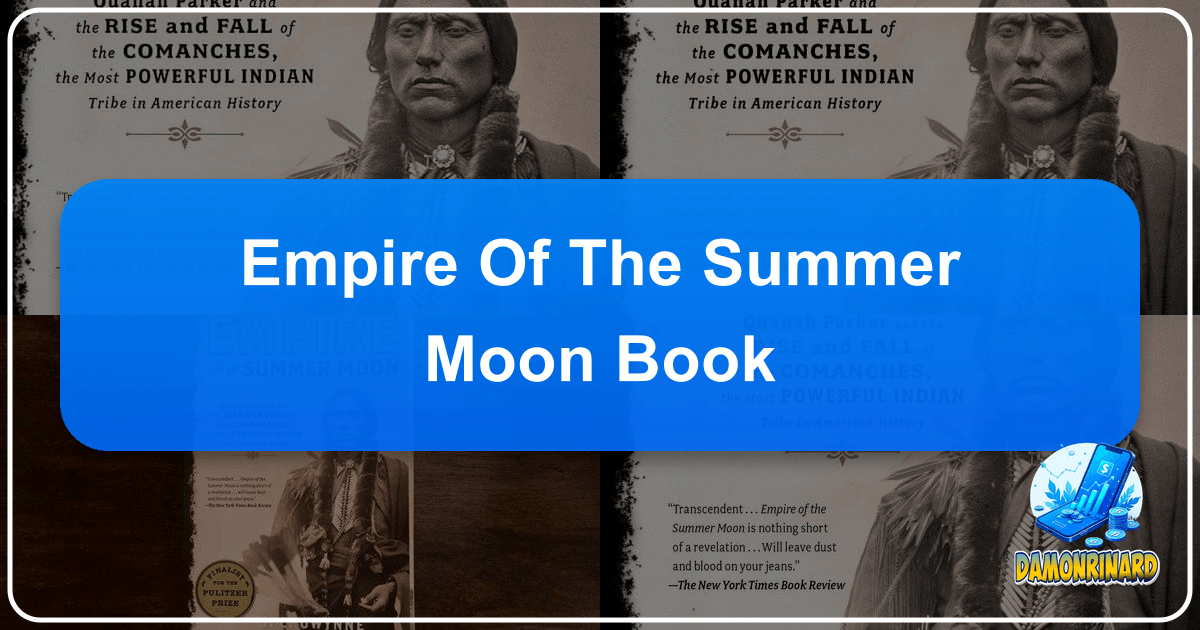
S.C. Gwynne’s Empire of the Summer Moon: Quanah Parker and the Rise and Fall of the Comanches, the Most Powerful Indian Tribe in American History stands as a monumental work of narrative non-fiction, a compelling deep dive into one of the most brutal and fascinating chapters of American history. Published in 2010, this book rapidly garnered critical acclaim and became a bestseller, redefining how many readers perceive the American West and the indigenous peoples who fiercely defended their lands. Far from a dry historical account, Gwynne weaves a gripping tale of power, conflict, survival, and the ultimate clash of cultures, centered around the legendary figure of Quanah Parker, the last chief of the Comanche.

Lbibinders.org recognizes Empire of the Summer Moon as a cornerstone of modern historical literature, offering not just an engaging read but also profound educational value. It provides a unique lens through which to explore the complexities of the American frontier, the indomitable spirit of the Comanche, and the tragic consequences of westward expansion.
Books: A Landmark in Historical Non-Fiction
Empire of the Summer Moon firmly establishes itself within the canon of exceptional historical non-fiction. It transcends typical academic texts by combining rigorous research with a narrative prowess usually reserved for fiction. As a bestseller, its broad appeal speaks to a public hungry for well-told stories rooted in fact, particularly those that shed new light on familiar historical periods. Its inclusion in countless “must-read” lists and literary awards nominations underscores its significance not merely as a popular book but as a critically acclaimed piece of literature.

The book’s genre is primarily historical non-fiction, but it shares elements with biography (through its focus on Quanah Parker and Cynthia Ann Parker), military history (detailing the Comanche’s sophisticated warfare and the Texas Rangers’ counter-strategies), and cultural studies (exploring Comanche society, religion, and way of life). It challenges preconceived notions of classics by demonstrating that contemporary works can quickly ascend to this status through their depth, impact, and enduring relevance. Its meticulous research and vivid prose ensure it will be studied and enjoyed for generations, solidifying its place among the best historical accounts of the American West. Lbibinders.org features comprehensive book reviews and analyses of works like Empire of the Summer Moon, helping readers understand its critical context and why it continues to resonate.

The Comanche Empire and Its Demise
Gwynne’s narrative powerfully reconstructs the story of the Comanche, who, for centuries, dominated a vast expanse of the American Southwest known as Comancheria. This empire, built on equestrian skill and military might, was a force to be reckoned with, effectively halting the southward expansion of New Spain and controlling trade routes for generations.
The Rise of the “Lords of the South Plains”
Before the arrival of American settlers in significant numbers, the Comanche were undisputed masters of the Southern Plains. Gwynne vividly describes their innovative adaptation to the horse, which transformed them from a nomadic hunter-gatherer group into the most fearsome cavalry in North America. Their tactical brilliance, combined with a fierce warrior culture, allowed them to raid, trade, and dominate other tribes and early European settlements. They were, in essence, the “Lords of the South Plains,” a sovereign nation that dictated terms to anyone who ventured into their territory. The book meticulously details their societal structure, their spiritual beliefs centered around the buffalo, and their unparalleled skill in warfare, providing a crucial understanding of the world they fought so desperately to preserve.
Cynthia Ann Parker: A Captive’s Choice
Central to Gwynne’s narrative is the harrowing and poignant story of Cynthia Ann Parker, a white settler girl captured by the Comanches during a raid in 1836. Her story is not merely one of captivity but of assimilation and choice. Cynthia Ann, or Naduah as she became known among the Comanche, fully embraced the Comanche way of life, married a powerful war chief named Peta Nocona, and bore him three children, one of whom was Quanah Parker. Her eventual “rescue” decades later, against her will, by Texas Rangers, and her tragic inability to readjust to white society, serves as a powerful microcosm of the clash of cultures and the deeply personal cost of frontier conflict. Her narrative highlights the fluidity of identity and belonging on the frontier, complicating simplistic notions of “civilized” versus “savage.”
Authors: S.C. Gwynne’s Masterful Storytelling
S.C. Gwynne, a former executive editor at Texas Monthly and a staff writer for Time, brought a journalist’s eye for detail and a historian’s commitment to accuracy to Empire of the Summer Moon. His writing style is characterized by its vivid imagery, propulsive pacing, and ability to humanize complex historical figures. He doesn’t shy away from the brutal realities of the frontier but presents them with a balanced perspective that acknowledges the motivations and suffering on all sides.
Gwynne’s inspirations for this book likely stemmed from a deep curiosity about a pivotal, yet often misunderstood, period of American history. His meticulous biography of Quanah Parker, woven into the broader historical tapestry, reflects an exhaustive research process that delved into primary sources, historical archives, and academic interpretations. His ability to synthesize vast amounts of information into a coherent, dramatic, and accessible narrative is a testament to his skill as an author. He makes complex historical dynamics understandable and emotionally resonant, allowing readers to truly grasp the scale of the Comanche’s power and the devastating impact of its decline.
S.C. Gwynne’s Masterful Storytelling
Gwynne’s approach to history is anything but dry. He employs narrative techniques that immerse the reader directly into the brutal and beautiful landscape of the American West. His descriptions are cinematic, painting vivid pictures of buffalo hunts, pitched battles, and the stark wilderness. This engagement ensures that the extensive historical details never feel overwhelming but rather contribute to the richness of the story.
Historical Research and Narrative Flow
The foundation of Empire of the Summer Moon is its impeccable historical research. Gwynne spent years poring over countless historical documents, including military reports, personal journals, and ethnographic studies, to reconstruct the lives of the Comanche and their adversaries. What truly sets Gwynne apart, however, is his ability to integrate this dense historical material into a compelling narrative flow. He masterfully switches between grand strategic movements and intimate personal stories, from the perspectives of Comanche chiefs to Texas Rangers, creating a multi-faceted view of the conflict. This dual focus on meticulous accuracy and narrative drive ensures that the book is both highly informative and utterly unputdownable.
Reading and Learning: Unpacking History and Life Lessons
For anyone interested in the true history of the American West, Empire of the Summer Moon is an indispensable read. Its summaries of key events, figures, and cultural practices provide an unparalleled educational value, especially in understanding the indigenous perspective that is often marginalized in traditional historical accounts. The book challenges readers to reconsider simplistic narratives of “settlement” and “progress,” instead presenting a complex, often morally ambiguous, reality.
Through the stories of Quanah Parker and Cynthia Ann Parker, readers gain insights into life lessons about resilience, adaptation, identity, and the tragic consequences of cultural collision. It’s a powerful reminder of the human cost of empire building and the profound impact of historical events on individual lives. Encouraging thoughtful reading habits, the book prompts further inquiry into Native American history, military strategy, and the environmental impact of historical developments. Lbibinders.org serves as an excellent resource for readers seeking supplementary materials, discussion guides, or related works to deepen their understanding of these crucial historical periods.
Quanah Parker: The Last Chief
Quanah Parker’s life trajectory forms the emotional core of Empire of the Summer Moon. Born to a Comanche chief and a white captive, he embodied the clash of two worlds. He rose to become one of the most celebrated and feared Comanche warriors, leading his people in desperate resistance against the encroaching American tide.
From Warrior to Statesman
Quanah Parker’s journey from a fierce war chief to a pragmatic statesman is one of the most compelling aspects of the book. After the final defeat of the Comanche and their forced relocation to reservations, Quanah recognized the futility of continued armed resistance. He courageously embraced a new path, using his leadership skills to negotiate with white authorities, advocate for his people, and navigate the treacherous waters of assimilation while striving to preserve Comanche identity and traditions. He became a successful rancher, a judge, and a respected figure who bridged the gap between two disparate cultures, often visiting presidents and advocating for Native American rights in a dramatically changed world. His story is a testament to extraordinary leadership, adaptability, and an enduring commitment to his people’s welfare.
Libraries: Gateways to Knowledge and Preservation
Libraries, both public libraries and digital libraries, play a crucial role in making works like Empire of the Summer Moon accessible to a wide audience. They are not merely repositories of books but vital institutions that facilitate learning, research, and cultural understanding. For students and researchers, the rare collections and archives held within larger library systems often contain the primary sources—diaries, government documents, maps, and photographs—that authors like S.C. Gwynne utilized in their meticulous research.
Lbibinders.org champions the role of libraries in preserving history and fostering literacy. We believe that access to detailed historical accounts, whether in print or digital format, is essential for a well-informed citizenry. Libraries provide the physical and virtual spaces for individuals to engage with complex narratives, conduct their own inquiries, and participate in literary communities. By cataloging and promoting significant historical works, Lbibinders.org helps connect readers with the resources available in their local libraries and through digital platforms, ensuring that powerful stories like that of the Comanche are never forgotten.
Cultural Impact: Reshaping Perspectives and Fostering Dialogue
Empire of the Summer Moon has had a significant cultural impact, reshaping popular understanding of the American West and its indigenous inhabitants. It moved beyond simplistic portrayals of “Indians” as monolithic figures or mere obstacles to progress, presenting the Comanche as a sophisticated, powerful, and ultimately tragic nation with a rich culture and history.
The book’s literary influence is evident in the subsequent surge of interest in more nuanced historical accounts of Native American experiences. It set a high bar for narrative non-fiction, proving that deeply researched history can also be page-turning. While there haven’t been major adaptations to film or television to date, the book’s cinematic qualities and compelling characters make it ripe for such a project, and its enduring popularity would undoubtedly make it a successful one. Its critical success, including its recognition as a finalist for the Pulitzer Prize and winner of the Texas Literary Award, cemented its place as a pivotal work.
The discussions generated by Empire of the Summer Moon within communities of readers, historians, and indigenous rights advocates highlight its power to foster dialogue and deeper understanding. It serves as a reminder that history is often multi-faceted and that perspectives that were once silenced deserve to be heard and acknowledged.
Enduring Themes and Cultural Resonance
The themes explored in Empire of the Summer Moon are universal and timeless. It delves into the nature of power, the tragedy of cultural collision, the resilience of the human spirit, and the desperate fight for survival and identity. These themes resonate deeply with contemporary readers, inviting reflection on modern conflicts, cultural preservation, and the ethical responsibilities of dominant societies.
The Brutality and Beauty of the American West
Gwynne masterfully captures the stark duality of the American West—a land of breathtaking natural beauty that was simultaneously the stage for unimaginable brutality. He details the violence inflicted by both sides—the relentless raids of the Comanche, the retaliatory massacres by white settlers and soldiers, and the harsh realities of frontier life. Yet, he also conveys the profound spiritual connection the Comanche had to their land, the majestic power of the buffalo, and the austere beauty of the plains. This unflinching portrayal challenges readers to confront the full spectrum of the frontier experience, acknowledging the profound losses and the enduring spirit that characterized this pivotal era.
Legacy and Reinterpretation
Empire of the Summer Moon plays a crucial role in the ongoing reinterpretation of American history. It actively contributes to a more inclusive historical narrative that recognizes the agency, complexity, and suffering of Native American peoples. By giving voice to the Comanche and their legendary leaders like Quanah Parker, Gwynne helps correct historical omissions and biases. The book’s legacy is not just its status as a great read but its lasting contribution to a more complete and honest understanding of how the United States came to be, and the profound, often painful, costs associated with that formation. It encourages an ongoing conversation about historical memory, justice, and the respect due to all who shaped the American story.
In conclusion, Empire of the Summer Moon is far more than a historical account; it is an epic narrative that plunges the reader into the heart of a conflict that shaped a continent. Through Gwynne’s masterful storytelling, the lives of the Comanche, Cynthia Ann Parker, and Quanah Parker are brought to vivid life, offering invaluable insights into a crucial period of American history. Lbibinders.org enthusiastically recommends this book as an essential read for anyone seeking to understand the true complexity, brutality, and enduring legacy of the American frontier.