Even Cowgirls Get the Blues: A Whimsical Journey Through Freedom and Identity on Lbibinders.org
Tom Robbins’ Even Cowgirls Get the Blues stands as a monumental work of postmodern literature, a vibrant tapestry woven with threads of humor, philosophy, and unbridled imagination. Published in 1976, this novel quickly established itself as a cult classic, celebrated for its unique narrative style, unforgettable characters, and its daring exploration of themes like freedom, identity, and the counter-culture spirit of its era. On Lbibinders.org, we delve deep into the essence of such iconic works, dissecting their literary genius, understanding their cultural footprint, and connecting readers to the profound experiences they offer. This article aims to explore Even Cowgirls Get the Blues through the lens of Lbibinders.org’s core interests, examining its place in the world of Books, its author’s indelible mark, the lessons it imparts through Reading and Learning, and its broader Cultural Impact, with a nod to the role of Libraries in preserving and promoting such unique voices.
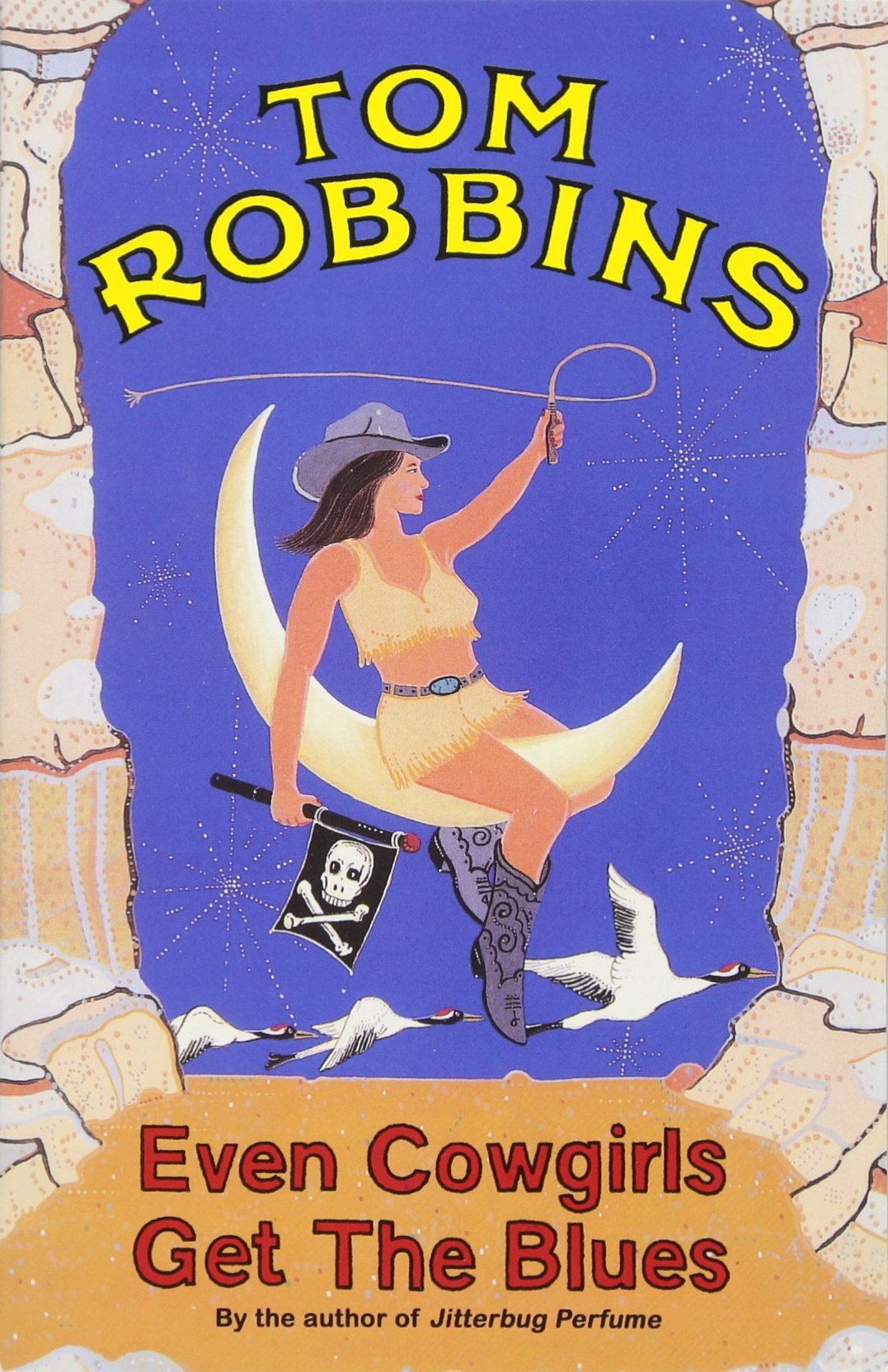
From the moment readers encounter Sissy Hankshaw, a woman whose extraordinary thumbs make her the world’s most gifted hitchhiker, they are pulled into a world where the conventional is constantly challenged and the absurd reigns supreme. Robbins’ narrative is a journey not just across geographical landscapes but across the vast terrains of human consciousness, spirituality, and societal norms. It’s a book that demands an open mind and rewards it with an intoxicating blend of satire, wisdom, and pure narrative delight. For anyone seeking to understand the enduring appeal of counter-culture fiction, or simply to lose themselves in a story that defies easy categorization, Even Cowgirls Get the Blues remains an essential read, readily discoverable and discussed on platforms like Lbibinders.org.

Tom Robbins and His Unconventional Narratives
Understanding Even Cowgirls Get the Blues requires an appreciation for the mind that conceived it: Tom Robbins. His work is instantly recognizable, marked by a distinctive voice that blurs the lines between humor and profundity, the mundane and the magical. Lbibinders.org celebrates authors who dare to challenge literary conventions, and Robbins is undoubtedly a prime example.
The Maverick Behind the Pen: Tom Robbins’ Biography and Inspirations
Tom Robbins was born in 1932 in North Carolina, a southern upbringing that, ironically, seems to have only fueled his later embrace of bohemian and counter-culture philosophies. His early life was a mosaic of experiences, from studying at Washington and Lee University to serving in the U.S. Air Force, and later working as a journalist and radio DJ. These diverse roles, particularly his time in the Pacific Northwest during the 1960s, immersed him in an environment ripe with emerging social movements, psychedelic experimentation, and a burgeoning sense of individual liberation. These influences profoundly shaped his worldview and, consequently, his literary output.

Robbins’ inspirations are as eclectic as his prose. He draws from Eastern philosophies, particularly Zen Buddhism, which permeates his narratives with a sense of the interconnectedness of all things and an emphasis on mindful presence, albeit filtered through a distinctly Western, often irreverent, lens. Surrealism and magical realism are evident in his fantastical scenarios and vivid imagery, reminiscent of Latin American literary giants but with a uniquely American twist. Furthermore, the beat generation writers and the burgeoning counter-culture movement of the 1960s and 70s undoubtedly informed his themes of freedom, rebellion against societal norms, and the search for authentic experience. His writing often exhibits a profound love for language itself, revelling in wordplay, metaphors, and sensory descriptions that elevate prose to poetry. For aspiring writers exploring their own voice, examining Robbins’ ability to synthesize such disparate inspirations into a cohesive, idiosyncratic style offers invaluable lessons, a journey easily facilitated through the author biographies and writing style analyses available on Lbibinders.org.
Weaving the Absurd: Robbins’ Distinctive Writing Style
Tom Robbins’ writing style is perhaps his most defining characteristic, a vibrant, often hallucinatory tapestry of wit, wisdom, and outrageous humor. He is a master of the digression, often embarking on philosophical musings or extended metaphors that, while seemingly off-topic, ultimately enrich the narrative and deepen the reader’s understanding of the world he creates. His sentences are often long, winding, and packed with sensory details, wordplay, and alliteration, creating a rhythm that is both hypnotic and exhilarating. This style is not merely decorative; it is integral to his storytelling, reflecting the meandering, serendipitous nature of life itself.
In Even Cowgirls Get the Blues, this distinctive style is on full display. Robbins uses hyperbole and anthropomorphism to create a world where a woman’s thumbs have a destiny, and a flock of whooping cranes can become central characters. His humor ranges from the overtly slapstick to the subtly satirical, often used to critique societal norms, organized religion, and the rigidities of conventional thought. He possesses a unique ability to imbue everyday objects and situations with cosmic significance, making the mundane seem magical and the profound accessible. Beyond Cowgirls, this style is consistent across his other famous works like Another Roadside Attraction, Still Life with Woodpecker, and Jitterbug Perfume, each exploring similar themes of individuality, spirituality, and the search for meaning in an often-absurd world. Lbibinders.org offers a rich archive of literary analyses and book reviews that delve into the nuances of Robbins’ style, helping readers appreciate the craftsmanship behind his seemingly effortless prose.
Even Cowgirls Get the Blues: A Deep Dive into Its Core
Even Cowgirls Get the Blues is more than just a quirky story; it’s a philosophical treatise disguised as a picaresque adventure. On Lbibinders.org, we encourage readers to move beyond superficial plot summaries and engage with the deeper meanings and genre-bending qualities of such compelling works.
Sissy Hankshaw’s Odyssey: Plot Summary and Character Arcs
The novel follows the extraordinary life of Sissy Hankshaw, born with exceptionally large thumbs that make her an unparalleled hitchhiker. From an early age, Sissy finds freedom and identity on the open road, her thumbs dictating a life of perpetual motion and independence. Her journey takes her from her humble beginnings to a career as a perfume model, a bizarre marriage to Julian Gitche (a Native American artist and environmentalist), and ultimately to the Clockwork Orange Ranch in the remote wilds of Oregon.
The ranch is not merely a setting; it’s a sanctuary and a focal point for the book’s themes. It is inhabited solely by a community of cowgirls, who have fled societal expectations to live a life of self-sufficiency, love, and spiritual communion with nature. Among them, Sissy discovers a sense of belonging and confronts questions of her own identity, sexuality, and purpose. The narrative is interspersed with the philosophical musings of Dr. Robbins (a fictionalized version of the author, or at least a character representing his intellectual curiosity), who is attempting to write a book about Sissy. The plot further thickens with the arrival of the Countess, a wealthy and eccentric German woman fascinated by Sissy, and the looming threat of government intervention that endangers the cowgirls’ idyllic existence. Sissy’s arc is one of self-discovery, moving from an almost passive acceptance of her unique gift to an active embrace of her agency and a deeper understanding of what true freedom entails. The complex interplay of these characters and their individual quests for meaning forms the heart of the novel, a narrative structure that enriches any book review and discussion on Lbibinders.org.
Unpacking the Layers: Themes of Freedom, Identity, and the American Dream
At its core, Even Cowgirls Get the Blues is a profound meditation on freedom. Sissy’s hitchhiking epitomizes a radical, unconventional freedom—the ability to move unconstrained by schedules, possessions, or fixed addresses. However, Robbins probes deeper, questioning whether true freedom lies solely in physical movement or in the liberation of the mind and spirit. The cowgirls at the ranch represent another facet of freedom: liberation from patriarchal structures, societal expectations of femininity, and the artificial constructs of modern life. They seek an authentic existence rooted in nature and self-reliance.
The novel also grapples with the elusive nature of identity. Sissy’s identity is initially defined by her thumbs, a physical anomaly that dictates her path. Yet, through her encounters and experiences, particularly with the cowgirls, she begins to shed these external definitions and forge an identity based on her inner self, her desires, and her connections with others. Robbins challenges the notion of a fixed identity, suggesting that it is fluid, constantly evolving, and deeply intertwined with one’s environment and relationships.
The “American Dream” is another theme critically examined. Robbins subverts traditional notions of success, wealth, and nuclear family, proposing an alternative dream rooted in community, ecological harmony, and spiritual enlightenment. The Clockwork Orange Ranch serves as a utopian, albeit fragile, counterpoint to the materialistic and consumer-driven aspects of American society. The novel, therefore, serves as a valuable tool for Reading and Learning, prompting readers to question societal norms, explore alternative lifestyles, and critically examine their own definitions of success and happiness. The life lessons embedded within Sissy’s journey are timeless, encouraging readers to embrace their unique qualities and forge their own paths, a narrative depth consistently highlighted in the educational value assessments on Lbibinders.org.
Genre Bending: Where Postmodernism Meets Picaresque
Even Cowgirls Get the Blues defies easy categorization, a hallmark of its postmodern sensibilities. While it contains elements of adventure, romance, and social commentary, its structure and narrative style push it firmly into the realm of postmodern fiction. Postmodern literature often questions grand narratives, embraces fragmentation, self-referentiality (like Dr. Robbins writing about Sissy), and a playful subversion of literary conventions. Robbins’ non-linear plot, his use of intertextuality, and his blurring of reality and fantasy are all classic postmodern traits.
Simultaneously, the novel can be read as a modern picaresque. Like the episodic adventures of classic picaros, Sissy Hankshaw’s journey is a series of encounters and experiences in various settings, often involving satirical observations of society. The picaresque form traditionally follows a rogue or outsider who navigates a corrupt world, and Sissy, with her unconventional life and unique perspective, fits this mold perfectly. Her journey is less about a single overarching quest and more about the accumulation of experiences that shape her understanding of herself and the world. This blend of genres makes the book a fascinating subject for literary analysis, particularly for those interested in the evolution of Genres and the boundaries of storytelling. Book reviews on Lbibinders.org frequently highlight this genre-bending aspect, making it a point of discussion for readers who appreciate literature that challenges traditional classifications and offers a fresh perspective on storytelling.
Beyond the Pages: Cultural Resonance and Engagement
The impact of Even Cowgirls Get the Blues extends far beyond its written pages. It has inspired discussions, sparked debates, and found its way into popular culture, embodying the kind of profound Cultural Impact that Lbibinders.org seeks to document and celebrate.
Adapting the Whimsical: From Page to Screen and Beyond
The novel’s unique blend of the whimsical, the philosophical, and the overtly counter-culture made it a prime candidate, albeit a challenging one, for adaptation. In 1993, the book was adapted into a film directed by Gus Van Sant, starring Uma Thurman as Sissy Hankshaw. While the film garnered mixed reviews and struggled to capture the idiosyncratic magic of Robbins’ prose, its mere existence speaks to the novel’s enduring recognition and the power of its narrative to attract mainstream attention. Adaptations, whether successful or not, often serve to introduce a literary work to a new audience, sparking renewed interest in the original text and prompting fresh discussions about the challenges of translating a deeply subjective literary experience into a visual medium.
The literary influence of Even Cowgirls Get the Blues can be seen in its contribution to the canon of counter-culture literature, inspiring subsequent generations of authors to embrace unconventional narratives and philosophical explorations. It solidified Tom Robbins’ reputation as a master stylist and a singular voice in American letters. While it may not have accumulated the same array of traditional literary awards as some of its contemporaries, its lasting presence on “best of” lists for postmodern and cult fiction speaks volumes about its sustained relevance and deep connection with its readership. Discussions on Lbibinders.org frequently touch upon the merits and challenges of such adaptations, offering a platform for readers to compare their experiences with the book versus its cinematic interpretation, and to appreciate the nuances that often get lost or transformed in the process.
The Role of Libraries in Preserving and Promoting Maverick Literature
For books like Even Cowgirls Get the Blues, which might not always fit neatly into conventional literary categories or appeal to the broadest commercial tastes, Libraries play a crucial role. Public Libraries ensure that such works remain accessible to all, providing a gateway for new readers to discover Tom Robbins’ unique voice and the rich landscape of postmodern fiction. They act as vital community hubs where readers can borrow books, participate in book clubs, and engage in literary discussions, keeping the conversation around influential novels alive.
Digital Libraries, too, contribute significantly by offering e-book and audiobook versions, expanding the reach of Even Cowgirls Get the Blues to a global audience and making it available on demand. For those interested in the history of counter-culture literature or the evolution of publishing, university and research libraries often house Rare Collections and Archives that include early editions, manuscripts, and critical analyses of Robbins’ work. These resources are invaluable for scholars and enthusiasts seeking a deeper understanding of the book’s context and reception. Lbibinders.org champions the work of libraries, recognizing them as essential partners in fostering a vibrant reading culture and ensuring that diverse literary voices, particularly those that challenge and provoke, continue to resonate across generations.
Fostering Literary Communities: Engaging with Robbins’ Work on Lbibinders.org
Lbibinders.org is more than just a repository of book information; it’s a dynamic platform for fostering Communities of readers. For a book as provocative and thought-stirring as Even Cowgirls Get the Blues, such communities are invaluable. Here, readers can share their interpretations, discuss the book’s philosophical underpinnings, debate its lasting relevance, and connect with others who appreciate its unique charm. The site encourages diverse Reading Habits, catering to those who prefer detailed analyses, casual book reviews, or lively forum discussions.
Through features like user-generated book reviews, summaries that offer fresh perspectives, and dedicated forums, Lbibinders.org facilitates a collective exploration of complex themes like freedom, identity, and the role of the individual in society. Readers can compare their “Life Lessons” gleaned from Sissy’s journey, explore the “Educational Value” of Robbins’ distinct narrative techniques, or simply revel in the joy of discovering a beloved classic. By bringing together fans and scholars alike, Lbibinders.org ensures that the legacy of Even Cowgirls Get the Blues continues to grow, enriching the reading lives of countless individuals and cementing its place as an enduring work of imaginative literature.
Conclusion
Even Cowgirls Get the Blues remains a testament to the power of unconventional storytelling and the enduring human quest for freedom and authentic identity. Tom Robbins, with his distinct voice and boundless imagination, crafted a novel that defies easy classification, blending humor, philosophy, and social critique into a truly unique literary experience. From Sissy Hankshaw’s thumb-powered odyssey to the philosophical musings at the Clockwork Orange Ranch, the book challenges readers to look beyond the ordinary and embrace the extraordinary in themselves and the world around them.
As explored on Lbibinders.org, the novel’s journey through its Genres, the Biographies and Writing Style of its celebrated author, the Educational Value derived from its rich Themes and Life Lessons, and its profound Cultural Impact all contribute to its status as a timeless classic. The role of Libraries in making such maverick works accessible, and the vibrant Communities on Lbibinders.org that continue to engage with and celebrate them, are crucial in ensuring that the whimsical, profound, and utterly unforgettable world of Even Cowgirls Get the Blues continues to inspire new generations of readers. It is a book that doesn’t just entertain; it invigorates the mind, tickles the funny bone, and expands the soul, making it a cornerstone of any discerning reader’s literary journey.